Department of Cognition, Development and Psychology of Education, Vision and Control of Action (VISCA) Group, Institut de Neurociències, Universitat de Barcelona, Barcelona, Catalonia, Spain.
PLoS One. 2020 Feb 4;15(2):e0227913. doi: 10.1371/journal.pone.0227913. eCollection 2020.
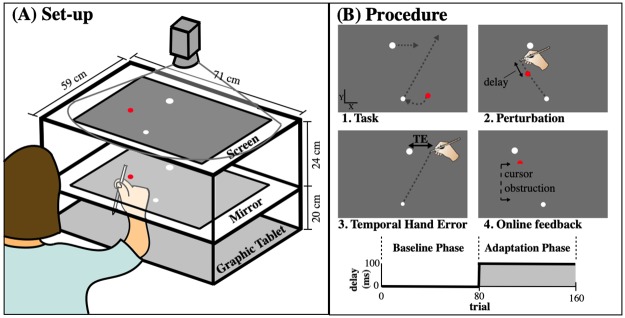
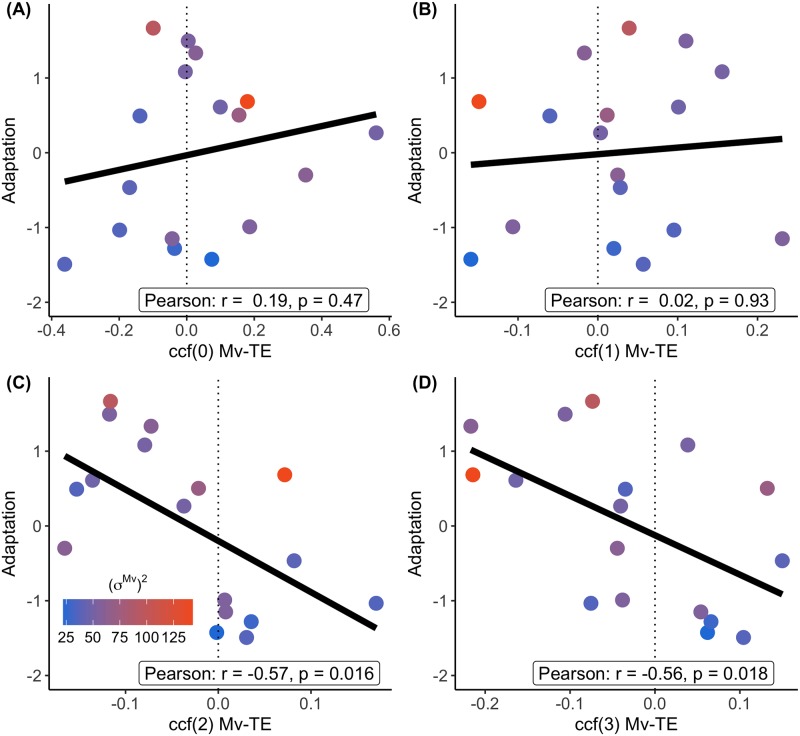
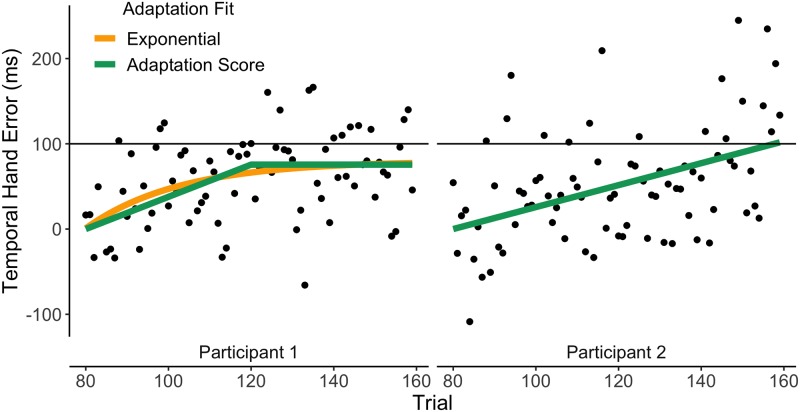
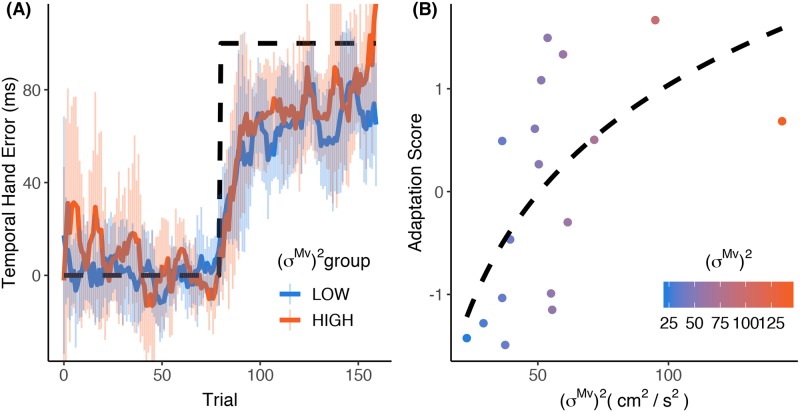
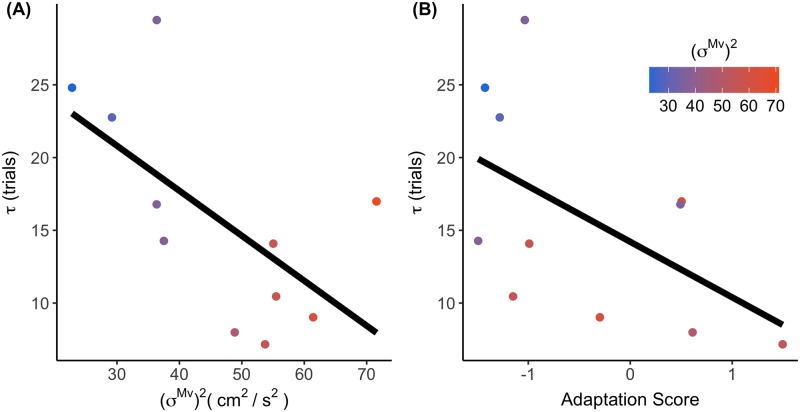
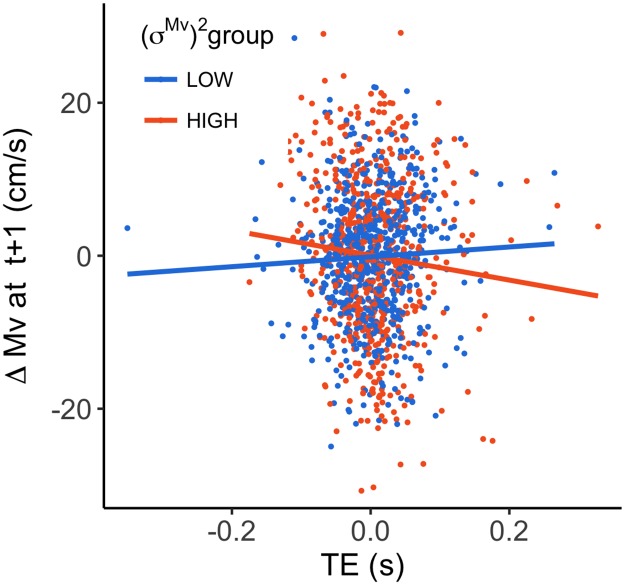
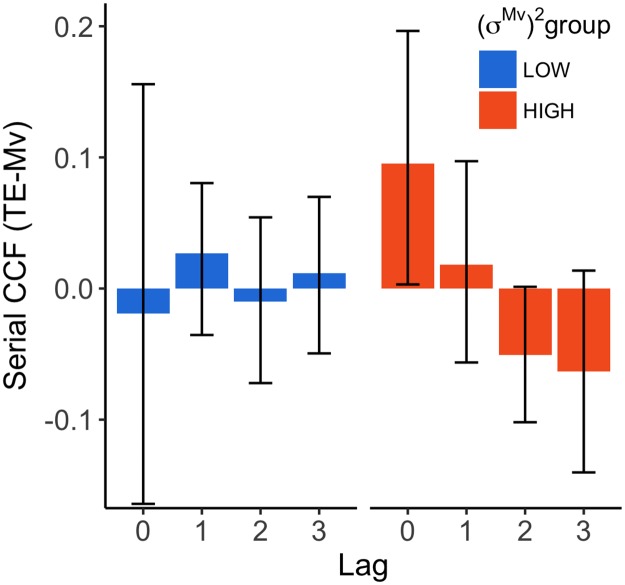
In order to intercept moving objects, we need to predict the spatiotemporal features of the motion of both the object and our hand. Our errors can result in updates of these predictions to benefit interceptions in the future (adaptation). Recent studies claim that task-relevant variability in baseline performance can help adapt to perturbations, because initial variability helps explore the spatial demands of the task. In this study, we examined whether this relationship is also found in interception (temporal domain) by looking at the link between the variability of hand-movement speed during baseline trials, and the adaptation to a temporal perturbation. 17 subjects performed an interception task on a graphic tablet with a stylus. A target moved from left to right or vice versa, with varying speed across trials. Participants were instructed to intercept this target with a straight forward movement of their hand. Their movements were represented by a cursor that was displayed on a screen above the tablet. To prevent online corrections we blocked the hand from view, and a part of the cursor's trajectory was occluded. After a baseline phase of 80 trials, a temporal delay of 100 ms was introduced to the cursor representing the hand (adaptation phase: 80 trials). This delay initially caused participants to miss the target, but they quickly accounted for these errors by adapting to most of the delay of the cursor. We found that variability in baseline movement velocity is a good predictor of temporal adaptation (defined as a combination of the rate of change and the asymptotic level of change after a perturbation), with higher variability during baseline being associated with better adaptation. However, cross-correlation results suggest that the increased variability is the result of increased error correction, rather than exploration.
为了拦截移动物体,我们需要预测物体和我们手的运动的时空特征。我们的错误可能导致这些预测的更新,从而有助于未来的拦截(适应)。最近的研究声称,基线性能的与任务相关的可变性可以帮助适应干扰,因为初始的可变性有助于探索任务的空间需求。在这项研究中,我们通过观察基线试验中手运动速度的可变性与对时间干扰的适应之间的关系,来研究这种关系是否也存在于拦截(时间域)中。17 名受试者使用手写笔在图形平板电脑上执行拦截任务。目标从左向右或反之亦然移动,每次试验的速度都不同。参与者被指示用手的直线运动来拦截这个目标。他们的运动由一个光标表示,光标显示在平板电脑上方的屏幕上。为了防止在线修正,我们将手挡住视线,并且光标轨迹的一部分被遮挡。在 80 次基线试验之后,引入了 100 毫秒的时间延迟到代表手的光标(适应阶段:80 次试验)。这个延迟最初导致参与者错过目标,但他们很快通过适应光标大部分的延迟来纠正这些错误。我们发现,基线运动速度的可变性是时间适应的一个很好的预测指标(定义为变化率和干扰后变化的渐近水平的组合),基线期间的可变性越高,适应能力越好。然而,交叉相关结果表明,增加的可变性是增加错误修正的结果,而不是探索的结果。