ICAR-National Rice Research Institute, Cuttack, Odisha, India.
ICAR-Indian Institute of Rice Research, Hyderabad, India.
BMC Plant Biol. 2020 Feb 4;20(1):57. doi: 10.1186/s12870-020-2262-4.
High yielding rice varieties are usually low in grain iron (Fe) and zinc (Zn) content. These two micronutrients are involved in many enzymatic activities, lack of which cause many disorders in human body. Bio-fortification is a cheaper and easier way to improve the content of these nutrients in rice grain.
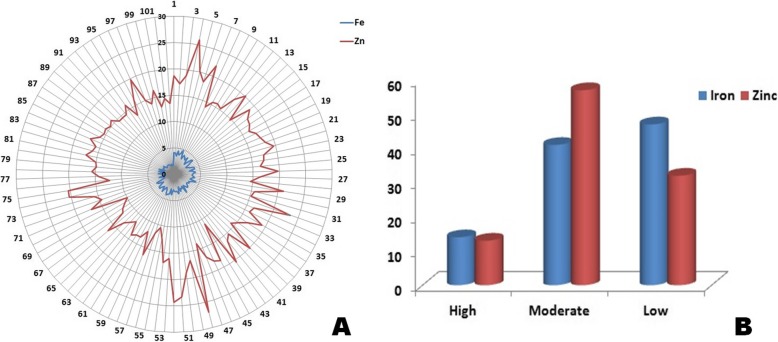
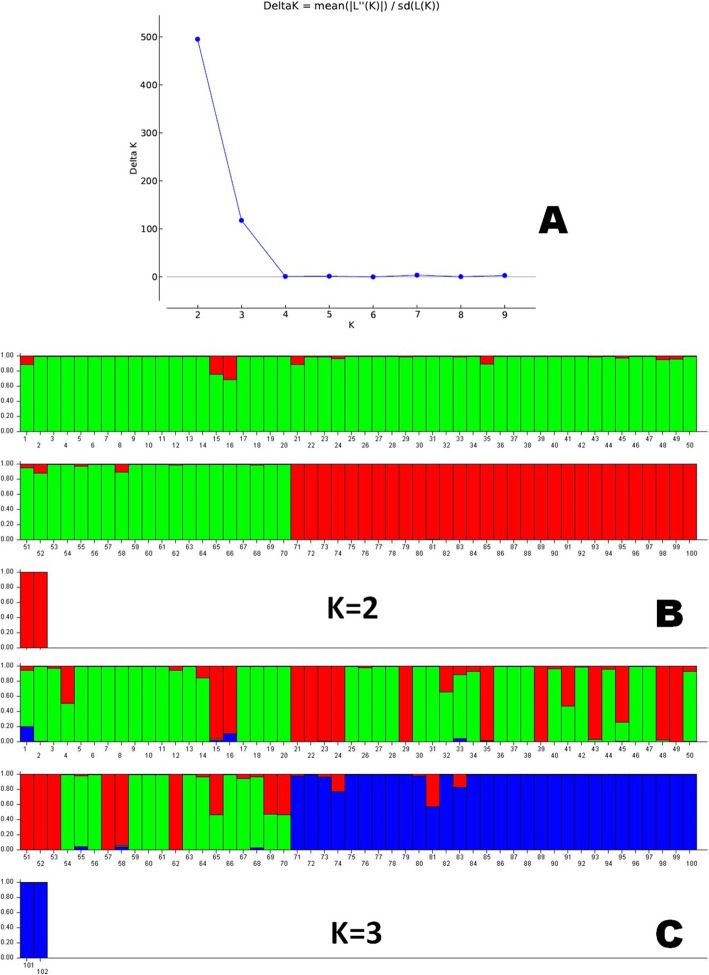
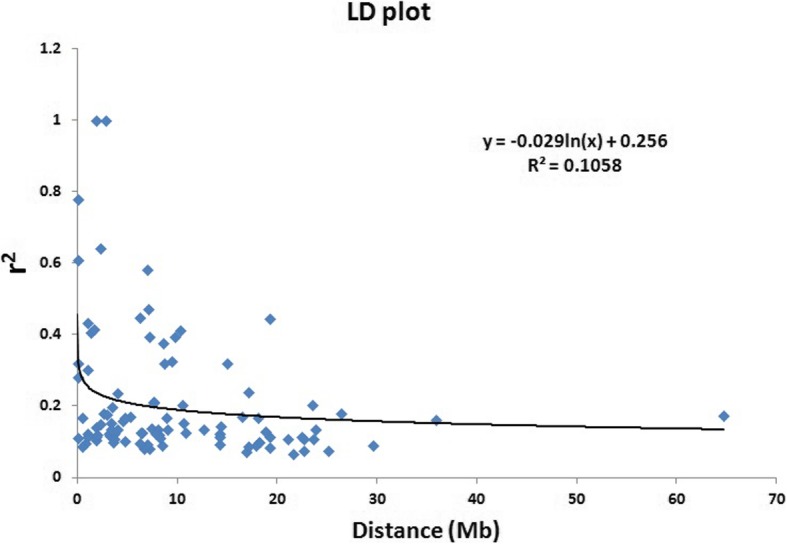
A population panel was prepared representing all the phenotypic classes for grain Fe-Zn content from 485 germplasm lines. The panel was studied for genetic diversity, population structure and association mapping of grain Fe-Zn content in the milled rice. The population showed linkage disequilibrium showing deviation of Hardy-Weinberg's expectation for Fe-Zn content in rice. Population structure at K = 3 categorized the panel population into distinct sub-populations corroborating with their grain Fe-Zn content. STRUCTURE analysis revealed a common primary ancestor for each sub-population. Novel quantitative trait loci (QTLs) namely qFe3.3 and qFe7.3 for grain Fe and qZn2.2, qZn8.3 and qZn12.3 for Zn content were detected using association mapping. Four QTLs, namely qFe3.3, qFe7.3, qFe8.1 and qFe12.2 for grain Fe content were detected to be co-localized with qZn3.1, qZn7, qZn8.3 and qZn12.3 QTLs controlling grain Zn content, respectively. Additionally, some Fe-Zn controlling QTLs were co-localized with the yield component QTLs, qTBGW, OsSPL14 and qPN. The QTLs qFe1.1, qFe3.1, qFe5.1, qFe7.1, qFe8.1, qZn6, qZn7 and gRMm9-1 for grain Fe-Zn content reported in earlier studies were validated in this study.
Novel QTLs, qFe3.3 and qFe7.3 for grain Fe and qZn2.2, qZn8.3 and qZn12.3 for Zn content were detected for these two traits. Four Fe-Zn controlling QTLs and few yield component QTLs were detected to be co-localized. The QTLs, qFe1.1, qFe3.1, qFe5.1, qFe7.1, qFe8.1, qFe3.3, qFe7.3, qZn6, qZn7, qZn2.2, qZn8.3 and qZn12.3 will be useful for biofortification of the micronutrients. Simultaneous enhancement of Fe-Zn content may be possible with yield component traits in rice.
高产品种的水稻通常谷物铁(Fe)和锌(Zn)含量较低。这两种微量元素参与许多酶的活性,缺乏这些微量元素会导致人体出现许多疾病。生物强化是一种更便宜、更容易的方法,可以提高水稻谷物中这些营养物质的含量。
从 485 个种质系中,制备了一个代表所有谷物 Fe-Zn 含量表型类别的群体面板。该面板用于研究碾磨稻米中 Fe-Zn 含量的遗传多样性、群体结构和关联作图。该群体显示出连锁不平衡,表明 Fe-Zn 含量偏离了 Hardy-Weinberg 的期望。K=3 时的群体结构将该群体划分为不同的亚群,这与它们的谷物 Fe-Zn 含量相吻合。STRUCTURE 分析表明,每个亚群都有一个共同的原始祖先。使用关联作图检测到了新的与 Fe-Zn 含量相关的数量性状位点(QTL),即 qFe3.3 和 qFe7.3 与 Fe 含量相关,qZn2.2、qZn8.3 和 qZn12.3 与 Zn 含量相关。检测到 4 个 QTL,即 qFe3.3、qFe7.3、qFe8.1 和 qFe12.2,与控制谷物 Zn 含量的 qZn3.1、qZn7、qZn8.3 和 qZn12.3 QTL 分别共定位。此外,一些 Fe-Zn 控制 QTL 与产量成分 QTL,qTBGW、OsSPL14 和 qPN 共定位。在本研究中,验证了先前研究中报道的与谷物 Fe-Zn 含量相关的 qFe1.1、qFe3.1、qFe5.1、qFe7.1、qFe8.1、qZn6、qZn7 和 gRMm9-1 的 QTL。检测到了新的与 Fe-Zn 含量相关的 QTL,qFe3.3 和 qFe7.3 与 Fe 含量相关,qZn2.2、qZn8.3 和 qZn12.3 与 Zn 含量相关。检测到 4 个 Fe-Zn 控制 QTL 和几个产量成分 QTL 共定位。qFe1.1、qFe3.1、qFe5.1、qFe7.1、qFe8.1、qFe3.3、qFe7.3、qZn6、qZn7、qZn2.2、qZn8.3 和 qZn12.3 的 QTL 将有助于这两种微量元素的生物强化。在水稻中,同时增强 Fe-Zn 含量和产量成分性状可能是可行的。