Department of Genetics and Genome Biology, University of Leicester, University Rd, Leicester, LE1 7RH, United Kingdom.
Department of Clinical Sciences, Liverpool School of Tropical Medicine, Pembroke Pl, Liverpool, L3 5QA, United Kingdom.
Sci Rep. 2020 Feb 4;10(1):1803. doi: 10.1038/s41598-020-58684-2.
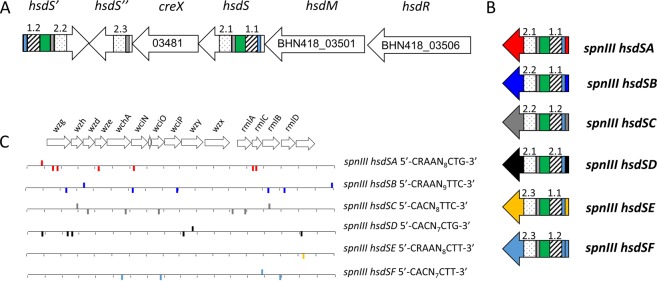
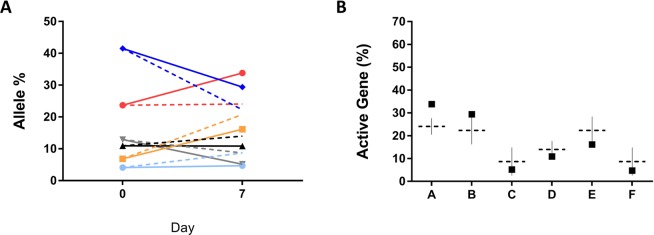
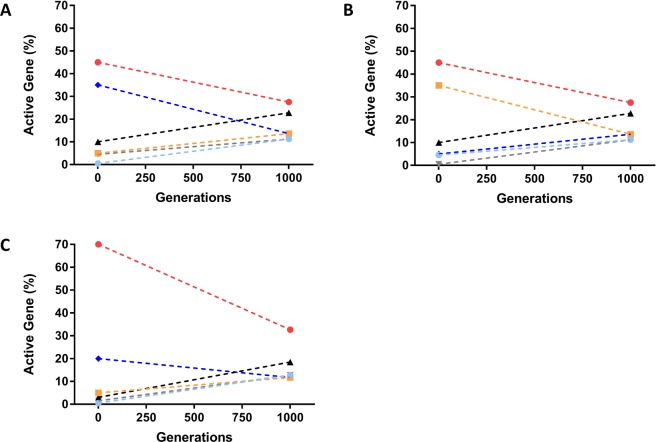
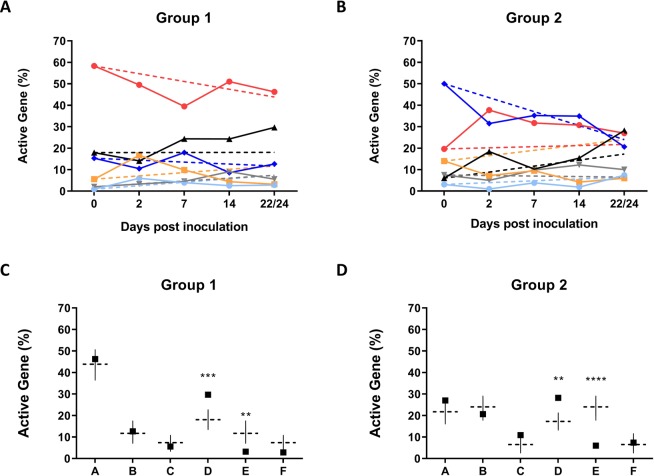
Streptococcus pneumoniae is one of the world's leading bacterial pathogens, responsible for pneumonia, septicaemia and meningitis. Asymptomatic colonisation of the nasopharynx is considered to be a prerequisite for these severe infections, however little is understood about the biological changes that permit the pneumococcus to switch from asymptomatic coloniser to invasive pathogen. A phase variable type I restriction-modification (R-M) system (SpnIII) has been linked to a change in capsule expression and to the ability to successfully colonise the murine nasopharynx. Using our laboratory data, we have developed a Markov change model that allows prediction of the expected level of phase variation within a population, and as a result measures when populations deviate from those expected at random. Using this model, we have analysed samples from the Experimental Human Pneumococcal Carriage (EHPC) project. Here we show, through mathematical modelling, that the patterns of dominant SpnIII alleles expressed in the human nasopharynx are significantly different than those predicted by stochastic switching alone. Our inter-disciplinary work demonstrates that the expression of alternative methylation patterns should be an important consideration in studies of pneumococcal colonisation.
肺炎链球菌是世界上主要的细菌病原体之一,可导致肺炎、败血症和脑膜炎。鼻咽部无症状定植被认为是这些严重感染的前提条件,但人们对允许肺炎链球菌从无症状定植者转变为侵袭性病原体的生物学变化知之甚少。一种时相变异的 I 型限制修饰(R-M)系统(SpnIII)已与荚膜表达的变化以及成功定植小鼠鼻咽部的能力相关联。利用我们实验室的数据,我们开发了一种马尔可夫变化模型,该模型可以预测群体中预期的时相变异水平,从而衡量群体何时偏离随机预期。利用该模型,我们分析了实验性人类肺炎链球菌定植(EHPC)项目的样本。在这里,我们通过数学建模表明,在人类鼻咽部表达的主要 SpnIII 等位基因的模式与单独随机转换预测的模式有显著差异。我们的跨学科工作表明,在肺炎链球菌定植研究中,替代甲基化模式的表达应该是一个重要的考虑因素。