Liu Dajiang, Yang Yuan, Yan Aiqin, Yang Yongxiu
Department of Obstetrics and Gynecology, The First Hospital of Lan Zhou University, Lanzhou, China.
The Reproductive Medicine Special Hospital, The First Hospital of Lanzhou University, Lanzhou, China.
Onco Targets Ther. 2020 Jan 15;13:351-359. doi: 10.2147/OTT.S200317. eCollection 2020.
Ovarian cancer (OC) is the most common type of gynecological malignant tumors with poor prognosis. The spen paralogue and orthologue C-terminal domain containing 1 (SPOCD1) is a newly identified molecule that has been indicated to discriminate progressive in human solid tumors. However, the role of SPOCD1 in OC remains unknown.
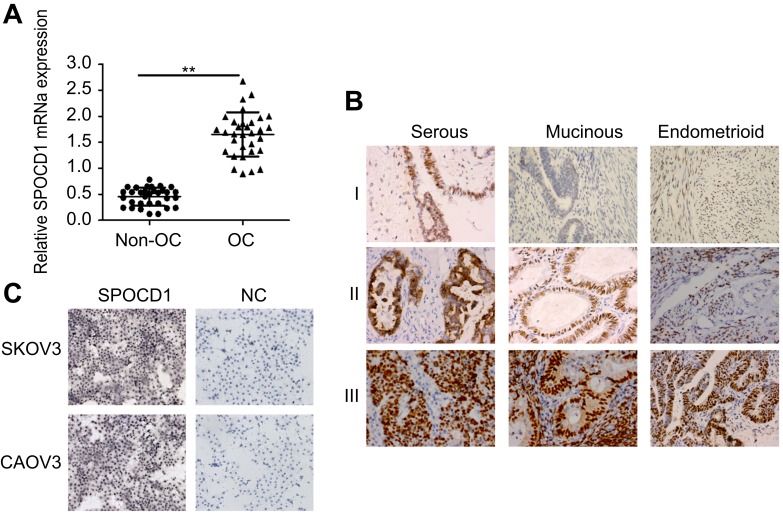
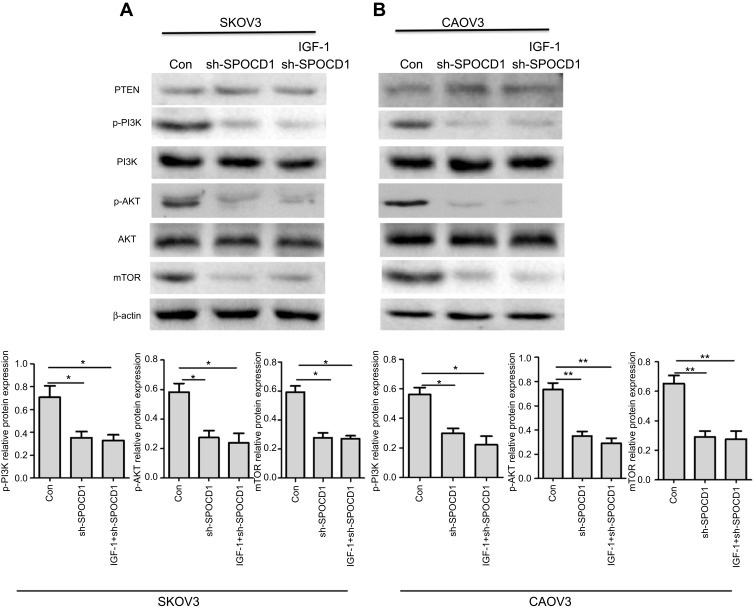
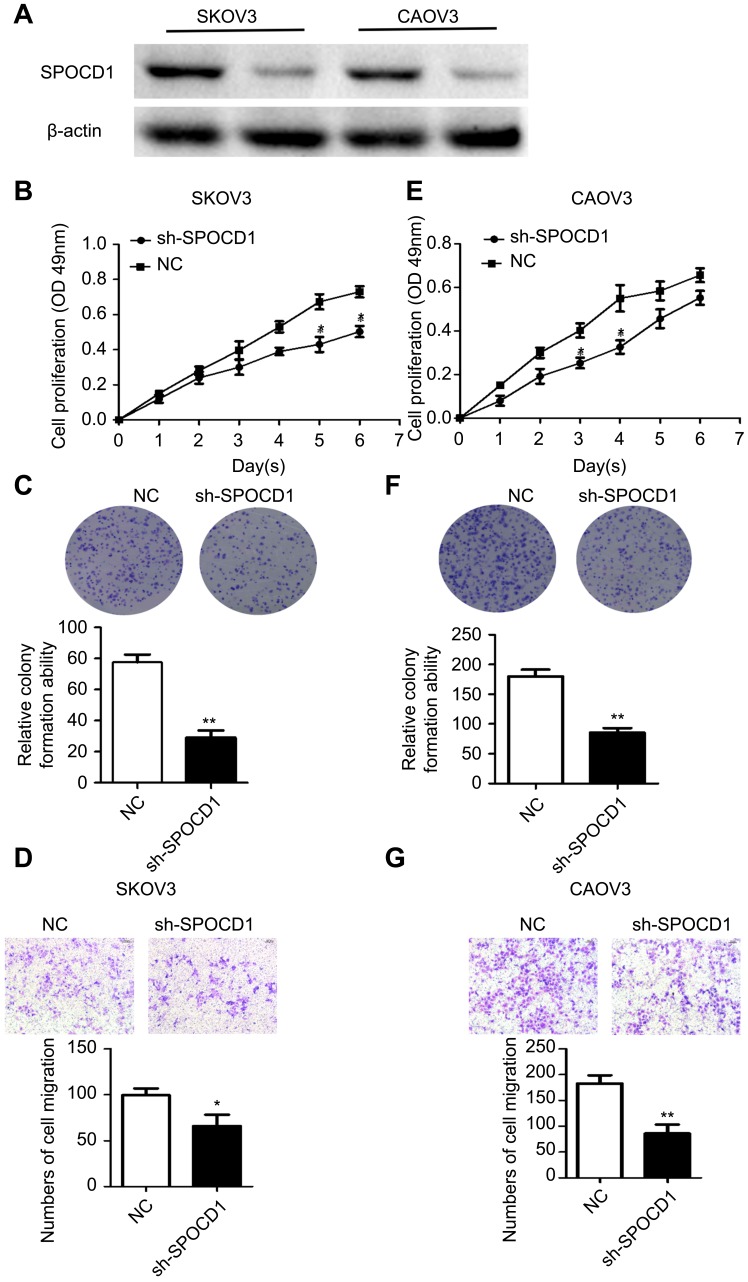
The expression of SPOCD1 in OC and non-cancerous tissue was detected by Realtime polymerase chain reaction and immunohistochemical staining. The expression of SPOCD1 in OC cells (SKOV3 and CAOV3) was also detected by immunohistochemical staining. The effect of SPOCD1 on cell proliferation was analyzed by Cell Counting Kit 8 and colony formation assay, and cell migration was analyzed by transwell assay. Apoptosis was analyzed by flow cytometry. The protein expression of SPOCD1, PTEN, PI3K, p-AKT, and mTOR in OC cells was measured by Western blot.
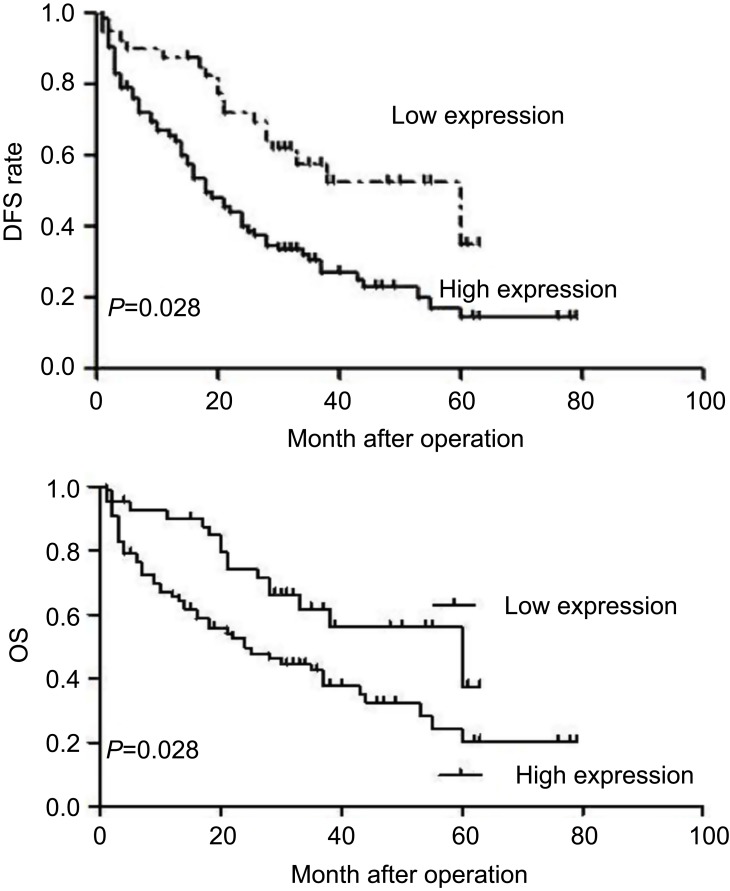
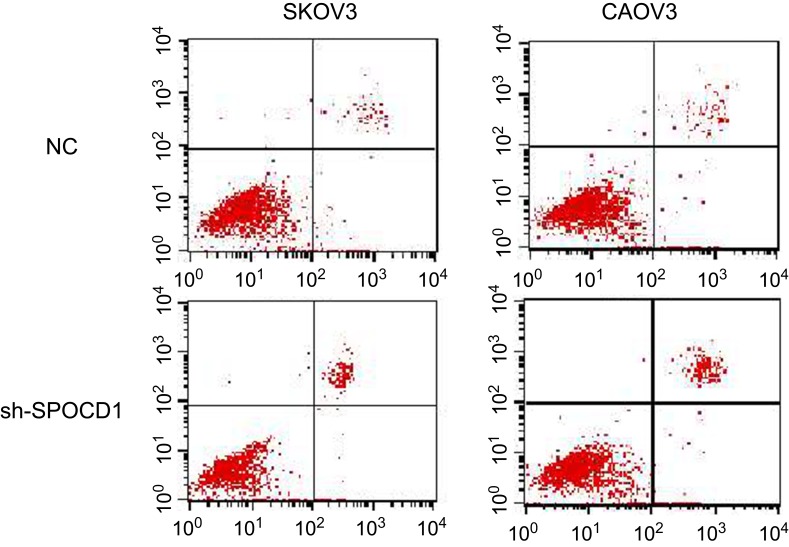
SPOCD1 expression was significantly upregulated in OC tissues compared with non-cancerous tissues (<0.01), and was positively correlated to FIGO stage and tumor grade of OC. Also, SPOCD1 was significantly expressed in nucleus and cytoplasm of SKOV3 and CAOV3 cells. Kaplan-Meier analysis indicated that patients with high SPOCD1 expression had shorter overall survival (HR =1.512, 95%CI: 1.321-2.793, =0.031) and progression-free survival (HR =1.875, 95%CI: 1.435-3.157, =0.028). SPOCD1 was upregulated in OC SKOV3 and CAOV3 cells. Further investigation revealed that downregulation of SPOCD1 inhibited the SKOV3 and CAOV3 cells proliferation and migration. In addition, the deficit of SPOCD1 increased the apoptosis in SKOV3 and CAOV3 cells. PI3K/AKT pathway was inhibited by knockdown of SPOCD1 in SKOV3 and CAOV3 cells.
Our data suggest that SPOCD1 may act as a carcinogenesis factor by activating the PI3K/AKT pathway to restrained cell apoptosis in OC.
卵巢癌(OC)是最常见的妇科恶性肿瘤类型,预后较差。含spen旁系同源物和直系同源物C末端结构域1(SPOCD1)是一种新发现的分子,已被证明可区分人类实体瘤的进展情况。然而,SPOCD1在OC中的作用尚不清楚。
通过实时聚合酶链反应和免疫组织化学染色检测SPOCD1在OC组织和非癌组织中的表达。还通过免疫组织化学染色检测SPOCD1在OC细胞(SKOV3和CAOV3)中的表达。采用细胞计数试剂盒8和集落形成试验分析SPOCD1对细胞增殖的影响,采用Transwell试验分析细胞迁移情况。通过流式细胞术分析细胞凋亡。用蛋白质免疫印迹法检测OC细胞中SPOCD1、PTEN、PI3K、p-AKT和mTOR的蛋白表达。
与非癌组织相比,OC组织中SPOCD1表达显著上调(<0.01),且与OC的国际妇产科联盟(FIGO)分期和肿瘤分级呈正相关。此外,SPOCD1在SKOV3和CAOV3细胞的细胞核和细胞质中均有显著表达。Kaplan-Meier分析表明,SPOCD1高表达的患者总生存期较短(HR =1.512,95%CI:1.321-2.793,P =0.031),无进展生存期较短(HR =1.875,95%CI:1.435-3.157,P =0.028)。SPOCD1在OC SKOV3和CAOV3细胞中上调。进一步研究发现,下调SPOCD1可抑制SKOV3和CAOV3细胞的增殖和迁移。此外,SPOCD1的缺失增加了SKOV3和CAOV3细胞的凋亡。在SKOV3和CAOV3细胞中,敲低SPOCD1可抑制PI3K/AKT通路。
我们的数据表明,SPOCD1可能通过激活PI3K/AKT通路抑制OC细胞凋亡而作为一种致癌因子。