Department of Clinical Laboratory, Fudan University Shanghai Cancer Center; Department of Oncology, Shanghai Medical School, Fudan University, Shanghai, 200032, China.
Department of Liver Surgery, Liver Cancer Institute, Zhongshan Hospital, Fudan University, Shanghai, 200032, China.
J Hematol Oncol. 2020 Feb 5;13(1):11. doi: 10.1186/s13045-020-0845-z.
Aberrant AKT activation contributes to cancer stem cell (CSC) traits in hepatocellular carcinoma (HCC). We previously reported that CD73 activated AKT signaling via the Rap1/P110β cascade. Here, we further explored the roles of CD73 in regulating CSC characteristics of HCC.
CD73 expression modulations were conducted by lentiviral transfections. CD73+ fractions were purified by magnetic-based sorting, and fluorescent-activated cell sorting was used to assess differentiation potentials. A sphere-forming assay was performed to evaluate CSC traits in vitro, subcutaneous NOD/SCID mice models were generated to assess in vivo CSC features, and colony formation assays assessed drug resistance capacities. Stemness-associated gene expression was also determined, and underlying mechanisms were investigated by evaluating immunoprecipitation and ubiquitylation.
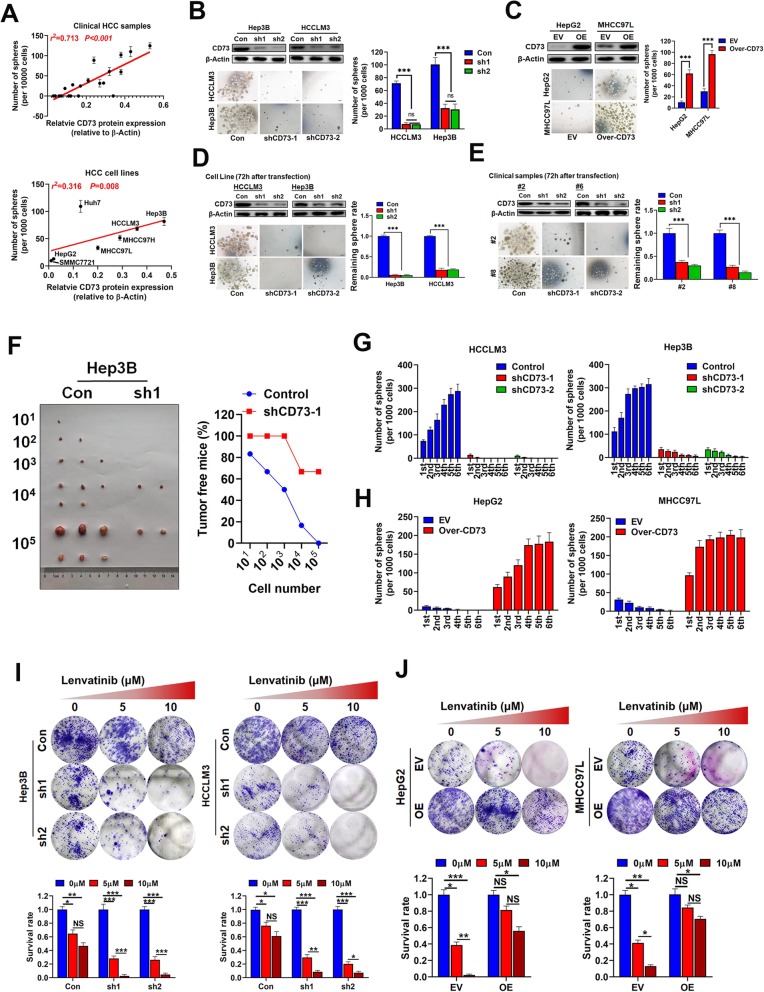
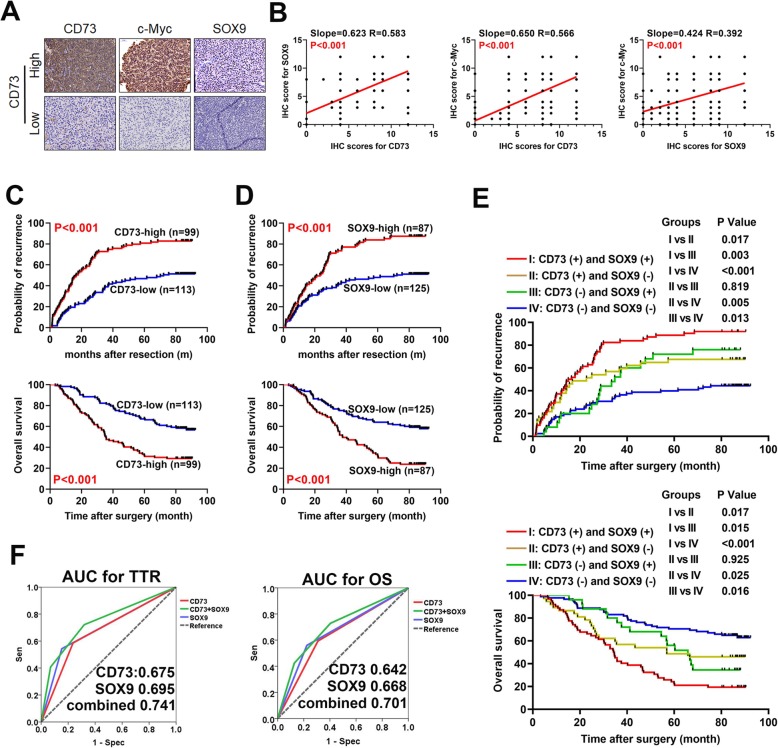
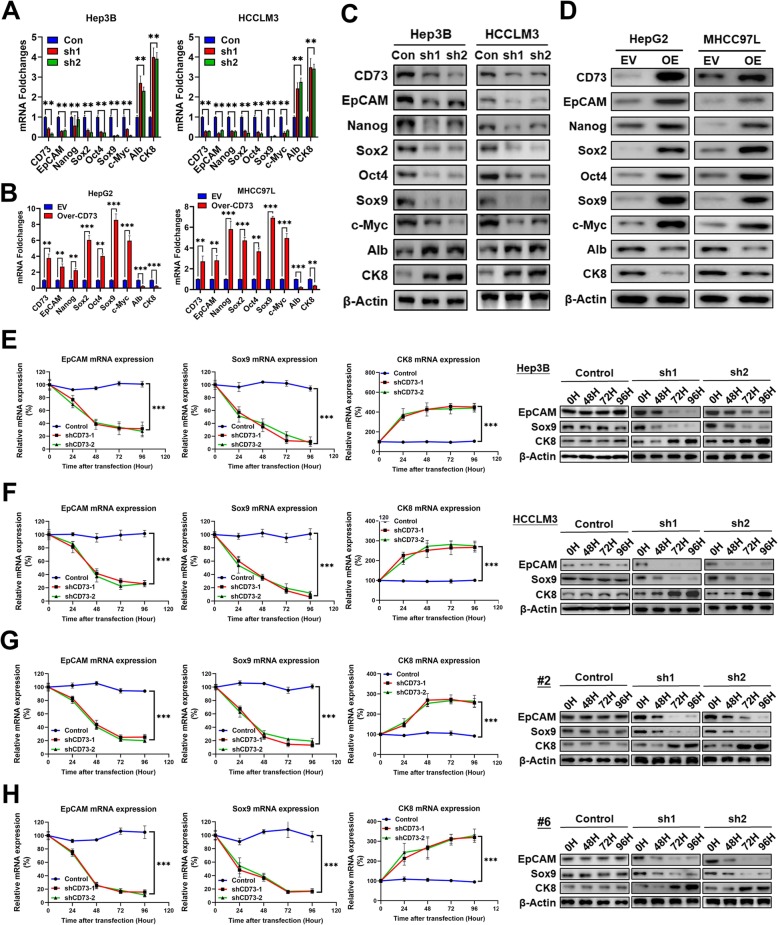
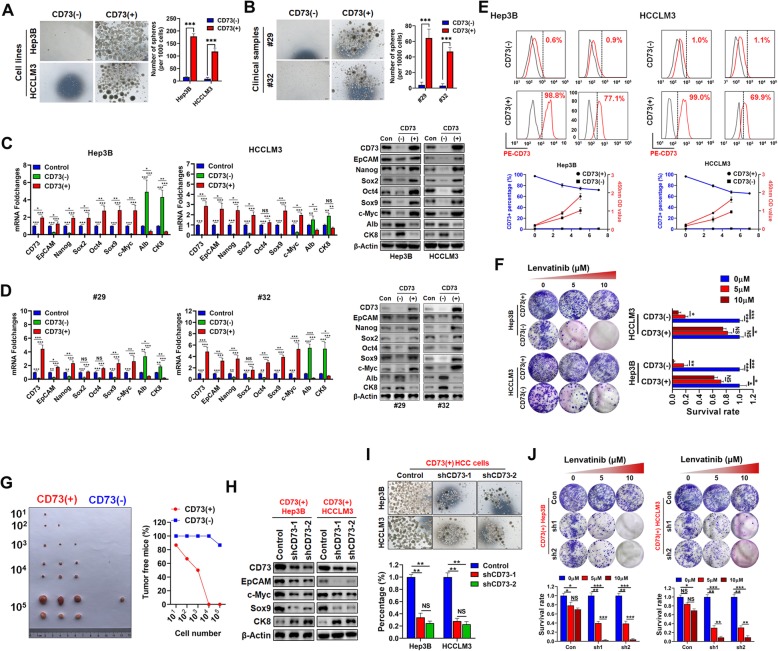
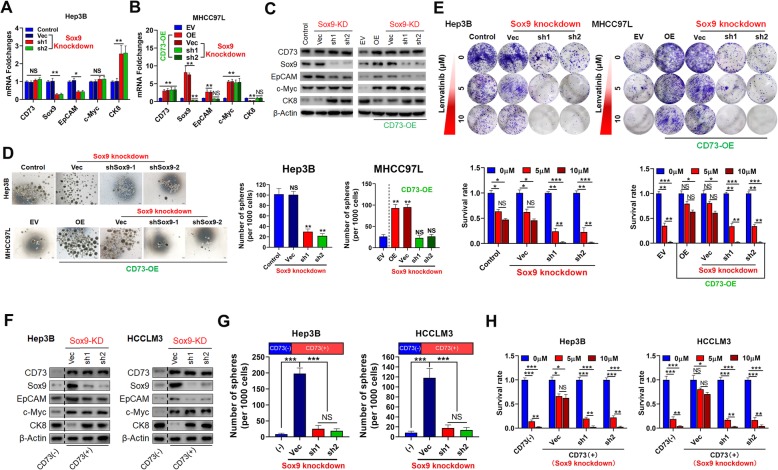
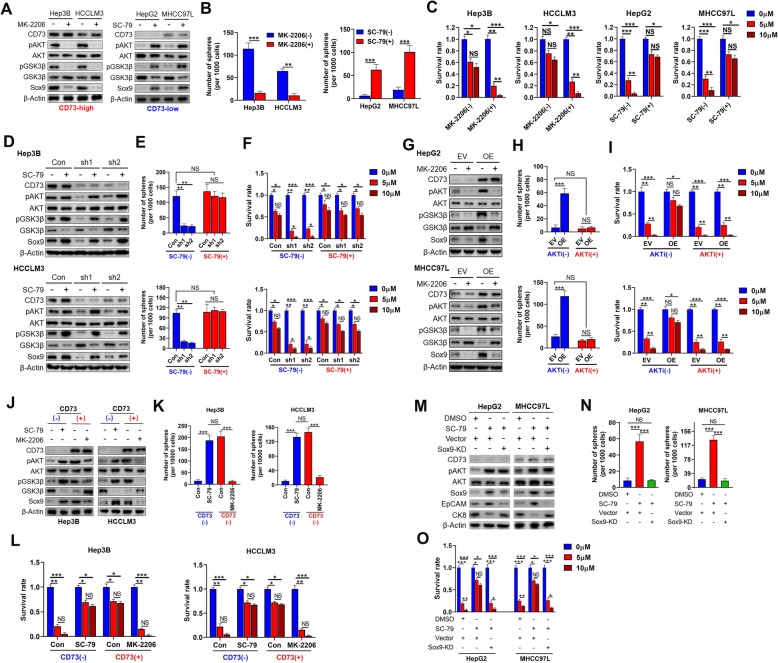
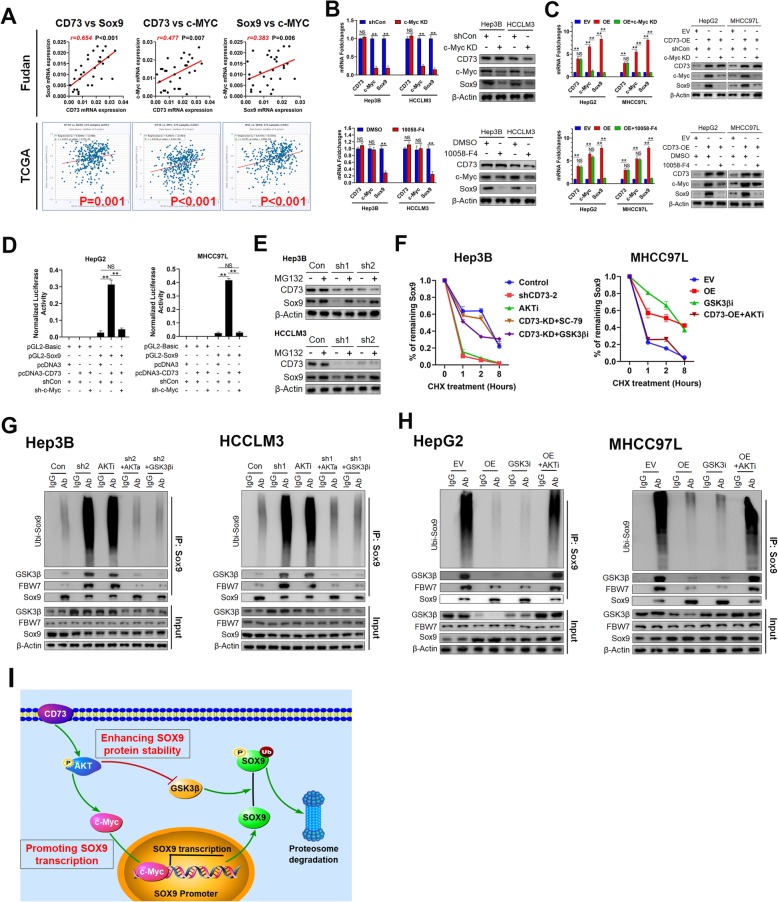
We found CD73 expression was positively associated with sphere-forming capacity and elevated in HCC spheroids. CD73 knockdown hindered sphere formation, Lenvatinib resistance, and stemness-associated gene expression, while CD73 overexpression achieved the opposite effects. Moreover, CD73 knockdown significantly inhibited the in vivo tumor propagation capacity. Notably, we found that CD73+ cells exhibited substantially stronger CSC traits than their CD73- counterparts. Mechanistically, CD73 exerted its pro-stemness activity through dual AKT-dependent mechanisms: activating SOX9 transcription via c-Myc, and preventing SOX9 degradation by inhibiting glycogen synthase kinase 3β. Clinically, the combined analysis of CD73 and SOX9 achieved a more accurate prediction of prognosis.
Collectively, CD73 plays a critical role in sustaining CSCs traits by upregulating SOX9 expression and enhancing its protein stability. Targeting CD73 might be a promising strategy to eradicate CSCs and reverse Lenvatinib resistance in HCC.
异常 AKT 激活导致肝癌(HCC)中的癌症干细胞(CSC)特征。我们之前报道过 CD73 通过 Rap1/P110β 级联激活 AKT 信号。在这里,我们进一步探讨了 CD73 在调节 HCC 的 CSC 特征中的作用。
通过慢病毒转染进行 CD73 表达调节。通过基于磁珠的分选纯化 CD73+ 分馏物,并用荧光激活细胞分选评估分化潜力。进行球体形成测定以评估体外 CSC 特征,生成皮下 NOD/SCID 小鼠模型以评估体内 CSC 特征,并进行集落形成测定评估耐药能力。还确定了与干性相关的基因表达,并通过评估免疫沉淀和泛素化来研究潜在机制。
我们发现 CD73 表达与球体形成能力呈正相关,并且在 HCC 球体中升高。CD73 敲低阻碍了球体形成、仑伐替尼耐药和与干性相关的基因表达,而 CD73 过表达则产生相反的效果。此外,CD73 敲低显著抑制了体内肿瘤传播能力。值得注意的是,我们发现 CD73+细胞表现出比其 CD73-对应物更强的 CSC 特征。从机制上讲,CD73 通过两种 AKT 依赖性机制发挥其促干性活性:通过 c-Myc 激活 SOX9 转录,以及通过抑制糖原合酶激酶 3β 防止 SOX9 降解。临床上,CD73 和 SOX9 的联合分析实现了对预后更准确的预测。
总之,CD73 通过上调 SOX9 表达并增强其蛋白质稳定性,在维持 CSCs 特征方面发挥关键作用。靶向 CD73 可能是一种有前途的策略,可以根除 HCC 中的 CSCs 并逆转仑伐替尼耐药性。