Wei Zhiqiang, Dong Chunjiao, Guan Liping, Wang Yafei, Huang Jianghai, Wen Xinzhu
1Orthopaedics Department, Dongfang Hospital, Beijing University of Chinese Medicine, Bejing, 100078 China.
Cardiology & Neurology Department, Beijing TongRen Tang Traditional Chinese Medicine Hospital, Bejing, 100051 China.
Chin Med. 2020 Feb 1;15:12. doi: 10.1186/s13020-020-0295-0. eCollection 2020.
Osteoarthritis (OA) is a metabolic disorder and able to be relieved by traditional Chinese medicines. However, the effect of on OA is unknown.
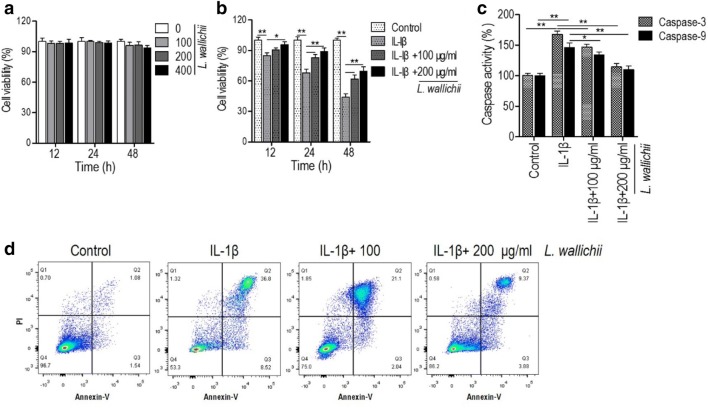
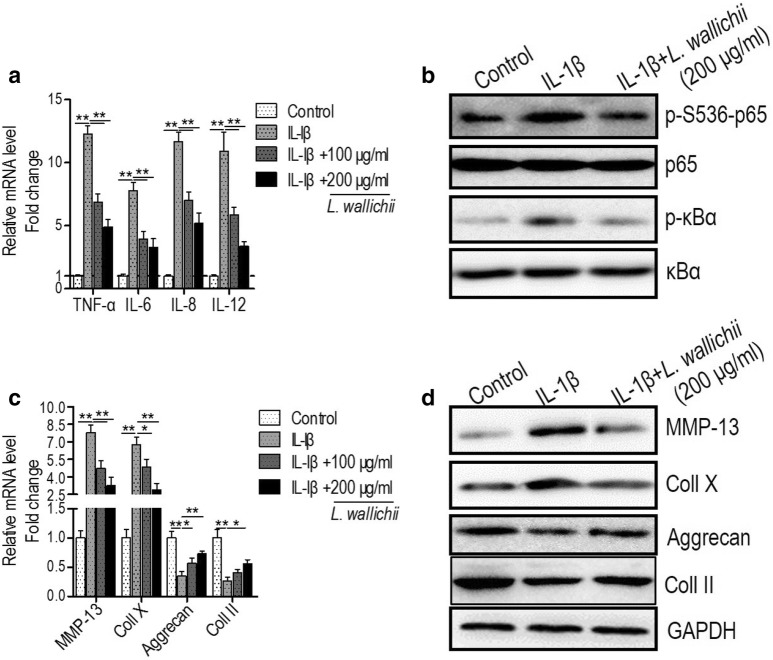
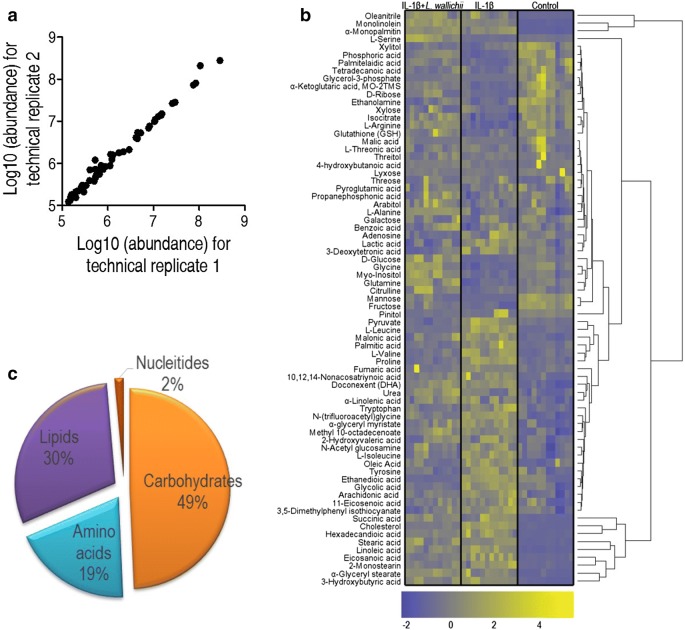
Cytokine IL-1β and extracts were used to stimulate the primary mouse chondrocytes. MTT assay was used to measure the cell viability. The mRNA and protein level of each gene were test by qRT-PCR and western blotting, respectively. The rate of apoptotic cell was measured by flow cytometry. GC/MS-based metabolomics was utilized to characterize the variation of metabolome.
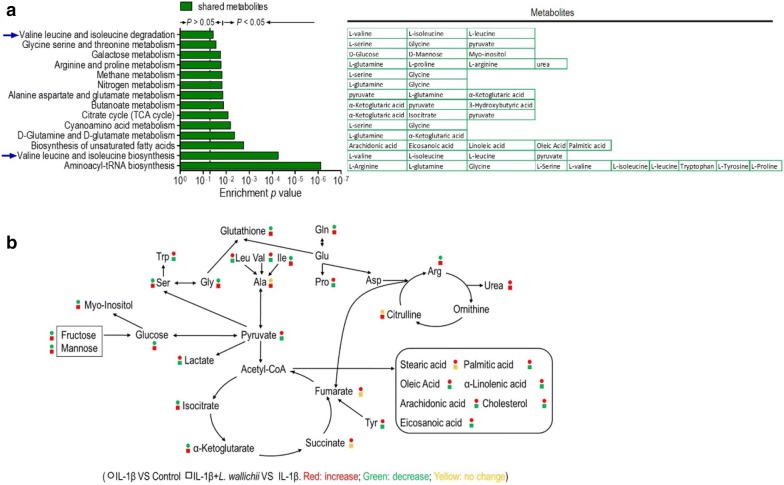
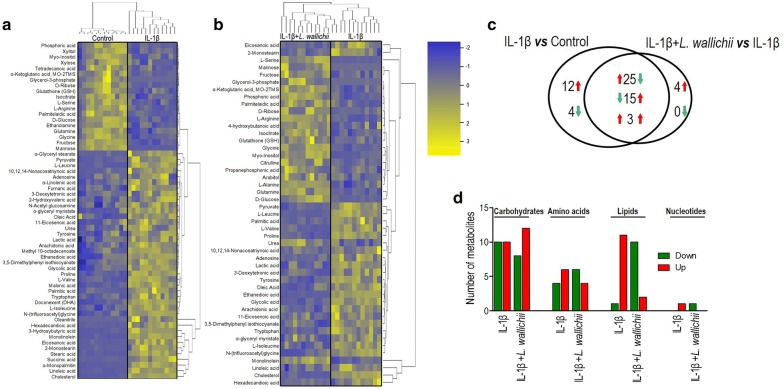
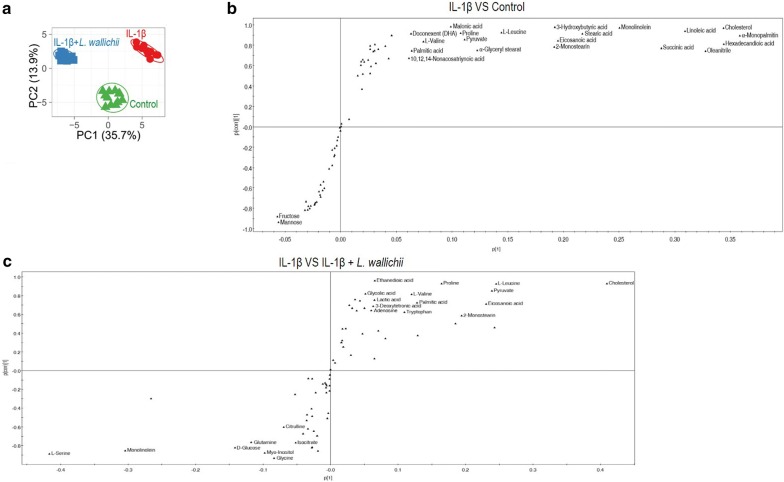
Here, we found that attenuated the IL-1β-induced apoptosis, inflammatory response, and extracellular matrix (ECM) degradation in mouse chondrocytes. Then we used GC/MS-based metabolomics to characterize the variation of metabolomes. The established metabolic profile of mouse chondrocytes showed that the abundance of most metabolites (= 40) altered by IL-1β stimulation could be repressed by treatment. Multivariate data analysis identified that cholesterol, linoleic acid, hexadecandioic acid, proline, l-valine, l-leucine, pyruvate, palmitic acid, and proline are the most key biomarkers for understanding the metabolic role of in IL-1β-treated chondrocytes. Further pathway analysis using these metabolites enriched fourteen metabolic pathways, which were dramatically changed in IL-1β-treated chondrocytes and capable of being reprogrammed by incubation. These enriched pathways were involved in carbon metabolisms, fatty acid biosynthesis, and amino acid metabolisms.
These findings provide potential clues that metabolic strategies are linked to protective mechanisms of treatment in IL-1β-stimulated chondrocytes and emphasize the importance of metabolic strategies against inflammatory responses in OA development.
骨关节炎(OA)是一种代谢紊乱疾病,可用中药缓解。然而,[具体药物名称]对OA的作用尚不清楚。
使用细胞因子IL-1β和[具体药物名称]提取物刺激原代小鼠软骨细胞。采用MTT法检测细胞活力。分别通过qRT-PCR和蛋白质印迹法检测各基因的mRNA和蛋白质水平。通过流式细胞术检测凋亡细胞率。利用基于气相色谱/质谱联用的代谢组学技术表征代谢组的变化。
在此,我们发现[具体药物名称]可减轻IL-1β诱导的小鼠软骨细胞凋亡、炎症反应和细胞外基质(ECM)降解。然后我们使用基于气相色谱/质谱联用的代谢组学技术表征代谢组的变化。所建立的小鼠软骨细胞代谢谱表明,IL-1β刺激引起的大多数代谢物(n = 40)丰度变化可被[具体药物名称]处理所抑制。多变量数据分析确定胆固醇、亚油酸、十六烷二酸、脯氨酸、L-缬氨酸、L-亮氨酸、丙酮酸、棕榈酸和脯氨酸是理解[具体药物名称]在IL-1β处理的软骨细胞中代谢作用的最关键生物标志物。使用这些代谢物进行的进一步通路分析富集了14条代谢通路,这些通路在IL-1β处理的软骨细胞中发生了显著变化,并且能够通过[具体药物名称]孵育进行重新编程。这些富集的通路涉及碳代谢、脂肪酸生物合成和氨基酸代谢。
这些发现提供了潜在线索,表明代谢策略与[具体药物名称]在IL-1β刺激的软骨细胞中的保护机制相关,并强调了代谢策略在OA发展中对抗炎症反应的重要性。