von Wild Tobias, Brunelli Giorgio A, von Wild Klaus R H, Löhnhardt Marlene, Catoi Cornel, Catoi Adriana Florinela, Vester Johannes C, Strilciuc Stefan, Trillenberg Peter
Department of Plastic Reconstructive and Aesthetic Surgery, Hand Surgery, Praxisklinik in der Alster City, Hamburg, Germany.
School of Specialists in Orthopedics, Traumatology, Hand and Microsurgery, University of Brescia, Brescia, Italy.
J Med Life. 2019 Oct-Dec;12(4):342-353. doi: 10.25122/jml-2019-0063.
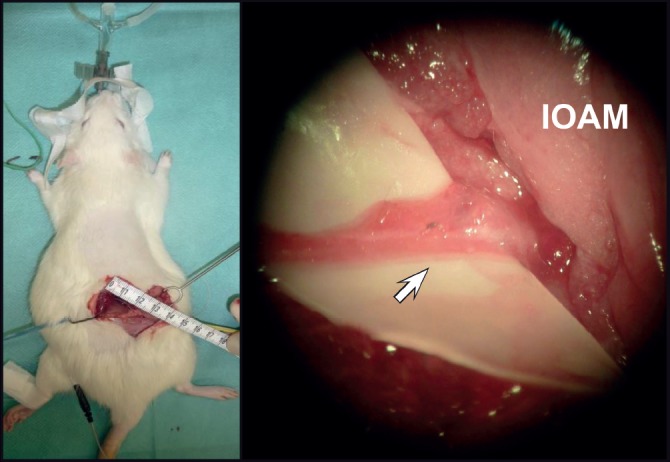
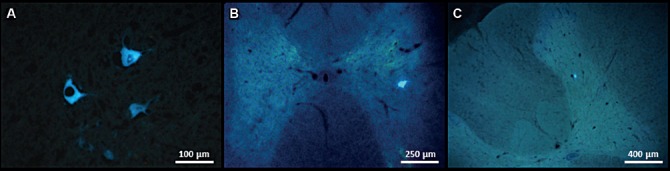
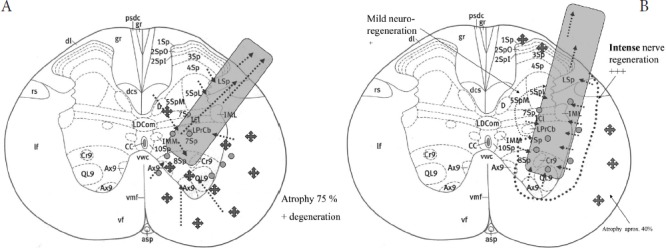
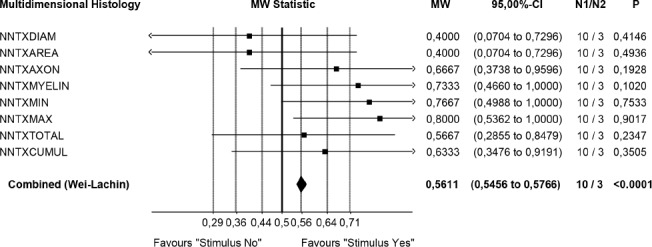
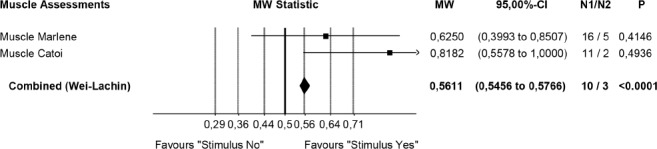
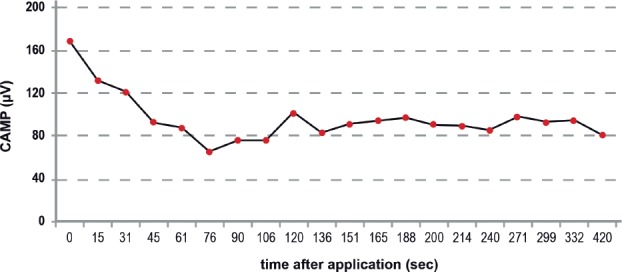
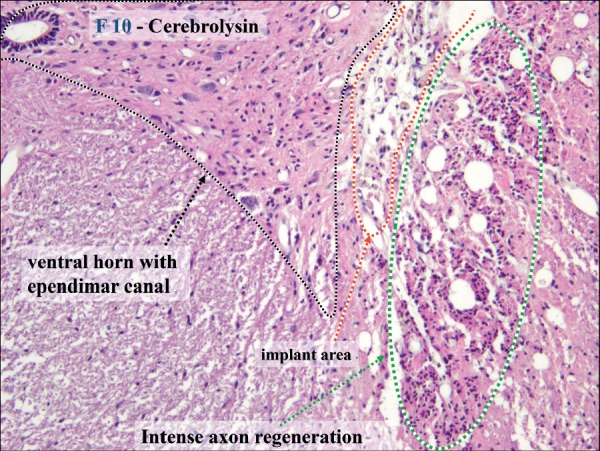
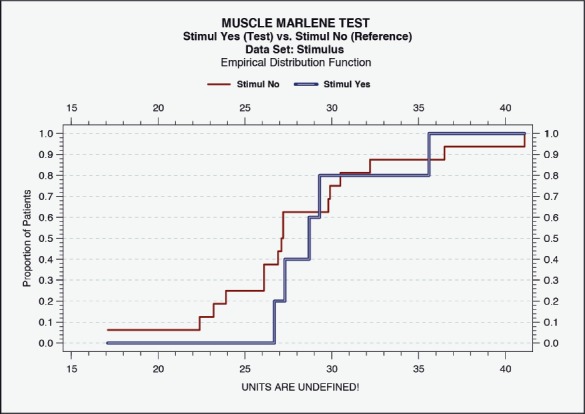
The restoration of voluntary muscle activity in posttraumatic paraplegia in both animal experiments and other clinical applications requires reproducibility of a technically-demanding microsurgical procedure, limited by physicians' understanding of Brunelli's spinal cord grafting paradigm. The insufficient clinical investigation of the long-term benefits of the CNS-PNS graft application warrants additional inquiry. The objective of this study is to explore the potential benefits of the first replicated, graft-induced neuroregeneration of denervated skeletal muscle regarding long-term clinical outcomes and to investigate the effect of Cerebrolysin on neuromodulation. A randomized study evaluating 30 rats, approved by the National Animal Ethics Advisory Committee was performed. The medication was administered postoperatively. For 14 days, 12 rats received Cerebrolysin (serum), 11 received NaCl 0.9% (shams), and 7 were controls. For microsurgery, the lateral corticospinal tract T10 was grafted to the denervated internal obliquus abdominal muscle. On day 90, intraoperative proof of reinnervation was observed. On day 100, 15 rats were euthanized for fixation, organ removal, and extensive histology-morphology examination, and the Wei-Lachin statistical procedure was employed. After an open revision of 16 rats, 8 were CMAP positive. After intravenous Vecuronium application, two (Cerebrolysin, NaCl) out of two rats showed an incomplete compound muscle action potential (CMAP) loss due to glutamatergic and cholinergic co-transmission, while two others showed a complete loss of amplitude. Cerebrolysin medication initiated larger restored muscle fiber diameters and less scarring. FB+ neurons were not observed in the brain but were observed in the Rexed laminae. Brunelli's concept was successfully replicated, demonstrating the first graft induced existence of cholinergic and glutamatergic neurotransmission in denervated grafted muscles. Statistics of the histometric count of muscle fibers revealed larger fiber diameters after Cerebrolysin. Brunelli's CNS-PNS experimental concept is suitable to analyze graft-neuroplasticity focused on the voluntary restoration of denervated skeletal muscles in spinal cord injury. Neuroprotection by Cerebrolysin is demonstrated.
在动物实验和其他临床应用中,创伤后截瘫患者自主肌肉活动的恢复需要一种技术要求较高的显微外科手术具备可重复性,但这受到医生对布鲁内利脊髓移植模式理解的限制。中枢神经系统-外周神经系统移植应用长期益处的临床研究不足,需要进一步探究。本研究的目的是探讨首次复制的、移植诱导的失神经骨骼肌神经再生对长期临床结果的潜在益处,并研究脑蛋白水解物对神经调节的作用。进行了一项经国家动物伦理咨询委员会批准的随机研究,评估30只大鼠。术后给予药物治疗。14天内,12只大鼠接受脑蛋白水解物(血清),11只接受0.9%氯化钠(假手术组),7只为对照组。对于显微手术,将胸10侧皮质脊髓束移植到失神经的腹内斜肌。在第90天,观察到术中再支配的证据。在第100天,对15只大鼠实施安乐死以进行固定、器官切除和广泛的组织学-形态学检查,并采用魏-拉钦统计程序。对16只大鼠进行开放性翻修后,8只呈复合肌肉动作电位(CMAP)阳性。静脉注射维库溴铵后,两只大鼠(脑蛋白水解物组、氯化钠组)中的两只由于谷氨酸能和胆碱能共同传递而出现不完全复合肌肉动作电位(CMAP)丧失,而另外两只则出现幅度完全丧失。脑蛋白水解物药物治疗使恢复的肌纤维直径更大,瘢痕形成更少。在大脑中未观察到FB +神经元,但在 Rexed板层中观察到。布鲁内利的概念成功复制,证明了首次移植诱导失神经移植肌肉中存在胆碱能和谷氨酸能神经传递。肌肉纤维组织计量计数统计显示,脑蛋白水解物治疗后纤维直径更大。布鲁内利的中枢神经系统-外周神经系统实验概念适用于分析聚焦于脊髓损伤中失神经骨骼肌自主恢复的移植神经可塑性。证明了脑蛋白水解物的神经保护作用。