Army Tuberculosis Prevention and Control Key Laboratory/Beijing Key Laboratory of New Techniques of Tuberculosis Diagnosis and Treatment, Institute for Tuberculosis Research, The 8 Medical Center of Chinese PLA General Hospital, 17 Heishanhu Road, Haidian District, Beijing 100091, China.
Biomed Res Int. 2020 Jan 2;2020:4263079. doi: 10.1155/2020/4263079. eCollection 2020.
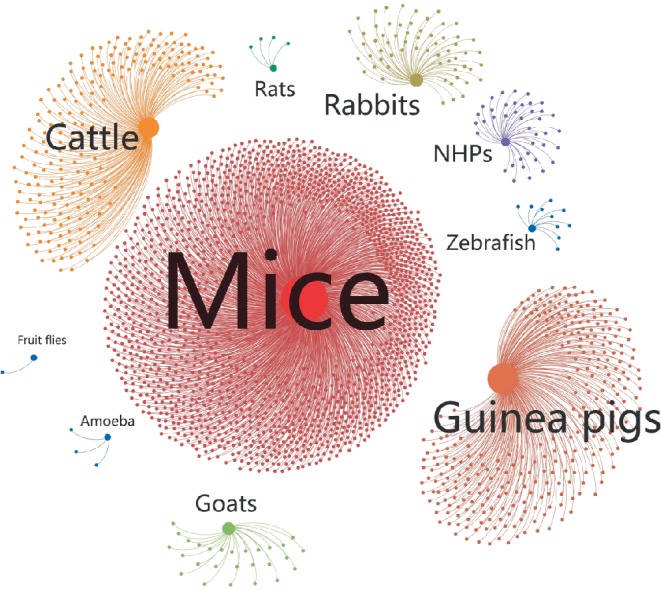
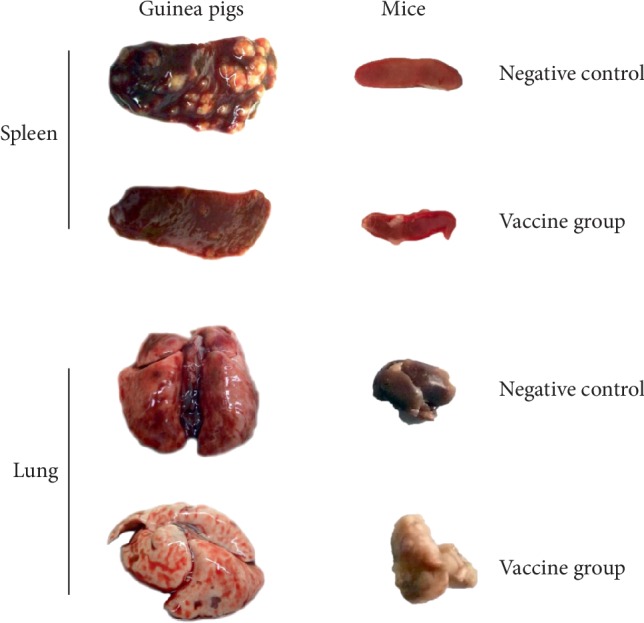
Tuberculosis (TB), an infectious disease caused by , is one of the top ten infectious diseases worldwide, and is the leading cause of morbidity from a single infectious agent. can cause infection in several species of animals in addition to humans as the natural hosts. Although animal models of TB disease cannot completely simulate the occurrence and development of human TB, they play an important role in studying the pathogenesis, immune responses, and pathological changes as well as for vaccine research. This review summarizes the commonly employed animal models, including mouse, guinea pig, rabbit, rat, goat, cattle, and nonhuman primates, and their characteristics as used in TB vaccine research, and provides a basis for selecting appropriate animal models according to specific research needs. Furthermore, some of the newest animal models used for TB vaccine research (such as humanized animal models, zebrafish, , and amoeba) are introduced, and their characteristics and research progress are discussed.
结核病(TB)是由引起的传染病,是全球十大传染病之一,也是单一感染源导致发病率最高的疾病。除人类外,还可以在几种动物物种中引起感染,这些动物是其自然宿主。尽管结核病疾病的动物模型不能完全模拟人类结核病的发生和发展,但它们在研究发病机制、免疫反应和病理变化以及疫苗研究方面发挥着重要作用。本文综述了常用于结核病疫苗研究的动物模型,包括小鼠、豚鼠、兔、大鼠、山羊、牛和非人类灵长类动物,及其在结核病疫苗研究中的特点,并为根据具体研究需求选择合适的动物模型提供了依据。此外,还介绍了一些用于结核病疫苗研究的最新动物模型(如人源化动物模型、斑马鱼、和阿米巴),并讨论了它们的特点和研究进展。