Department of Laboratory Medicine, Affiliated Hospital of North Sichuan Medical College, Nanchong, China.
Department of Laboratory Medicine, North Sichuan Medical College, Nanchong, China.
FEBS Open Bio. 2020 Apr;10(4):535-545. doi: 10.1002/2211-5463.12806. Epub 2020 Mar 6.
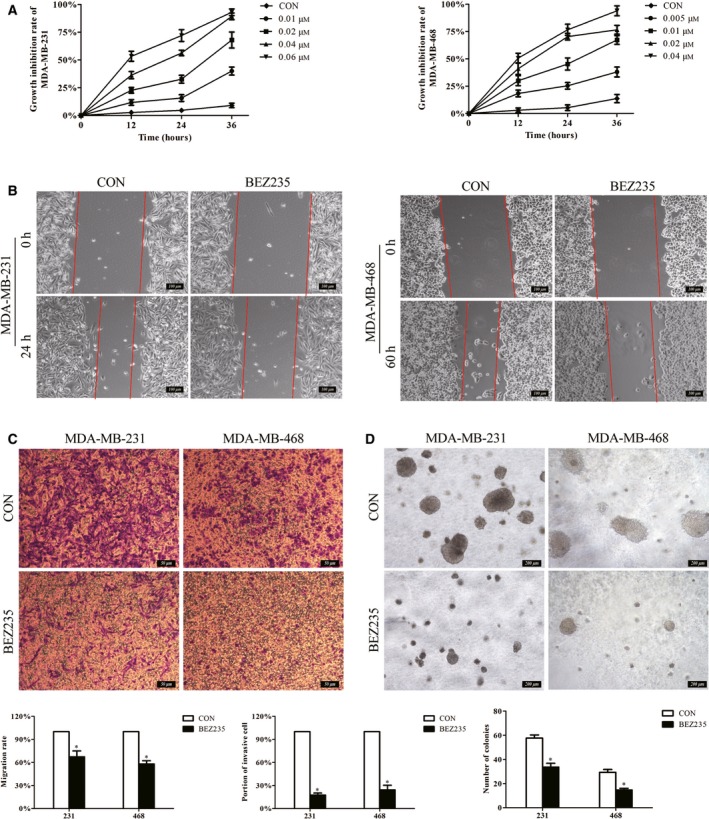
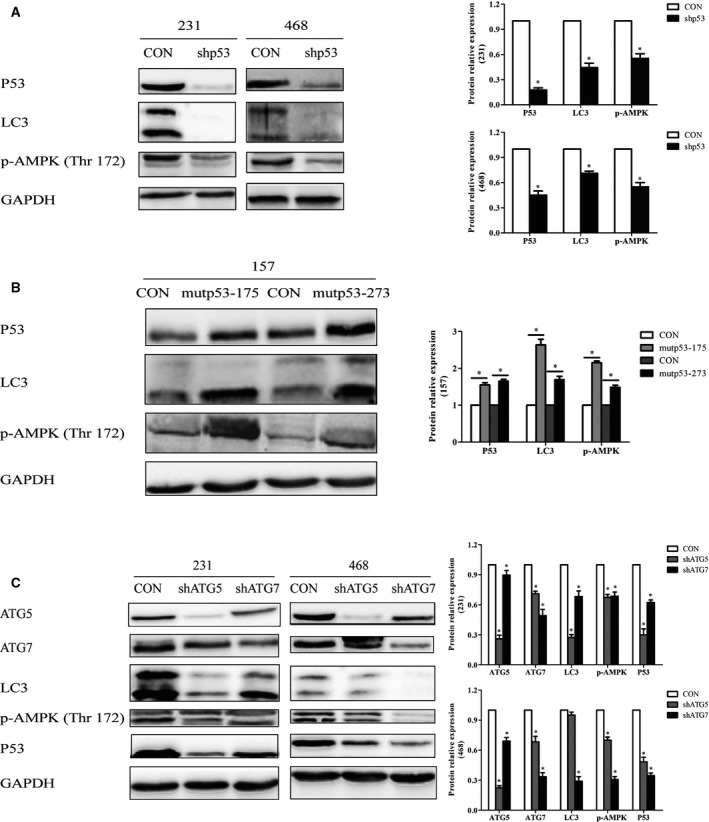
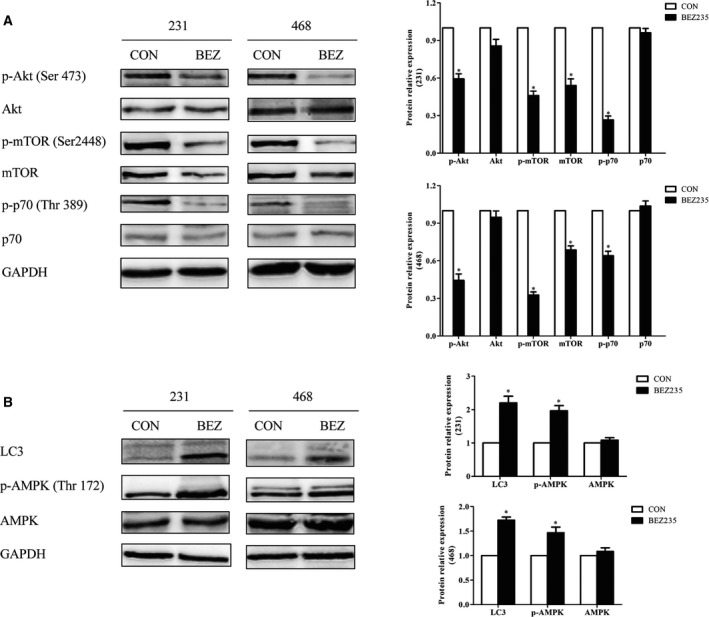
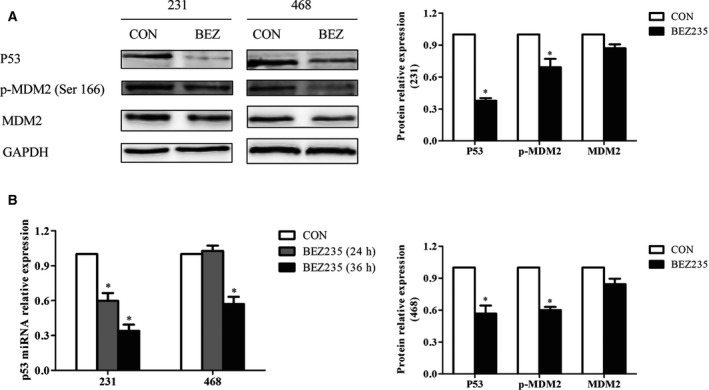
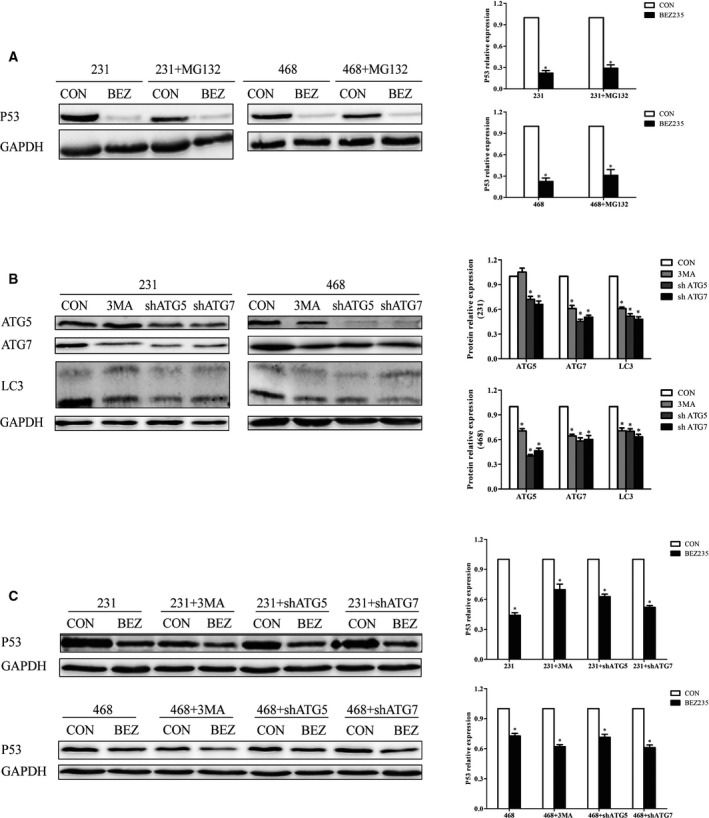
Nearly half of human cancers harbor p53 mutations, and mutant p53 (mutp53) promotes carcinogenesis, metastasis, tumor recurrence and chemoresistance. mutp53 is observed in 30% of breast carcinomas, including triple-negative breast cancer (TNBC), and thus mutp53 is a promising target for treatment of TNBC. In this study, we investigated the effect of a phosphatidylinositide 3 kinase/mammalian target of rapamycin dual inhibitor, NVP-BEZ235 (BEZ235), on two TNBC cell lines with mutp53: MDA-MB-231 and MDA-MB-468. Cell growth, migration and colony-formation abilities were detected by 3-(4,5-dimethylthiazol-2-yl)-2,5-diphenyl-tetrazolium bromide, scratch assay, transwell and soft agar assay, revealing that BEZ235 can inhibit the growth, migration and colony-formation abilities of TNBC cells. In addition, BEZ235 caused degradation of mutp53 in these cells. We investigated the underlying mechanism by inhibiting proteasome function using MG132 and inhibiting autophagy using 3-methyladenine and shRNAs. We observed that BEZ235 may induce autophagy through repression of the Akt/mammalian target of rapamycin signaling pathway. The observed interplay between mutp53 and autophagy in TNBC cells was examined further by knockdown of ATG5 and ATG7, revealing that degradation of mutp53 induced by BEZ235 may be independent of the ubiquitin-proteasome pathway and autophagy mediated by ATG5 and ATG7. Moreover, we found evidence of positive feedback between mutp53 and autophagy in TNBC cells. In conclusion, BEZ235 may exert antitumor effects against TNBC cells by targeting mutp53, and this may have implications for the development of future therapies.
近一半的人类癌症存在 p53 突变,突变型 p53(mutp53)促进致癌、转移、肿瘤复发和化疗耐药。mutp53 存在于 30%的乳腺癌中,包括三阴性乳腺癌(TNBC),因此 mutp53 是治疗 TNBC 的一个有前途的靶点。在这项研究中,我们研究了磷酸肌醇 3 激酶/雷帕霉素哺乳动物靶蛋白双重抑制剂 NVP-BEZ235(BEZ235)对两种带有 mutp53 的 TNBC 细胞系 MDA-MB-231 和 MDA-MB-468 的影响。通过 3-(4,5-二甲基噻唑-2-基)-2,5-二苯基四氮唑溴盐(MTT)比色法、划痕实验、Transwell 实验和软琼脂实验检测细胞生长、迁移和集落形成能力,结果表明 BEZ235 可以抑制 TNBC 细胞的生长、迁移和集落形成能力。此外,BEZ235 导致这些细胞中 mutp53 的降解。我们通过使用 MG132 抑制蛋白酶体功能和使用 3-甲基腺嘌呤和 shRNA 抑制自噬来研究潜在的机制。我们观察到,BEZ235 可能通过抑制 Akt/雷帕霉素哺乳动物靶蛋白信号通路诱导自噬。通过敲低 ATG5 和 ATG7 进一步研究了 TNBC 细胞中 mutp53 和自噬之间的相互作用,结果表明,BEZ235 诱导的 mutp53 降解可能不依赖于泛素-蛋白酶体途径和由 ATG5 和 ATG7 介导的自噬。此外,我们发现 TNBC 细胞中 mutp53 和自噬之间存在正反馈。总之,BEZ235 可能通过靶向 mutp53 对 TNBC 细胞发挥抗肿瘤作用,这可能对未来治疗方法的发展具有重要意义。