Mutagenesis and Cancer Prevention Unit, IRCCS Ospedale Policlinico San Martino, Genoa 16132, Italy.
Mutagenesis and Cancer Prevention Unit, IRCCS Ospedale Policlinico San Martino, Genoa 16132, Italy
Biosci Rep. 2019 Feb 19;39(2). doi: 10.1042/BSR20181345. Print 2019 Feb 28.
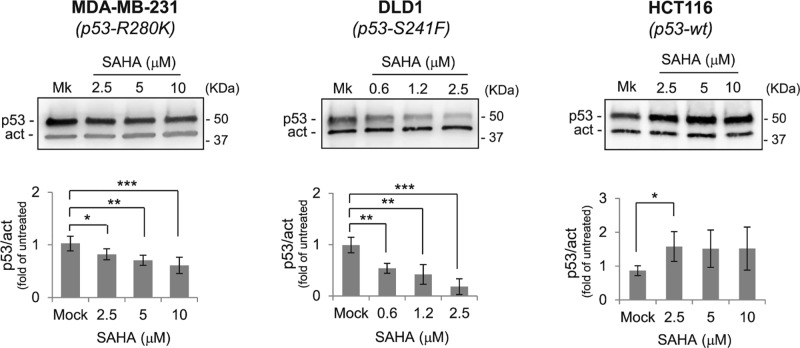
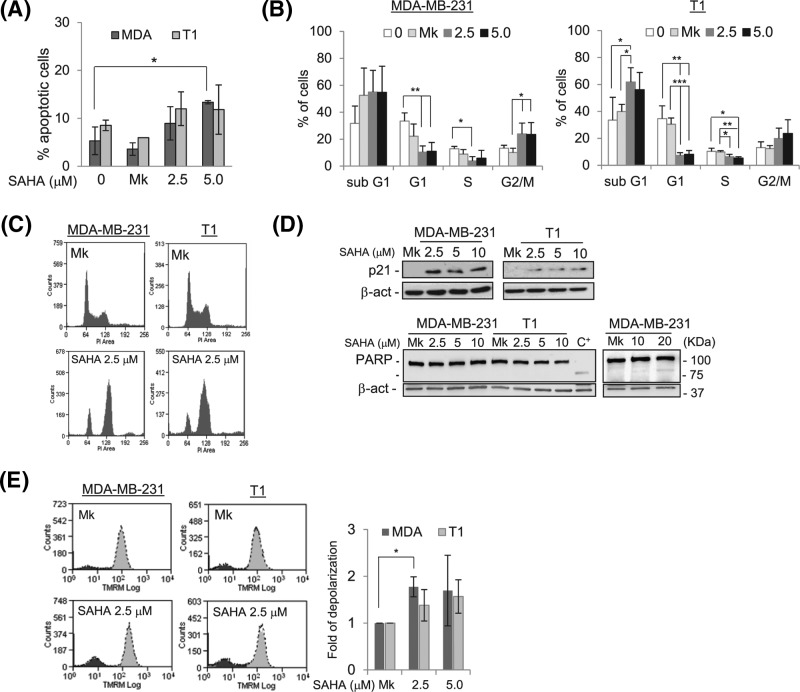
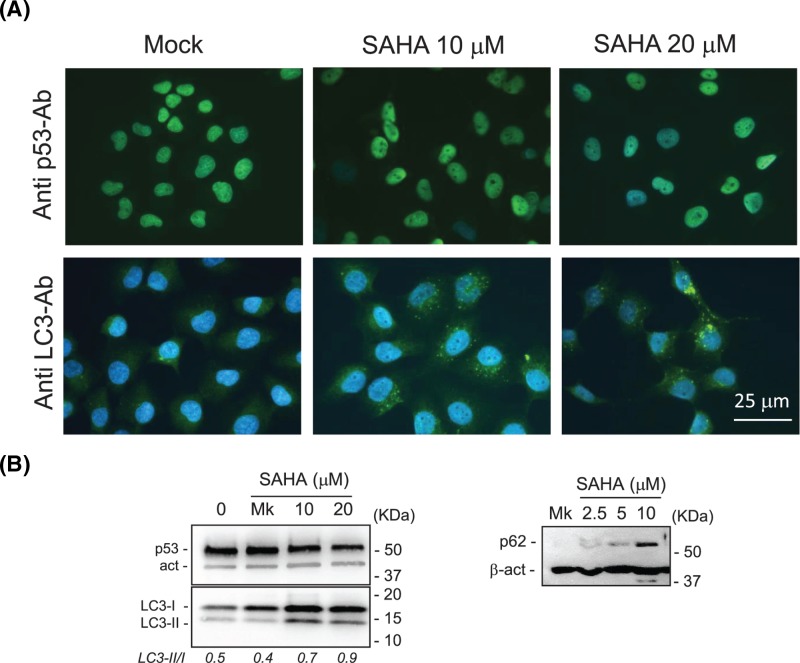
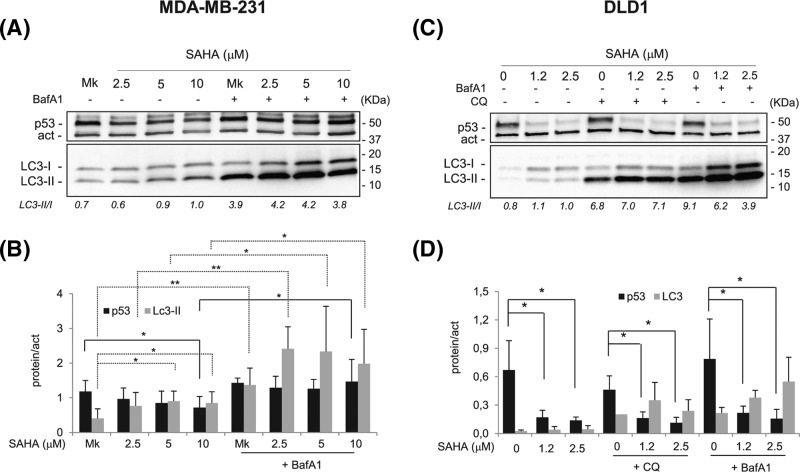
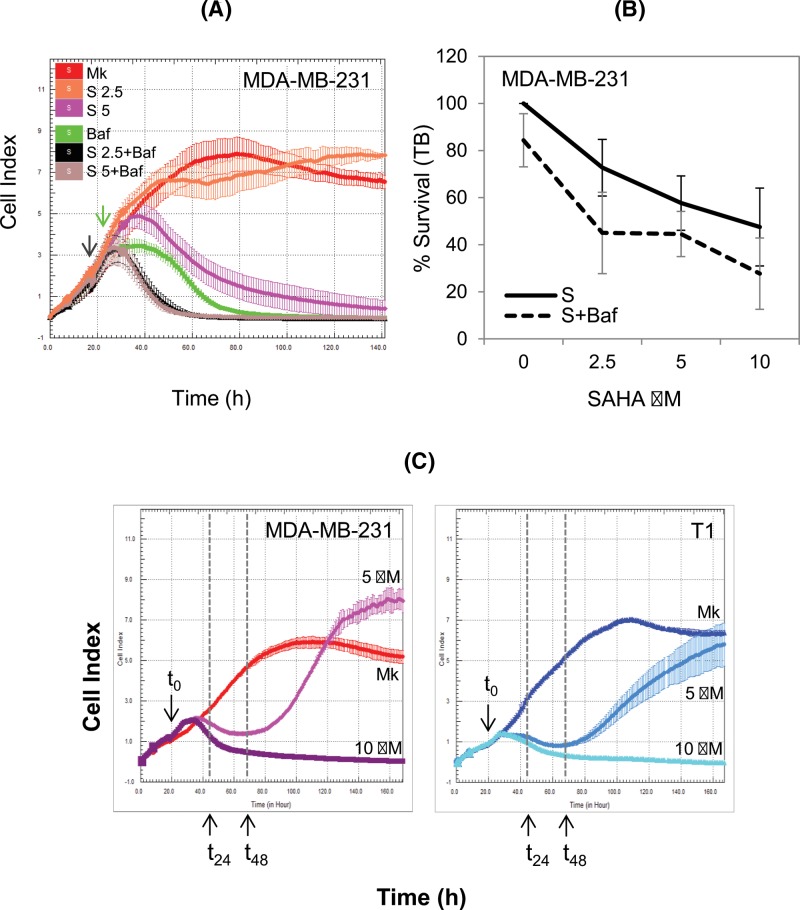
Missense mutations in the gene produce mutant p53 (mutp53) proteins which may acquire oncogenic properties favoring chemoresistance, cell migration, and metastasis. The exploitation of cellular pathways that promote mutp53 degradation may reduce cell proliferation and invasion as well as increase the sensitivity to anticancer drugs, with a strong impact on current cancer therapies. In the last years, several molecules have been characterized for their ability to induce the degradation of mutp53 through the activation of autophagy. Here, we investigated the correlation between autophagy and mutp53 degradation induced by suberoylanilide hydroxamic acid (SAHA), an FDA-approved histone deacetylase inhibitor. In the human cancer lines MDA-MB-231 (mutp53-R280K) and DLD1 (mutp53-S241F), SAHA induced a significant mutp53 degradation. However, such degradation correlated with autophagy induction only in MDA-MB-231 cells, being counteracted by autophagy inhibition, which also increased SAHA-induced cell death. Conversely, in DLD1 cells SAHA triggered a low level of autophagy despite promoting a strong decrease in mutp53 level, and autophagy inhibition did not change either mutp53 levels or sensitivity to this drug. We conclude that autophagy can be a relevant pathway for mutp53 degradation induced by SAHA, but its contribution to mutp53 destabilization and the consequences on cell death are likely context-dependent.
错义突变导致基因产生突变 p53(mutp53)蛋白,这些蛋白可能获得致癌特性,促进化疗耐药、细胞迁移和转移。利用促进 mutp53 降解的细胞途径可能会降低细胞增殖和侵袭,并增加对抗癌药物的敏感性,对当前的癌症治疗产生重大影响。在过去的几年中,已经有几种分子因其能够通过激活自噬诱导 mutp53 降解的能力而被描述。在这里,我们研究了自噬与琥珀酰亚胺羟肟酸(SAHA)诱导的 mutp53 降解之间的相关性,SAHA 是一种获得 FDA 批准的组蛋白去乙酰化酶抑制剂。在人类癌症系 MDA-MB-231(mutp53-R280K)和 DLD1(mutp53-S241F)中,SAHA 诱导了显著的 mutp53 降解。然而,这种降解仅在 MDA-MB-231 细胞中与自噬诱导相关,自噬抑制会拮抗这种降解,同时增加 SAHA 诱导的细胞死亡。相反,在 DLD1 细胞中,尽管 SAHA 强烈降低 mutp53 水平,但它会触发低水平的自噬,并且自噬抑制既不会改变 mutp53 水平,也不会改变对这种药物的敏感性。我们得出结论,自噬可能是 SAHA 诱导的 mutp53 降解的一个相关途径,但它对 mutp53 不稳定的贡献以及对细胞死亡的影响可能取决于具体情况。