Center for Reproductive Medicine, Ren Ji Hospital, School of Medicine, Shanghai Jiao Tong University, Shanghai 200135, China; Shanghai Key Laboratory for Assisted Reproduction and Reproductive Genetics, Shanghai 200135, China.
Center for Reproductive Medicine, Ren Ji Hospital, School of Medicine, Shanghai Jiao Tong University, Shanghai 200135, China; Shanghai Key Laboratory for Assisted Reproduction and Reproductive Genetics, Shanghai 200135, China; National Research Center for Assisted Reproductive Technology and Reproductive Genetics, The Key Laboratory for Reproductive Endocrinology of Ministry of Education, Shandong Provincial Key Laboratory of Reproductive Medicine, Center for Reproductive Medicine, Shandong Provincial Hospital, Shandong University, Jinan 250021, China.
EBioMedicine. 2020 Feb;52:102635. doi: 10.1016/j.ebiom.2020.102635. Epub 2020 Feb 3.
The ovulatory dysfunction mechanisms underlying polycystic ovary syndrome (PCOS) are not completely understood. There is no effective therapy for PCOS so far.
We measured the expression of four and a half LIM domain 2 (FHL2) and other related-genes in human granulosa cells (hGCs) from patients with and without PCOS. To minimise the heterogeneity of patients with PCOS, we only included PCOS patients meeting all three criteria according to the revised Rotterdam consensus. The in vitro effects of FHL2 on ovulatory genes and the underlying mechanisms were examined in KGN cells. The role of FHL2 in ovulation was investigated in vivo by overexpressing FHL2 in rat ovaries via intrabursal lentivirus injection.
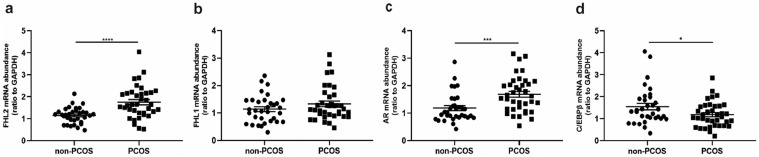
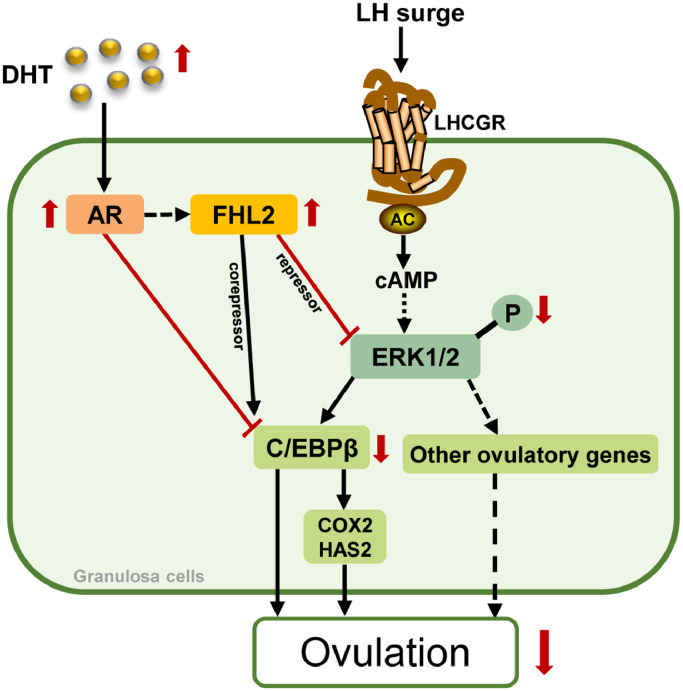
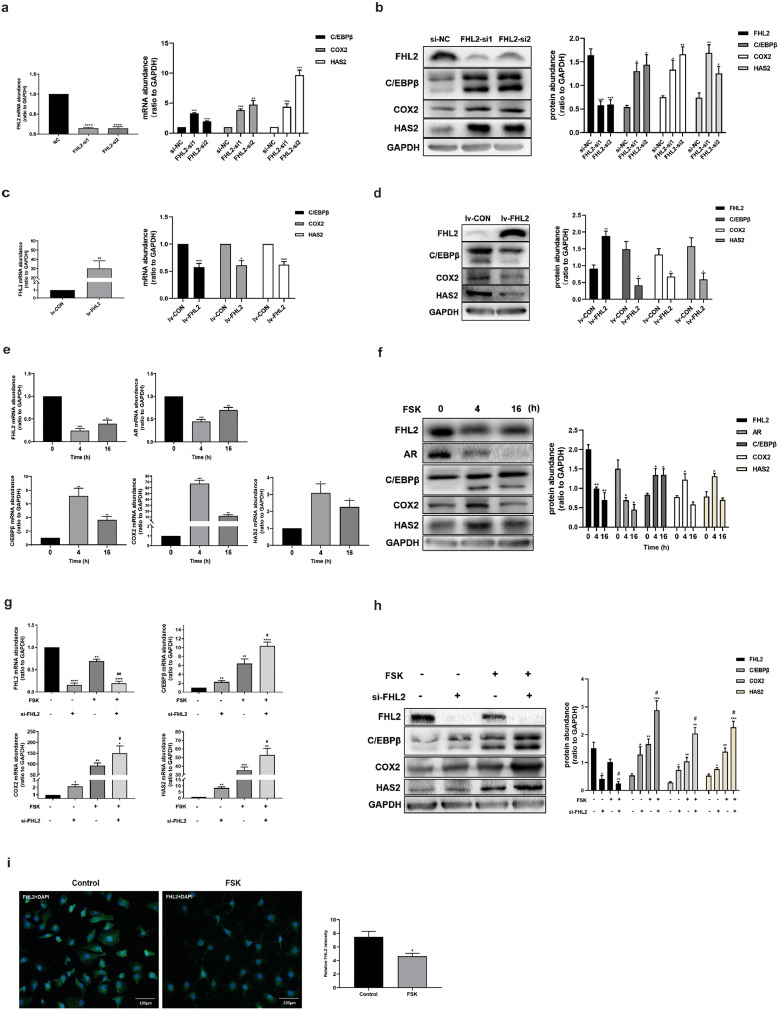
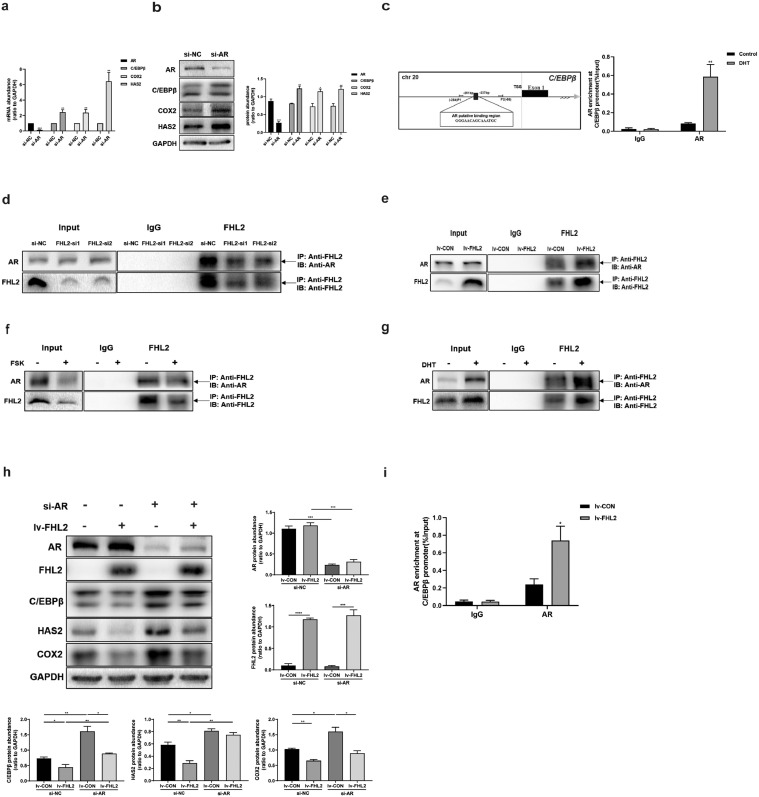
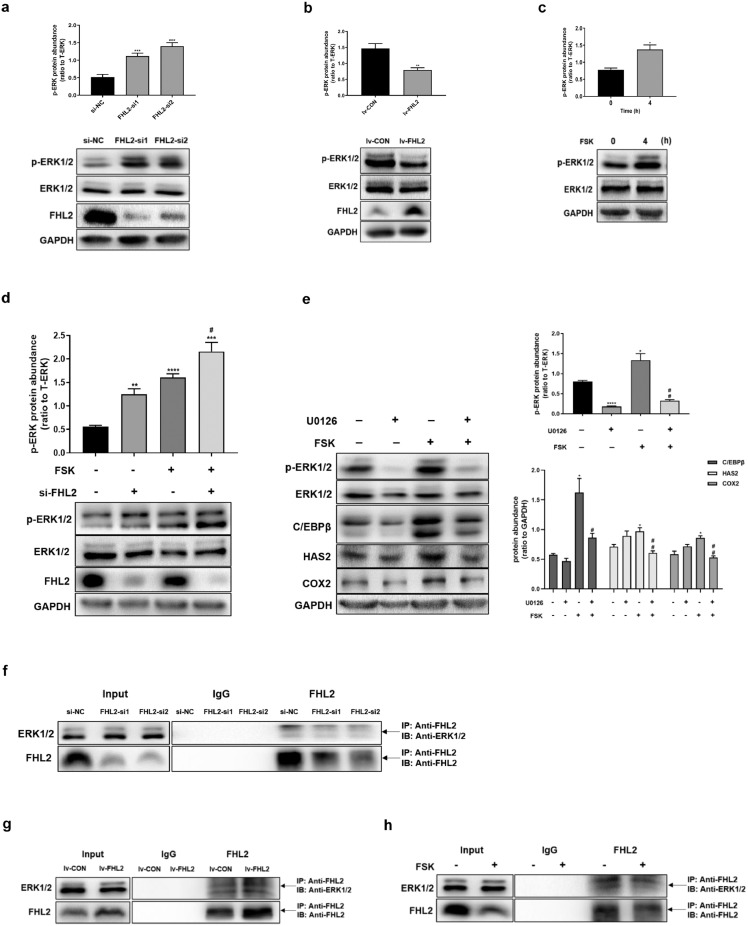
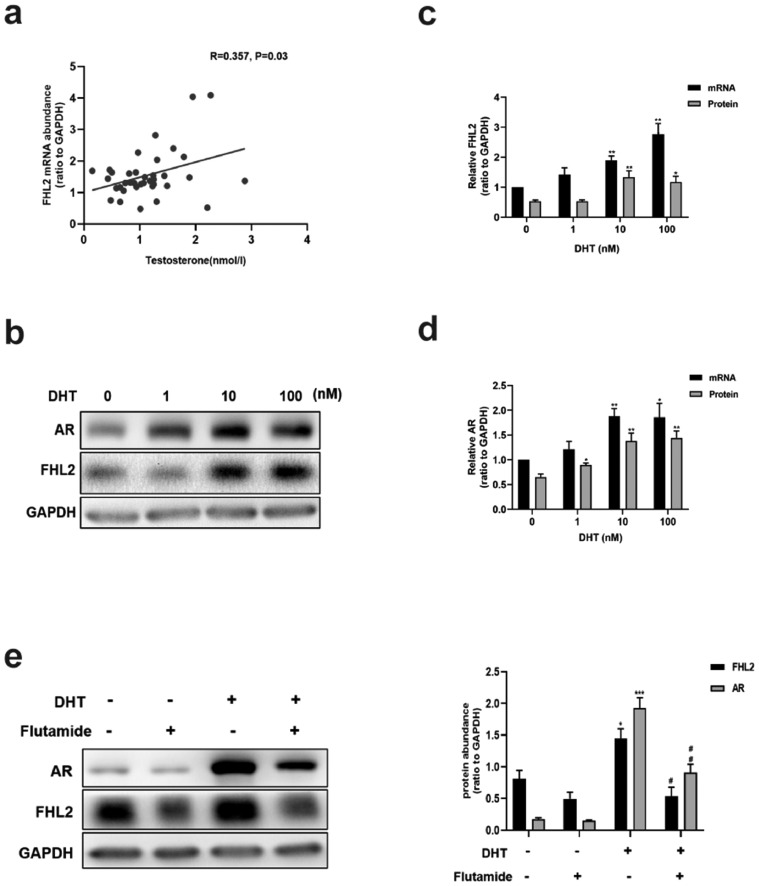
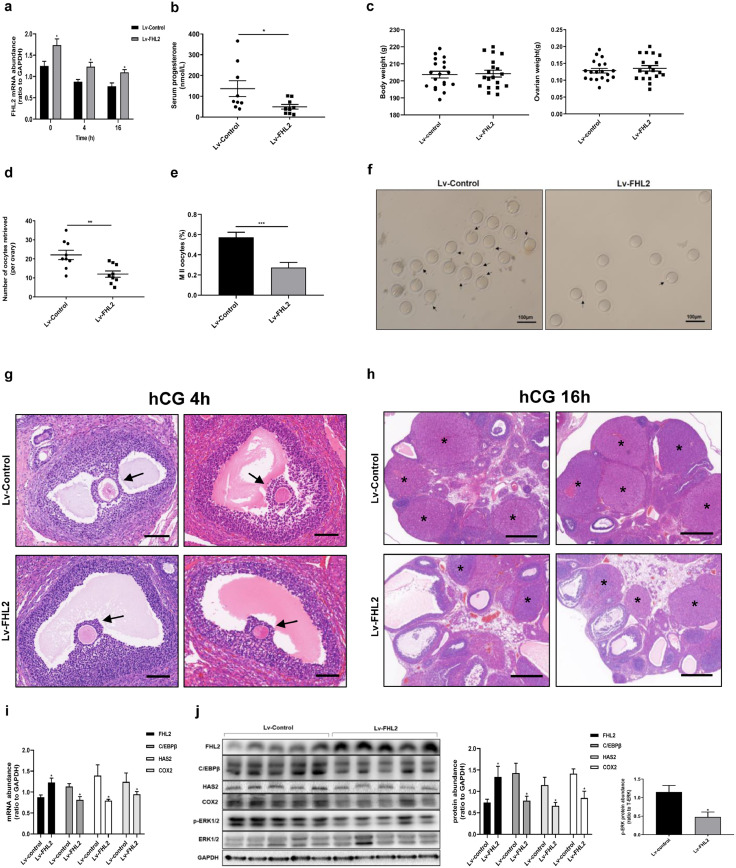
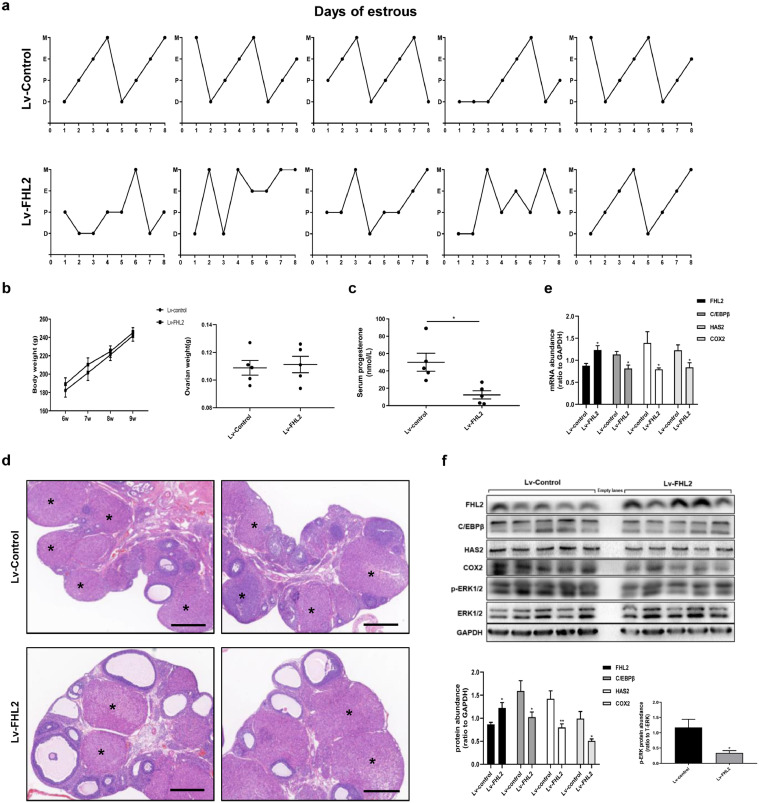
Increased FHL2 and androgen receptor (AR) expression and decreased CCAAT/enhancer-binding protein β (C/EBPβ) expression were observed in hGCs from patients with PCOS. FHL2 inhibited the expression of ovulation-related genes, including phosphorylated ERK1/2, C/EBPβ, COX2 and HAS2 in KGN cells. It was partially by interacting with AR to act as its co-regulator to inhibit C/EBPβ expression and by binding to ERK1/2 to inhibit its phosphorylation. Moreover, FHL2 abundance in hGCs was positively correlated with the basal serum testosterone concentration of patients with PCOS, and dihydrotestosterone (DHT)-induced FHL2 upregulation was mediated by AR signalling in KGN cells. Additionally, lentiviral-mediated functional FHL2 overexpression in rat ovaries for 1 week contributed to an impaired superovulatory response, displaying decreased numbers of retrieved oocytes and a lower MII oocyte rate. 3-week FHL2 overexpression rat models without superovulation led to acyclicity and polycystic ovary morphology.
Our findings provide novel insights into the mechanisms underlying the pathogenesis of PCOS, suggesting that FHL2 could be a potential treatment target for ovulatory obstacles in PCOS. FUND: National Key Research and Development Program of China, National Natural Science Foundation, National Institutes of Health project and Shanghai Commission of Science and Technology.
多囊卵巢综合征(PCOS)的排卵功能障碍机制尚不完全清楚。到目前为止,还没有针对 PCOS 的有效治疗方法。
我们测量了来自患有和不患有 PCOS 的患者的人颗粒细胞(hGC)中四个半 LIM 结构域 2(FHL2)和其他相关基因的表达。为了尽量减少 PCOS 患者的异质性,我们仅包括根据修订的鹿特丹共识符合所有三个标准的 PCOS 患者。在 KGN 细胞中检查了 FHL2 对排卵基因的体外作用及其潜在机制。通过在大鼠卵巢内通过囊内慢病毒注射过表达 FHL2 ,在体内研究了 FHL2 在排卵中的作用。
在患有 PCOS 的患者的 hGC 中观察到 FHL2 和雄激素受体(AR)表达增加,CCAAT/增强子结合蛋白β(C/EBPβ)表达降低。FHL2 抑制了排卵相关基因的表达,包括 KGN 细胞中的磷酸化 ERK1/2、C/EBPβ、COX2 和 HAS2。它部分通过与 AR 相互作用作为其共调节剂来抑制 C/EBPβ 的表达,并通过与 ERK1/2 结合来抑制其磷酸化。此外,hGC 中 FHL2 的丰度与患有 PCOS 的患者的基础血清睾丸酮浓度呈正相关,并且 KGN 细胞中 DHT 诱导的 FHL2 上调是由 AR 信号介导的。此外,在大鼠卵巢中进行 1 周的慢病毒介导的功能性 FHL2 过表达导致超排卵反应受损,表现为取回的卵母细胞数量减少和 II 期卵母细胞比率降低。没有超排卵的 3 周 FHL2 过表达大鼠模型导致无排卵和多囊卵巢形态。
我们的研究结果为 PCOS 发病机制的研究提供了新的见解,表明 FHL2 可能是 PCOS 排卵障碍的潜在治疗靶点。
国家重点研发计划,国家自然科学基金,美国国立卫生研究院项目和上海市科学技术委员会。