University of Verona, Verona, Italy; Division of Gynecologic Oncology, Department of Woman and Child Health and Public Health, Fondazione Policlinico Universitario A. Gemelli IRCCS, Roma, Italy.
Department of Diagnostics and Public Health, University of Verona, Azienda Ospedaliera Universitaria Integrata, Verona, Italy.
Breast. 2020 Apr;50:56-63. doi: 10.1016/j.breast.2020.01.034. Epub 2020 Jan 27.
The clinico-pathological and molecular factors that drive the prognosis of invasive lobular breast carcinoma (ILC) are not entirely explored. In this regard, the development and validation of a prognostic model for ILC and the investigation of the distribution of molecular abnormalities (focusing on CDK4/6 alterations) according to prognosis were the aims of this study.
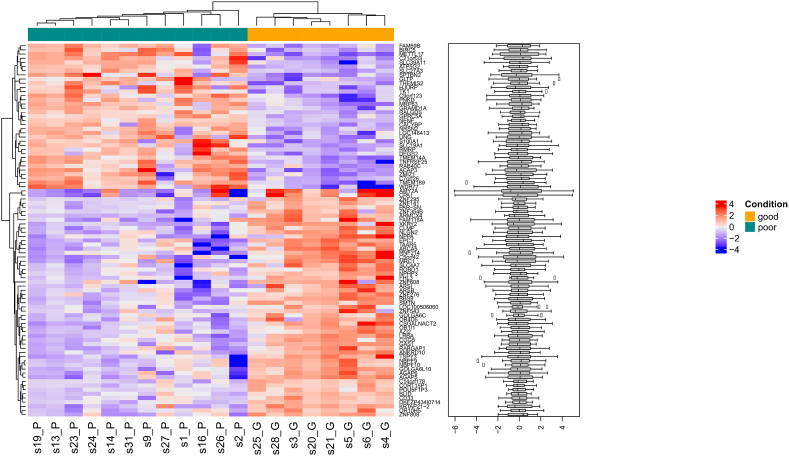
Two clinico-pathological multi-center data-sets of early-stage ILC patients (Training/Validation Set, TS/VS) were gathered. A 3-class model was developed according to the multivariate analysis for disease-free-survival (DFS) and externally validated. Mutational, copy number variation and transcriptomic analyses by targeted next generation sequencing (NGS) were performed (and validated with quantitative PCR) in an explorative cohort of patients with poor and good prognosis.
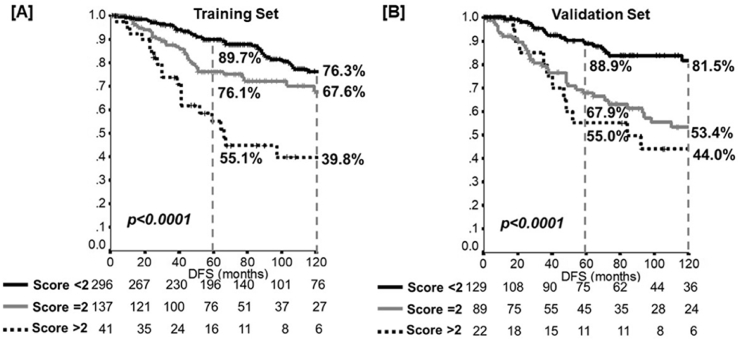
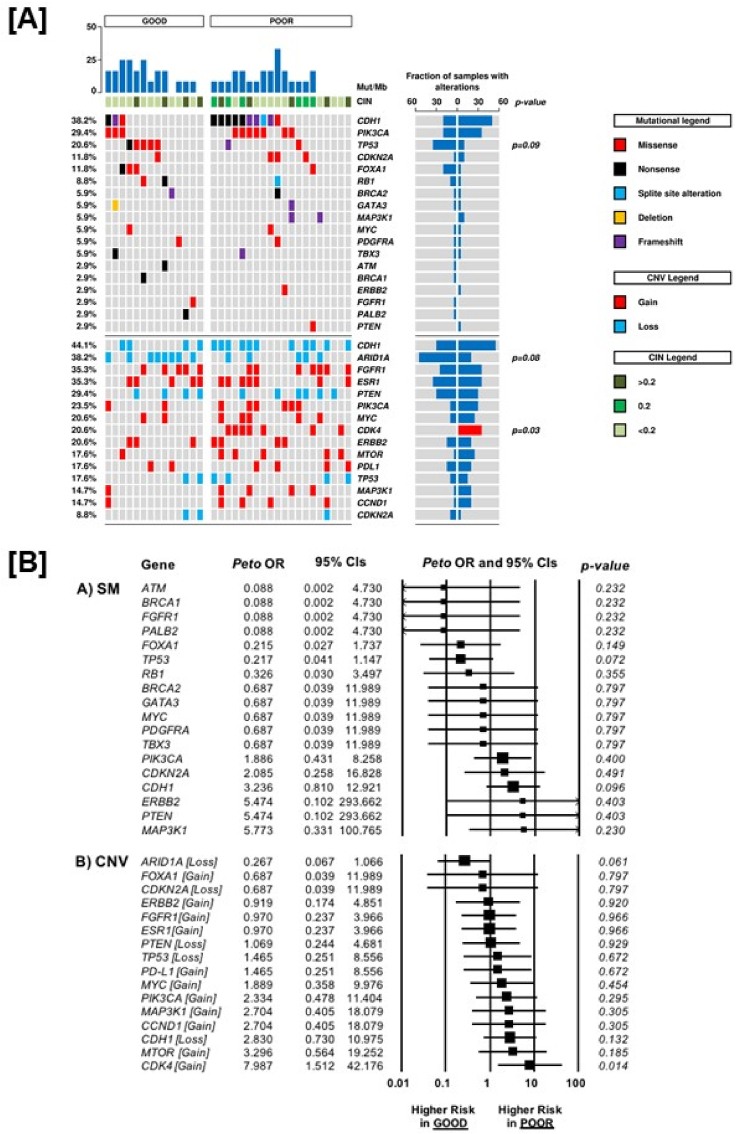
Data from overall 773 patients (TS/VS: 491/282) were gathered. The developed model significantly discriminated low/intermediate/high risk in the TS (10-years DFS: 76.3%/67.6%/39.8%, respectively, p<0.0001) and in the VS (p<0.0001). In the explorative cohort for molecular analysis (34 patients), CDK4 gain was present exclusively in the poor prognosis group (35.0%, p = 0.03; OR 7.98, 95%CI 1.51-42.1, p = 0.014). Moreover, CDK4 and 6 overexpression showed a trend toward an association with poor prognosis (OR 2.7, 95%CI 0.4-18.1, p = 0.3; OR 3.29, 95%CI 0.56-19.25, p = 0.18).
A risk stratification model, able to accurately separate early-stage ILC patients' prognosis into different risk classes according to clinico-pathological variables, allowed to investigate potential biomarkers of prognosis with targeted NGS. CDK4 gain is suggested for future validation as a prognostic biomarker and a potential therapeutic opportunity in ILC patients.
浸润性小叶乳腺癌(ILC)的临床病理和分子因素对预后的影响尚未完全阐明。在这方面,本研究旨在开发一种用于 ILC 的预后模型,并根据预后情况研究分子异常(重点关注 CDK4/6 改变)的分布。
收集了两个早期 ILC 患者的临床病理多中心数据集(训练/验证集,TS/VS)。根据无病生存(DFS)的多变量分析,建立了一个 3 类模型,并在外部进行了验证。对预后不良和良好的患者进行了靶向下一代测序(NGS)的突变、拷贝数变异和转录组分析(并通过定量 PCR 进行了验证)。
共收集了 773 例患者的数据(TS/VS:491/282)。所开发的模型在 TS 中(10 年 DFS:76.3%/67.6%/39.8%,分别,p<0.0001)和 VS 中(p<0.0001)显著区分了低/中/高危。在用于分子分析的探索性队列(34 例患者)中,仅在预后不良组中存在 CDK4 增益(35.0%,p=0.03;OR 7.98,95%CI 1.51-42.1,p=0.014)。此外,CDK4 和 6 过表达显示与不良预后有一定关联(OR 2.7,95%CI 0.4-18.1,p=0.3;OR 3.29,95%CI 0.56-19.25,p=0.18)。
一种能够根据临床病理变量准确将早期 ILC 患者的预后分为不同风险类别的风险分层模型,允许使用靶向 NGS 研究潜在的预后生物标志物。CDK4 增益被建议作为未来的验证,作为 ILC 患者的预后生物标志物和潜在的治疗机会。