• 文献检索
  • 文档翻译
  • 深度研究
  • 学术资讯
  • Suppr Zotero 插件Zotero 插件
  • 邀请有礼
  • 套餐&价格
  • 历史记录
应用&插件
Suppr Zotero 插件Zotero 插件浏览器插件Mac 客户端Windows 客户端微信小程序
定价
高级版会员购买积分包购买API积分包
服务
文献检索文档翻译深度研究API 文档MCP 服务
关于我们
关于 Suppr公司介绍联系我们用户协议隐私条款
关注我们

Suppr 超能文献

核心技术专利:CN118964589B侵权必究
粤ICP备2023148730 号-1Suppr @ 2026

文献检索

告别复杂PubMed语法,用中文像聊天一样搜索,搜遍4000万医学文献。AI智能推荐,让科研检索更轻松。

立即免费搜索

文件翻译

保留排版,准确专业,支持PDF/Word/PPT等文件格式,支持 12+语言互译。

免费翻译文档

深度研究

AI帮你快速写综述,25分钟生成高质量综述,智能提取关键信息,辅助科研写作。

立即免费体验

社会偏好理论视角下个人收入对舆论极化的影响。

Public Opinion Polarization by Individual Revenue from the Social Preference Theory.

机构信息

School of Statistics and Mathematics, Zhejiang Gongshang University, Hangzhou 310018, China.

School of Management and E-Business, Zhejiang Gongshang University, Hangzhou 310018, China.

出版信息

Int J Environ Res Public Health. 2020 Feb 4;17(3):946. doi: 10.3390/ijerph17030946.

DOI:10.3390/ijerph17030946
PMID:32033012
原文链接:https://pmc.ncbi.nlm.nih.gov/articles/PMC7037295/
Abstract

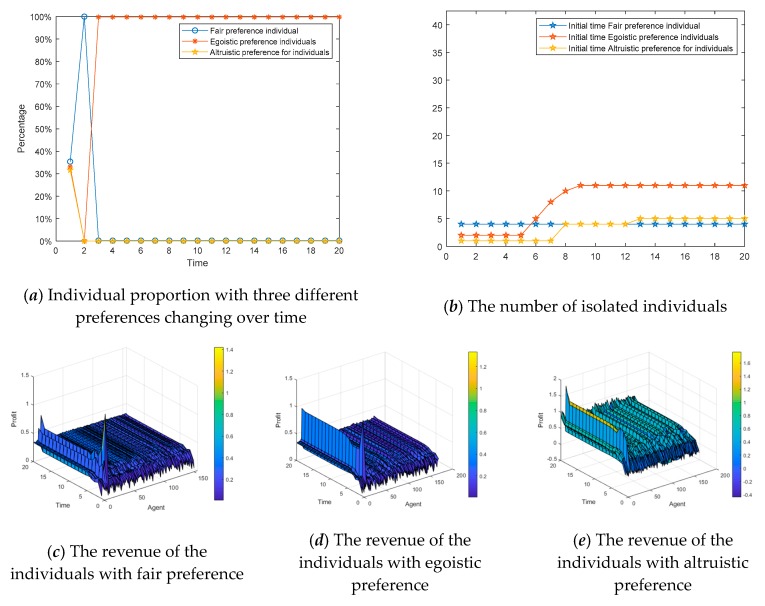
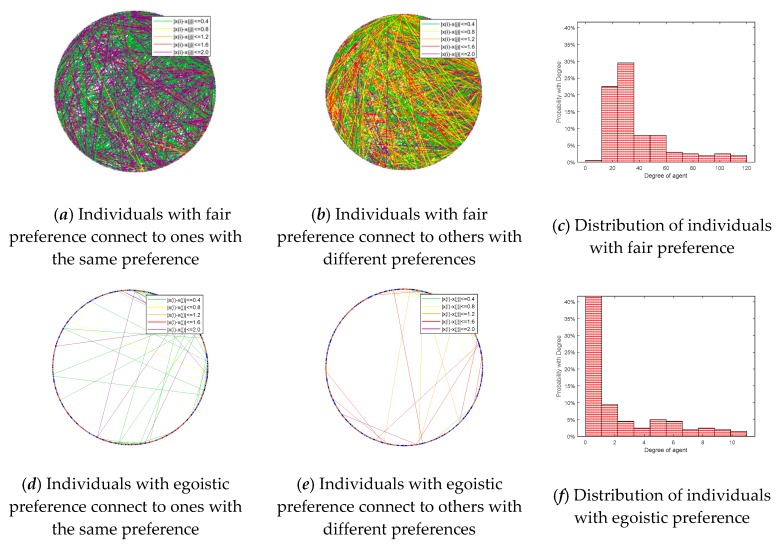
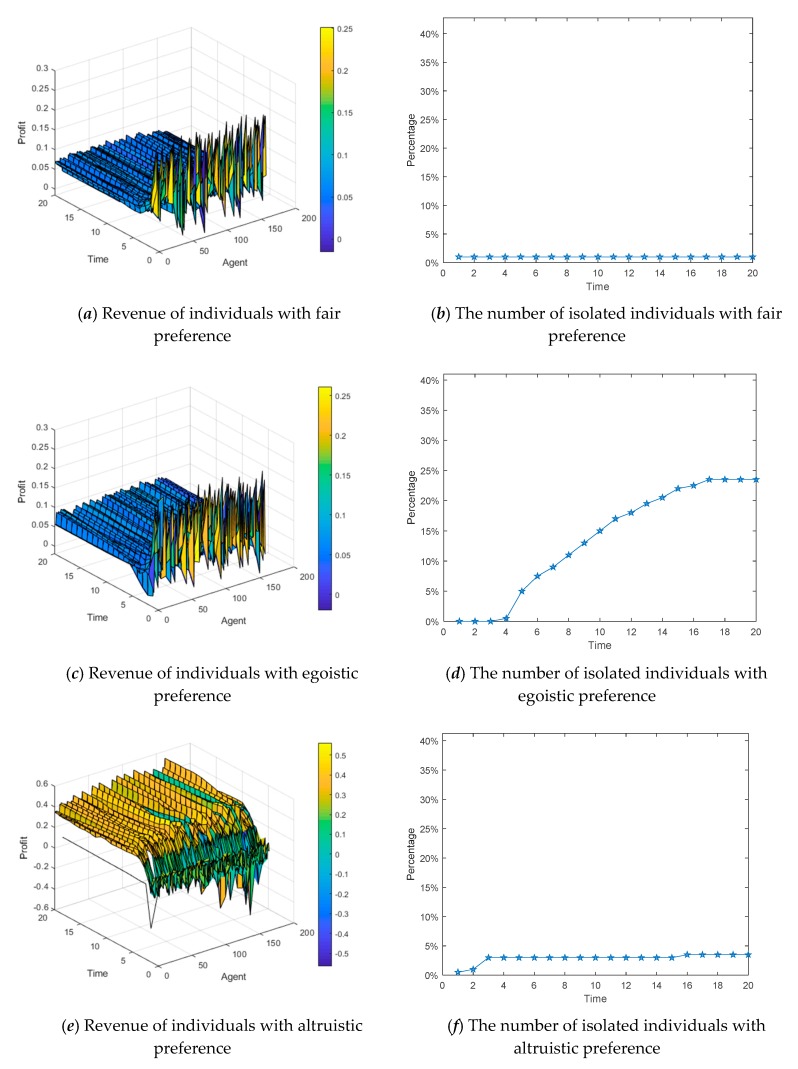
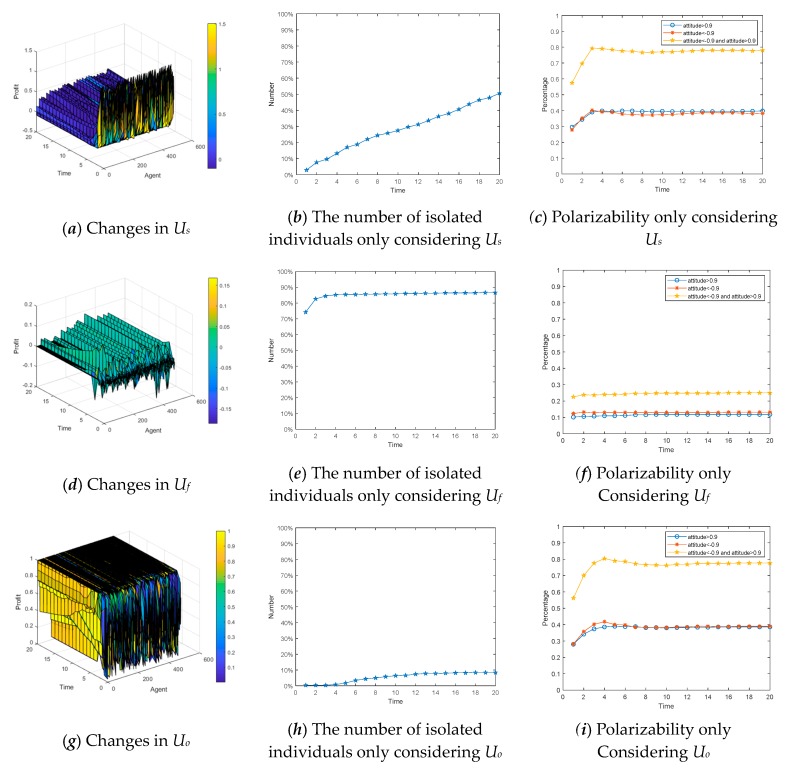
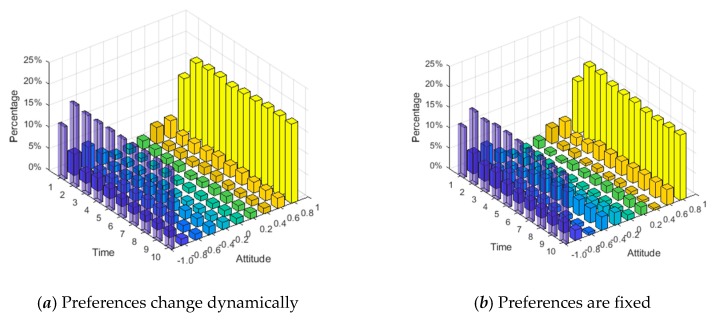
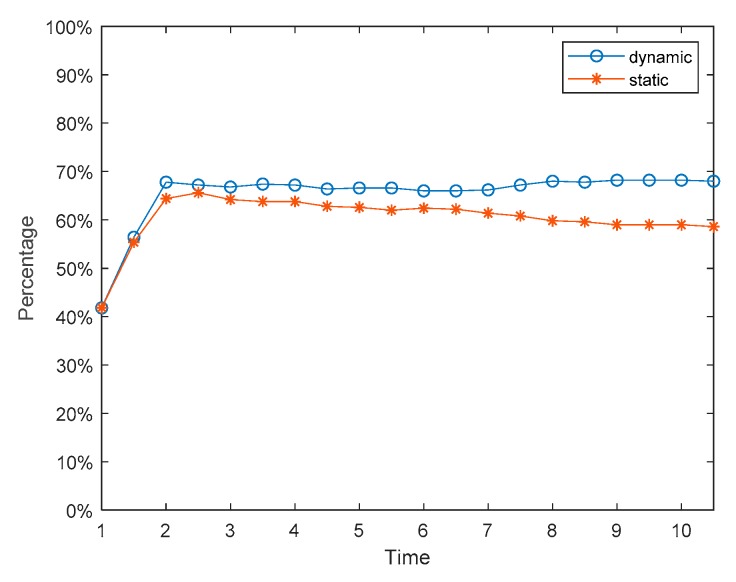
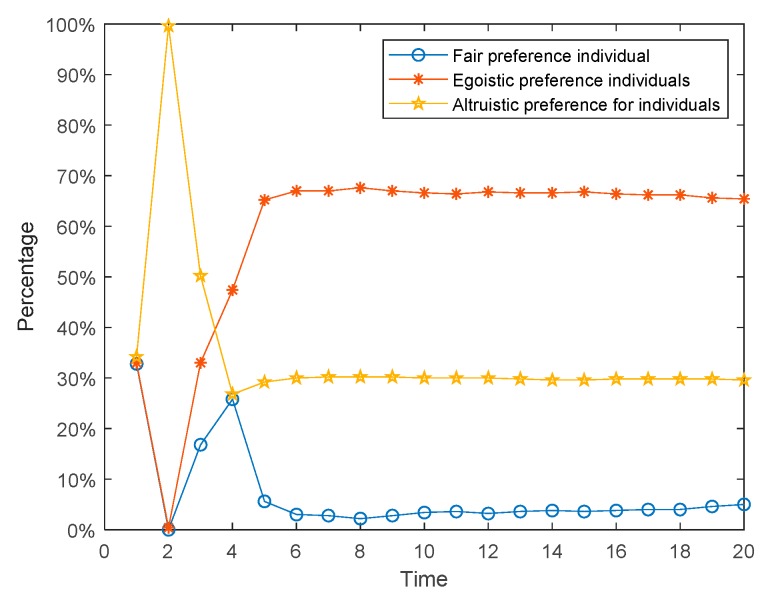
Social conflicts occur frequently duringthe social transition period and the polarization of public opinion happens occasionally. By introducing the social preference theory, the target of this paper is to reveal the micro-interaction mechanism of public opinion polarization. Firstly, we divide the social preferences of Internet users (network nodes) into three categories: egoistic, altruistic, and fair preferences, and adopt the revenue function to define the benefits obtained by individuals with different preferences among their interaction process so as to analyze their decision-making behaviors driven by the revenue. Secondly, the revenue function is used to judge the exit rules of nodes in a network, and then a dynamic network of spreading public opinionwith the node (individual) exit mechanism is built based on a BA scale-free network. Subsequently, the influences of different social preferences,as well as individual revenue on the effect of public opinionpolarization, are analyzed through simulation experiments. The simulation results show that(1) Different social preferences demonstrate different influences on the evolution of public opinions, (2) Individuals tend to interact with ones with different preferences, (3) The network with a single preference or a high aggregation is more likely to form public opinion polarization. Finally, the practicability and effectiveness of the proposed model are verified by a real case.

摘要

社会转型期社会冲突频发,舆论极化偶有发生。本文引入社会偏好理论,旨在揭示舆论极化的微观互动机制。首先,我们将互联网用户(网络节点)的社会偏好分为三种类型:自利偏好、利他偏好和公平偏好,并采用收益函数来定义不同偏好的个体在相互作用过程中所获得的利益,从而分析其受收益驱动的决策行为。其次,利用收益函数判断节点在网络中的退出规则,然后基于 BA 无标度网络构建带有节点(个体)退出机制的舆论动态传播网络。随后,通过仿真实验分析了不同社会偏好和个体收益对舆论极化效应的影响。仿真结果表明:(1)不同的社会偏好对舆论的演变有不同的影响;(2)个体倾向于与具有不同偏好的个体进行互动;(3)具有单一偏好或高聚集度的网络更容易形成舆论极化。最后,通过一个真实案例验证了所提出模型的实用性和有效性。
https://cdn.ncbi.nlm.nih.gov/pmc/blobs/73c9/7037295/b399bec85902/ijerph-17-00946-g027.jpg
https://cdn.ncbi.nlm.nih.gov/pmc/blobs/73c9/7037295/39dd81643553/ijerph-17-00946-g017.jpg
https://cdn.ncbi.nlm.nih.gov/pmc/blobs/73c9/7037295/41571a9a6904/ijerph-17-00946-g018.jpg
https://cdn.ncbi.nlm.nih.gov/pmc/blobs/73c9/7037295/d0e27baed6ac/ijerph-17-00946-g019a.jpg
https://cdn.ncbi.nlm.nih.gov/pmc/blobs/73c9/7037295/e7be620146bd/ijerph-17-00946-g020.jpg
https://cdn.ncbi.nlm.nih.gov/pmc/blobs/73c9/7037295/43f7cfafd97e/ijerph-17-00946-g021.jpg
https://cdn.ncbi.nlm.nih.gov/pmc/blobs/73c9/7037295/745c8018ab85/ijerph-17-00946-g022.jpg
https://cdn.ncbi.nlm.nih.gov/pmc/blobs/73c9/7037295/e0c3e3498eb0/ijerph-17-00946-g023.jpg
https://cdn.ncbi.nlm.nih.gov/pmc/blobs/73c9/7037295/c5ee651d0a6d/ijerph-17-00946-g024.jpg
https://cdn.ncbi.nlm.nih.gov/pmc/blobs/73c9/7037295/ffcd543c5a38/ijerph-17-00946-g025.jpg
https://cdn.ncbi.nlm.nih.gov/pmc/blobs/73c9/7037295/e0627e33d02e/ijerph-17-00946-g026.jpg
https://cdn.ncbi.nlm.nih.gov/pmc/blobs/73c9/7037295/b399bec85902/ijerph-17-00946-g027.jpg
https://cdn.ncbi.nlm.nih.gov/pmc/blobs/73c9/7037295/39dd81643553/ijerph-17-00946-g017.jpg
https://cdn.ncbi.nlm.nih.gov/pmc/blobs/73c9/7037295/41571a9a6904/ijerph-17-00946-g018.jpg
https://cdn.ncbi.nlm.nih.gov/pmc/blobs/73c9/7037295/d0e27baed6ac/ijerph-17-00946-g019a.jpg
https://cdn.ncbi.nlm.nih.gov/pmc/blobs/73c9/7037295/e7be620146bd/ijerph-17-00946-g020.jpg
https://cdn.ncbi.nlm.nih.gov/pmc/blobs/73c9/7037295/43f7cfafd97e/ijerph-17-00946-g021.jpg
https://cdn.ncbi.nlm.nih.gov/pmc/blobs/73c9/7037295/745c8018ab85/ijerph-17-00946-g022.jpg
https://cdn.ncbi.nlm.nih.gov/pmc/blobs/73c9/7037295/e0c3e3498eb0/ijerph-17-00946-g023.jpg
https://cdn.ncbi.nlm.nih.gov/pmc/blobs/73c9/7037295/c5ee651d0a6d/ijerph-17-00946-g024.jpg
https://cdn.ncbi.nlm.nih.gov/pmc/blobs/73c9/7037295/ffcd543c5a38/ijerph-17-00946-g025.jpg
https://cdn.ncbi.nlm.nih.gov/pmc/blobs/73c9/7037295/e0627e33d02e/ijerph-17-00946-g026.jpg
https://cdn.ncbi.nlm.nih.gov/pmc/blobs/73c9/7037295/b399bec85902/ijerph-17-00946-g027.jpg

相似文献

1
Public Opinion Polarization by Individual Revenue from the Social Preference Theory.社会偏好理论视角下个人收入对舆论极化的影响。
Int J Environ Res Public Health. 2020 Feb 4;17(3):946. doi: 10.3390/ijerph17030946.
2
Modeling Multidimensional Public Opinion Polarization Process under the Context of Derived Topics.基于衍生话题的多维舆论极化过程建模。
Int J Environ Res Public Health. 2021 Jan 8;18(2):472. doi: 10.3390/ijerph18020472.
3
Private-Public Opinion Discrepancy.公私意见分歧。
PLoS One. 2020 Nov 25;15(11):e0242148. doi: 10.1371/journal.pone.0242148. eCollection 2020.
4
Modeling Network Public Opinion Propagation with the Consideration of Individual Emotions.考虑个体情绪的网络舆情传播建模。
Int J Environ Res Public Health. 2020 Sep 14;17(18):6681. doi: 10.3390/ijerph17186681.
5
The evolution of utility functions and psychological altruism.效用函数与心理利他主义的演变。
Stud Hist Philos Biol Biomed Sci. 2016 Apr;56:24-31. doi: 10.1016/j.shpsc.2015.10.008. Epub 2015 Nov 18.
6
Modeling Public Opinion Reversal Process with the Considerations of External Intervention Information and Individual Internal Characteristics.考虑外部干预信息和个体内在特征的公众舆论反转过程建模
Healthcare (Basel). 2020 Jun 5;8(2):160. doi: 10.3390/healthcare8020160.
7
Modeling, simulation, and case analysis of COVID-19 over network public opinion formation with individual internal factors and external information characteristics.基于个体内在因素和外部信息特征的新冠疫情网络舆情形成的建模、仿真与案例分析
Concurr Comput. 2021 Sep 10;33(17):e6201. doi: 10.1002/cpe.6201. Epub 2021 Jan 23.
8
Combining Public Opinion Dissemination with Polarization Process Considering Individual Heterogeneity.结合考虑个体异质性的舆论传播与两极分化过程。
Healthcare (Basel). 2021 Feb 7;9(2):176. doi: 10.3390/healthcare9020176.
9
Greenness and Pricing Decisions of Cooperative Supply Chains Considering Altruistic Preferences.考虑利他偏好的合作供应链的绿色度和定价决策。
Int J Environ Res Public Health. 2018 Dec 26;16(1):51. doi: 10.3390/ijerph16010051.
10
Opinion formation on social media: an empirical approach.社交媒体上的观点形成:一种实证方法。
Chaos. 2014 Mar;24(1):013130. doi: 10.1063/1.4866011.

引用本文的文献

1
Quantification and Evolution of Online Public Opinion Heat Considering Interactive Behavior and Emotional Conflict.考虑交互行为和情感冲突的网络舆情热度量化与演化
Entropy (Basel). 2025 Jun 29;27(7):701. doi: 10.3390/e27070701.
2
How social reinforcement learning can lead to metastable polarisation and the voter model.社会强化学习如何导致亚稳态极化和选民模型。
PLoS One. 2024 Dec 17;19(12):e0313951. doi: 10.1371/journal.pone.0313951. eCollection 2024.
3
Applying Blockchain Technology in Network Public Opinion Risk Management System in Big Data Environment.

本文引用的文献

1
Risk Propagation Model and Its Simulation of Emergency Logistics Network Based on Material Reliability.基于物资可靠性的应急物流网络风险传播模型及其仿真。
Int J Environ Res Public Health. 2019 Nov 23;16(23):4677. doi: 10.3390/ijerph16234677.
2
Boundedly rational expected utility theory.有限理性预期效用理论。
J Risk Uncertain. 2018;57(3):199-223. doi: 10.1007/s11166-018-9293-3. Epub 2018 Dec 28.
3
Biased assimilation, homophily, and the dynamics of polarization.偏见同化、同质性和极化的动态。
区块链技术在大数据环境下网络舆情风险管理系统中的应用。
Comput Intell Neurosci. 2023 Mar 10;2023:5212712. doi: 10.1155/2023/5212712. eCollection 2023.
4
Application of edge computing combined with deep learning model in the dynamic evolution of network public opinion in emergencies.边缘计算结合深度学习模型在突发事件网络舆情动态演化中的应用
J Supercomput. 2023;79(2):1526-1543. doi: 10.1007/s11227-022-04733-8. Epub 2022 Jul 28.
5
How to Improve Urban Intelligent Traffic? A Case Study Using Traffic Signal Timing Optimization Model Based on Swarm Intelligence Algorithm.如何改善城市智能交通?基于群体智能算法的交通信号定时优化模型的案例研究
Sensors (Basel). 2021 Apr 8;21(8):2631. doi: 10.3390/s21082631.
6
Modeling Multidimensional Public Opinion Polarization Process under the Context of Derived Topics.基于衍生话题的多维舆论极化过程建模。
Int J Environ Res Public Health. 2021 Jan 8;18(2):472. doi: 10.3390/ijerph18020472.
7
Modeling Network Public Opinion Propagation with the Consideration of Individual Emotions.考虑个体情绪的网络舆情传播建模。
Int J Environ Res Public Health. 2020 Sep 14;17(18):6681. doi: 10.3390/ijerph17186681.
8
Path Optimization of Medical Waste Transport Routes in the Emergent Public Health Event of COVID-19: A Hybrid Optimization Algorithm Based on the Immune-Ant Colony Algorithm.基于免疫蚁群算法的 COVID-19 突发公共卫生事件医疗废物运输路径优化
Int J Environ Res Public Health. 2020 Aug 12;17(16):5831. doi: 10.3390/ijerph17165831.
9
Analysis of User Satisfaction with Online Education Platforms in China during the COVID-19 Pandemic.新冠疫情期间中国在线教育平台用户满意度分析
Healthcare (Basel). 2020 Jul 7;8(3):200. doi: 10.3390/healthcare8030200.
10
Modeling Public Opinion Reversal Process with the Considerations of External Intervention Information and Individual Internal Characteristics.考虑外部干预信息和个体内在特征的公众舆论反转过程建模
Healthcare (Basel). 2020 Jun 5;8(2):160. doi: 10.3390/healthcare8020160.
Proc Natl Acad Sci U S A. 2013 Apr 9;110(15):5791-6. doi: 10.1073/pnas.1217220110. Epub 2013 Mar 27.
4
Group decision-making model with incomplete fuzzy preference relations based on additive consistency.基于加法一致性的具有不完全模糊偏好关系的群体决策模型
IEEE Trans Syst Man Cybern B Cybern. 2007 Feb;37(1):176-89. doi: 10.1109/tsmcb.2006.875872.
5
Universal behavior of load distribution in scale-free networks.无标度网络中负载分布的普遍行为。
Phys Rev Lett. 2001 Dec 31;87(27 Pt 1):278701. doi: 10.1103/PhysRevLett.87.278701. Epub 2001 Dec 12.