Department of Integrative Biotechnology, Sungkyunkwan University, Suwon 16419, Korea.
Basic Research & Innovation Division, R&D Center, AmorePacific Corporation, Yongin 17074, Korea.
Biomolecules. 2020 Feb 4;10(2):238. doi: 10.3390/biom10020238.
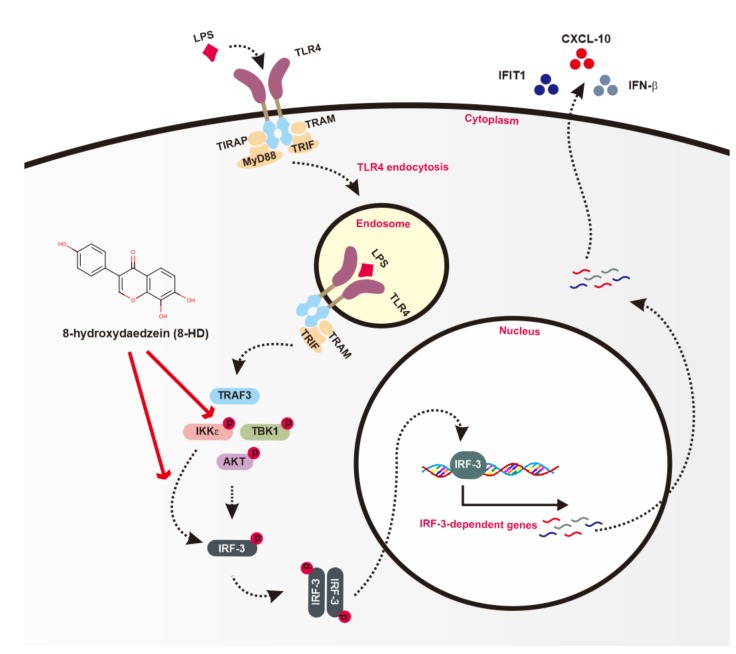
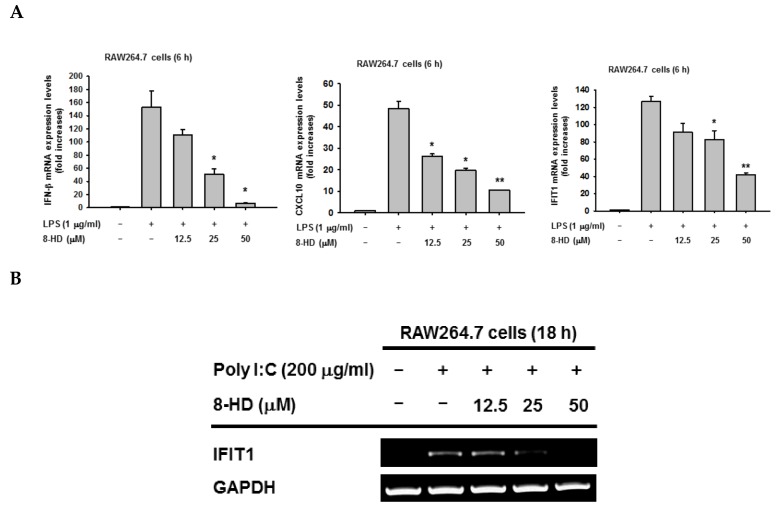
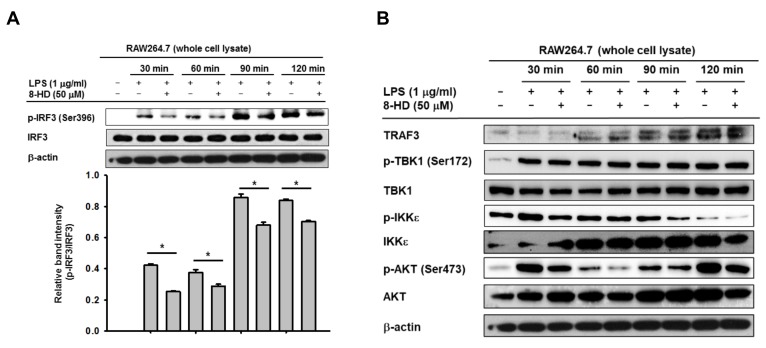
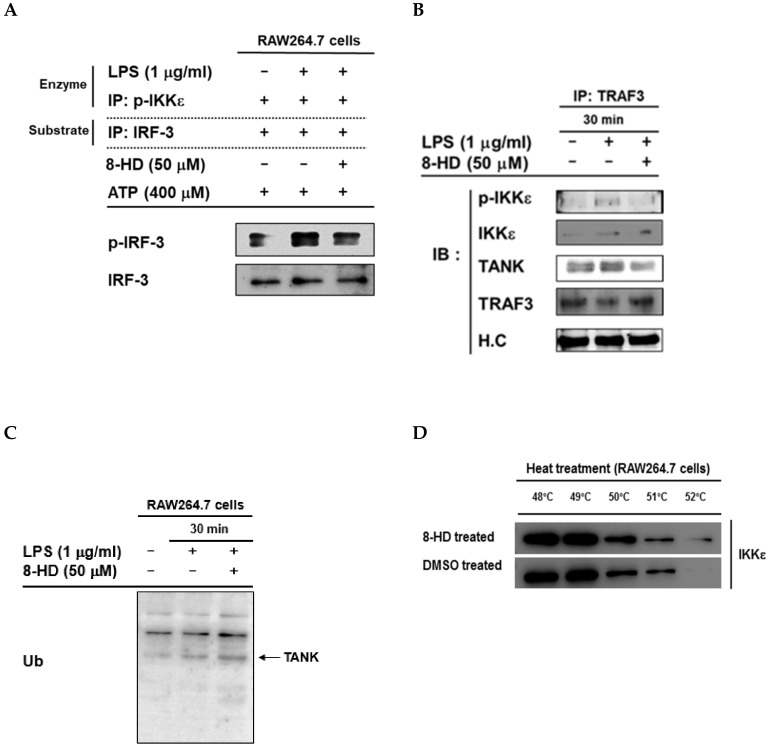
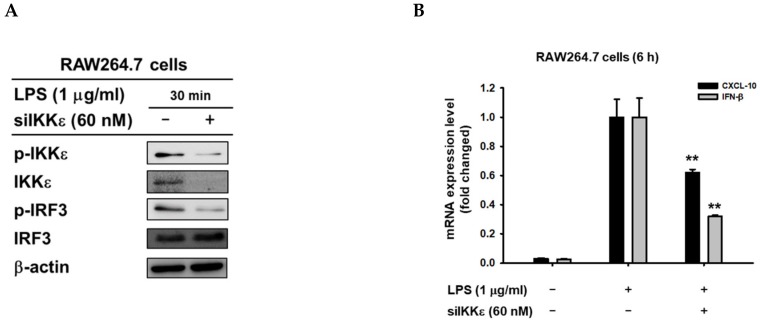
Cytokines and chemokines are transcriptionally regulated by inflammatory transcription factors such as nuclear factor-κB (NF-κB), activator protein-1 (AP-1), and interferon regulatory factor (IRF)-3. A daidzein derivative compound, 8-hydroxydaidzein (8-HD), isolated from soy products, has recently gained attention due to various pharmacological benefits, including anti-inflammatory activities. However, regulation of the inflammatory signaling mechanism for 8-HD is still poorly understood, particularly with respect to the IRF-3 signaling pathway. In this study, we explored the molecular mechanism of 8-HD in regulating inflammatory processes, with a focus on the IRF-3 signaling pathway using a lipopolysaccharide (LPS) and polyinosinic:polycytidylic acid [Poly (I:C)] stimulated murine macrophage cell line (RAW264.7). The 8-HD downregulated the mRNA expression level of IRF-3-dependent genes by inhibiting phosphorylation of the IRF-3 transcription factor. The inhibitory mechanism of 8-HD in the IRF-3 signaling pathway was shown to inhibit the kinase activity of IKKε to phosphorylate IRF-3. This compound can also interfere with the TRIF-mediated complex formation composed of TRAF3, TANK, and IKKε leading to downregulation of AKT phosphorylation and reduction of IRF-3 activation, resulted in inhibition of IRF-3-dependent expression of genes including , C-X-C motif chemokine 10 (), and interferon-induced protein with tetratricopeptide repeats 1 (IFIT1). Therefore, these results strongly suggest that 8-HD can act as a promising compound with the regulatory function of IRF-3-mediated inflammatory responses.
细胞因子和趋化因子受炎症转录因子(如核因子-κB(NF-κB)、激活蛋白-1(AP-1)和干扰素调节因子(IRF)-3)转录调控。大豆制品中分离出的大豆苷元衍生物化合物 8-羟基大豆苷元(8-HD),由于具有多种药理学益处,包括抗炎活性,最近受到关注。然而,8-HD 对炎症信号机制的调节仍知之甚少,特别是在 IRF-3 信号通路方面。在这项研究中,我们使用脂多糖(LPS)和聚肌苷酸:聚胞苷酸[Poly(I:C)]刺激的鼠巨噬细胞系(RAW264.7),探讨了 8-HD 调节炎症过程的分子机制,重点是 IRF-3 信号通路。8-HD 通过抑制 IRF-3 转录因子的磷酸化来下调 IRF-3 依赖性基因的 mRNA 表达水平。结果表明,8-HD 抑制 IKKε 的激酶活性以磷酸化 IRF-3,从而抑制了 IRF-3 信号通路。该化合物还可以干扰 TRAF3、TANK 和 IKKε 组成的 TRIF 介导的复合物形成,导致 AKT 磷酸化减少和 IRF-3 激活减少,从而抑制 IRF-3 依赖性基因的表达,包括 C-X-C 基序趋化因子 10()和干扰素诱导的四肽重复蛋白 1(IFIT1)。因此,这些结果强烈表明,8-HD 可以作为一种有前途的化合物,具有调节 IRF-3 介导的炎症反应的功能。