German Center for Neurodegenerative Diseases (DZNE), 39120 Magdeburg, Germany.
Otto-von-Guericke University, 39120 Magdeburg, Germany.
Cells. 2020 Feb 5;9(2):365. doi: 10.3390/cells9020365.
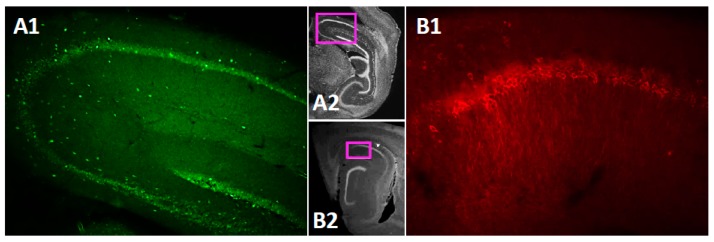
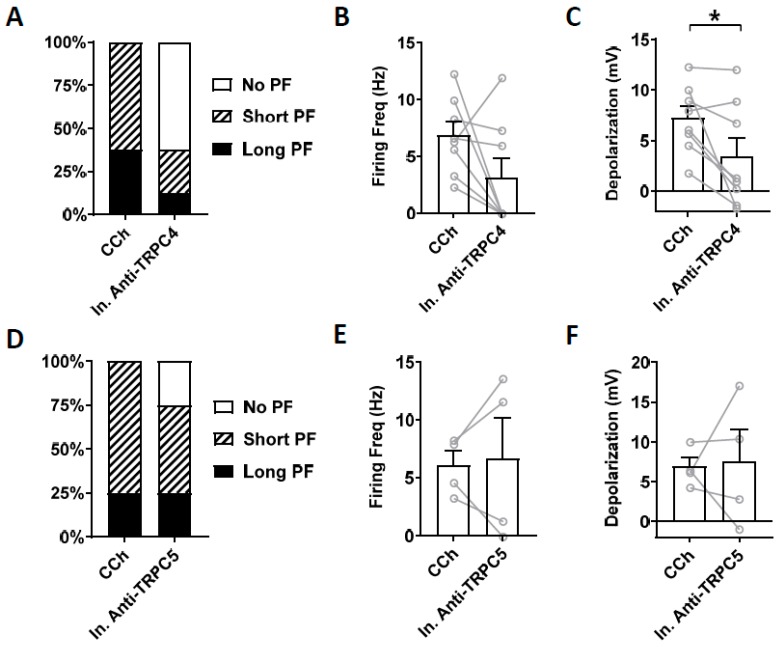
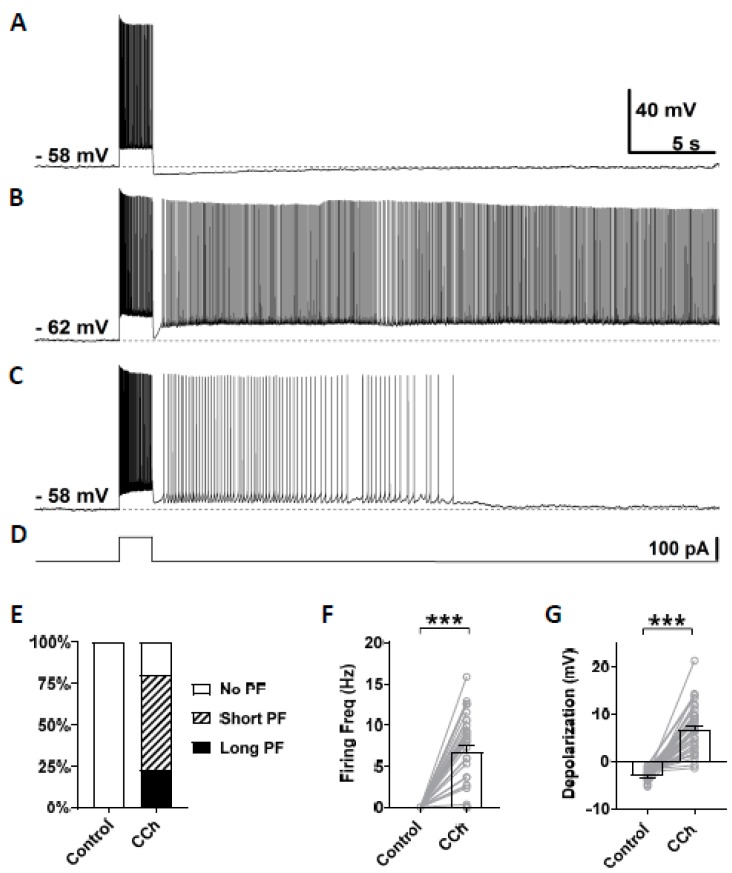
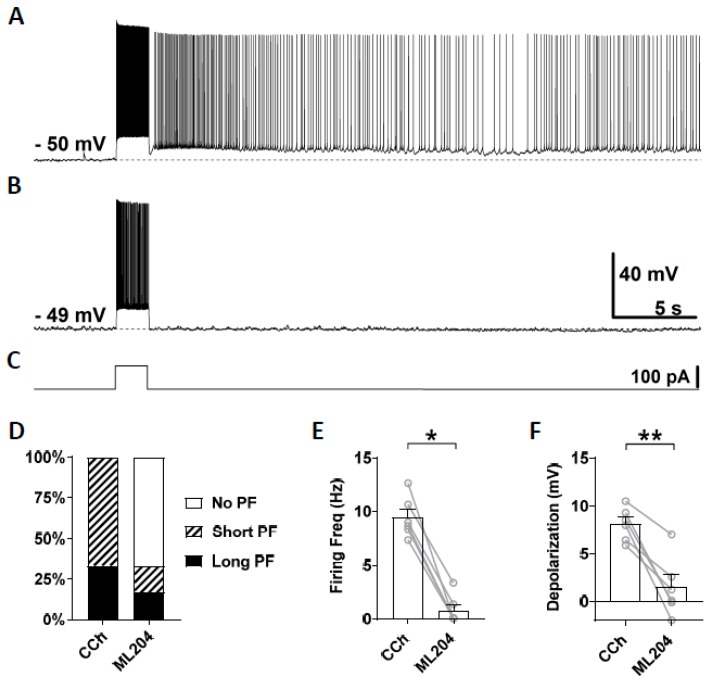
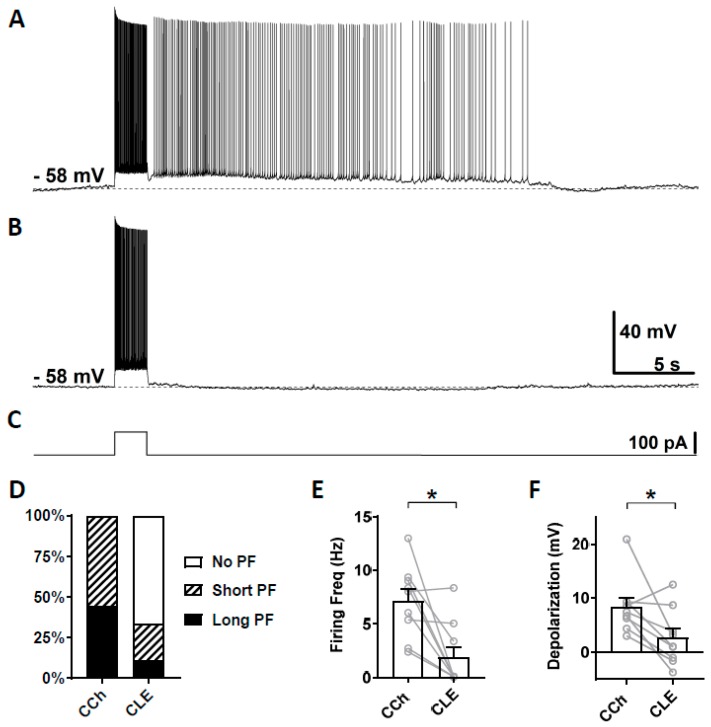
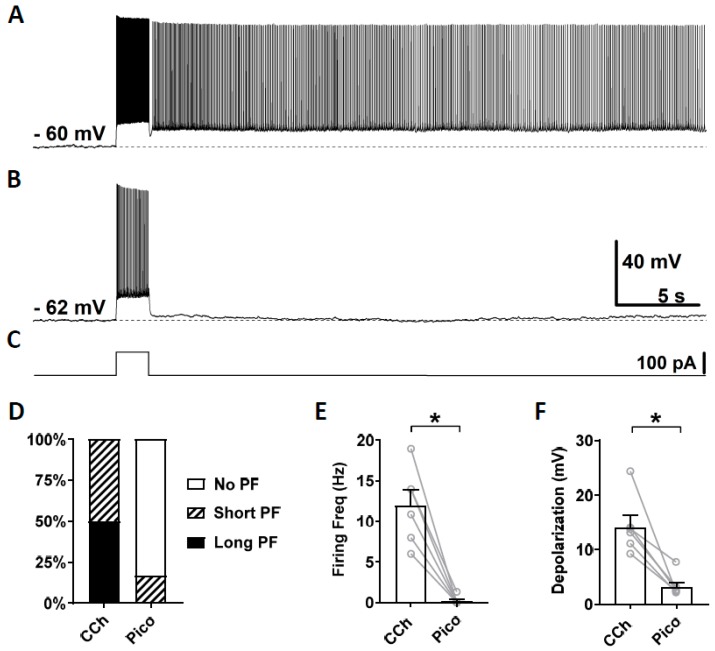
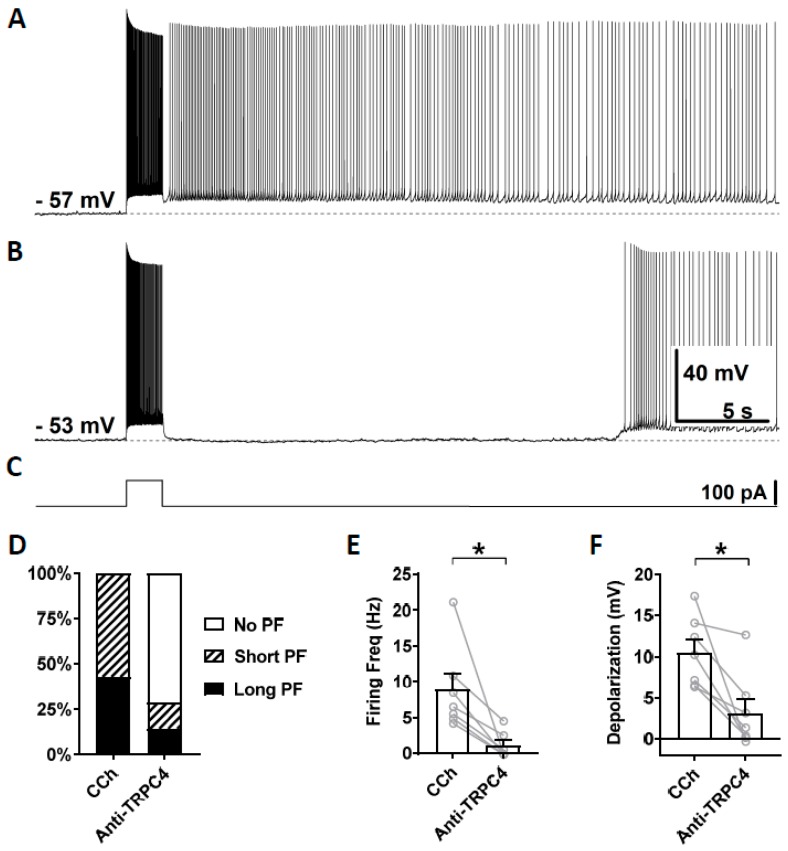
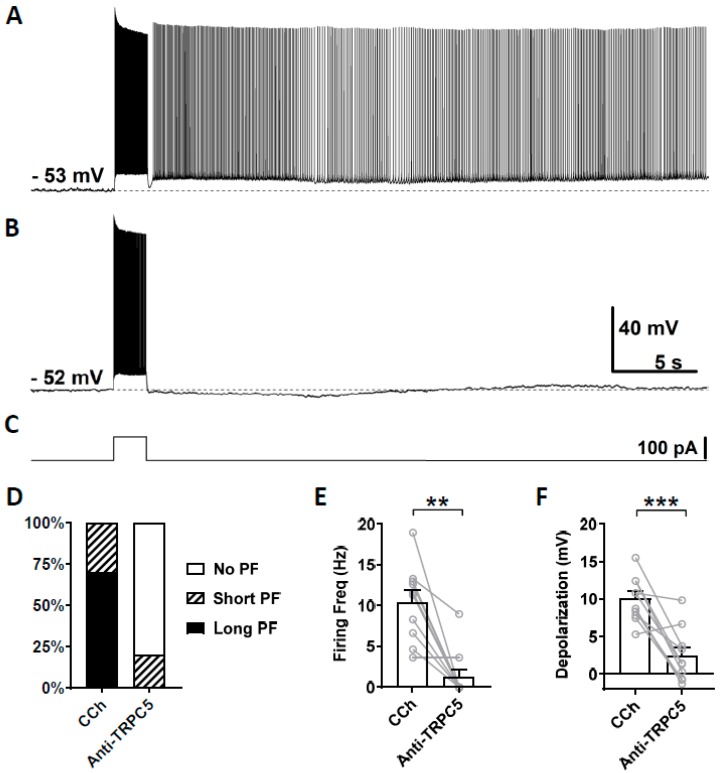
Persistent neural activity has been observed in vivo during working memory tasks, and supports short-term (up to tens of seconds) retention of information. While synaptic and intrinsic cellular mechanisms of persistent firing have been proposed, underlying cellular mechanisms are not yet fully understood. In vitro experiments have shown that individual neurons in the hippocampus and other working memory related areas support persistent firing through intrinsic cellular mechanisms that involve the transient receptor potential canonical (TRPC) channels. Recent behavioral studies demonstrating the involvement of TRPC channels on working memory make the hypothesis that TRPC driven persistent firing supports working memory a very attractive one. However, this view has been challenged by recent findings that persistent firing in vitro is unchanged in TRPC knock out (KO) mice. To assess the involvement of TRPC channels further, we tested novel and highly specific TRPC channel blockers in cholinergically induced persistent firing in mice CA1 pyramidal cells for the first time. The application of the TRPC4 blocker ML204, TRPC5 blocker clemizole hydrochloride, and TRPC4 and 5 blocker Pico145, all significantly inhibited persistent firing. In addition, intracellular application of TRPC4 and TRPC5 antibodies significantly reduced persistent firing. Taken together these results indicate that TRPC4 and 5 channels support persistent firing in CA1 pyramidal neurons. Finally, we discuss possible scenarios causing these controversial observations on the role of TRPC channels in persistent firing.
在工作记忆任务中,体内观察到持续的神经活动,并支持短期(长达数十秒)的信息保留。虽然已经提出了突触和内在细胞持续放电的机制,但潜在的细胞机制尚未完全理解。体外实验表明,海马体和其他与工作记忆相关的区域中的单个神经元通过涉及瞬时受体电位经典(TRPC)通道的内在细胞机制支持持续放电。最近的行为研究表明 TRPC 通道参与工作记忆,这使得 TRPC 驱动的持续放电支持工作记忆的假设非常有吸引力。然而,最近的发现挑战了这一观点,即在 TRPC 敲除(KO)小鼠中,体外持续放电没有变化。为了进一步评估 TRPC 通道的参与,我们首次在小鼠 CA1 锥体神经元中测试了新型和高度特异性的 TRPC 通道阻滞剂在胆碱能诱导的持续放电中的作用。应用 TRPC4 阻滞剂 ML204、TRPC5 阻滞剂盐酸克莱咪唑以及 TRPC4 和 5 阻滞剂 Pico145,均显著抑制持续放电。此外,TRPC4 和 TRPC5 抗体的细胞内应用显著减少了持续放电。这些结果表明 TRPC4 和 5 通道支持 CA1 锥体神经元中的持续放电。最后,我们讨论了导致这些关于 TRPC 通道在持续放电中作用的有争议的观察结果的可能情况。