Qin Qian, Fan Jingyu, Zheng Rongbin, Wan Changxin, Mei Shenglin, Wu Qiu, Sun Hanfei, Brown Myles, Zhang Jing, Meyer Clifford A, Liu X Shirley
Clinical Translational Research Center, Shanghai Pulmonary Hospital, School of Life Science and Technology, Tongji University, Shanghai, 200433, China.
Center of Molecular Medicine, Children's Hospital of Fudan University, Shanghai, 201102, China.
Genome Biol. 2020 Feb 7;21(1):32. doi: 10.1186/s13059-020-1934-6.
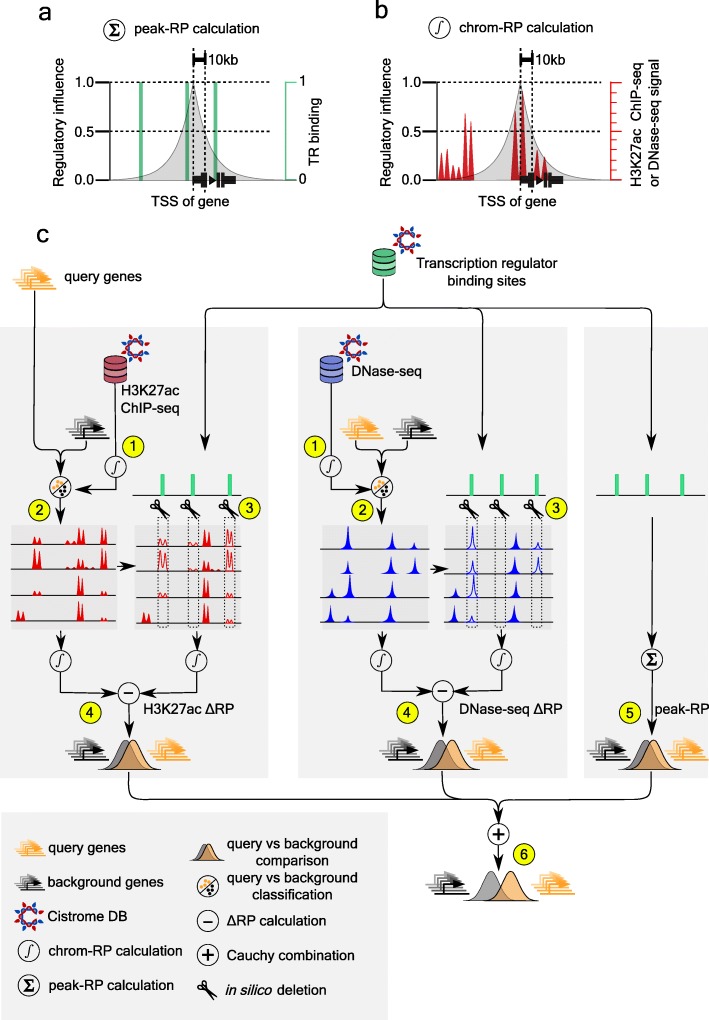
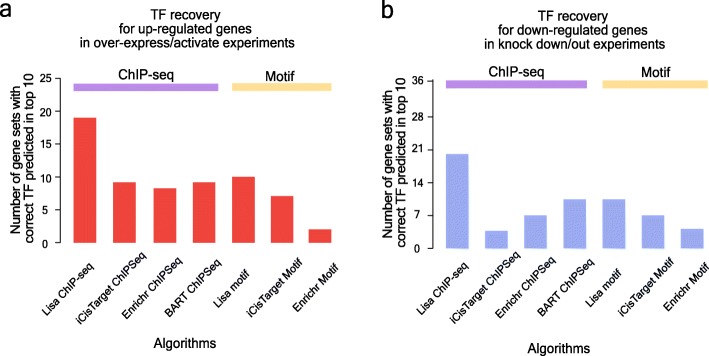
We developed Lisa (http://lisa.cistrome.org/) to predict the transcriptional regulators (TRs) of differentially expressed or co-expressed gene sets. Based on the input gene sets, Lisa first uses histone mark ChIP-seq and chromatin accessibility profiles to construct a chromatin model related to the regulation of these genes. Using TR ChIP-seq peaks or imputed TR binding sites, Lisa probes the chromatin models using in silico deletion to find the most relevant TRs. Applied to gene sets derived from targeted TF perturbation experiments, Lisa boosted the performance of imputed TR cistromes and outperformed alternative methods in identifying the perturbed TRs.
我们开发了Lisa(http://lisa.cistrome.org/)来预测差异表达或共表达基因集的转录调节因子(TRs)。基于输入的基因集,Lisa首先使用组蛋白标记ChIP-seq和染色质可及性图谱来构建与这些基因调控相关的染色质模型。利用TR ChIP-seq峰或估算的TR结合位点,Lisa通过计算机模拟缺失对染色质模型进行探测,以找到最相关的TRs。应用于来自靶向TF扰动实验的基因集时,Lisa提高了估算的TR顺式作用元件组的性能,并且在识别受扰动的TRs方面优于其他方法。