Department of Physiology and Pharmacology, Sapienza University, Rome, Italy.
IRCCS Neuromed, Pozzilli, IS, Italy.
Eur J Immunol. 2020 May;50(5):705-711. doi: 10.1002/eji.201948354. Epub 2020 Mar 1.
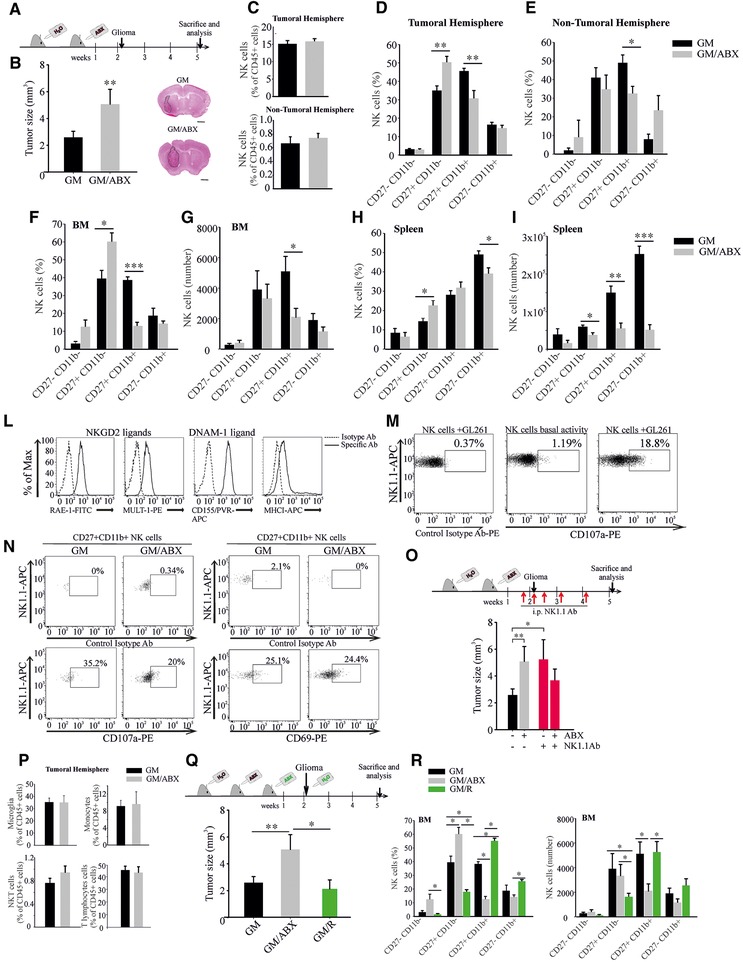
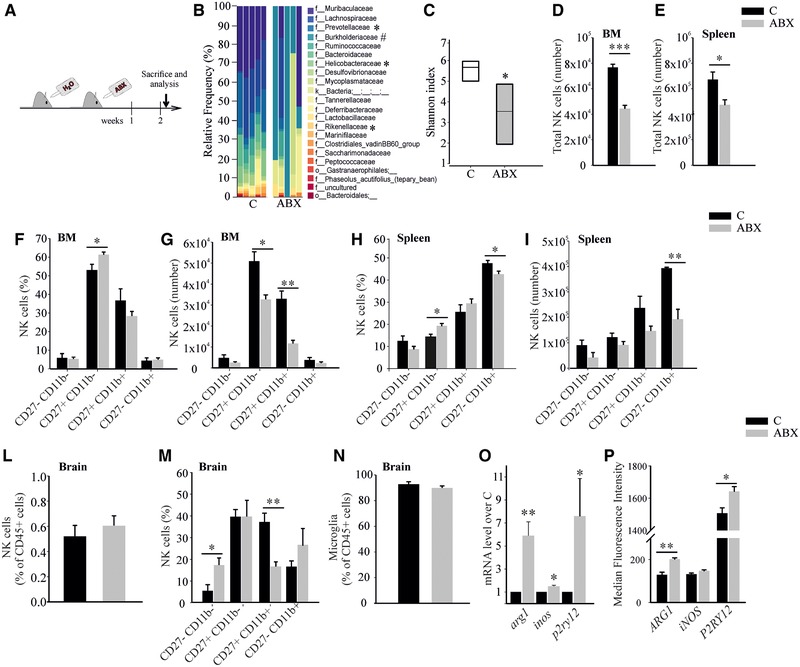
Glioma is a CNS tumor with few therapeutic options. Recently, host microbiota has been involved in the immune modulation of different tumors, but no data are available on the possible effects of the gut-immune axis on brain tumors. Here, we investigated the effect of gut microbiota alteration in a syngeneic (GL261) mouse model of glioma, treating mice with two antibiotics (ABX) and evaluating the effects on tumor growth, microbe composition, natural killer (NK) cells and microglia phenotype. We report that ABX treatment (i) altered the intestinal microbiota at family level, (ii) reduced cytotoxic NK cell subsets, and (iii) altered the expression of inflammatory and homeostatic proteins in microglia. All these findings could contribute to the increased growth of intracranial glioma that was observed after ABX treatment. These results demonstrate that chronic ABX administration alters microbiota composition and contributes to modulate brain immune state paving the way to glioma growth.
神经胶质瘤是一种中枢神经系统肿瘤,治疗选择有限。最近,宿主微生物群已参与到不同肿瘤的免疫调节中,但关于肠道-免疫轴对脑肿瘤可能产生的影响尚无数据。在这里,我们研究了在神经胶质瘤的同种异体(GL261)小鼠模型中改变肠道微生物群的效果,用两种抗生素(ABX)治疗小鼠,并评估其对肿瘤生长、微生物组成、自然杀伤(NK)细胞和小胶质细胞表型的影响。我们报告称,ABX 治疗(i)改变了肠道微生物群的家族水平,(ii)减少了细胞毒性 NK 细胞亚群,以及(iii)改变了小胶质细胞中炎症和稳态蛋白的表达。所有这些发现可能有助于解释 ABX 治疗后观察到的颅内神经胶质瘤生长增加。这些结果表明,慢性 ABX 给药会改变微生物群组成,并有助于调节大脑免疫状态,为神经胶质瘤的生长铺平道路。