Department of Physiology and Pharmacology, Sapienza University, Rome, Italy.
Center for Life Nanoscience & Neuroscience Istituto Italiano di Tecnologia@Sapienza, Rome, Italy.
Cell Death Dis. 2024 Mar 13;15(3):210. doi: 10.1038/s41419-024-06578-w.
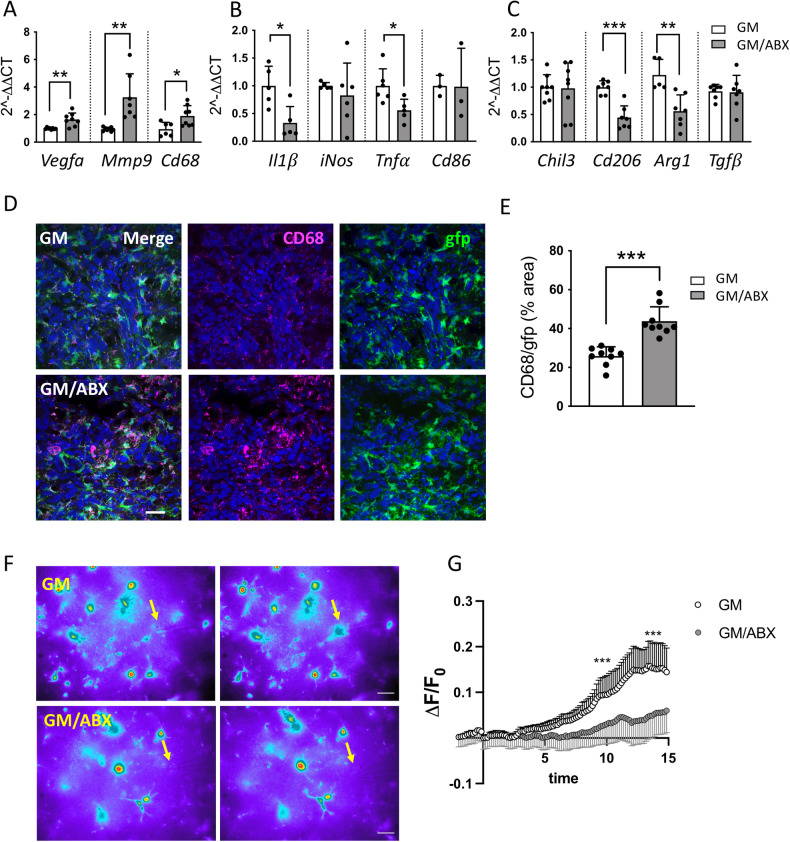
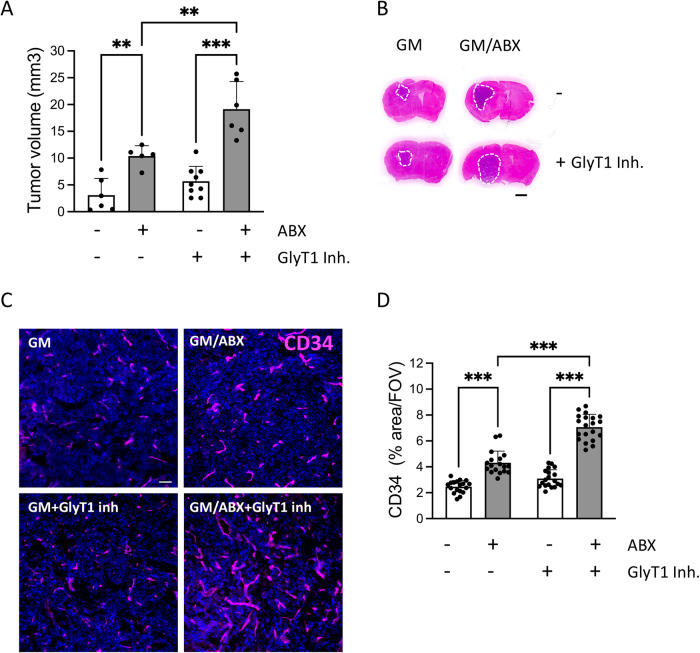
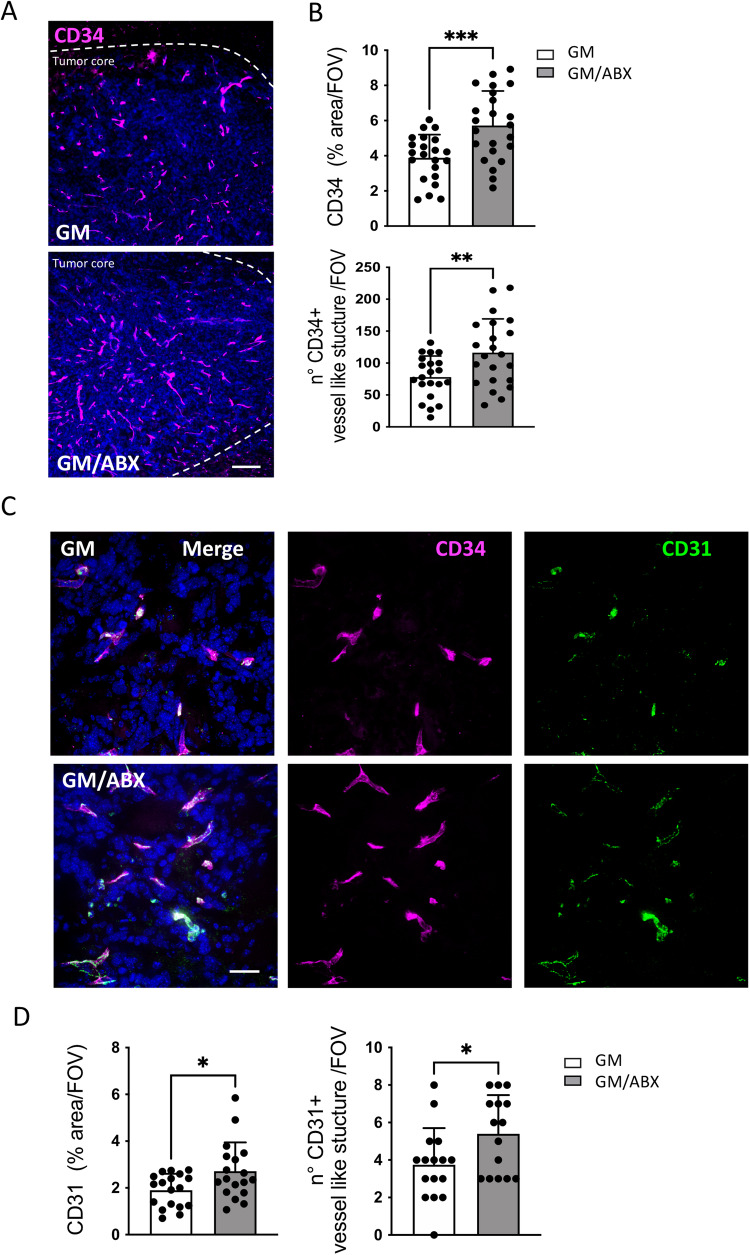
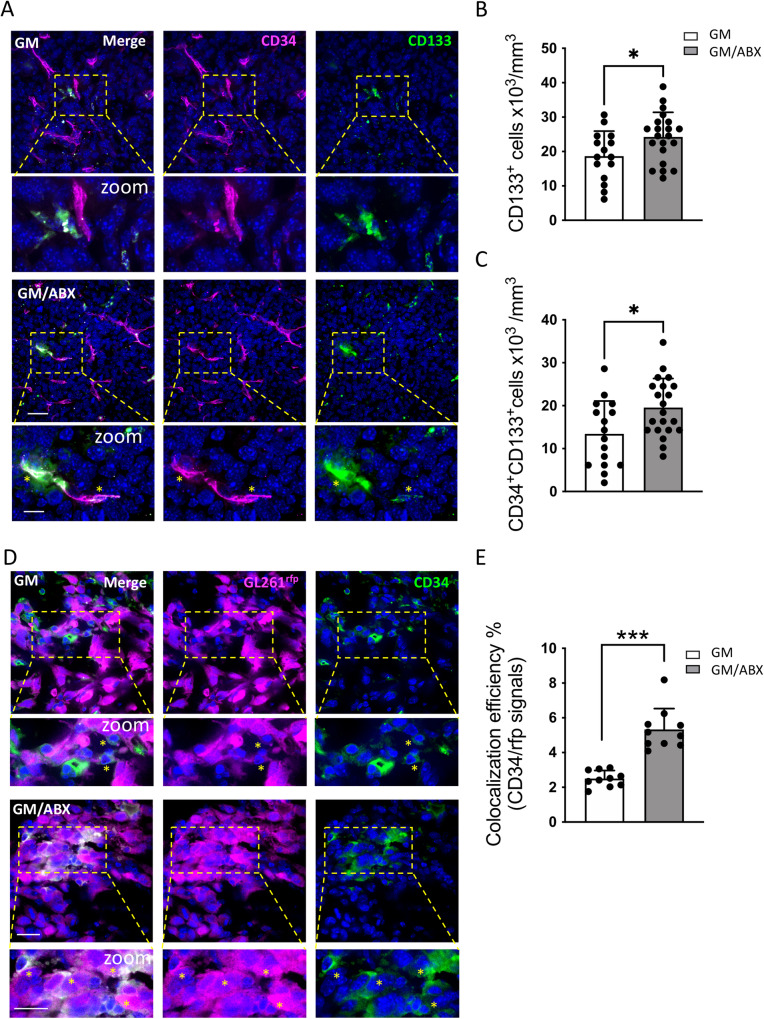
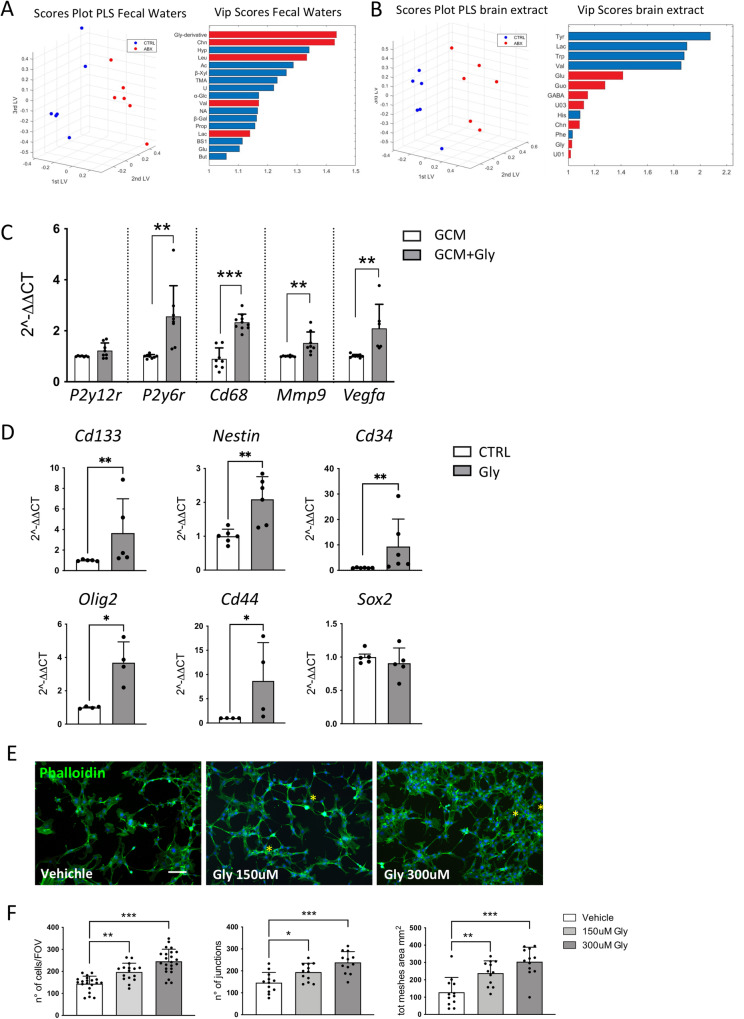
In recent years, several studies described the close relationship between the composition of gut microbiota and brain functions, highlighting the importance of gut-derived metabolites in mediating neuronal and glial cells cross-talk in physiological and pathological condition. Gut dysbiosis may affects cerebral tumors growth and progression, but the specific metabolites involved in this modulation have not been identified yet. Using a syngeneic mouse model of glioma, we have investigated the role of dysbiosis induced by the administration of non-absorbable antibiotics on mouse metabolome and on tumor microenvironment. We report that antibiotics treatment induced: (1) alteration of the gut and brain metabolome profiles; (2) modeling of tumor microenvironment toward a pro-angiogenic phenotype in which microglia and glioma cells are actively involved; (3) increased glioma stemness; (4) trans-differentiation of glioma cells into endothelial precursor cells, thus increasing vasculogenesis. We propose glycine as a metabolite that, in ABX-induced dysbiosis, shapes brain microenvironment and contributes to glioma growth and progression.
近年来,有几项研究描述了肠道微生物群落组成与大脑功能之间的密切关系,强调了肠道衍生代谢物在介导生理和病理条件下神经元和神经胶质细胞相互作用中的重要性。肠道菌群失调可能会影响脑肿瘤的生长和进展,但尚未确定参与这种调节的特定代谢物。我们使用胶质细胞瘤的同基因小鼠模型,研究了给予不可吸收抗生素引起的菌群失调对小鼠代谢组和肿瘤微环境的作用。我们报告称,抗生素治疗诱导:(1)肠道和大脑代谢组谱的改变;(2)向促血管生成表型模拟肿瘤微环境,其中小胶质细胞和神经胶质瘤细胞积极参与;(3)增加神经胶质瘤干细胞;(4)神经胶质瘤细胞向内皮祖细胞的转分化,从而增加血管生成。我们提出甘氨酸是一种代谢物,在 ABX 诱导的菌群失调中,它可以塑造大脑微环境,并有助于神经胶质瘤的生长和进展。