School of Psychology, University of Kent, Canterbury, CT2 7NP, UK.
Exp Brain Res. 2020 Mar;238(3):689-698. doi: 10.1007/s00221-020-05741-x. Epub 2020 Feb 8.
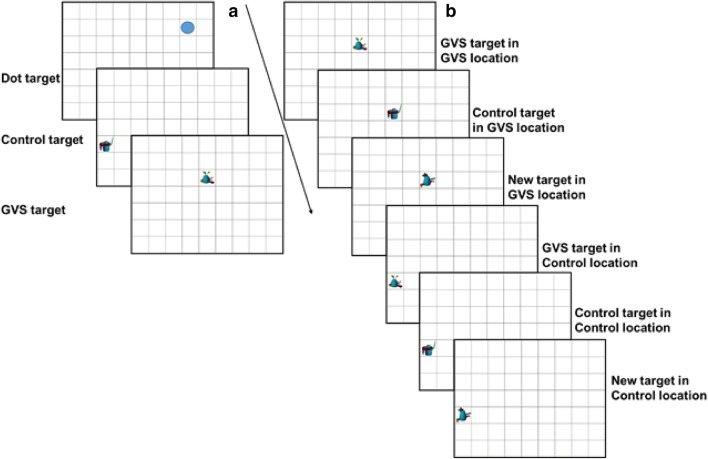
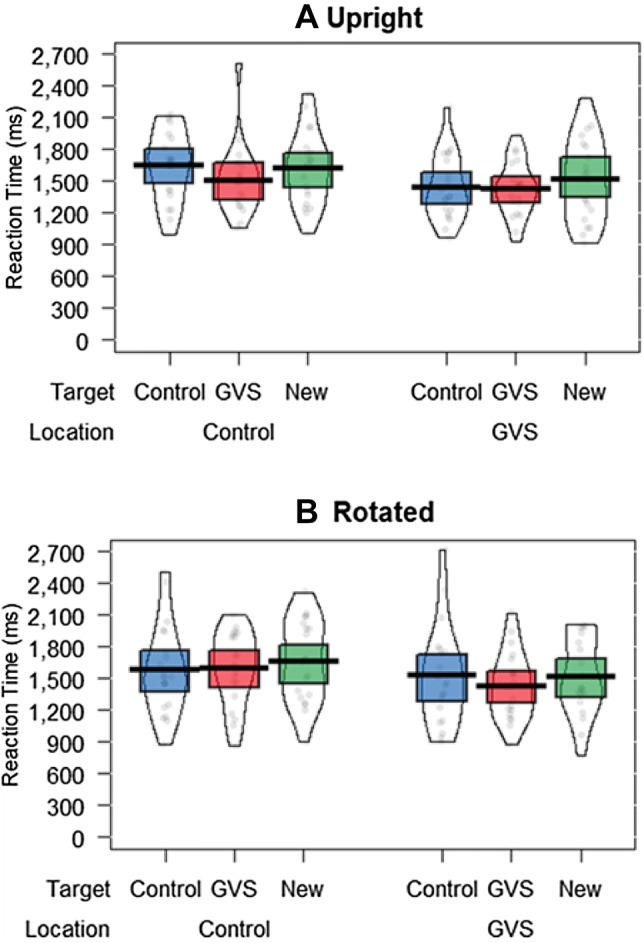
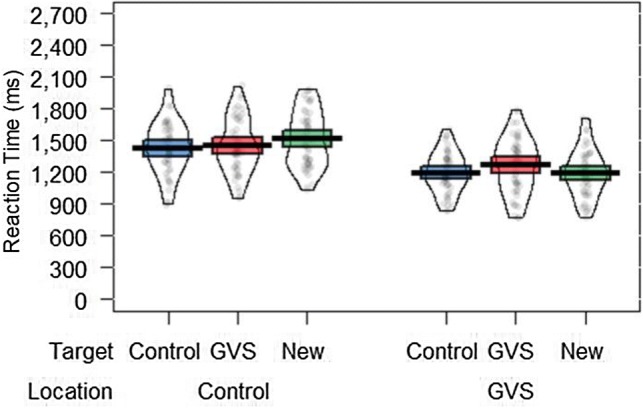
The amnesic symptoms that accompany vestibular dysfunction point to a functional relationship between the vestibular and visual memory systems. However, little is known about the underpinning cognitive processes. As a starting point, we sought evidence for a type of cross-modal interaction commonly observed between other sensory modalities in which the identification of a target (in this case, visual) is facilitated if earlier coupled to a unique, temporally coincident stimulus from another sensory domain (in this case, vestibular). Participants first performed a visual detection task in which stimuli appeared at random locations within a computerised grid. Unknown to participants, the onset of one particular stimulus was accompanied by a brief, sub-sensory pulse of galvanic vestibular stimulation (GVS). Across two visual search experiments, both old and new targets were identified faster when presented in the grid location at which the GVS-paired visual stimulus had appeared in the earlier detection task. This location advantage appeared to be based on relative rather than absolute spatial co-ordinates since the effect held when the search grid was rotated 90°. Together these findings indicate that when individuals return to a familiar visual scene (here, a 2D grid), visual judgements are facilitated when targets appear at a location previously associated with a unique, task-irrelevant vestibular cue. This novel case of multisensory interplay has broader implications for understanding how vestibular signals inform cognitive processes and helps constrain the growing therapeutic application of GVS.
伴随前庭功能障碍的健忘症状表明前庭和视觉记忆系统之间存在功能关系。然而,人们对潜在的认知过程知之甚少。作为一个起点,我们寻求了一种常见于其他感觉模态之间的跨模态相互作用的证据,即在这种情况下,如果目标(在这种情况下是视觉)与另一个感觉域(在这种情况下是前庭)的独特、同时发生的刺激更早地结合,那么目标的识别就会得到促进。参与者首先执行了一项视觉检测任务,其中刺激随机出现在计算机网格的各个位置。参与者不知道的是,一个特定刺激的开始伴随着短暂的、亚感觉的电前庭刺激(GVS)脉冲。在两个视觉搜索实验中,当旧和新目标出现在 GVS 配对的视觉刺激在早期检测任务中出现的网格位置时,它们的识别速度更快。这种位置优势似乎基于相对而不是绝对空间坐标,因为当搜索网格旋转 90°时,效果仍然存在。这些发现共同表明,当个体回到熟悉的视觉场景(这里是 2D 网格)时,当目标出现在以前与独特、任务无关的前庭线索相关的位置时,视觉判断会得到促进。这种新的多感觉相互作用的情况对理解前庭信号如何为认知过程提供信息有更广泛的意义,并有助于限制 GVS 的日益增长的治疗应用。