Integrative Multisensory Perception Action & Cognition Team (ImpAct), INSERM U1028, CNRS UMR5292, Lyon Neuroscience Research Center (CRNL), Lyon, France; University of Lyon 1, Lyon, France.
Integrative Multisensory Perception Action & Cognition Team (ImpAct), INSERM U1028, CNRS UMR5292, Lyon Neuroscience Research Center (CRNL), Lyon, France; University of Lyon 1, Lyon, France; Hospices Civils de Lyon, Neuro-Ophthalmology and Neurocognition, Hôpital Neurologique Pierre Wertheimer, Bron, France.
Cortex. 2018 Jun;103:82-99. doi: 10.1016/j.cortex.2018.02.009. Epub 2018 Feb 27.
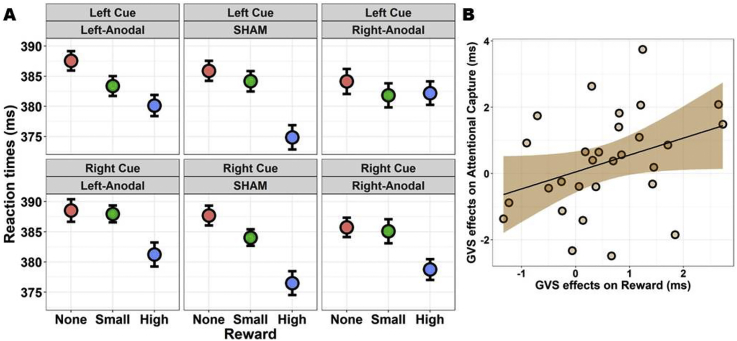
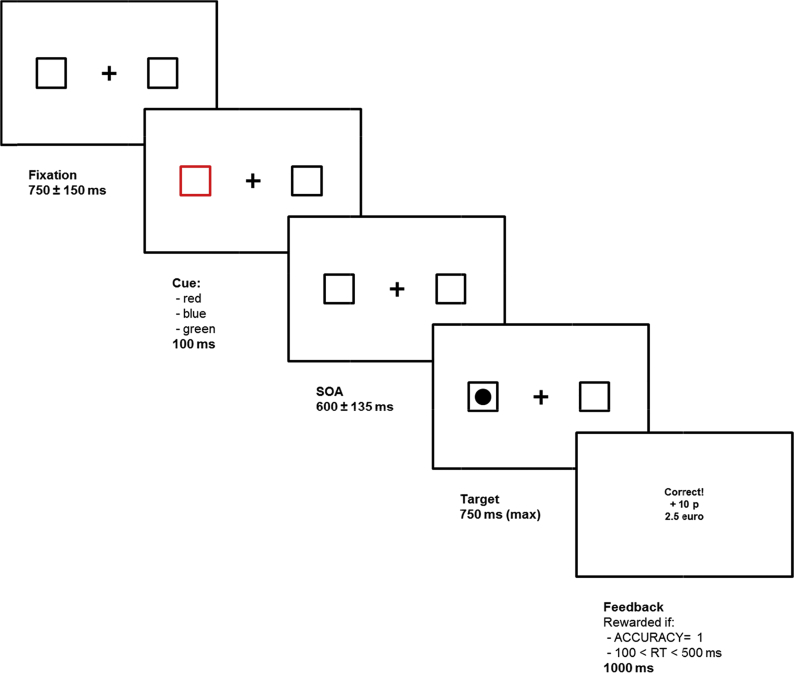
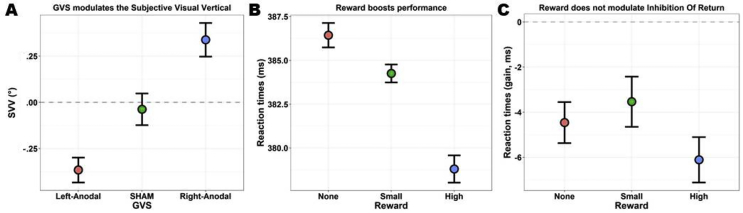
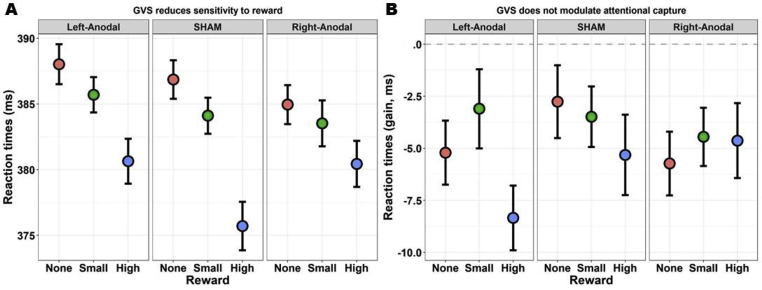
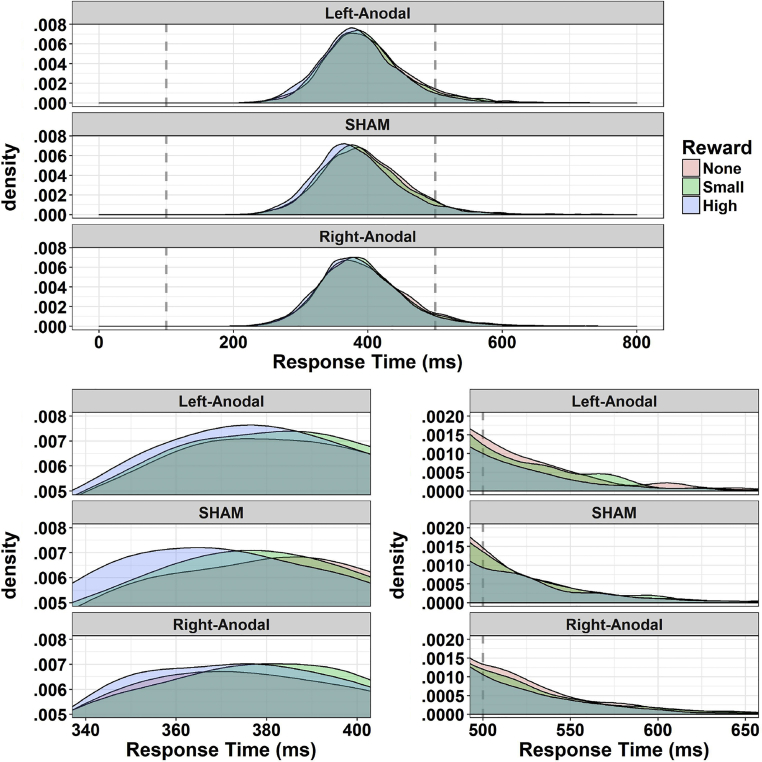
The vestibular system has widespread connections in the central nervous system. Several activation loci following vestibular stimulations have been notably reported in deep, limbic areas that are otherwise difficult to reach and modulate in healthy subjects. Following preliminary evidence, suggesting that such stimulations might affect mood and affective processing, we wondered whether the vestibular system is also involved in motivation. Evolutionary accounts suggest that visuo-vestibular mismatches might have a role in preventing the search for and exploitation of goods that previously resulted in aversive reactions, as they would be a fine warning signal which follows the contact with or ingestion of noxious neurotoxins. The first question was thus whether vestibular stimulation alters sensitivity to reward. Secondly, we sought to assess whether attention is allocated in space differently when cued by highly motivational stimuli, and if this interplay is further modulated by the vestibular system. In order to evaluate both motivational and attentional assets, we administered a Posner-like cueing task to 30 healthy subjects concurrently receiving sham or galvanic vestibular stimulation (GVS; Left-Anodal and Right-Anodal configurations). The participants had to discriminate targets appearing in either exogenously cued or uncued locations (50% validity); cues predicted the amount of points (0, 2, or 10) and thus money that they could earn for a correct response. The results highlight a robust inhibition of return (IOR) (faster responses for invalidly-cued targets) which was not modulated by different levels of reward or GVS. Across all stimulation sessions, rewards exerted a powerful beneficial effect over performance: reaction times were faster when rewards were at stake. However, this effect was largest in sham, but greatly reduced in GVS conditions, most notably with the Right-Anodal configuration. This is the first evidence for a decreased sensitivity to rewards causally induced by a perturbation of the vestibular system. While future studies will shed light on its neural underpinnings and clinical implications, here we argue that GVS could be a safe and promising way to enrich our understanding of reward processes and eventually tackle the management of patients with aberrant sensitivity to rewards.
前庭系统在中枢神经系统中具有广泛的连接。在深部边缘区域已经报道了几个在健康受试者中难以到达和调节的前庭刺激后的激活部位。在初步证据表明,这种刺激可能会影响情绪和情感处理之后,我们想知道前庭系统是否也参与了动机。进化理论表明,视-前庭不匹配可能在防止寻找和利用以前产生厌恶反应的物品方面发挥作用,因为它们是一种精细的警告信号,会在接触或摄入有毒神经毒素后出现。因此,第一个问题是前庭刺激是否会改变对奖励的敏感性。其次,我们试图评估高度激励性刺激提示时注意力在空间中的分配方式是否不同,如果这种相互作用进一步受到前庭系统的调节。为了评估动机和注意力资产,我们向 30 名健康受试者同时进行了类似于 Posner 的提示任务,同时接受假刺激或电刺激(左阳极和右阳极配置)。参与者必须辨别出出现在外部提示或非提示位置的目标(50%的有效性);线索预测了他们可以获得的分数(0、2 或 10)和金钱,以便对正确的反应进行奖励。结果突出了一种强大的抑制返回(IOR)(无效提示目标的反应更快),这种抑制不会被不同水平的奖励或 GVS 调节。在所有刺激过程中,奖励对表现产生了强大的有益影响:有奖励时反应时间更快。然而,这种效果在假刺激条件下最大,但在 GVS 条件下大大降低,尤其是在右阳极配置下。这是前庭系统受到干扰导致对奖励的敏感性降低的第一个因果证据。虽然未来的研究将揭示其神经基础及其临床意义,但在这里我们认为,GVS 可能是一种安全且有前途的方法,可以丰富我们对奖励过程的理解,并最终解决对奖励异常敏感的患者的管理问题。