Oxford University Clinical Research Unit, Hospital for Tropical Diseases, Ho Chi Minh City, Vietnam.
Oxford University Clinical Research Unit, Hospital for Tropical Diseases, Ho Chi Minh City, Vietnam.
Poult Sci. 2020 Feb;99(2):783-790. doi: 10.1016/j.psj.2019.10.033. Epub 2019 Dec 26.
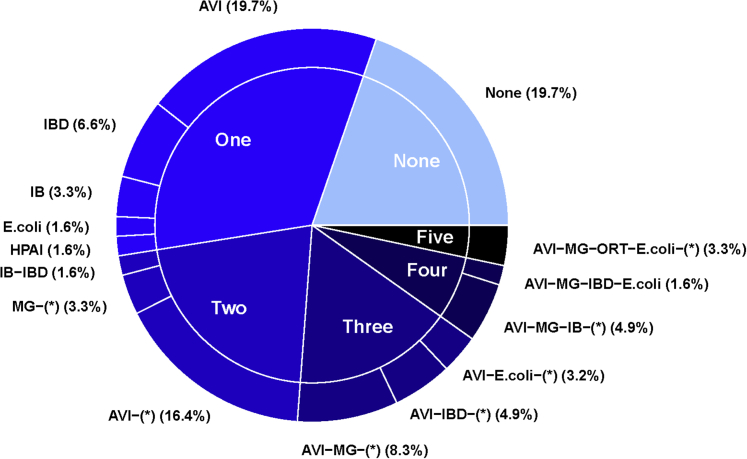
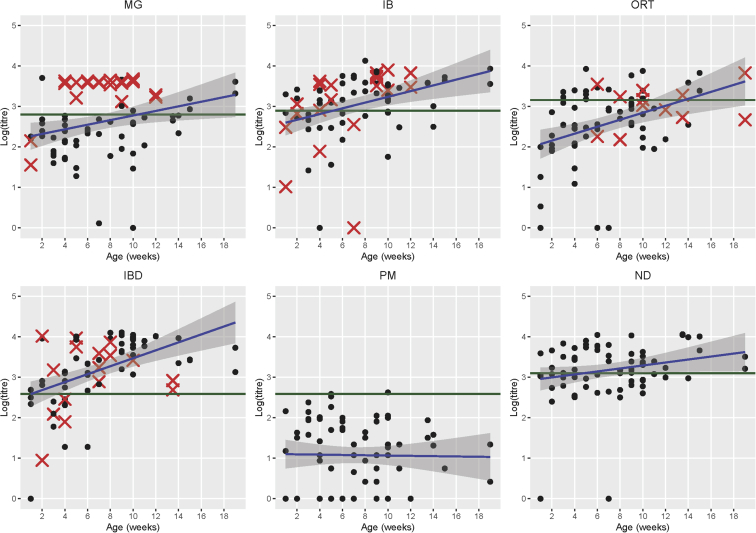
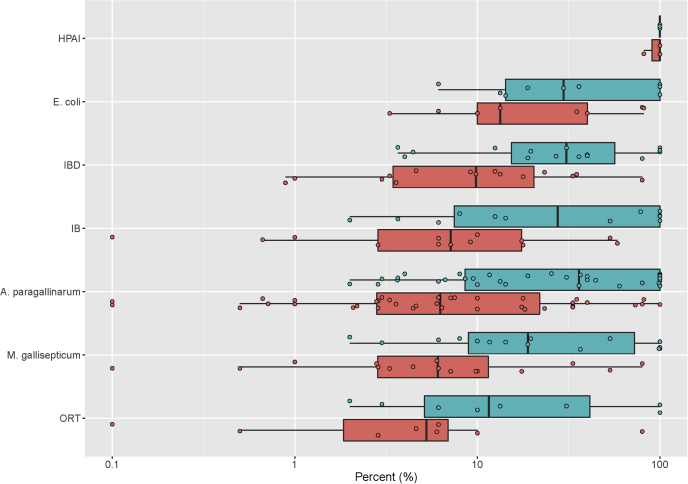
In the Mekong Delta region of Vietnam, small-scale chicken farming is common. However, high levels of disease or mortality in such flocks impair economic development and challenge the livelihoods of many rural households. We investigated 61 diseased small-scale flocks (122 chickens) for evidence of infection with 5 bacteria, 4 viruses, and helminths. Serological profiles (ELISA) were also determined against 6 of these pathogens. The aims of this study were the following: (1) to investigate the prevalence of different pathogens and to compare the probability of detection of bacterial pathogens using PCR and culture; (2) to investigate the relationship between detection of organisms in birds' tissues and the observed morbidity and mortality, as well as their antibody profile; and (3) to characterize risk factors for infection with specific viral or bacterial pathogens. We used PCR to test for viral (viruses causing infectious bronchitis [IB], highly pathogenic avian influenza [HPAI], Newcastle disease, and infectious bursal disease [IBD]) and bacterial pathogens (Mycoplasma gallisepticum, Pasteurella multocida, Avibacterium paragallinarum, and Ornithobacterium rhinotracheale [ORT]). The latter two were also investigated in respiratory tissues by conventional culture. Colisepticemic Escherichia coli was investigated by liver or spleen culture. In 49 of 61 (80.3%) flocks, at least one bacterial or viral pathogen was detected, and in 29 (47.5%) flocks, more than one pathogen was detected. A. paragallinarum was detected in 62.3% flocks, followed by M. gallisepticum (26.2%), viruses causing IBD (24.6%) and IB (21.3%), septicemic E. coli (14.8%), ORT (13.1%), and HPAI viruses (4.9%). Of all flocks, 67.2% flocks were colonized by helminths. Mortality was highest among flocks infected with HPAI (100%, interquartile range [IQR]: 81.6-100%) and lowest with flocks infected with ORT (5.3%, IQR: 1.1-9.0%). The results indicated slight agreement (kappa ≤ 0.167) between detection by PCR and culture for both A. paragallinarum and ORT, as well as between the presence of cestodes and ORT infection (kappa = 0.317). Control of A. paragallinarum, viruses causing HPAI, IBD, and IB, M. gallisepticum, and gastrointestinal helminths should be a priority in small-scale flocks.
在越南湄公河三角洲地区,小规模养鸡很常见。然而,这种禽类群中高水平的疾病或死亡率会损害经济发展,并对许多农村家庭的生计构成挑战。我们调查了 61 个患病的小规模禽类群(122 只鸡),以寻找 5 种细菌、4 种病毒和寄生虫感染的证据。还针对其中 6 种病原体进行了血清学分析(ELISA)。本研究的目的如下:(1)调查不同病原体的流行情况,并比较使用 PCR 和培养法检测细菌病原体的概率;(2)调查鸟类组织中检测到的生物体与观察到的发病率和死亡率以及它们的抗体谱之间的关系;(3)描述感染特定病毒或细菌病原体的风险因素。我们使用 PCR 检测了传染性支气管炎病毒(IB)、高致病性禽流感病毒(HPAI)、新城疫病毒和传染性法氏囊病病毒(IBD)等病毒以及鸡毒支原体、多杀性巴氏杆菌、禽传染性鼻炎病毒(ORT)和滑液囊支原体等细菌病原体。后两种病原体也通过常规培养检测了呼吸道组织。大肠杆菌败血症通过肝脏或脾脏培养进行检测。在 61 个禽类群中,有 49 个(80.3%)至少检测到一种细菌或病毒病原体,有 29 个(47.5%)检测到一种以上病原体。62.3%的禽类群中检测到禽传染性鼻炎病毒,其次是鸡毒支原体(26.2%)、传染性法氏囊病病毒(24.6%)和传染性支气管炎病毒(21.3%)、大肠杆菌败血症(14.8%)、ORT(13.1%)和高致病性禽流感病毒(4.9%)。所有禽类群中,有 67.2%的禽类群被寄生虫定植。感染 HPAI 的禽类群死亡率最高(100%,四分位距[IQR]:81.6-100%),感染 ORT 的禽类群死亡率最低(5.3%,IQR:1.1-9.0%)。结果表明,PCR 和培养法对禽传染性鼻炎病毒和 ORT 的检测之间有轻微的一致性(kappa≤0.167),以及绦虫的存在与 ORT 感染之间有轻微的一致性(kappa=0.317)。在小规模禽类群中,应优先控制禽传染性鼻炎病毒、HPAI、IBD、IB、鸡毒支原体和胃肠道寄生虫。