Department of Clinical Laboratory, Peking Union Medical College Hospital, Peking Union Medical College, Chinese Academy of Medical Sciences, Beijing, People's Republic of China.
Beijing Key Laboratory for Mechanisms Research and Precision Diagnosis of Invasive Fungal Diseases, Beijing, People's Republic of China.
Emerg Microbes Infect. 2020 Feb 9;9(1):320-331. doi: 10.1080/22221751.2020.1721334. eCollection 2020.
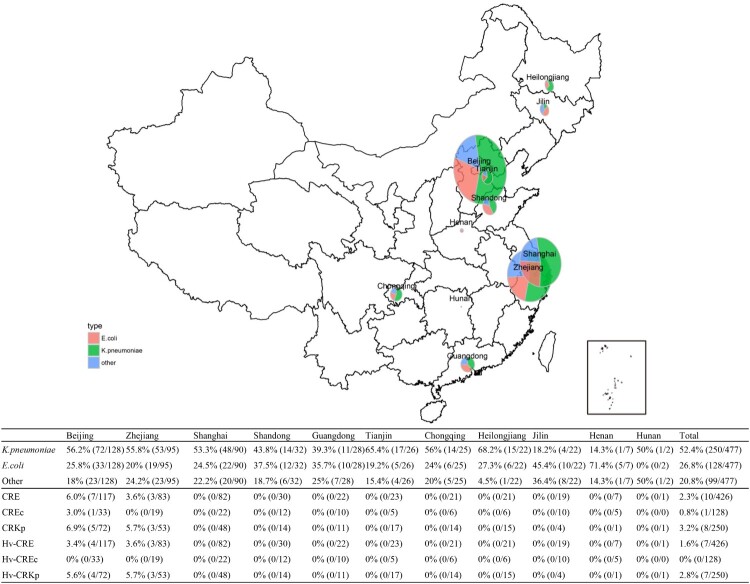
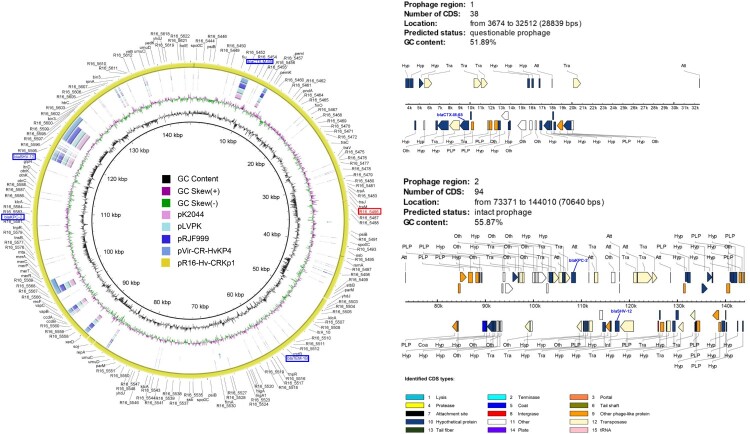
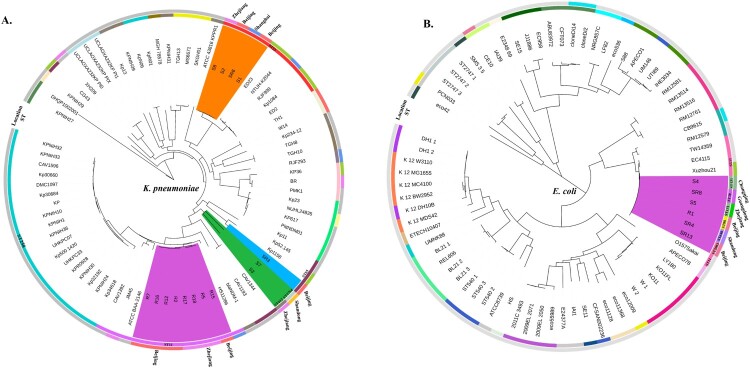
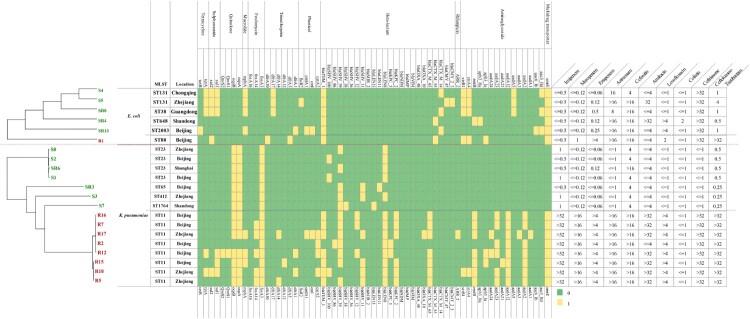
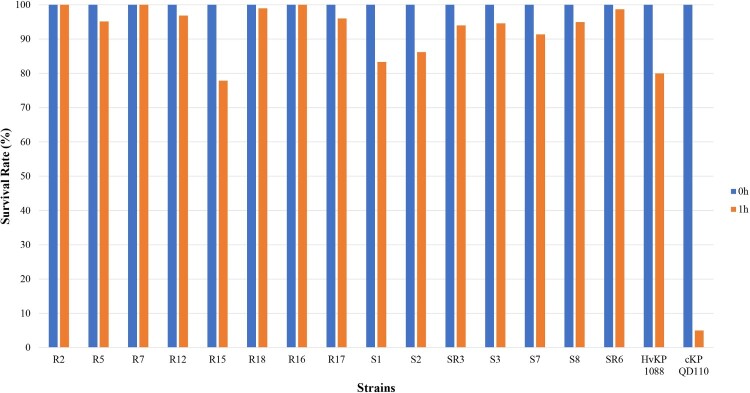
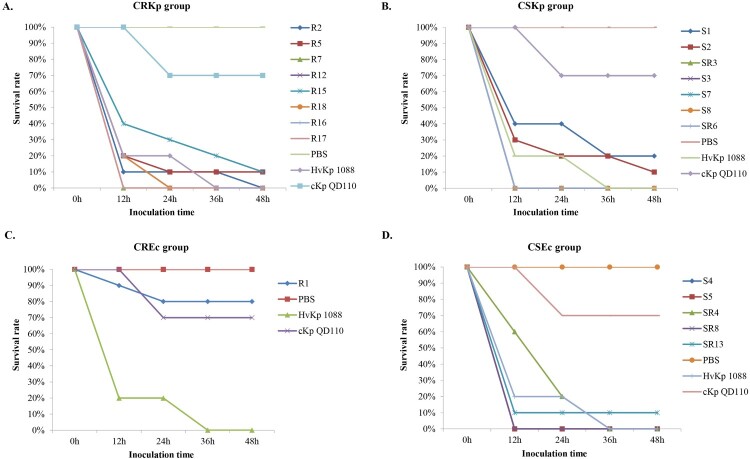
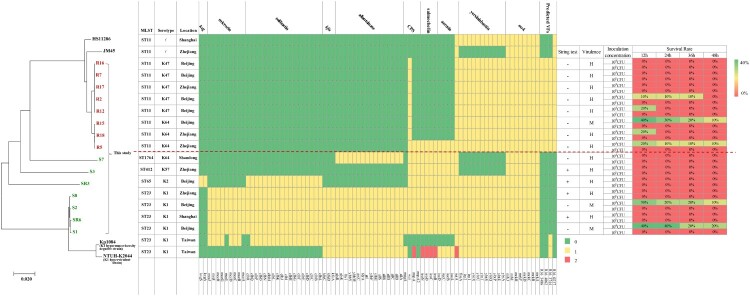
Multidrug-resistant bacteria, especially those with high virulence, are an emerging problem in clinical settings. We conducted a multicentre epidemiological and comparative genomic analysis on the evolution, virulence and antimicrobial resistance of carbapenem-resistant in patients with bacterial liver abscesses from 2012 to 2016. A total of 477 bacterial isolates were collected. were the main pathogen (89.3%) with (52.4%) predominating followed by (26.8%). All CRKps (3.2%) were of sequence type (ST) 11 and serotypes K47 or K64, and simultaneously possessed acquired / and together with the multidrug transporter EmrE. Seven Hv-CRKps (five ST11-K47, two ST11-K64) were confirmed by bacteriological test, neutrophil killing assay and infection model. Genomic analysis indicated that the emergence of one ST11-K64 Hv-CRKp strain was related to the acquisition of genes and siderophore gene clusters, while ST11-K47 Hv-CRKp lacked these traditional virulence genes. Further complete genome analysis of one ST11-K47 Hv-CRKp strain, R16, showed that it acquired a rare plasmid (pR16-Hv-CRKp1) carrying , , , , and a predicted virulence gene R16_5486 simultaneously. The emergence of the ST11-K47/K64 Hv-CRKps, which are simultaneously multidrug-resistant and hypervirulent, requires urgent control measures to be implemented.
耐多药细菌,尤其是那些高毒力的细菌,是临床环境中一个新出现的问题。我们对 2012 年至 2016 年期间细菌性肝脓肿患者的耐碳青霉烯肠杆菌进行了一项多中心的流行病学和比较基因组分析,以研究其进化、毒力和抗菌耐药性。共收集了 477 株细菌分离株。肠杆菌属(89.3%)是主要病原体,其中肺炎克雷伯菌(52.4%)占优势,其次是大肠埃希菌(26.8%)。所有耐碳青霉烯类肠杆菌(3.2%)均为 ST11 型,血清型为 K47 或 K64,同时携带获得性 / 和多药转运蛋白 EmrE。通过细菌学检测、中性粒细胞杀伤试验和 感染模型证实了 7 株 Hv-CRKp(5 株 ST11-K47,2 株 ST11-K64)的存在。基因组分析表明,一株 ST11-K64 Hv-CRKp 菌株的出现与 基因和铁载体基因簇的获得有关,而 ST11-K47 Hv-CRKp 则缺乏这些传统的毒力基因。对一株 ST11-K47 Hv-CRKp 菌株 R16 的全基因组分析进一步表明,它获得了一个罕见的质粒(pR16-Hv-CRKp1),该质粒同时携带 、 、 、 、 和一个预测的毒力基因 R16_5486。ST11-K47/K64 Hv-CRKp 株的同时出现,具有多药耐药性和高毒性,需要采取紧急控制措施。