Wang Ruixiang, Martin Connor D, Lei Anna L, Hausknecht Kathryn A, Ishiwari Keita, Richards Jerry B, Haj-Dahmane Samir, Shen Roh-Yu
Department of Pharmacology and Toxicology, Jacobs School of Medicine and Biomedical Sciences, University at Buffalo, The State University of New York, Buffalo, NY, United States.
Department of Psychology, University at Buffalo, The State University of New York, Buffalo, NY, United States.
Front Neurosci. 2020 Jan 24;14:12. doi: 10.3389/fnins.2020.00012. eCollection 2020.
Prenatal ethanol exposure (PE) causes multiple behavioral and cognitive deficits, collectively referred to as fetal alcohol spectrum disorders (FASD). Studies show that 49-94% of FASD children exhibit attention deficits, even when they have normal IQs or lack severe facial deformities, suggesting that attention deficits could be caused by even moderate prenatal exposure to alcohol, of which the underlying neural mechanisms are still unclear. A valid rodent model could help elucidate this phenomenon.
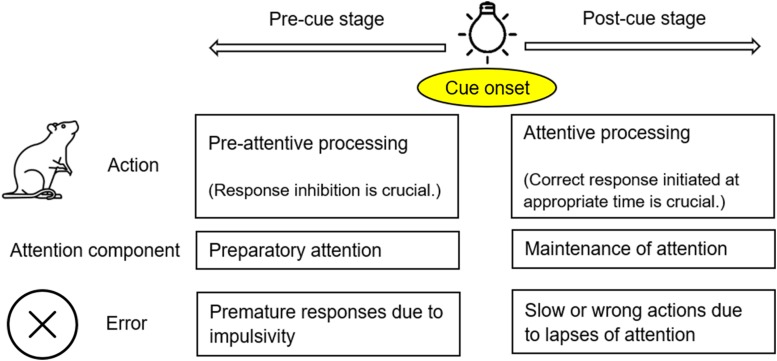
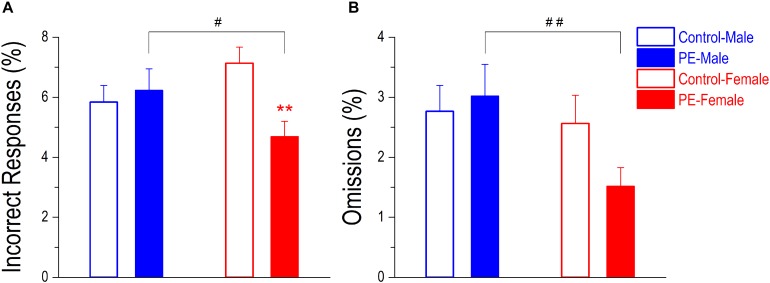
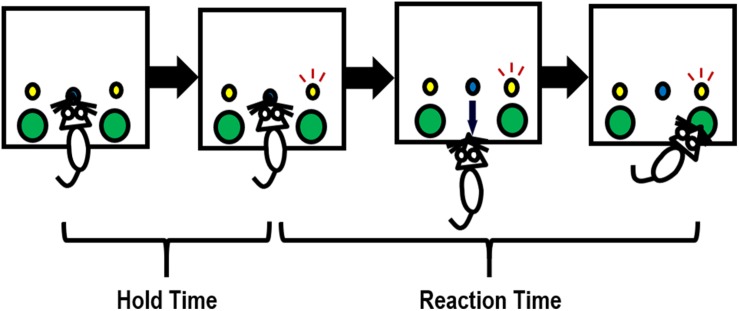
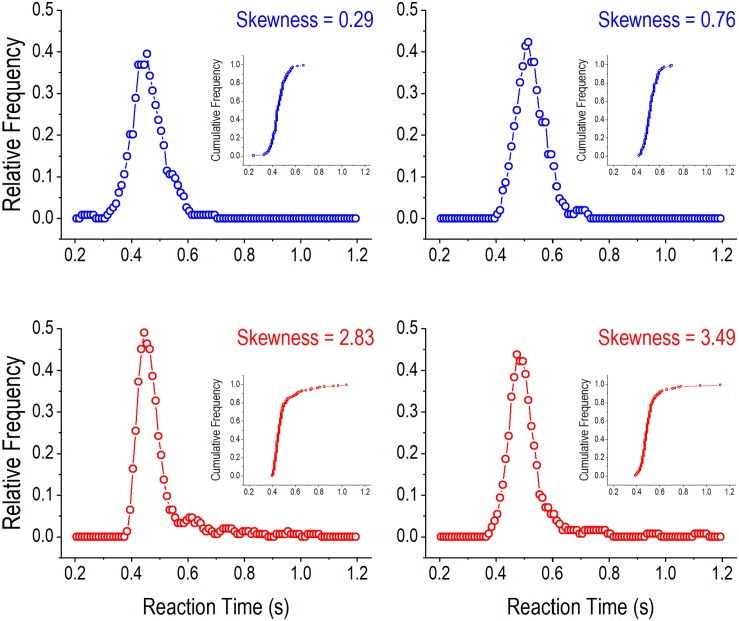
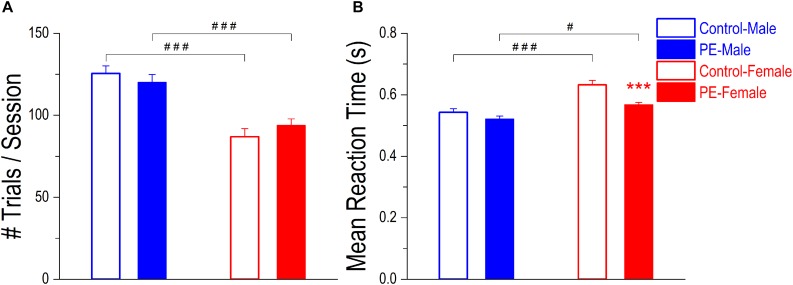
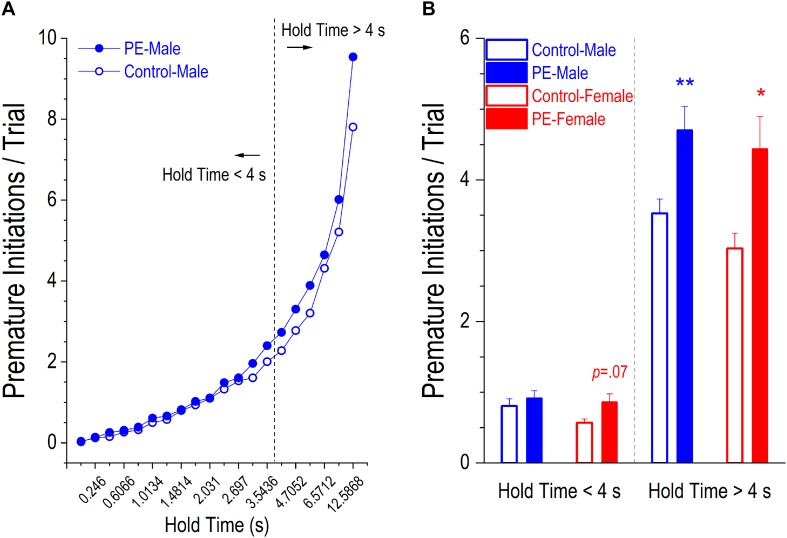
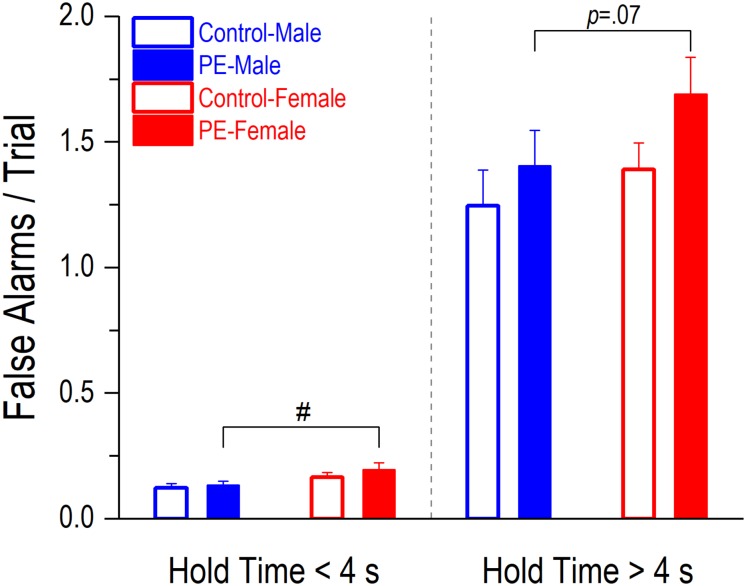
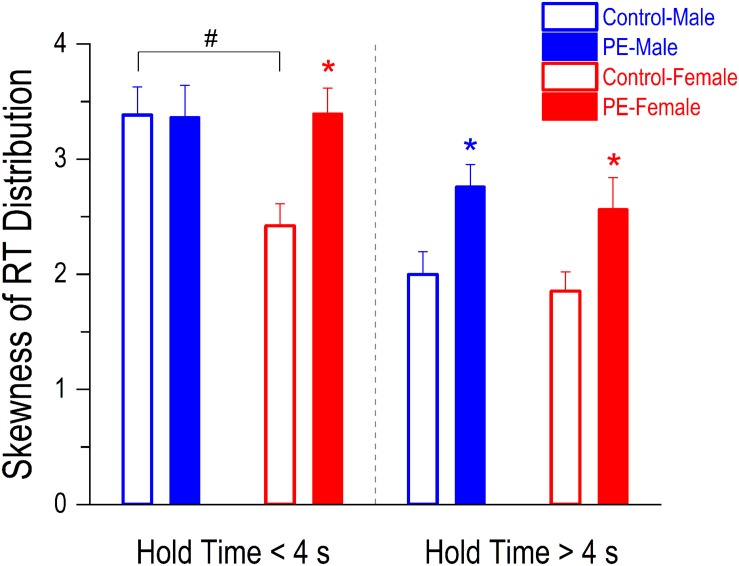
A second-trimester equivalent binge drinking PE model was utilized. Pregnant Sprague Dawley rats were administered with 15% (w/v) ethanol (6 g/kg/day, via gastric gavage) during gestational days 8-20, and their offspring were the subjects in the present study. A modified 2-choice reaction time (2-CRT) task was used to illustrate possible attention deficits, including increased action impulsivity and lapses of attention. Enhanced impulsivity was reflected by more premature responses while increased lapses of attention were manifested as more incorrect responses and/or greater variability of reaction time, demonstrated by more skewed distributions of reaction time. Ten-week-old male and female rats were tested for three sessions following 16-19 days of training.
Our PE paradigm caused no major teratogenic effects. PE led to increased impulsivity exhibited as greater premature responses and augmented lapses of attention shown by greater skewnesses of reaction time distributions, relative to controls. The deficits were observed in both PE male and female rats. Interestingly, in males, the attention deficits were detected only when the 2-CRT task was relatively difficult whereas in females they were detected even when the task was at a less demanding level.
We show that the binge drinking pattern of PE led to attention deficits in both sexes of rats even though no major teratogenic effects were observed. Therefore, this rodent model can be used to study neural mechanisms underlying attention deficits caused by PE and to explore effective intervention approaches for FASD.
产前乙醇暴露(PE)会导致多种行为和认知缺陷,统称为胎儿酒精谱系障碍(FASD)。研究表明,49%至94%的FASD儿童存在注意力缺陷,即使他们智商正常或没有严重的面部畸形,这表明即使是中度产前酒精暴露也可能导致注意力缺陷,但其潜在的神经机制仍不清楚。一个有效的啮齿动物模型有助于阐明这一现象。
采用相当于孕中期的暴饮式PE模型。在妊娠第8至20天,给怀孕的斯普拉格-道利大鼠灌胃15%(w/v)乙醇(6克/千克/天),它们的后代为本研究的对象。使用改良的二选一反应时(2-CRT)任务来说明可能存在的注意力缺陷,包括行动冲动性增加和注意力不集中。冲动性增强表现为更多的过早反应,而注意力不集中增加则表现为更多的错误反应和/或反应时的更大变异性,反应时分布更偏态可证明这一点。在训练16至19天后,对10周龄的雄性和雌性大鼠进行了三个阶段的测试。
我们的PE范式未产生重大致畸作用。与对照组相比,PE导致冲动性增加,表现为更多的过早反应,以及注意力不集中增加,表现为反应时分布的更大偏态。在PE雄性和雌性大鼠中均观察到这些缺陷。有趣的是,在雄性大鼠中,只有当2-CRT任务相对困难时才检测到注意力缺陷,而在雌性大鼠中,即使任务要求较低时也能检测到。
我们表明,PE的暴饮模式导致大鼠两性均出现注意力缺陷,尽管未观察到重大致畸作用。因此,这个啮齿动物模型可用于研究PE引起的注意力缺陷的神经机制,并探索FASD的有效干预方法。