Department of Medical Microbiology and Immunology, Faculty of Medicine and Dentistry, University of Alberta, Edmonton, AB, Canada.
Front Immunol. 2020 Jan 24;10:3128. doi: 10.3389/fimmu.2019.03128. eCollection 2019.
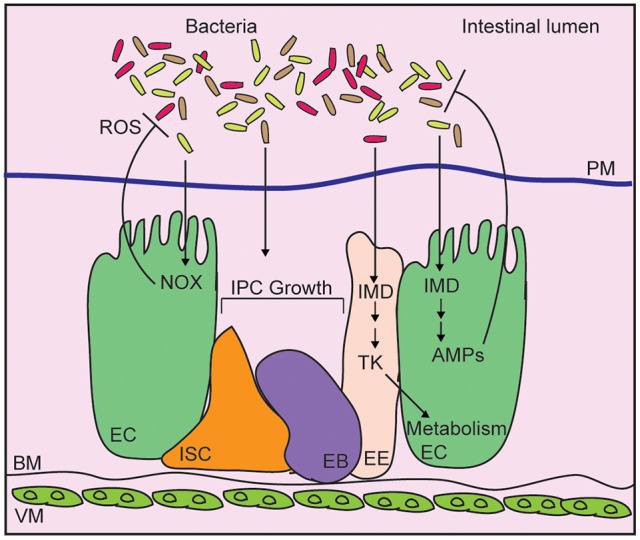
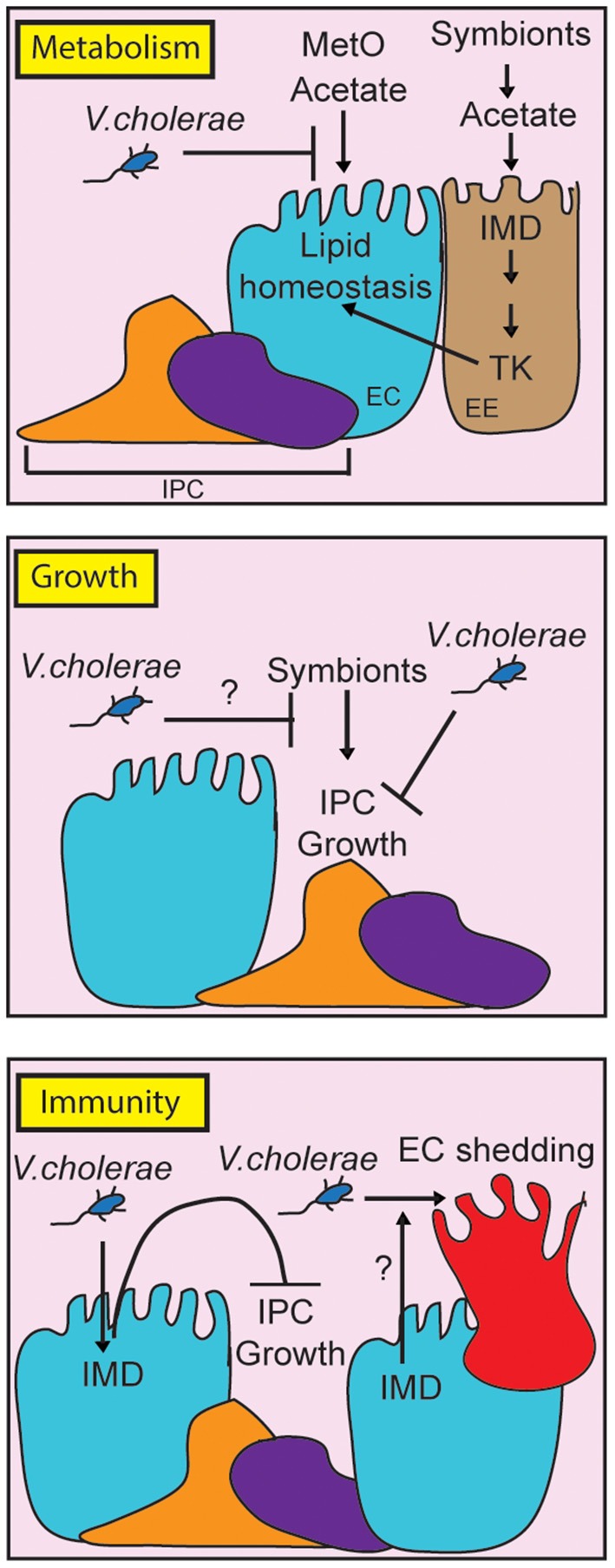
Most animals maintain mutually beneficial symbiotic relationships with their intestinal microbiota. Resident microbes in the gastrointestinal tract breakdown indigestible food, provide essential nutrients, and, act as a barrier against invading microbes, such as the enteric pathogen . Over the last decades, our knowledge of pathogenesis, colonization, and transmission has increased tremendously. A number of animal models have been used to study how interacts with host-derived resources to support gastrointestinal colonization. Here, we review studies on host-microbe interactions and how infection with disrupts these interactions, with a focus on contributions from the model. We will discuss studies that highlight the connections between symbiont, host, and metabolism; crosstalk between and host microbes; and the impact of the host immune system on the lethality of infection. These studies suggest that modulates host immune-metabolic responses in the fly and improves fitness through competition with intestinal microbes.
大多数动物与其肠道微生物群保持互利共生关系。胃肠道内的常驻微生物可分解不可消化的食物,提供必需的营养物质,并充当抵御入侵微生物(如肠道病原体)的屏障。在过去的几十年中,我们对发病机制、定植和传播的认识有了极大的提高。许多动物模型被用于研究 如何与宿主来源的资源相互作用以支持胃肠道定植。在这里,我们综述了关于宿主-微生物相互作用的研究,以及感染 如何破坏这些相互作用,重点介绍了 模型的贡献。我们将讨论强调共生体、宿主和 代谢之间联系的研究; 与宿主微生物之间的串扰;以及宿主免疫系统对 感染致死性的影响。这些研究表明, 在果蝇中调节宿主免疫代谢反应,并通过与肠道微生物竞争来提高自身适应性。