Mahmoud Mohamed Y, Sapare Sonali, Curry Keegan C, Demuth Donald R, Steinbach-Rankins Jill M
Department of Pharmacology and Toxicology, University of Louisville School of Medicine, Louisville, KY, United States.
Center for Predictive Medicine, University of Louisville, Louisville, KY, United States.
Front Chem. 2020 Jan 21;7:926. doi: 10.3389/fchem.2019.00926. eCollection 2019.
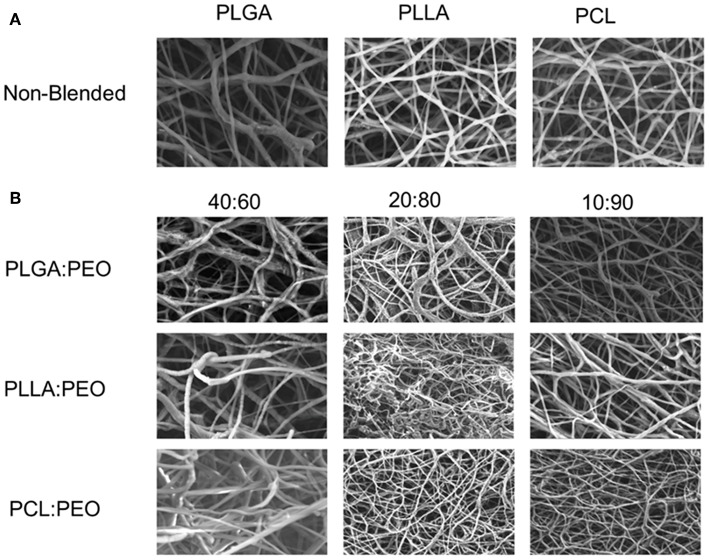
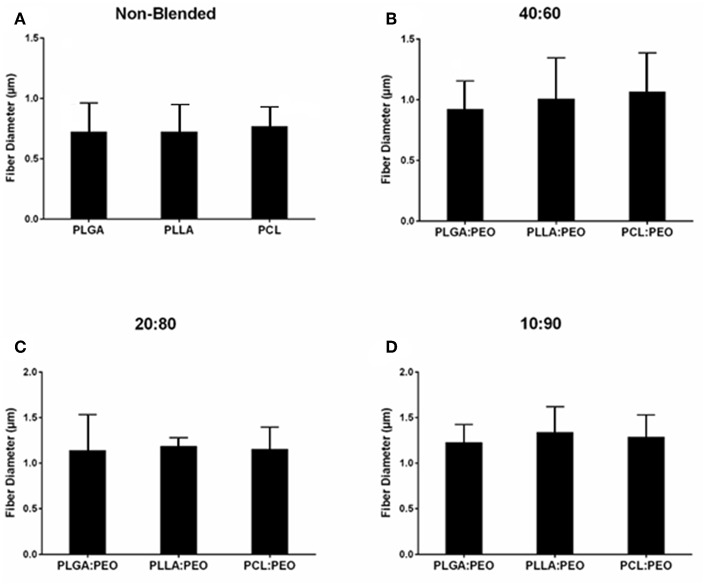
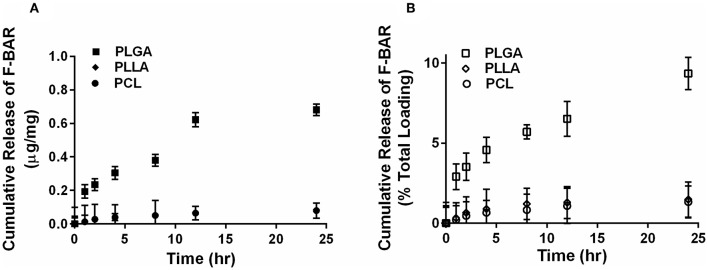
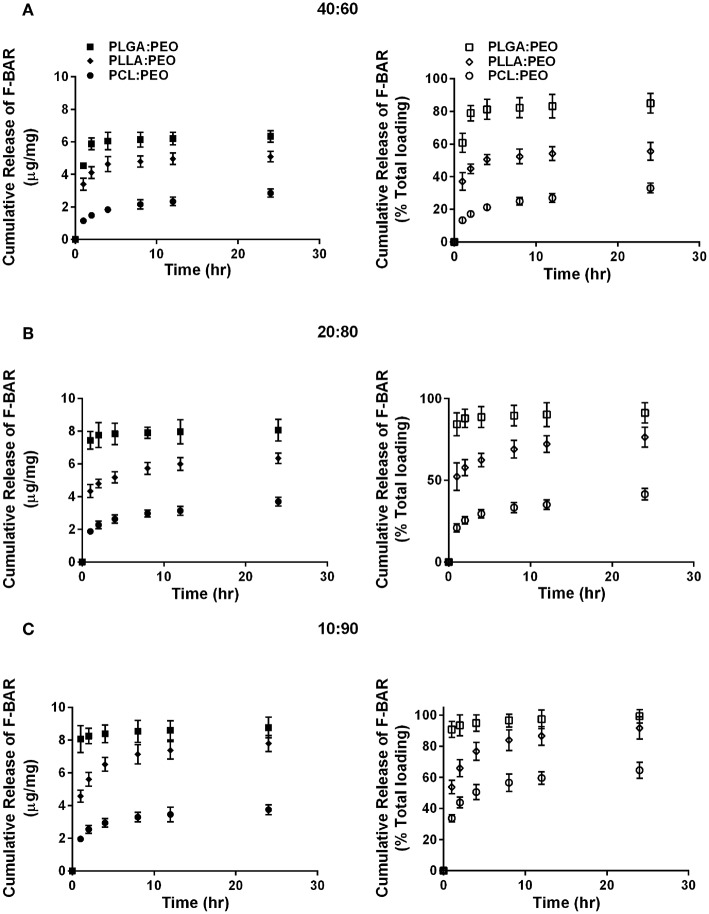
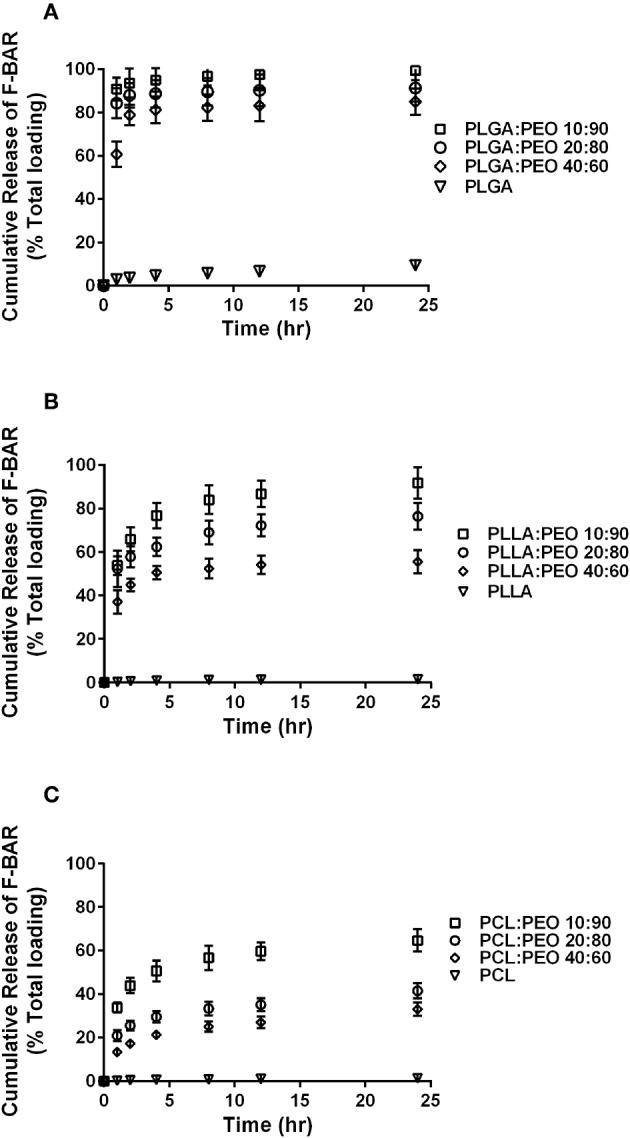
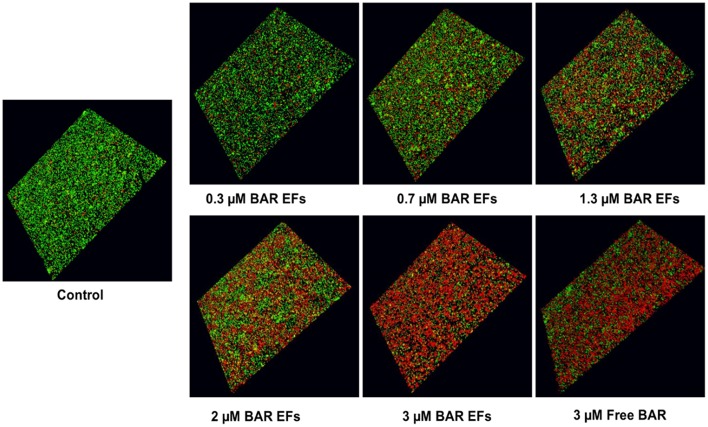
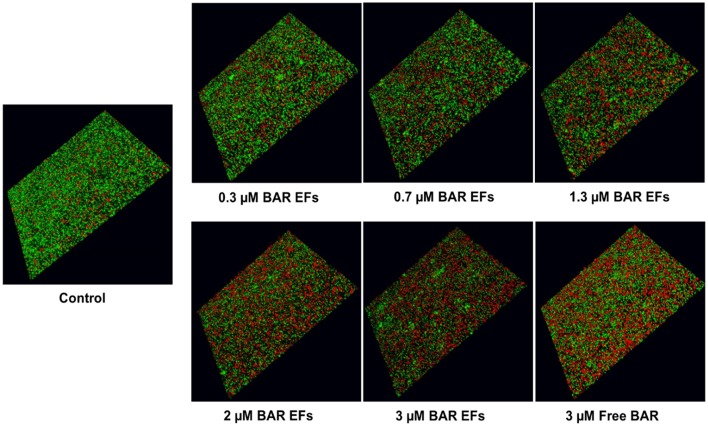
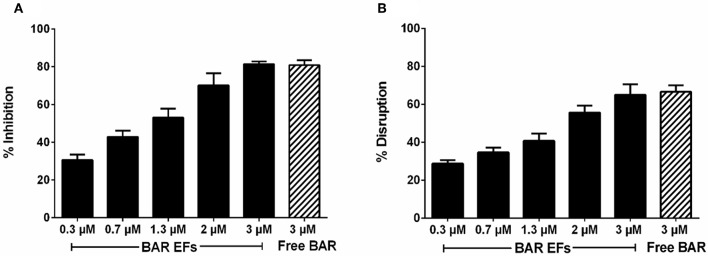
Active agents targeting key bacterial interactions that initiate biofilm formation in the oral cavity, may alter periodontitis progression; however, to date, specifically-targeted prophylactic and treatment strategies have been limited. Previously we developed a peptide, BAR (SspB Adherence Region), that inhibits oral biofilm formation and , and BAR nanoparticles that increase BAR effectiveness via multivalency and prolonged delivery. However, limited BAR loading and nanoparticle retention in the oral cavity can result in inadequate release and efficaciousness. Given this, an effective delivery platform that can release concentrations of BAR suitable for twice-daily applications, may offer an alternative that enhances loading, ease of administration, and retention in the oral cavity. With this in mind, the study objectives were to develop and characterize a rapid-release platform, composed of polymeric electrospun fibers (EFs) that encapsulate BAR, and to evaluate fiber safety and functionality against / biofilms . Poly(lactic-co-glycolic acid) (PLGA), poly(L-lactic acid) (PLLA), and polycaprolactone (PCL) were electrospun alone or blended with polyethylene oxide (PEO), to provide high BAR loading and rapid-release. The most promising formulation, 10:90 PLGA:PEO EFs, provided 95% BAR release after 4 h, dose-dependent inhibition of biofilm formation (IC50 = 1.3 μM), disruption of established dual-species biofilms (IC50 = 2 μM), and maintained high cell viability. These results suggest that BAR-incorporated EFs may provide a safe and specifically-targeted rapid-release platform to inhibit and disrupt dual-species biofilms, that we envision may be applied twice-daily to exert prophylactic effect in the oral cavity.
针对引发口腔生物膜形成的关键细菌相互作用的活性剂,可能会改变牙周炎的进展;然而,迄今为止,特异性靶向的预防和治疗策略一直有限。此前我们开发了一种肽,即BAR(SspB黏附区域),它可抑制口腔生物膜的形成,以及通过多价性和延长递送提高BAR有效性的BAR纳米颗粒。然而,BAR在口腔中的负载有限以及纳米颗粒的保留可能导致释放不足和有效性不佳。鉴于此,一种能够释放适合每日两次应用浓度的BAR的有效递送平台,可能提供一种增强负载、易于给药并在口腔中保留的替代方案。考虑到这一点,本研究的目标是开发并表征一种由包裹BAR的聚合物电纺纤维(EFs)组成的快速释放平台,并评估纤维对生物膜的安全性和功能。聚乳酸-乙醇酸共聚物(PLGA)、聚-L-乳酸(PLLA)和聚己内酯(PCL)单独或与聚环氧乙烷(PEO)混合进行电纺,以实现高BAR负载和快速释放。最有前景的配方,即10:90的PLGA:PEO EFs,在4小时后释放了95%的BAR,对生物膜形成具有剂量依赖性抑制作用(IC50 = 1.3 μM),对已形成的双物种生物膜具有破坏作用(IC50 = 2 μM),并保持了高细胞活力。这些结果表明,掺入BAR的EFs可能提供一个安全且特异性靶向的快速释放平台,以抑制和破坏双物种生物膜,我们设想该平台可每日两次应用于口腔以发挥预防作用。