Ginn Samantha L, Amaya Anais K, Liao Sophia H Y, Zhu Erhua, Cunningham Sharon C, Lee Michael, Hallwirth Claus V, Logan Grant J, Tay Szun S, Cesare Anthony J, Pickett Hilda A, Grompe Markus, Dilworth Kimberley, Lisowski Leszek, Alexander Ian E
Gene Therapy Research Unit, Children's Medical Research Institute, Faculty of Medicine and Health, The University of Sydney and Sydney Children's Hospitals Network, Westmead, Australia.
Telomere Length Regulation Group, Children's Medical Research Institute, Faculty of Medicine and Health, The University of Sydney, Westmead, Australia.
JHEP Rep. 2019 Dec 27;2(1):100065. doi: 10.1016/j.jhepr.2019.100065. eCollection 2020 Feb.
BACKGROUND & AIMS: Genome editing technology has immense therapeutic potential and is likely to rapidly supplant contemporary gene addition approaches. Key advantages include the capacity to directly repair mutant loci with resultant recovery of physiological gene expression and maintenance of durable therapeutic effects in replicating cells. In this study, we aimed to repair a disease-causing point mutation in the ornithine transcarbamylase () locus in patient-derived primary human hepatocytes at therapeutically relevant levels.
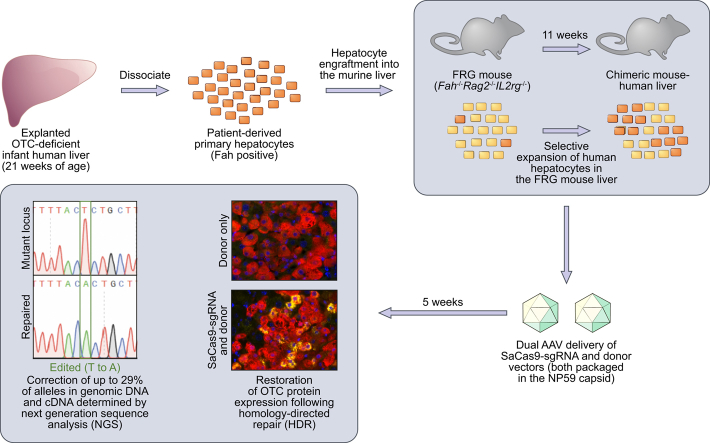
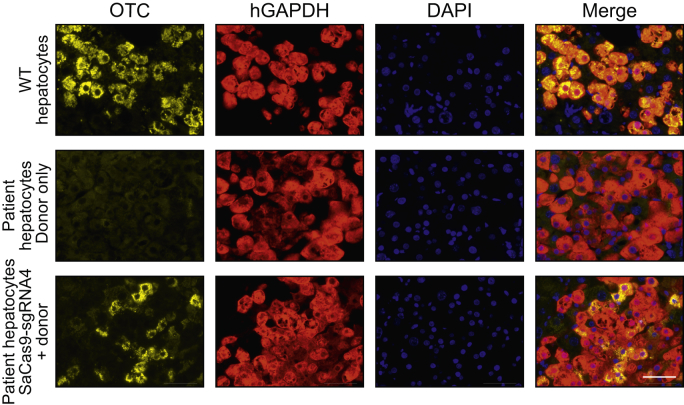
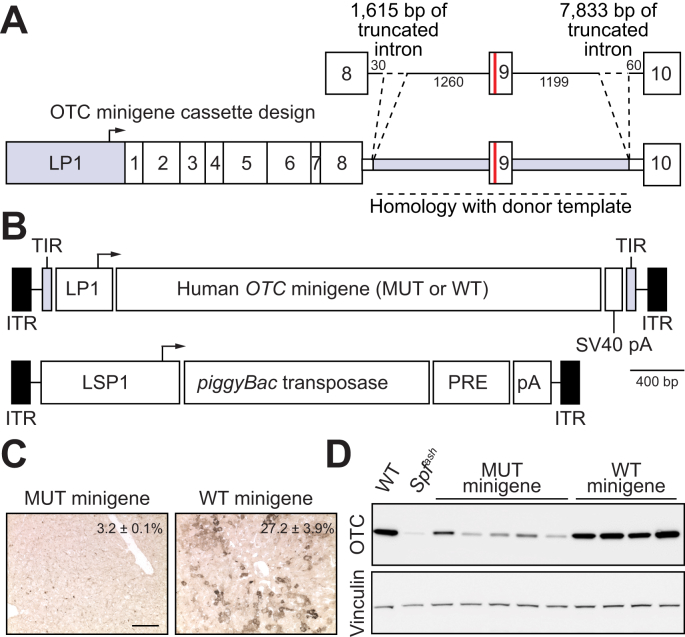
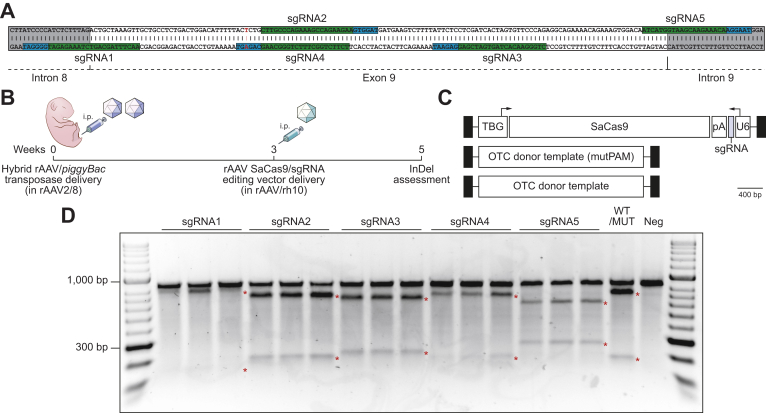
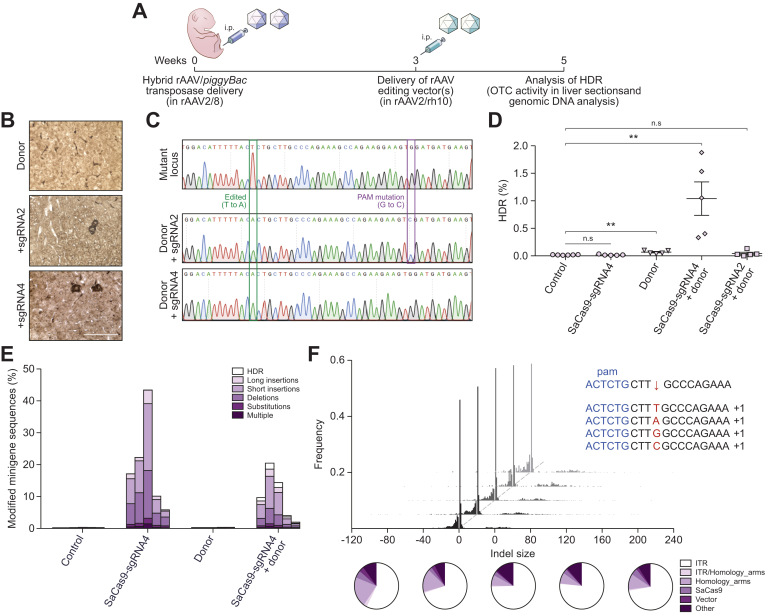
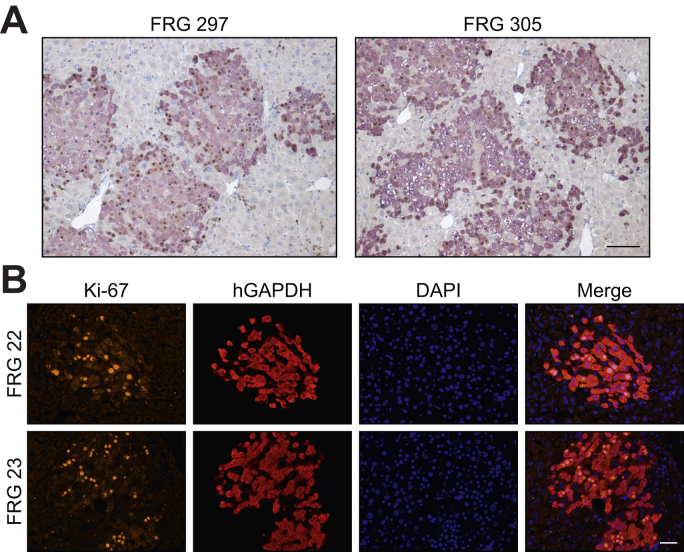
Editing reagents for precise CRISPR/SaCas9-mediated cleavage and homology-directed repair (HDR) of the human locus were first evaluated against an minigene cassette transposed into the mouse liver. The editing efficacy of these reagents was then tested on the native locus in patient-derived primary human hepatocytes xenografted into the FRG ( ) mouse liver. A highly human hepatotropic capsid (NP59) was used for adeno-associated virus (AAV)-mediated gene transfer. Editing events were characterised using next-generation sequencing and restoration of OTC expression was evaluated using immunofluorescence.
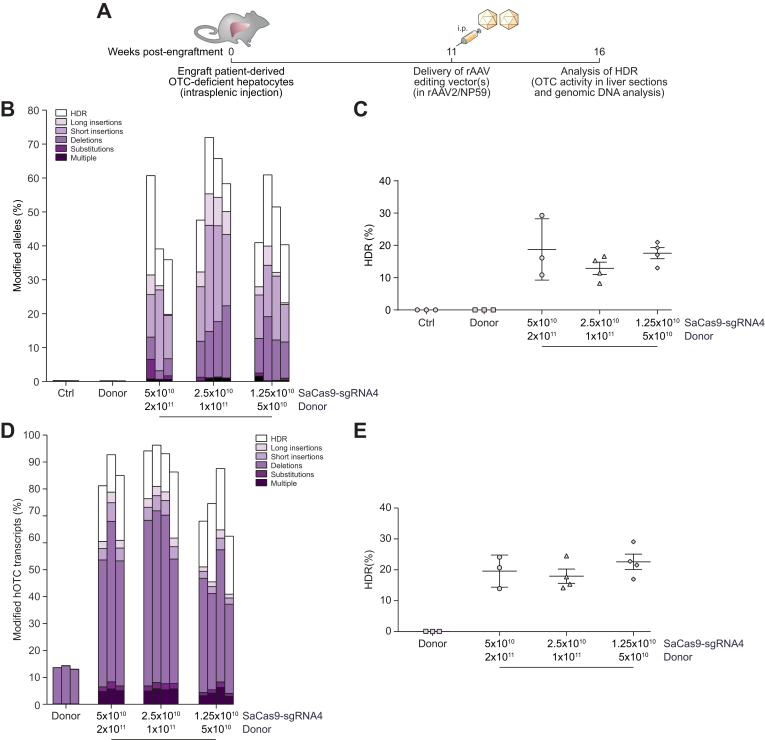
Following AAV-mediated delivery of editing reagents to patient-derived primary human hepatocytes , locus-specific cleavage was achieved at efficiencies of up to 72%. Importantly, successful editing was observed in up to 29% of alleles at clinically relevant vector doses. No off-target editing events were observed at the top 10 -predicted sites in the genome.
We report efficient single-nucleotide correction of a disease-causing mutation in the locus in patient-derived primary human hepatocytes at levels that, if recapitulated in the clinic, would provide benefit for even the most therapeutically challenging liver disorders. Key challenges for clinical translation include the cell cycle dependence of classical HDR and mitigation of unintended on- and off-target editing events.
The ability to efficiently and safely correct disease-causing mutations remains the holy grail of gene therapy. Herein, we demonstrate, for the first time, efficient correction of a patient-specific disease-causing mutation in the gene in primary human hepatocytes, using therapeutically relevant vector doses. We also highlight the challenges that need to be overcome for this technology to be translated into clinical practice.
基因组编辑技术具有巨大的治疗潜力,很可能迅速取代当代的基因添加方法。其主要优势包括能够直接修复突变位点,从而恢复生理基因表达,并在复制细胞中维持持久的治疗效果。在本研究中,我们旨在以与治疗相关的水平修复患者来源的原代人肝细胞中鸟氨酸转氨甲酰酶(OTC)基因座的致病点突变。
首先针对转座到小鼠肝脏中的OTC小基因盒,评估用于精确CRISPR/SaCas9介导的人OTC基因座切割和同源定向修复(HDR)的编辑试剂。然后在移植到FRG(Fah-/- Rag2-/- Il2rg-/-)小鼠肝脏中的患者来源的原代人肝细胞的天然OTC基因座上测试这些试剂的编辑效果。使用高度嗜人肝细胞衣壳(NP59)进行腺相关病毒(AAV)介导的基因转移。使用下一代测序对编辑事件进行表征,并使用免疫荧光评估OTC表达的恢复情况。
在将编辑试剂通过AAV介导递送至患者来源的原代人肝细胞后,实现了高达72%效率的基因座特异性切割。重要的是,在临床相关载体剂量下,高达29%的OTC等位基因中观察到成功编辑。在基因组中预测的前10个位点未观察到脱靶编辑事件。
我们报告了在患者来源的原代人肝细胞中,以一定水平对OTC基因座的致病突变进行高效单核苷酸校正,如果在临床上得以重现,这将为即使是最具治疗挑战性的肝脏疾病带来益处。临床转化的关键挑战包括经典HDR的细胞周期依赖性以及减轻意外的靶向和脱靶编辑事件。
高效且安全地校正致病突变的能力仍然是基因治疗的圣杯。在此,我们首次证明,使用与治疗相关的载体剂量,在原代人肝细胞中对患者特异性的OTC基因致病突变进行了高效校正。我们还强调了将该技术转化为临床实践需要克服的挑战。