PhD Program in Systems, Synthetic, and Physical Biology, Rice University, Houston, TX, United States of America.
Center for Theoretical Biological Physics, Rice University, Houston, TX, United States of America.
PLoS Comput Biol. 2020 Feb 10;16(2):e1007619. doi: 10.1371/journal.pcbi.1007619. eCollection 2020 Feb.
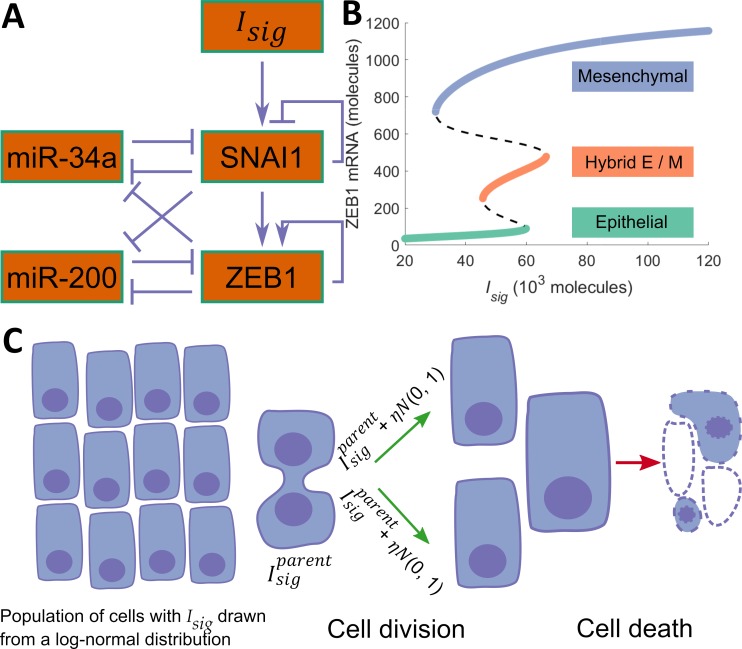
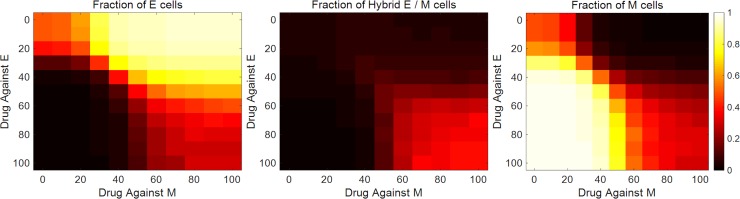
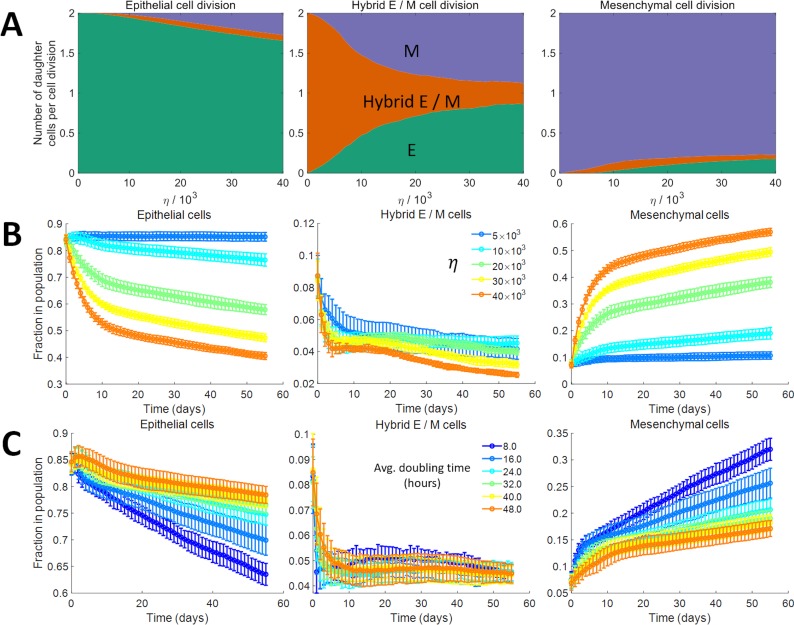
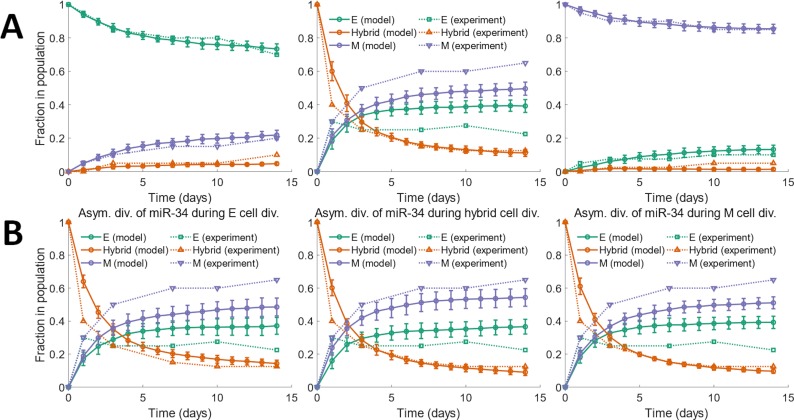
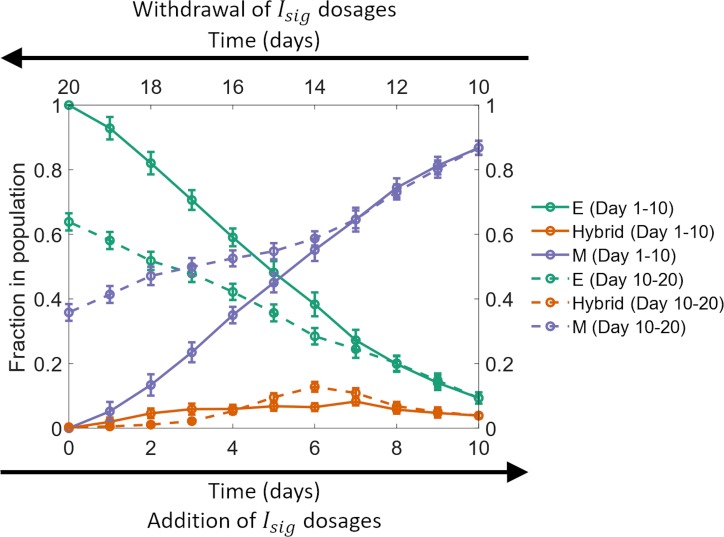
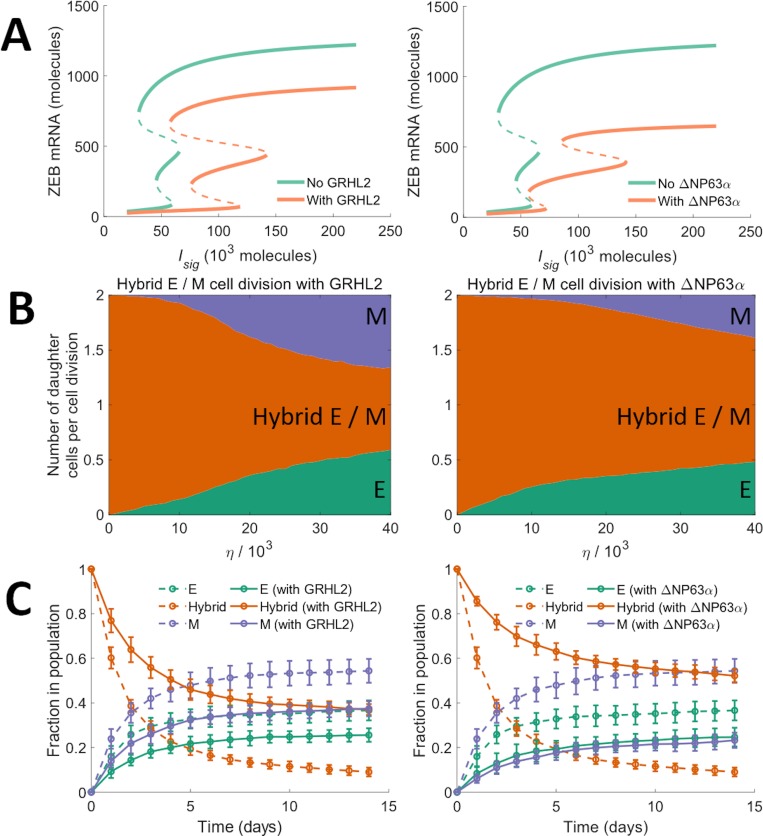
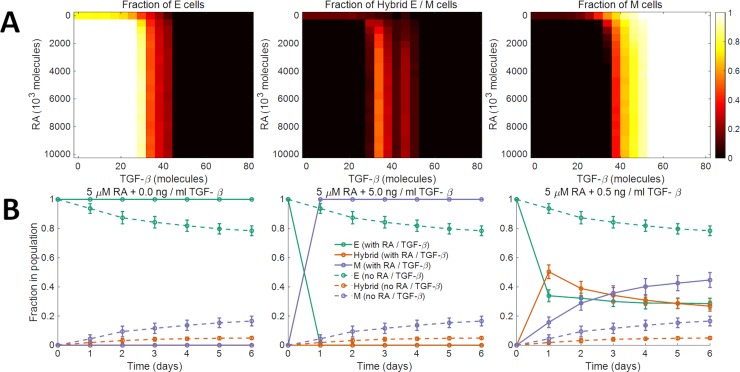
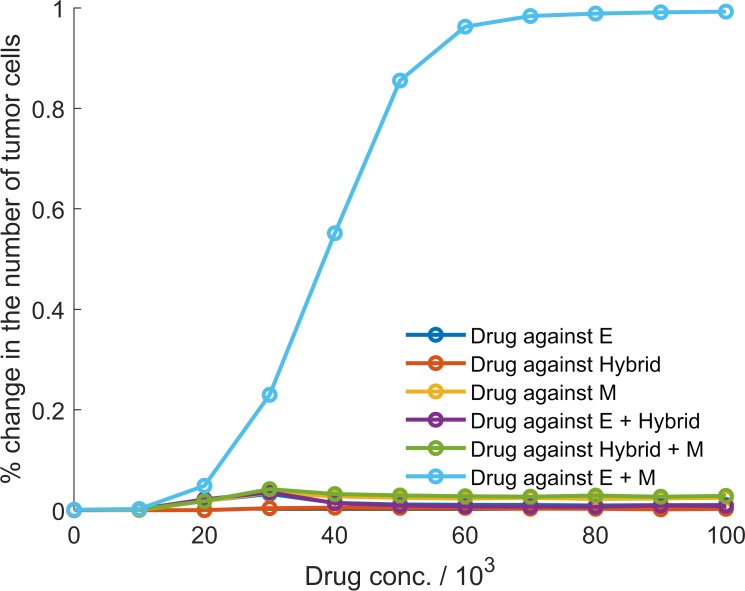
Epithelial-mesenchymal heterogeneity implies that cells within the same tumor can exhibit different phenotypes-epithelial, mesenchymal, or one or more hybrid epithelial-mesenchymal phenotypes. This behavior has been reported across cancer types, both in vitro and in vivo, and implicated in multiple processes associated with metastatic aggressiveness including immune evasion, collective dissemination of tumor cells, and emergence of cancer cell subpopulations with stem cell-like properties. However, the ability of a population of cancer cells to generate, maintain, and propagate this heterogeneity has remained a mystifying feature. Here, we used a computational modeling approach to show that epithelial-mesenchymal heterogeneity can emerge from the noise in the partitioning of biomolecules (such as RNAs and proteins) among daughter cells during the division of a cancer cell. Our model captures the experimentally observed temporal changes in the fractions of different phenotypes in a population of murine prostate cancer cells, and describes the hysteresis in the population-level dynamics of epithelial-mesenchymal plasticity. The model is further able to predict how factors known to promote a hybrid epithelial-mesenchymal phenotype can alter the phenotypic composition of a population. Finally, we used the model to probe the implications of phenotypic heterogeneity and plasticity for different therapeutic regimens and found that co-targeting of epithelial and mesenchymal cells is likely to be the most effective strategy for restricting tumor growth. By connecting the dynamics of an intracellular circuit to the phenotypic composition of a population, our study serves as a first step towards understanding the generation and maintenance of non-genetic heterogeneity in a population of cancer cells, and towards the therapeutic targeting of phenotypic heterogeneity and plasticity in cancer cell populations.
上皮-间充质异质性意味着同一肿瘤内的细胞可以表现出不同的表型——上皮、间充质或一种或多种混合上皮-间充质表型。这种行为在体外和体内的多种癌症类型中都有报道,并与转移性侵袭性相关的多种过程有关,包括免疫逃逸、肿瘤细胞的集体扩散以及具有干细胞样特性的癌细胞亚群的出现。然而,癌细胞群体产生、维持和传播这种异质性的能力仍然是一个令人费解的特征。在这里,我们使用计算建模方法表明,上皮-间充质异质性可以从癌细胞分裂过程中生物分子(如 RNA 和蛋白质)在子细胞之间分配的噪声中出现。我们的模型捕捉到了在一群小鼠前列腺癌细胞中不同表型分数的实验观察到的时间变化,并描述了上皮-间充质可塑性的群体水平动力学中的滞后现象。该模型还可以预测已知促进混合上皮-间充质表型的因素如何改变群体的表型组成。最后,我们使用该模型探讨了表型异质性和可塑性对不同治疗方案的影响,并发现靶向上皮和间充质细胞可能是限制肿瘤生长的最有效策略。通过将细胞内电路的动力学与群体的表型组成联系起来,我们的研究为理解癌细胞群体中非遗传异质性的产生和维持,以及为癌症细胞群体中的表型异质性和可塑性的治疗靶向提供了一个初步的认识。