Min Ahrum, Im Seock-Ah
Cancer Research Institute, Seoul National University College of Medicine, Seoul 03080, Korea.
Biomedical Research Institute, Seoul National University Hospital, Seoul 03080, Korea.
Cancers (Basel). 2020 Feb 8;12(2):394. doi: 10.3390/cancers12020394.
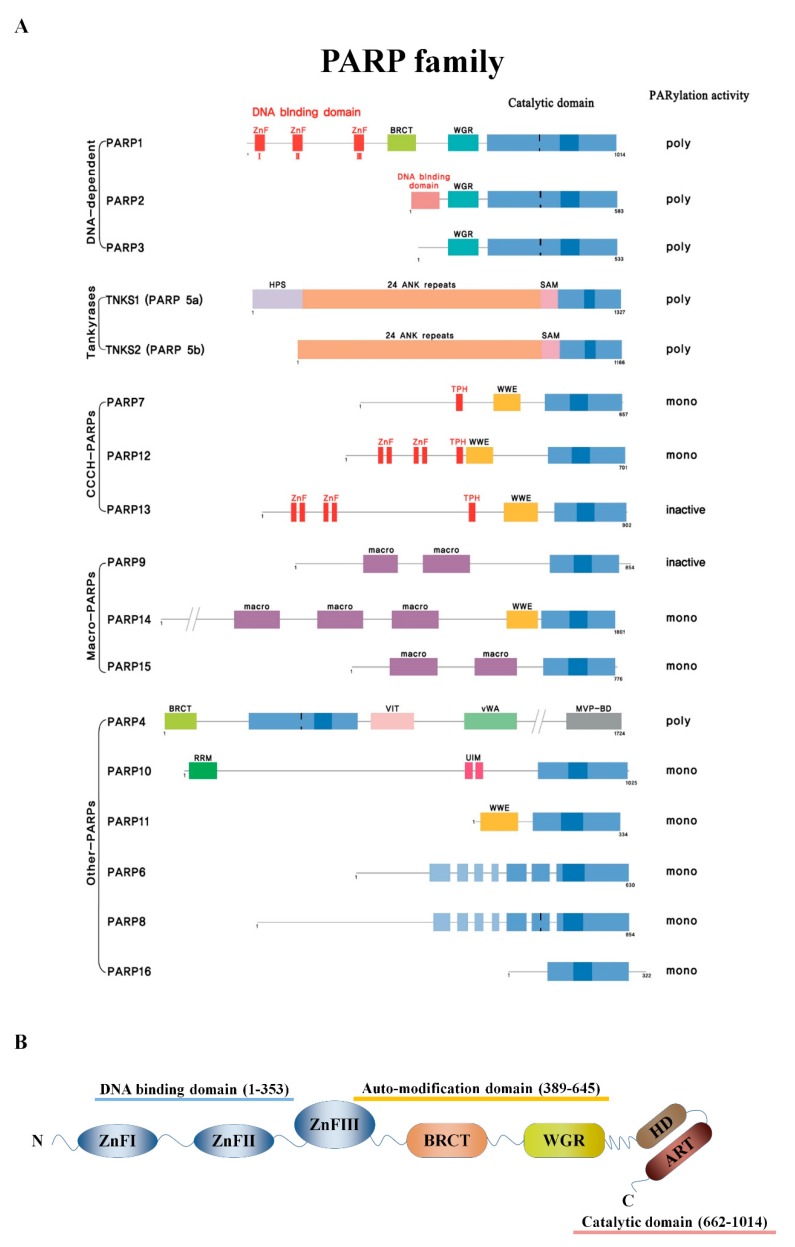
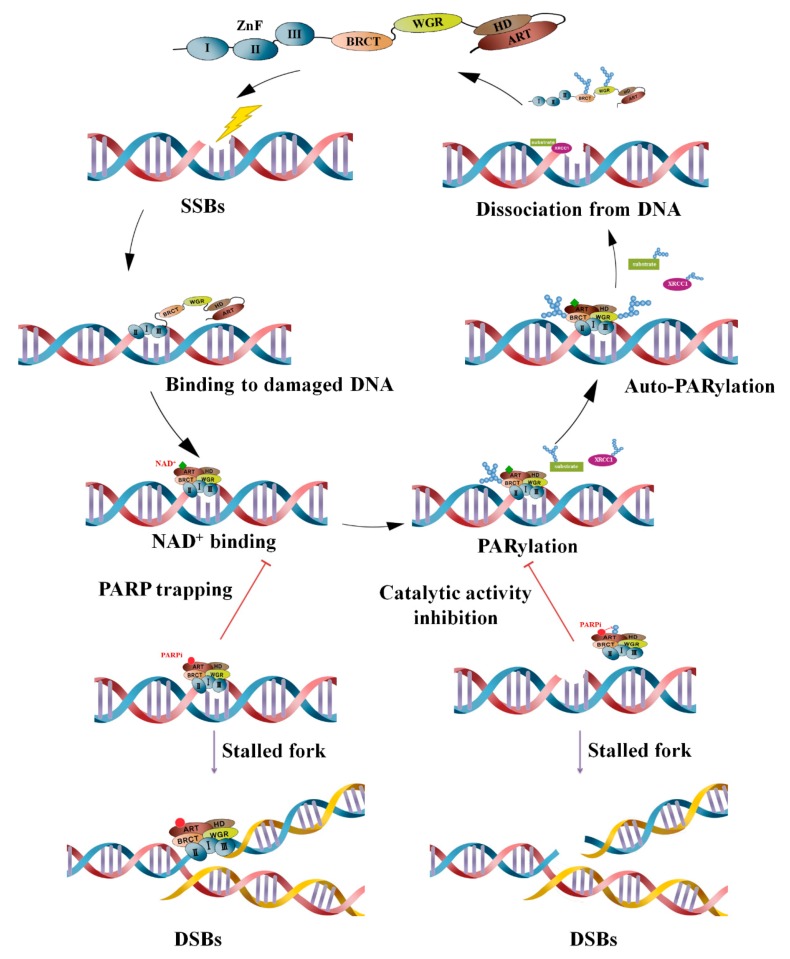
Poly (ADP-ribose) polymerase (PARP) 1 is an essential molecule in DNA damage response by sensing DNA damage and docking DNA repair proteins on the damaged DNA site through a type of posttranslational modification, poly (ADP-Ribosyl)ation (PARylation). PARP inhibitors, which inhibit PARylation through competitively binding to NAD+ binding site of PARP1 and PARP2, have improved clinical benefits for BRCA mutated tumors, leading to their accelerated clinical application. However, the antitumor activities of PARP inhibitors in clinical development are different, due to PARP trapping activity beyond blocking PARylation reactions. In this review, we comprehensively address the current state of knowledge regarding the mechanisms of action of PARP inhibitors. We will also discuss the different effects of PARP inhibitors in combination with cytotoxic chemotherapeutic agents regarding the mechanism of regulating PARylation.
聚(ADP - 核糖)聚合酶(PARP)1是DNA损伤反应中的关键分子,它通过一种翻译后修饰——聚(ADP - 核糖)化(PARylation)来感知DNA损伤,并将DNA修复蛋白对接至受损的DNA位点。PARP抑制剂通过竞争性结合PARP1和PARP2的NAD⁺结合位点来抑制PARylation,已在BRCA突变肿瘤中显示出更好的临床疗效,从而加速了其临床应用。然而,由于PARP抑制剂除了阻断PARylation反应外还具有PARP捕获活性,其在临床开发中的抗肿瘤活性存在差异。在本综述中,我们全面阐述了关于PARP抑制剂作用机制的当前知识状态。我们还将讨论PARP抑制剂与细胞毒性化疗药物联合使用时,在调节PARylation机制方面的不同效果。