Peng Yuan, Fang Ting, Zhang Yiyong, Zhang Mengyuan, Zeng Lihui
College of Horticulture, Fujian Agriculture and Forestry University, Fuzhou 350002, China.
Institute of Genetics and Breeding in Horticultural Plants, Fujian Agriculture and Forestry University, Fuzhou, 350002, China.
Plants (Basel). 2020 Feb 8;9(2):221. doi: 10.3390/plants9020221.
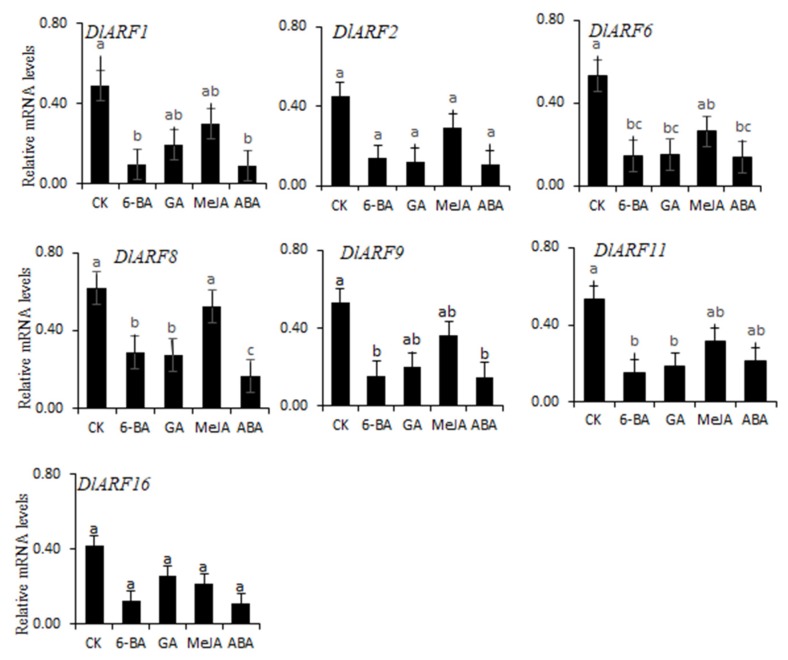
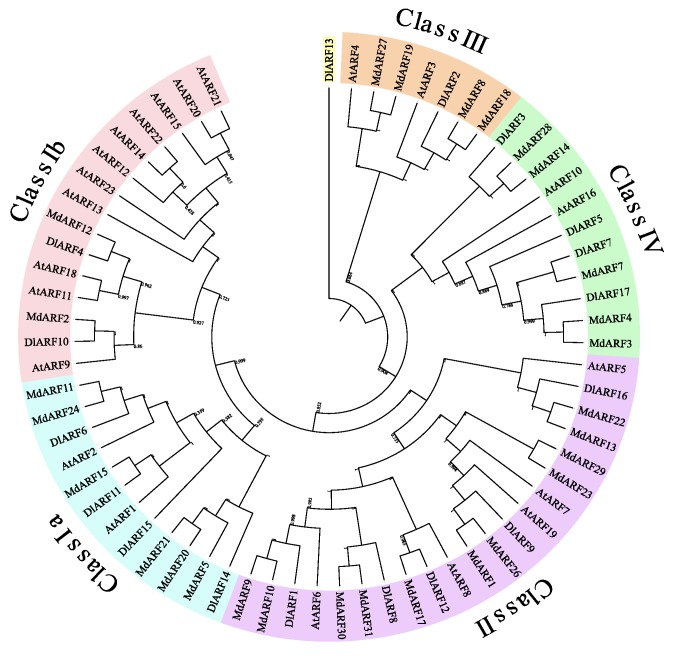
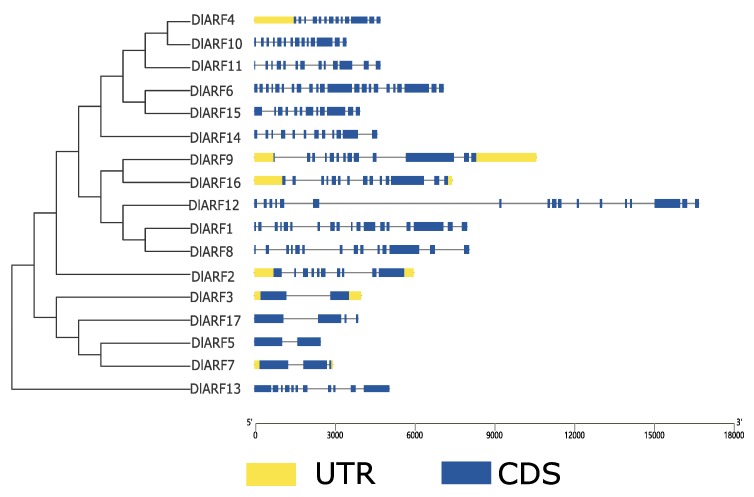
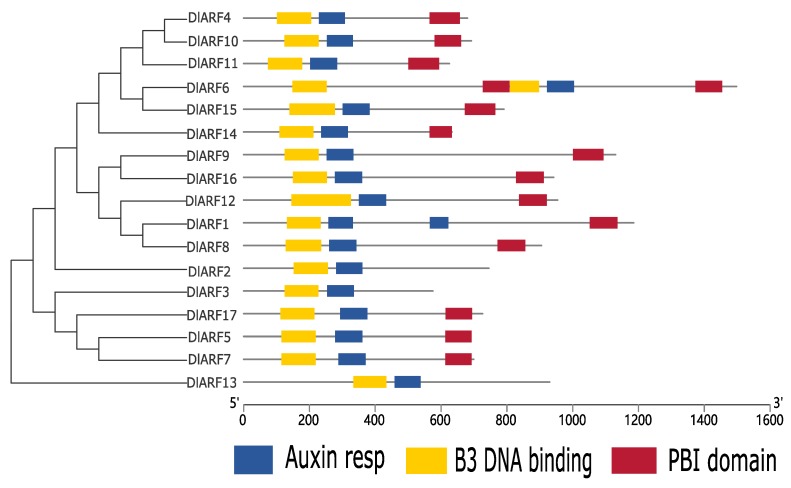
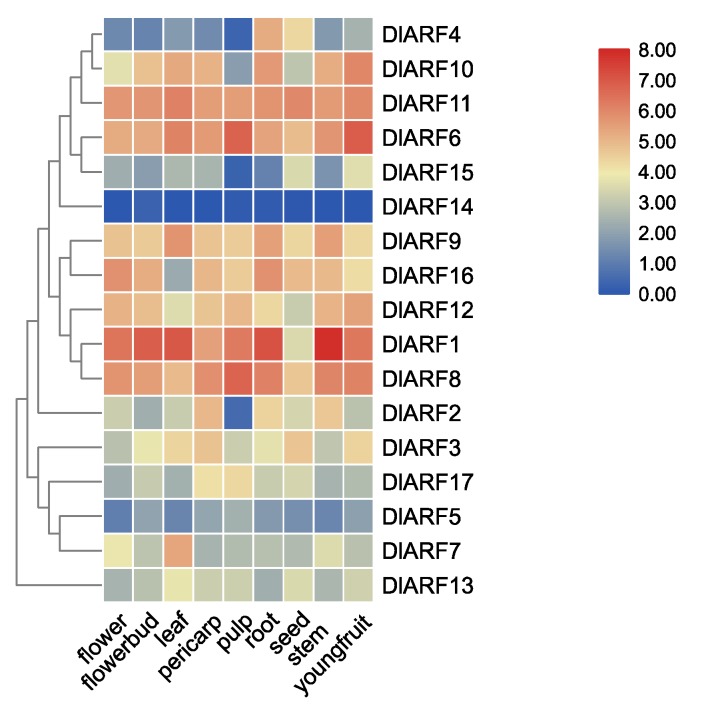
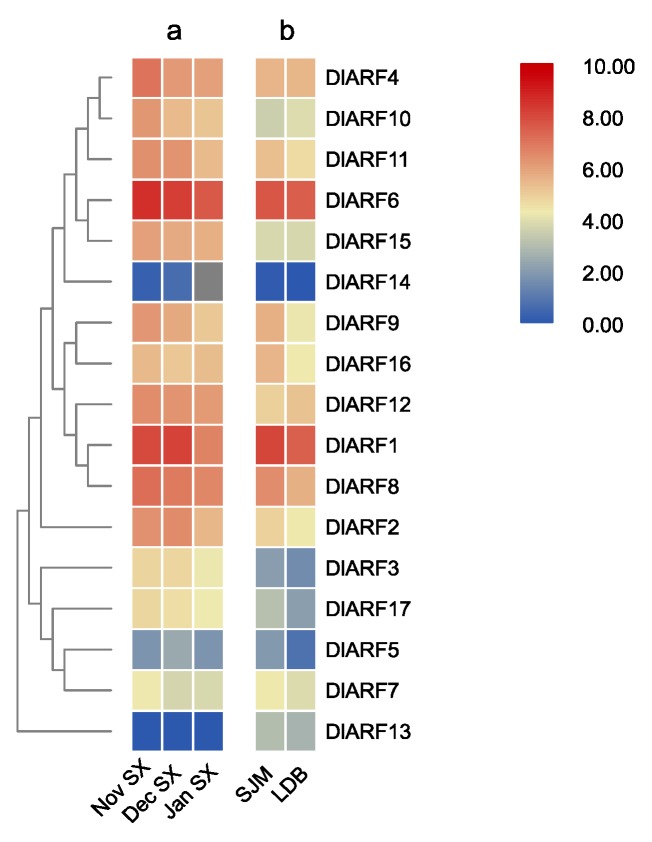
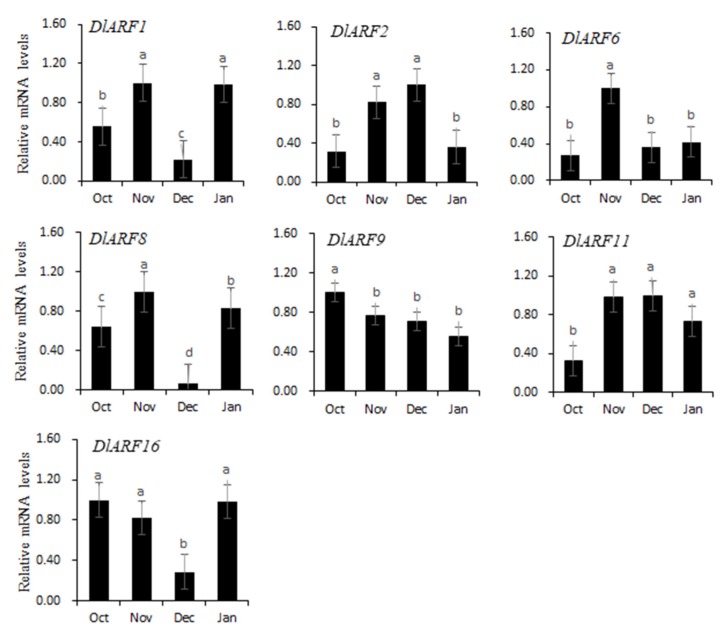
Auxin response factor (ARF) is the key regulator involved in plant development. Despite their physiological importance identified in various woody plants, the functions of ARF genes in longan were still not clear. In this study, 17 longan ARF genes (DlARF) were identified using the reference longan genome data. According to the phylogenetic relationships among longan, Arabidopsis and apple, DlARFs were divided into four classes. Most DlARFs showed a closer relationship with ARFs from apple than those from Arabidopsis. The analysis of gene structure and domain revealed high similarity of different ARF genes in the same class. Typical features of B3-type DNA binding domain (DBD) motif, Auxin Resp motifs, and a highly conserved C-terminal Phox and Bem1 (PB1) domain were present in all DlARFs except for DlARF-2,-3,-13 which lacked PBI domain. Expression profiles of 17 DlARF genes in longan different tissues showed that some DlARF genes were tissues-specific genes. Analysis of three longan transcriptomes showed seven DlARFs (DlARF-1,-2,-6,-8,-9,-11,-16) had higher expression levels during floral bud differentiation of common longan and in the buds of 'Sijimi', suggesting these genes may promote floral bud differentiation in longan. Further qPCR analysis showed that among seven DlARF genes, the expression levels of DlARF-2,-6,-11,-16 increased significantly during the physiological differentiation stage of longan floral buds, confirming that they may play a role in flowering induction. Promoter sequence analysis revealed cis-elements related to flowering induction such as low-temperature responsiveness motif and circadian control motif. Motifs linked with hormone response for instance Auxin, MeJA, Gibberellin, and Abscisic acid were also found in promoters. This study provides a comprehensive overview of the ARF gene family in longan. Our findings could provide new insights into the complexity of the regulation of ARFs at the transcription level that may be useful to develop breeding strategies to improve development or promote flowering in longan.
生长素响应因子(ARF)是参与植物发育的关键调节因子。尽管其在各种木本植物中的生理重要性已得到确认,但ARF基因在龙眼(桂圆)中的功能仍不清楚。在本研究中,利用参考龙眼基因组数据鉴定出17个龙眼ARF基因(DlARF)。根据龙眼、拟南芥和苹果之间的系统发育关系,DlARF被分为四类。大多数DlARF与来自苹果的ARF的关系比与来自拟南芥的ARF的关系更密切。基因结构和结构域分析显示同一类中不同ARF基因具有高度相似性。除了缺少PBI结构域的DlARF - 2、- 3、- 13外,所有DlARF中都存在典型的B3型DNA结合结构域(DBD)基序、生长素响应基序以及高度保守的C端Phox和Bem1(PB1)结构域。17个DlARF基因在龙眼不同组织中的表达谱表明,一些DlARF基因是组织特异性基因。对三个龙眼转录组的分析表明,7个DlARF(DlARF - 1、- 2、- 6、- 8、- 9、- 11、- 16)在普通龙眼花芽分化期间以及‘四季蜜’的芽中表达水平较高,表明这些基因可能促进龙眼的花芽分化。进一步的qPCR分析表明,在7个DlARF基因中,DlARF - 2、- 6、- 11、- 16在龙眼花芽生理分化阶段表达水平显著升高,证实它们可能在开花诱导中起作用。启动子序列分析揭示了与开花诱导相关的顺式作用元件,如低温响应基序和昼夜节律控制基序。在启动子中还发现了与激素响应相关的基序,例如生长素、茉莉酸甲酯、赤霉素和脱落酸。本研究全面概述了龙眼ARF基因家族。我们的研究结果可为转录水平上ARF调控的复杂性提供新的见解,这可能有助于制定育种策略,以改善龙眼的发育或促进其开花。