Department of Pediatrics, University of Minnesota, Minneapolis, MN 55455, USA.
Masonic Cancer Center, University of Minnesota, Minneapolis, MN 55455, USA.
Int J Mol Sci. 2020 Feb 10;21(3):1172. doi: 10.3390/ijms21031172.
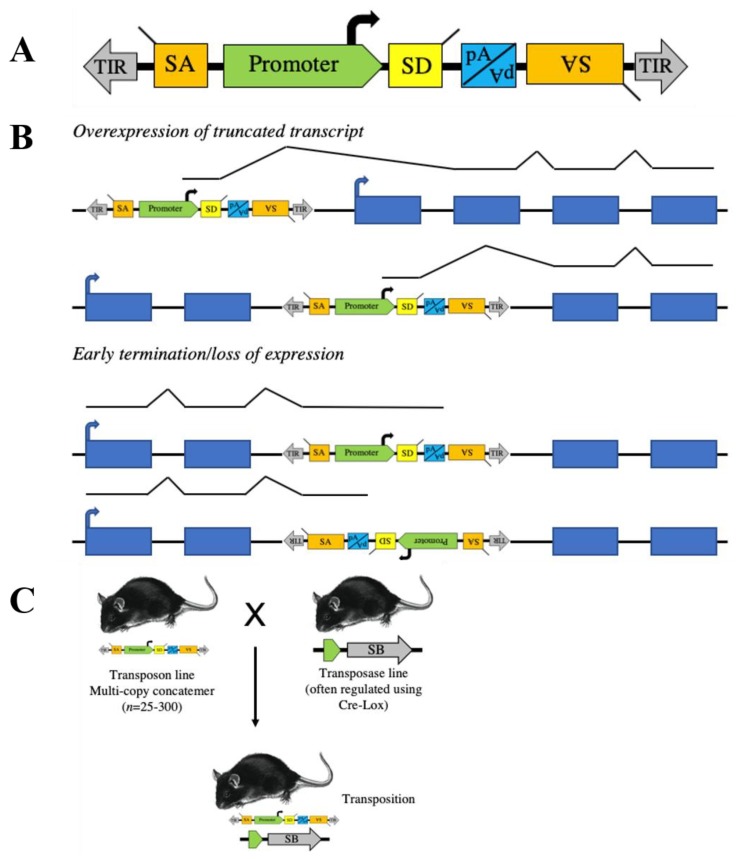
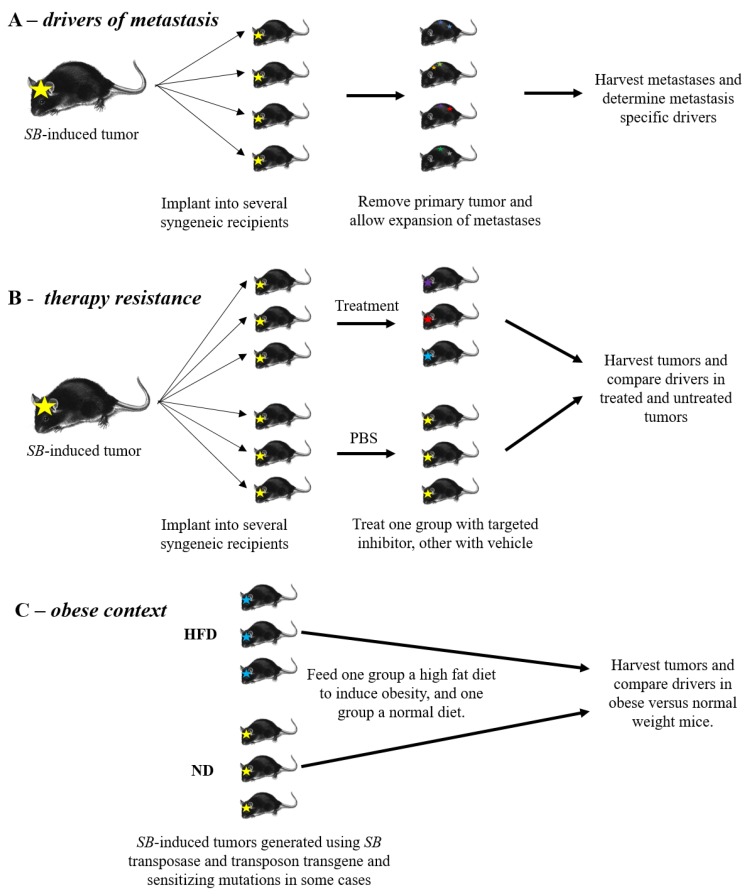
Transposon mutagenesis has been used to model many types of human cancer in mice, leading to the discovery of novel cancer genes and insights into the mechanism of tumorigenesis. For this review, we identified over twenty types of human cancer that have been modeled in the mouse using and transposon insertion mutagenesis. We examine several specific biological insights that have been gained and describe opportunities for continued research. Specifically, we review studies with a focus on understanding metastasis, therapy resistance, and tumor cell of origin. Additionally, we propose further uses of transposon-based models to identify rarely mutated driver genes across many cancers, understand additional mechanisms of drug resistance and metastasis, and define personalized therapies for cancer patients with obesity as a comorbidity.
转座子诱变已被用于在小鼠中模拟多种人类癌症,从而发现了新的癌症基因,并深入了解了肿瘤发生的机制。在本次综述中,我们鉴定了二十多种使用 和 转座子插入诱变在小鼠中建立的人类癌症模型。我们考察了已获得的几个特定生物学方面的深入认识,并描述了进一步研究的机会。具体而言,我们综述了研究转移、治疗耐药性和肿瘤细胞起源的重点内容。此外,我们还提出了进一步利用基于转座子的模型来识别许多癌症中罕见突变的驱动基因、了解耐药性和转移的其他机制,并为肥胖合并症的癌症患者制定个性化治疗方案。