USDA-ARS Honey Bee Breeding, Genetics, and Physiology Laboratory, Baton Rouge, LA, USA.
BMC Genomics. 2020 Feb 12;21(1):154. doi: 10.1186/s12864-020-6551-y.
The small hive beetle, Aethina tumida, is a rapidly emerging global pest of honey bee colonies. Small hive beetle infestation can be extremely destructive, which may cause honey bees to abscond and render colony infrastructure unusable. Due to the impacts small hive beetles have on honey bees, a wide variety of physical, cultural, and chemical control measures have been implemented to manage small hive beetle infestations. The use of insecticides to control small hive beetle populations is an emerging management tactic. Currently, very little genomic information exists on insecticide target sites in the small hive beetle. Therefore, the objective of this study is to utilize focused in silico comparative genomics approaches to identify and assess the potential insecticide sensitivity of the major insecticide target sites in the small hive beetle genome.
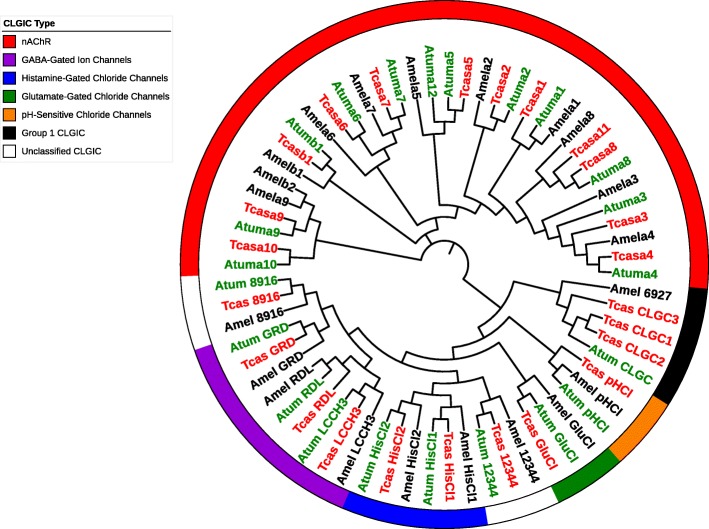
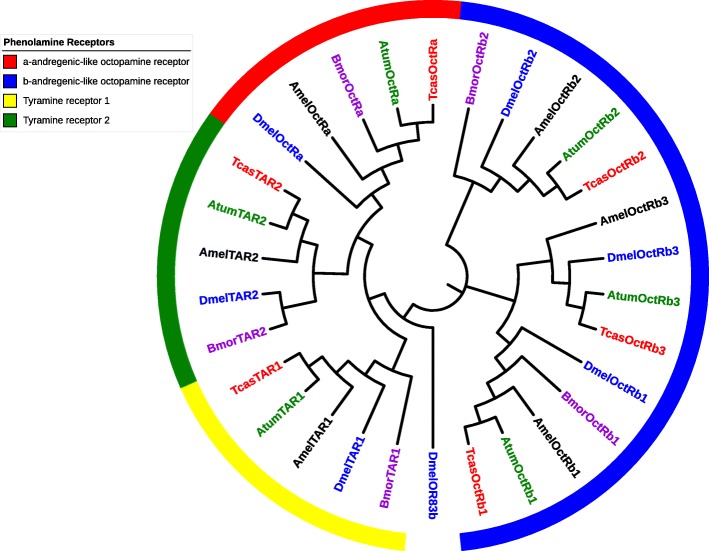
No previously described resistance mutations were identified in any orthologs of insecticide target sites. Alternative exon use and A-to-I RNA editing were absent in AtumSC1. The ryanodine receptor in small hive beetle (Atum_Ryr) was highly conserved and no previously described resistance mutations were identified. A total of 12 nAChR subunits were identified with similar alternative exon use in other insects. Alternative exon use and critical structural features of the GABA-gated chloride channel subunits (Atum_RDL, Atum_GRD, and Atum_LCCH3) were conserved. Five splice variants were found for the glutamate-gated chloride channel subunit. Exon 3c of Atum_GluCl may be a beetle-specific alternative exon. The co-occurrence of exons 9a and 9b in the pH-sensitive chloride channel (Atum_pHCl) is a unique combination that introduces sites of post-translational modification. The repertoire and alternative exon use for histamine-gated chloride channels (Atum-HisCl), octopamine (Atum_OctR) and tyramine receptors (Atum_TAR) were conserved.
The recently published small hive beetle genome likely serves as a reference for insecticide-susceptible versions of insecticide target sites. These comparative in silico studies are the first step in discovering targets that can be exploited for small hive beetle-specific control as well as tracking changes in the frequency of resistance alleles as part of a resistance monitoring program. Comparative toxicity alongside honey bees is required to verify these in silico predictions.
小黄蜂,Aethina tumida,是一种迅速出现的全球蜜蜂群体害虫。小黄蜂的侵害可能极具破坏性,这可能导致蜜蜂逃离并使蜂群基础设施无法使用。由于小黄蜂对蜜蜂的影响,已经实施了各种物理、文化和化学控制措施来管理小黄蜂的侵害。使用杀虫剂来控制小黄蜂种群是一种新兴的管理策略。目前,关于小黄蜂中杀虫剂靶标的基因组信息非常有限。因此,本研究的目的是利用集中的计算比较基因组学方法来识别和评估小黄蜂基因组中主要杀虫剂靶标的潜在杀虫剂敏感性。
在任何杀虫剂靶标同源物中都没有发现以前描述的抗性突变。AtumSC1 中不存在替代外显子的使用和 A-to-I RNA 编辑。小黄蜂中的肌醇三磷酸受体(Atum_Ryr)高度保守,没有发现以前描述的抗性突变。总共鉴定出 12 个 nAChR 亚基,在其他昆虫中具有类似的替代外显子使用。GABA 门控氯离子通道亚基(Atum_RDL、Atum_GRD 和 Atum_LCCH3)的替代外显子使用和关键结构特征保持保守。谷氨酸门控氯离子通道亚基发现了 5 个剪接变体。Atum_GluCl 的外显子 3c 可能是一种甲虫特异性的替代外显子。pH 敏感氯离子通道(Atum_pHCl)中外显子 9a 和 9b 的共存是一种独特的组合,引入了翻译后修饰的位点。组胺门控氯离子通道(Atum-HisCl)、章鱼胺(Atum_OctR)和酪胺受体(Atum_TAR)的受体库和替代外显子使用保持保守。
最近发表的小黄蜂基因组可能是杀虫剂靶标敏感版本的参考。这些计算比较研究是发现可用于小黄蜂特异性控制的靶标的第一步,也是作为抗药性监测计划的一部分跟踪抗性等位基因频率变化的第一步。需要与蜜蜂进行比较毒性测试来验证这些计算预测。