Muscle Biology Laboratory, School of Kinesiology, University of Michigan, Ann Arbor, Michigan, United States of America.
Department of Molecular & Integrative Physiology, University of Michigan, Ann Arbor, MI, United States of America.
PLoS One. 2020 Feb 13;15(2):e0223340. doi: 10.1371/journal.pone.0223340. eCollection 2020.
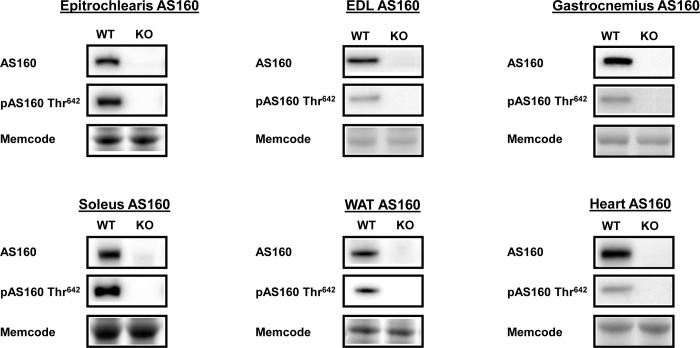
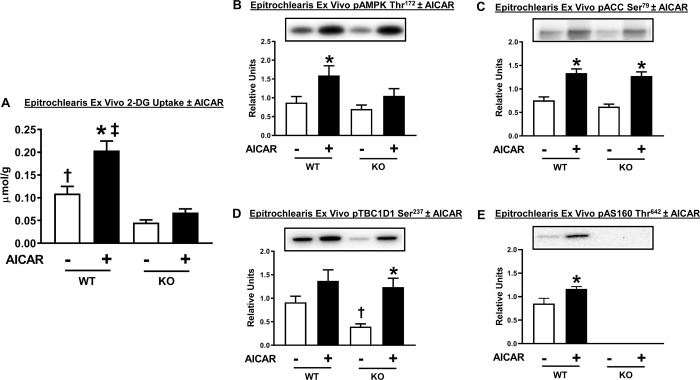
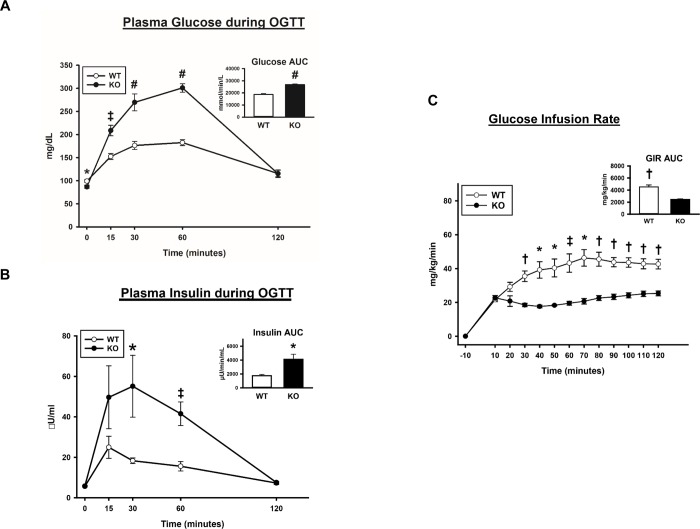
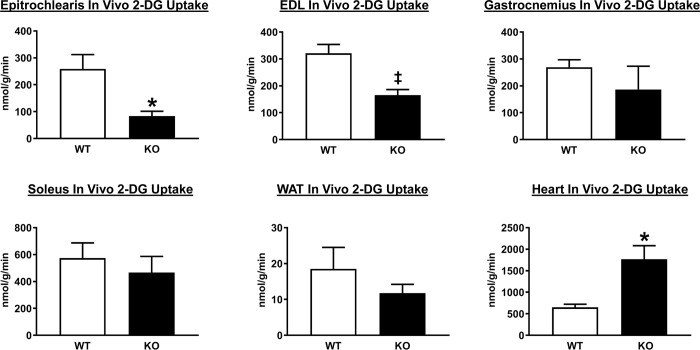
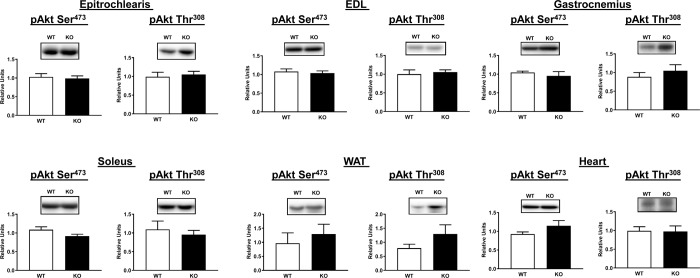
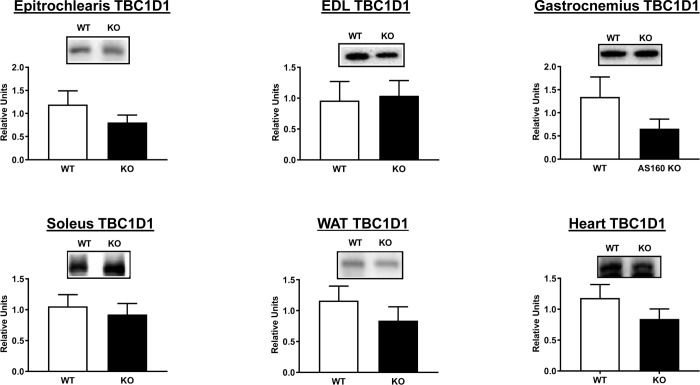
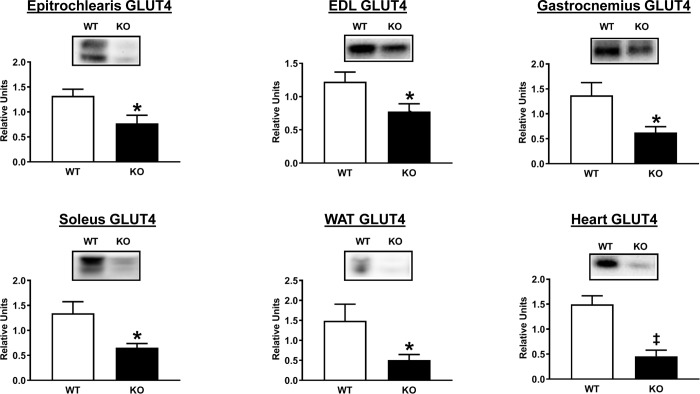
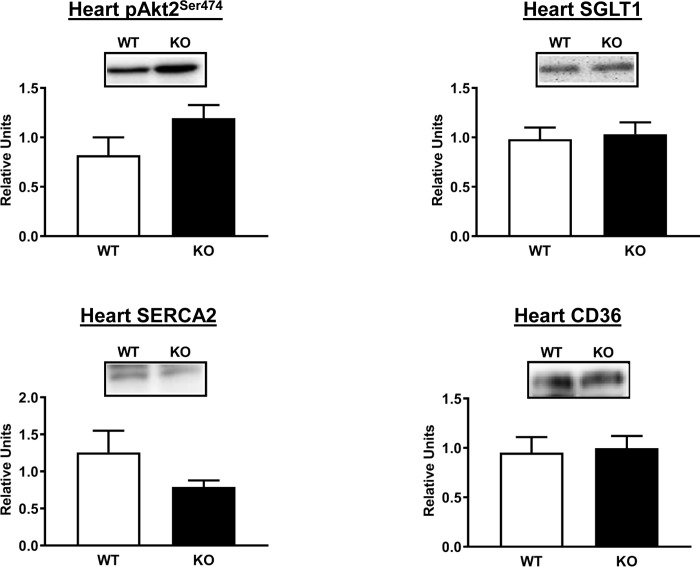
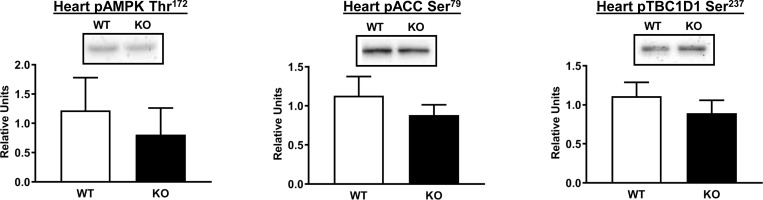
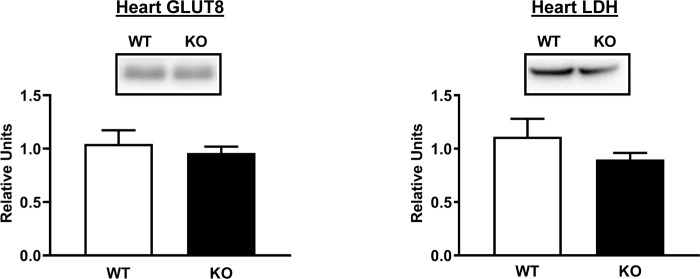
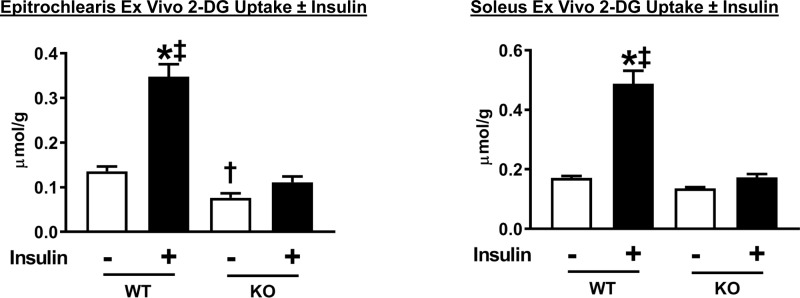
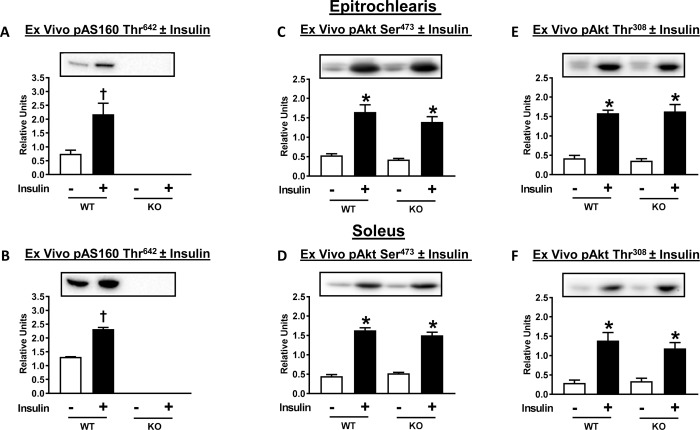
The Rab GTPase activating protein known as Akt substrate of 160 kDa (AS160 or TBC1D4) regulates insulin-stimulated glucose uptake in skeletal muscle, the heart, and white adipose tissue (WAT). A novel rat AS160-knockout (AS160-KO) was created with CRISPR/Cas9 technology. Because female AS160-KO versus wild type (WT) rats had not been previously evaluated, the primary objective of this study was to compare female AS160-KO rats with WT controls for multiple, important metabolism-related endpoints. Body mass and composition, physical activity, and energy expenditure were not different between genotypes. AS160-KO versus WT rats were glucose intolerant based on an oral glucose tolerance test (P<0.001) and insulin resistant based on a hyperinsulinemic-euglycemic clamp (HEC; P<0.001). Tissue glucose uptake during the HEC of female AS160-KO versus WT rats was: 1) significantly lower in epitrochlearis (P<0.05) and extensor digitorum longus (EDL; P<0.01) muscles of AS160-KO compared to WT rats; 2) not different in soleus, gastrocnemius or WAT; and 3) ~3-fold greater in the heart (P<0.05). GLUT4 protein content was reduced in AS160-KO versus WT rats in the epitrochlearis (P<0.05), EDL (P<0.05), gastrocnemius (P<0.05), soleus (P<0.05), WAT (P<0.05), and the heart (P<0.005). Insulin-stimulated glucose uptake by isolated epitrochlearis and soleus muscles was lower (P<0.001) in AS160-KO versus WT rats. Akt phosphorylation of insulin-stimulated tissues was not different between the genotypes. A secondary objective was to probe processes that might account for the genotype-related increase in myocardial glucose uptake, including glucose transporter protein abundance (GLUT1, GLUT4, GLUT8, SGLT1), hexokinase II protein abundance, and stimulation of the AMP-activated protein kinase (AMPK) pathway. None of these parameters differed between genotypes. Metabolic phenotyping in the current study revealed AS160 deficiency produced a profound glucoregulatory phenotype in female AS160-KO rats that was strikingly similar to the results previously reported in male AS160-KO rats.
已知 Rab GTP 酶激活蛋白 Akt 底物 160kDa(AS160 或 TBC1D4)调节骨骼肌、心脏和白色脂肪组织(WAT)中的胰岛素刺激的葡萄糖摄取。使用 CRISPR/Cas9 技术创建了新型大鼠 AS160 敲除(AS160-KO)。由于之前没有评估过雌性 AS160-KO 与野生型(WT)大鼠之间的差异,因此本研究的主要目的是比较雌性 AS160-KO 大鼠与 WT 对照之间的多种重要代谢相关终点。基因型之间的体重和成分、体力活动和能量消耗没有差异。口服葡萄糖耐量试验(OGTT;P<0.001)和高胰岛素-正常血糖钳夹(HEC;P<0.001)表明,AS160-KO 大鼠葡萄糖耐量和胰岛素抵抗。雌性 AS160-KO 与 WT 大鼠的 HEC 期间的组织葡萄糖摄取:1)比 WT 大鼠的外上髁(P<0.05)和伸趾长肌(EDL;P<0.01)肌肉明显更低;2)在比目鱼肌、腓肠肌或 WAT 中没有差异;3)在心脏中约增加 3 倍(P<0.05)。AS160-KO 大鼠的 GLUT4 蛋白含量在外上髁(P<0.05)、EDL(P<0.05)、腓肠肌(P<0.05)、比目鱼肌(P<0.05)、WAT(P<0.05)和心脏(P<0.005)中降低。与 WT 大鼠相比,AS160-KO 大鼠的离体外上髁和比目鱼肌的胰岛素刺激葡萄糖摄取降低(P<0.001)。胰岛素刺激组织的 Akt 磷酸化在基因型之间没有差异。次要目标是探究可能导致心肌葡萄糖摄取与基因型相关增加的过程,包括葡萄糖转运蛋白蛋白丰度(GLUT1、GLUT4、GLUT8、SGLT1)、己糖激酶 II 蛋白丰度和 AMP 激活的蛋白激酶(AMPK)途径的刺激。这些参数在基因型之间没有差异。本研究的代谢表型揭示了 AS160 缺乏导致雌性 AS160-KO 大鼠产生严重的糖调节表型,这与先前在雄性 AS160-KO 大鼠中报道的结果非常相似。