Department of Pharmacology and Toxicology, College of Pharmacy, University of Arizona, Tucson, Arizona, United States of America.
Department of Pathology, Northwestern University Feinberg School of Medicine, Chicago, Illinois, United States of America.
PLoS Biol. 2020 Feb 13;18(2):e3000620. doi: 10.1371/journal.pbio.3000620. eCollection 2020 Feb.
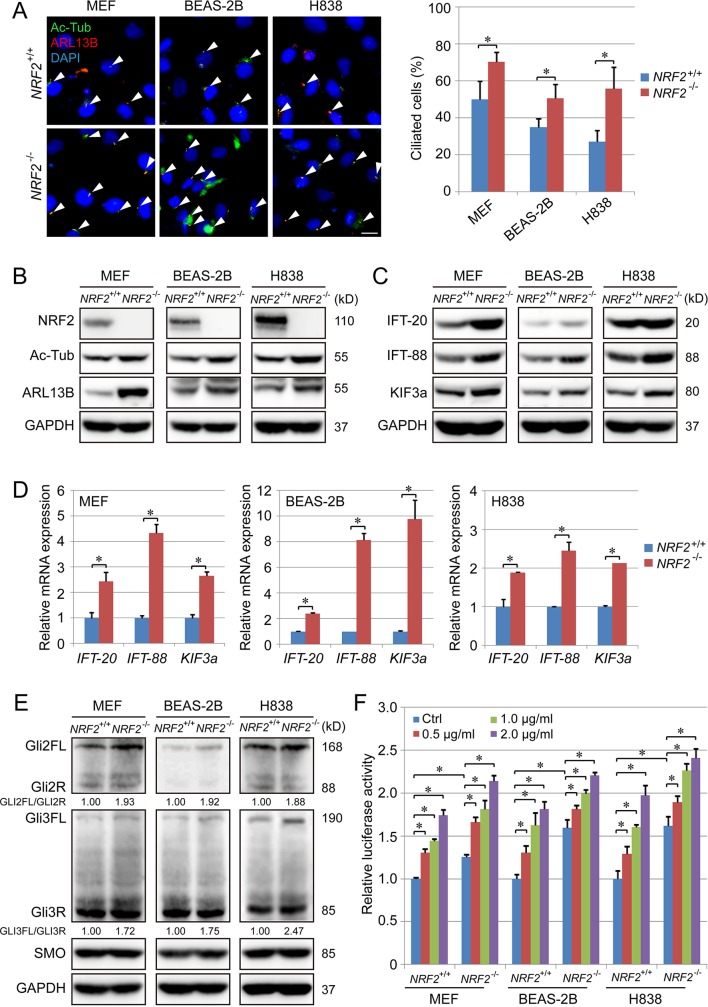
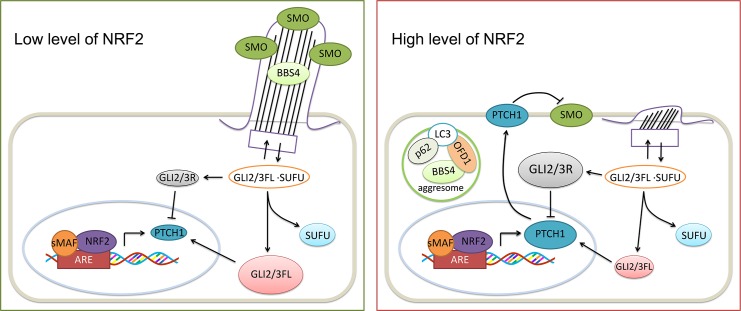
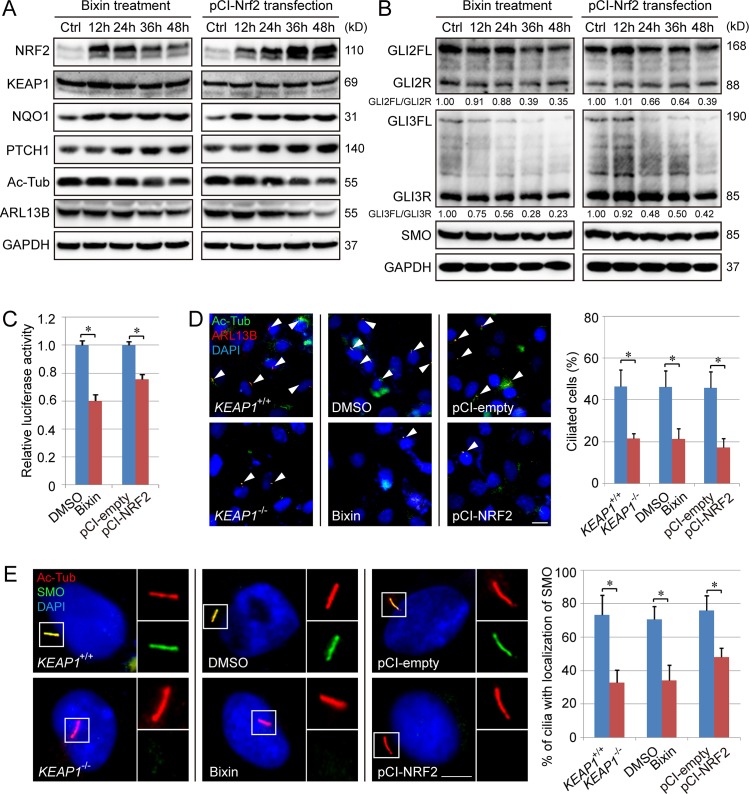
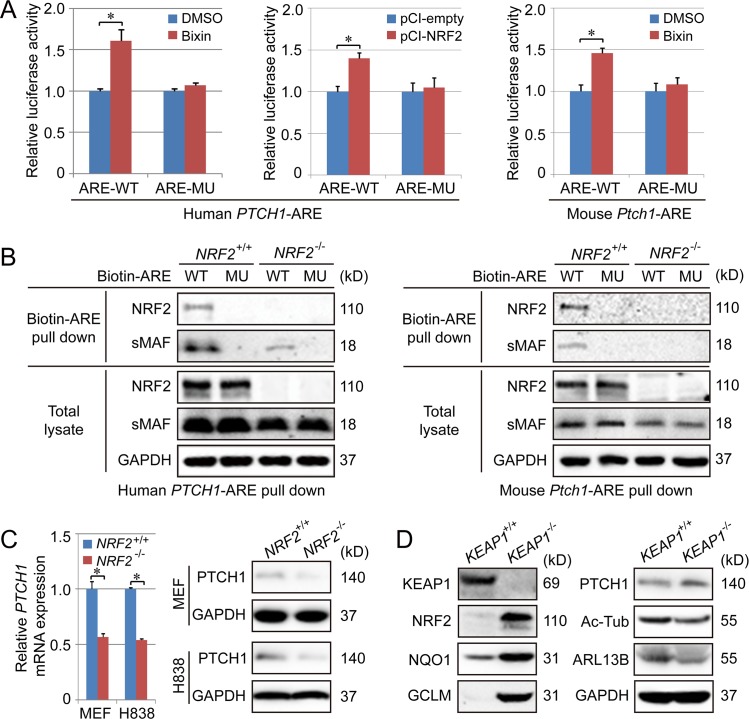
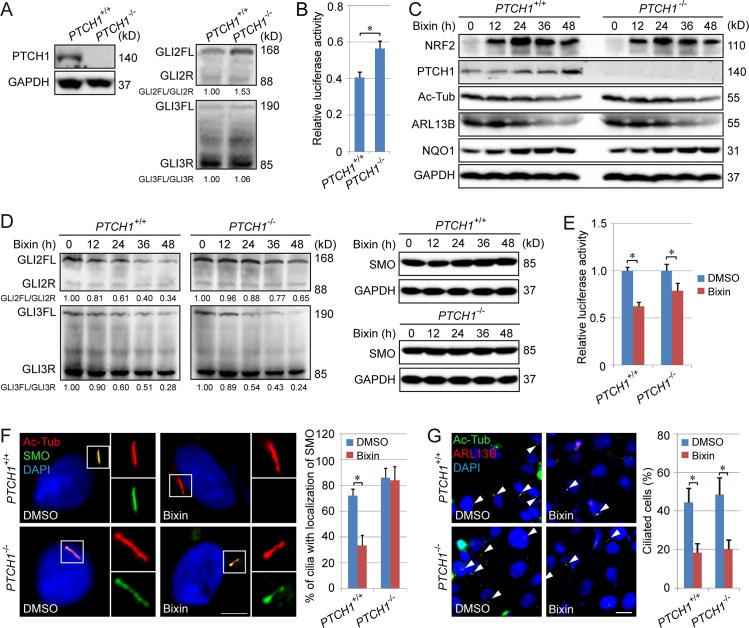
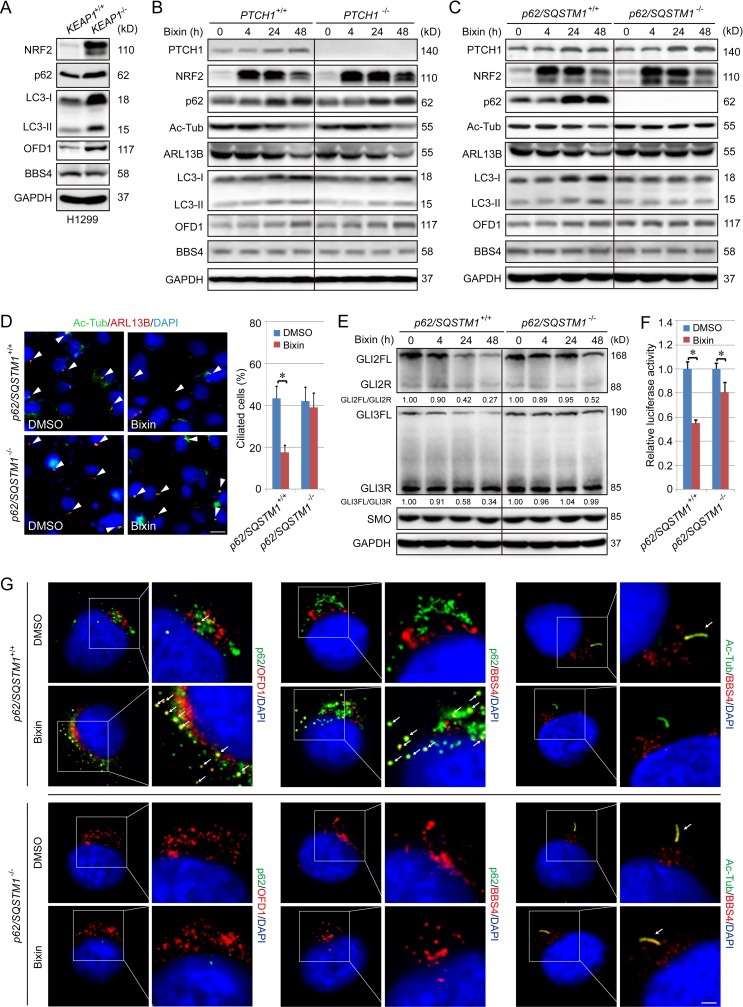
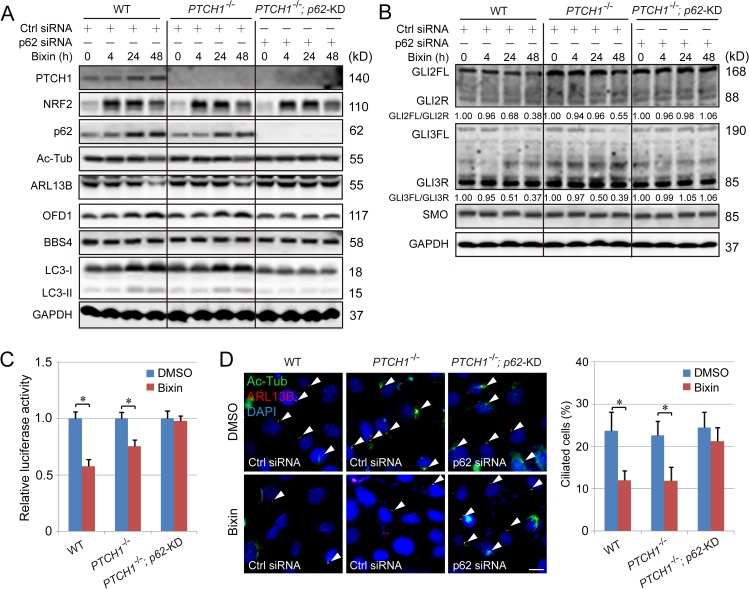
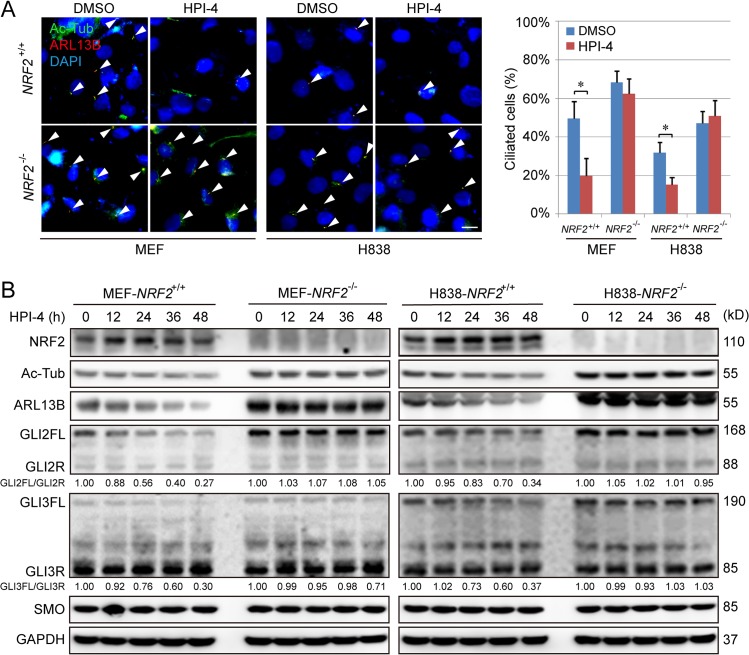
Primary cilia are lost during cancer development, but the mechanism regulating cilia degeneration is not determined. While transcription factor nuclear factor-erythroid 2-like 2 (NRF2) protects cells from oxidative, proteotoxic, and metabolic stress in normal cells, hyperactivation of NRF2 is oncogenic, although the detailed molecular mechanisms by which uncontrolled NRF2 activation promotes cancer progression remain unclear. Here, we report that NRF2 suppresses hedgehog (Hh) signaling through Patched 1 (PTCH1) and primary ciliogenesis via p62/sequestosome 1 (SQSTM1). PTCH1, a negative regulator of Hh signaling, is an NRF2 target gene, and as such, hyperactivation of NRF2 impairs Hh signaling. NRF2 also suppresses primary cilia formation through p62-dependent inclusion body formation and blockage of Bardet-Biedl syndrome 4 (BBS4) entrance into cilia. Simultaneous ablation of PTCH1 and p62 completely abolishes NRF2-mediated inhibition of both primary ciliogenesis and Hh signaling. Our findings reveal a previously unidentified role of NRF2 in controlling a cellular organelle, the primary cilium, and its associated Hh signaling pathway and also uncover a mechanism by which NRF2 hyperactivation promotes tumor progression via primary cilia degeneration and aberrant Hh signaling. A better understanding of the crosstalk between NRF2 and primary cilia/Hh signaling could not only open new avenues for cancer therapeutic discovery but could also have significant implications regarding pathologies other than cancer, including developmental disorders, in which improper primary ciliogenesis and Hh signaling play a major role.
初级纤毛在癌症发展过程中丢失,但调节纤毛退化的机制尚不清楚。转录因子核因子红细胞 2 样 2(NRF2)在正常细胞中保护细胞免受氧化、蛋白毒性和代谢应激,但 NRF2 的过度激活是致癌的,尽管不受控制的 NRF2 激活促进癌症进展的详细分子机制尚不清楚。在这里,我们报告 NRF2 通过 Patched 1(PTCH1)和 p62/自噬体 1(SQSTM1)抑制 Hedgehog(Hh)信号转导和初级纤毛发生。PTCH1 是 Hh 信号转导的负调节剂,是 NRF2 的靶基因,因此 NRF2 的过度激活会损害 Hh 信号转导。NRF2 还通过 p62 依赖性包涵体形成和阻止 Bardet-Biedl 综合征 4(BBS4)进入纤毛来抑制初级纤毛形成。PTCH1 和 p62 的同时缺失完全消除了 NRF2 介导的对初级纤毛发生和 Hh 信号转导的抑制。我们的发现揭示了 NRF2 控制细胞细胞器初级纤毛及其相关 Hh 信号通路的先前未被识别的作用,也揭示了 NRF2 过度激活通过初级纤毛退化和异常 Hh 信号转导促进肿瘤进展的机制。更好地理解 NRF2 和初级纤毛/Hh 信号转导之间的串扰不仅可以为癌症治疗发现开辟新途径,而且对癌症以外的病理学也具有重要意义,包括发育障碍,其中初级纤毛发生和 Hh 信号转导异常发挥主要作用。