Wong Judith Jing Wen, Berstad Maria Brandal, Fremstedal Ane Sofie Viset, Berg Kristian, Patzke Sebastian, Sørensen Vigdis, Peng Qian, Selbo Pål Kristian, Weyergang Anette
Department of Radiation Biology, Institute for Cancer Research, The Norwegian Radium Hospital, Oslo University Hospital, 0379 Oslo, Norway.
Section for Pharmaceutics and Social Pharmacy, Department of Pharmacy, University of Oslo, 0371 Oslo, Norway.
Cancers (Basel). 2020 Feb 11;12(2):417. doi: 10.3390/cancers12020417.
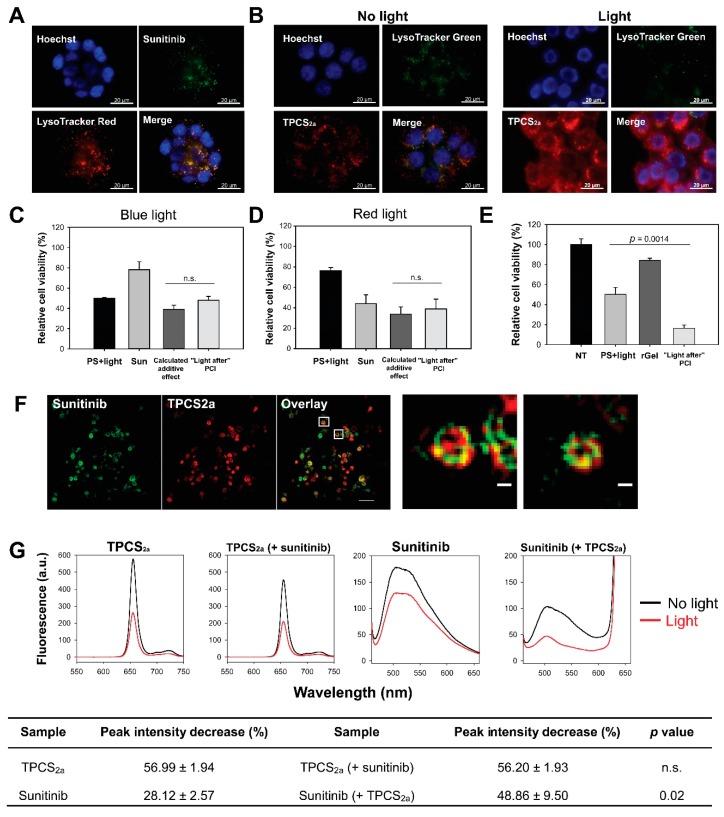
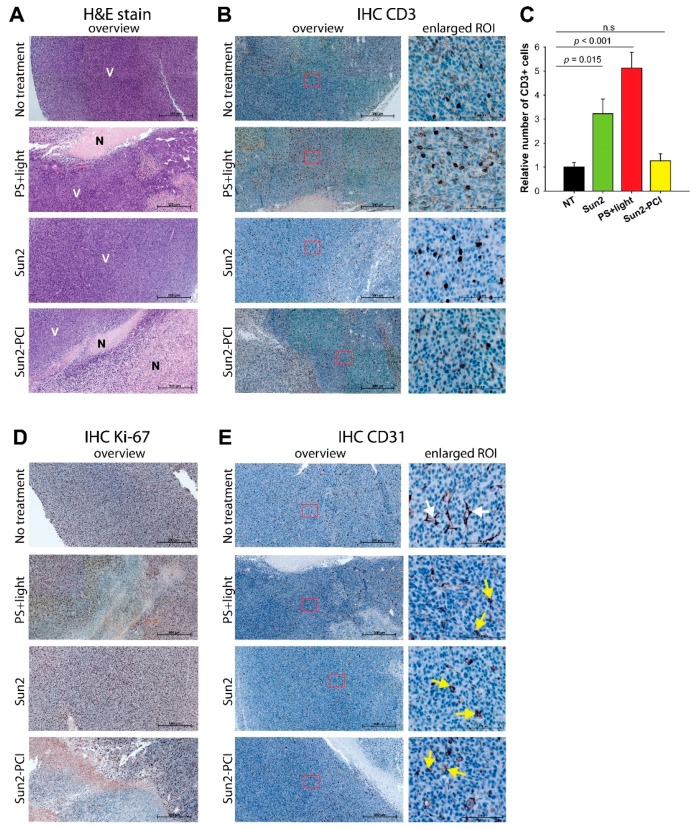
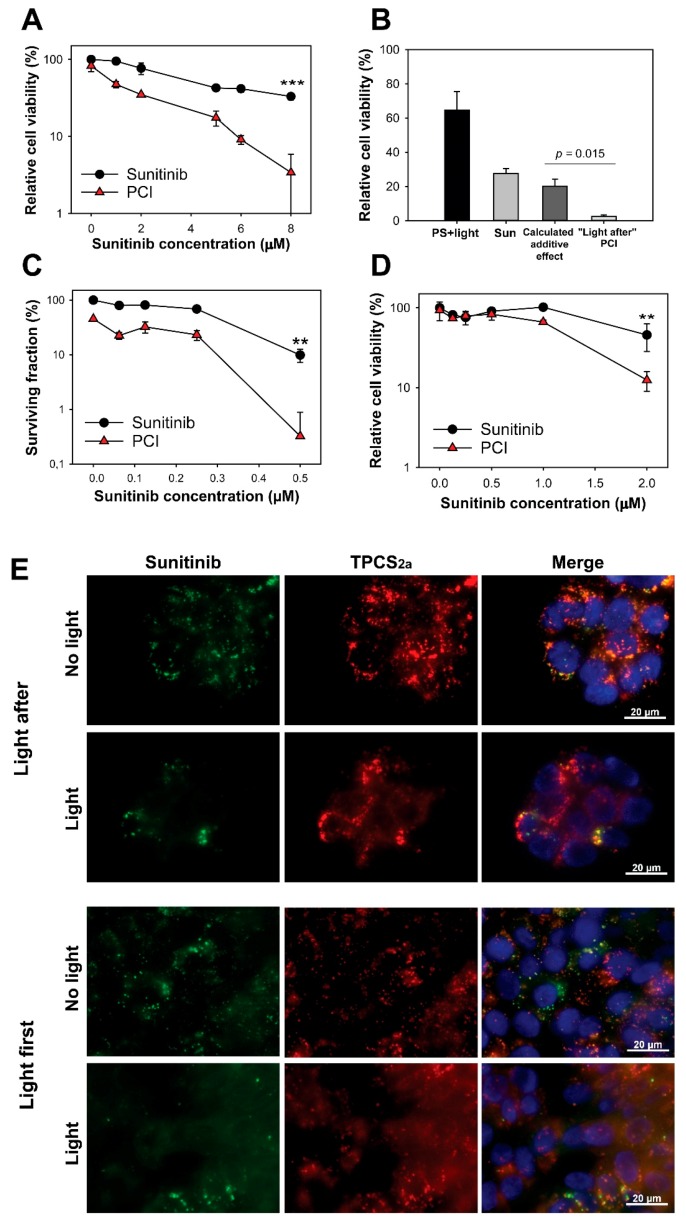
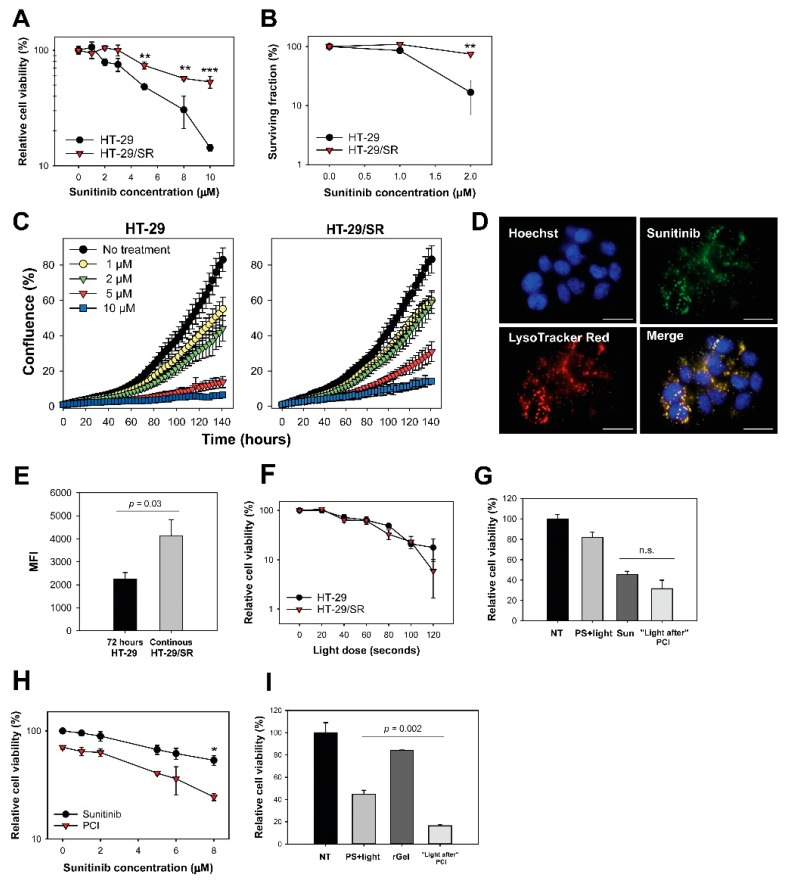
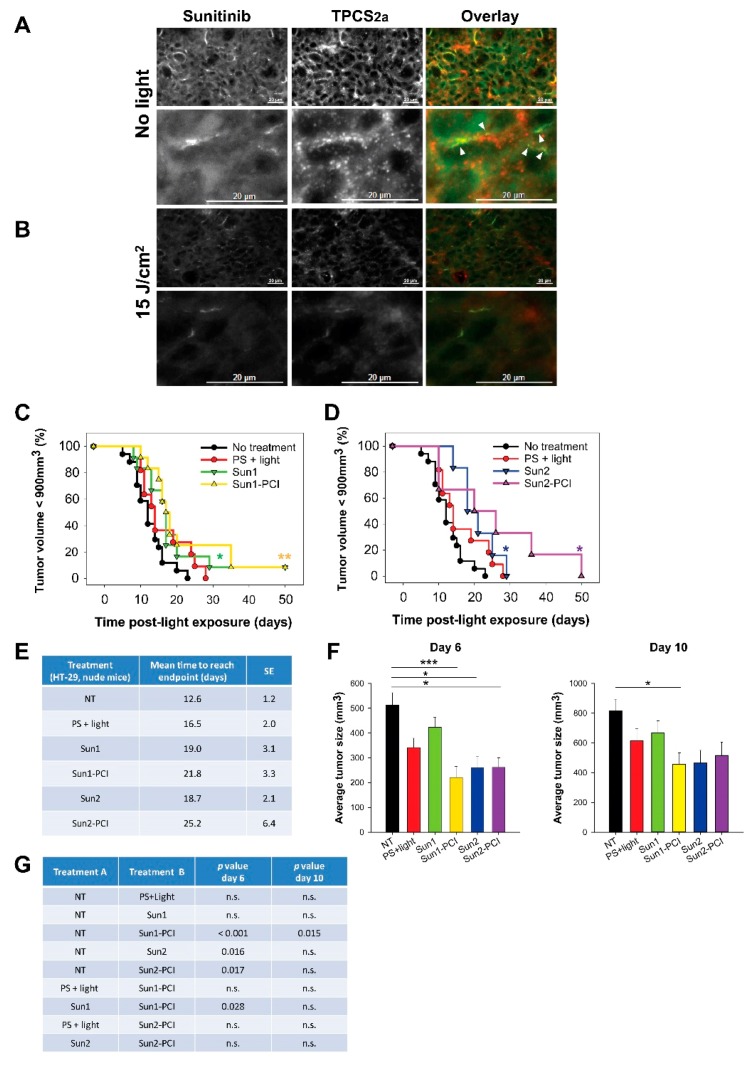
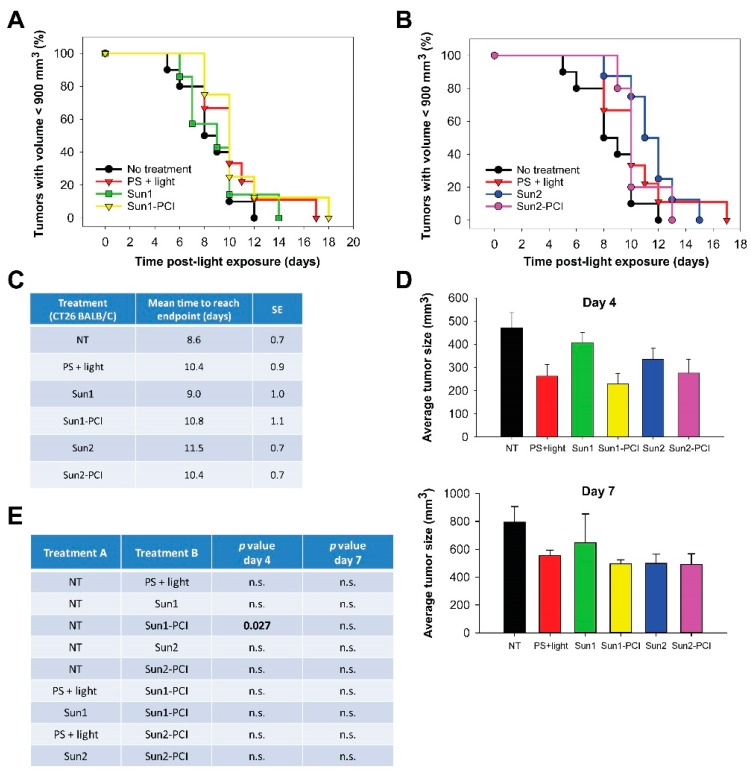
Lysosomal accumulation of sunitinib has been suggested as an underlying mechanism of resistance. Here, we investigated if photochemical internalization (PCI), a technology for cytosolic release of drugs entrapped in endosomes and lysosomes, would activate lysosomal sequestered sunitinib. By super-resolution fluorescence microscopy, sunitinib was found to accumulate in the membrane of endo/lysosomal compartments together with the photosensitizer disulfonated tetraphenylchlorin (TPCS). Furthermore, the treatment effect was potentiated by PCI in the human HT-29 and the mouse CT26.WT colon cancer cell lines. The cytotoxic outcome of sunitinib-PCI was, however, highly dependent on the treatment protocol. Thus, neoadjuvant PCI inhibited lysosomal accumulation of sunitinib. PCI also inhibited lysosomal sequestering of sunitinib in HT29/SR cells with acquired sunitinib resistance, but did not reverse the resistance. The mechanism of acquired sunitinib resistance in HT29/SR cells was therefore not related to lysosomal sequestering. Sunitinib-PCI was further evaluated on HT-29 xenografts in athymic mice, but was found to induce only a minor effect on tumor growth delay. In immunocompetent mice sunitinib-PCI enhanced areas of treatment-induced necrosis compared to the monotherapy groups. However, the tumor growth was not delayed, and decreased infiltration of CD3-positive T cells was indicated as a possible mechanism behind the failed overall response.
舒尼替尼在溶酶体中的蓄积被认为是耐药的潜在机制。在此,我们研究了光化学内化(PCI),一种使内体和溶酶体中包裹的药物释放到胞质溶胶中的技术,是否会激活溶酶体中隔离的舒尼替尼。通过超分辨率荧光显微镜观察发现,舒尼替尼与光敏剂二磺酸四苯基氯卟啉(TPCS)一起蓄积在内吞/溶酶体区室的膜中。此外,在人HT-29和小鼠CT26.WT结肠癌细胞系中,PCI增强了治疗效果。然而,舒尼替尼-PCI的细胞毒性结果高度依赖于治疗方案。因此,新辅助PCI抑制了舒尼替尼在溶酶体中的蓄积。PCI还抑制了获得性舒尼替尼耐药的HT29/SR细胞中舒尼替尼的溶酶体隔离,但并未逆转耐药性。因此,HT29/SR细胞中获得性舒尼替尼耐药的机制与溶酶体隔离无关。舒尼替尼-PCI在无胸腺小鼠的HT-29异种移植瘤上进一步评估,但发现其对肿瘤生长延迟仅产生轻微影响。与单药治疗组相比,在有免疫活性的小鼠中,舒尼替尼-PCI增强了治疗诱导的坏死区域。然而,肿瘤生长并未延迟,CD3阳性T细胞浸润减少被认为是总体反应失败的一个可能机制。