Rio Irina S R, Rodrigues Ana Rita O, Rodrigues Carolina P, Almeida Bernardo G, Pires A, Pereira A M, Araújo J P, Castanheira Elisabete M S, Coutinho Paulo J G
Centre of Physics (CFUM), University of Minho, Campus de Gualtar, 4710-057 Braga, Portugal.
IFIMUP - Instituto de Física de Materiais Avançados, Nanotecnologia e Fotónica, Universidade do Porto, DFA-FCUP, 4169-007 Porto, Portugal.
Materials (Basel). 2020 Feb 11;13(4):815. doi: 10.3390/ma13040815.
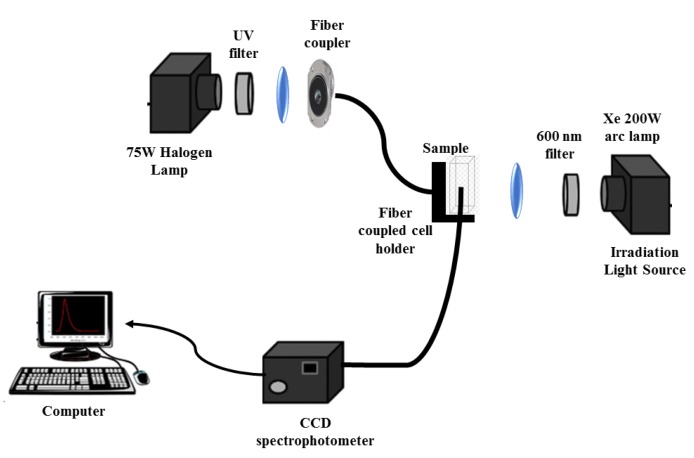
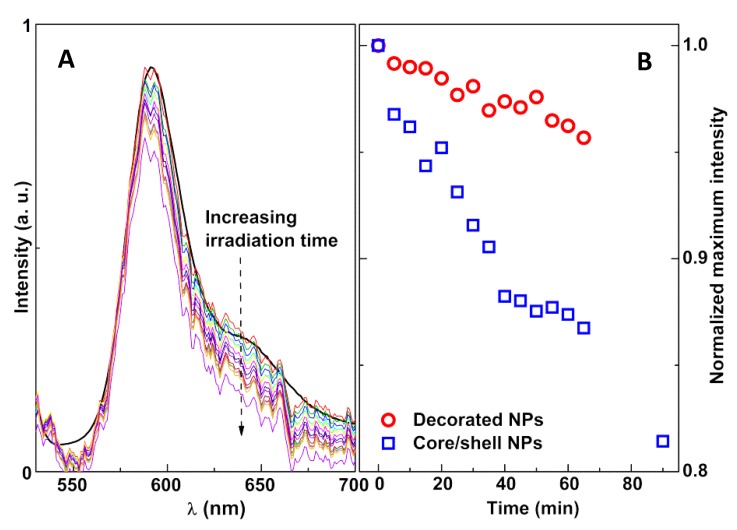
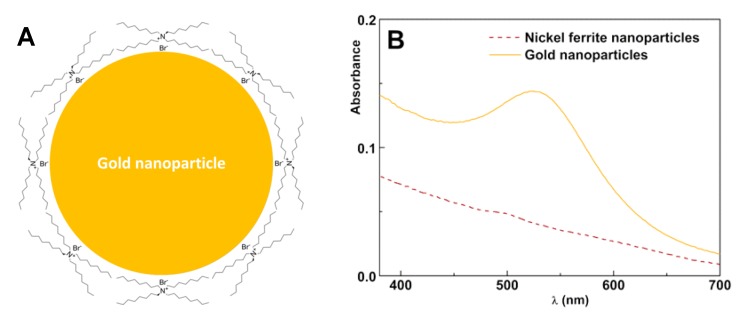
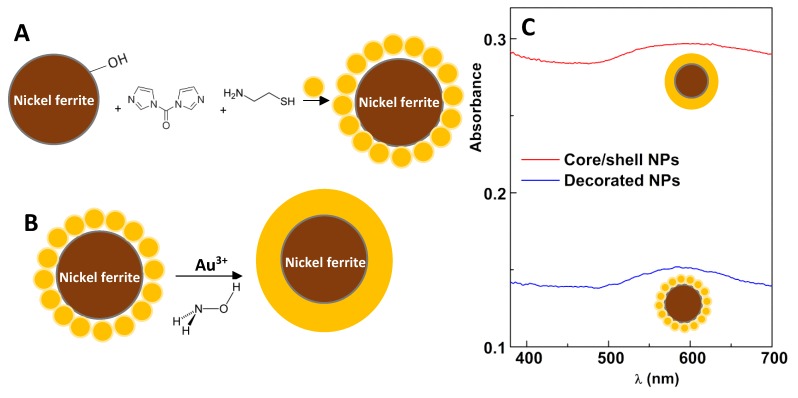
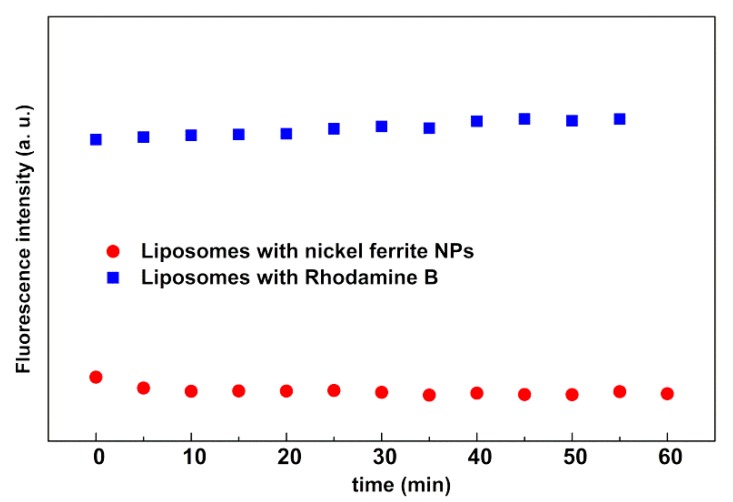
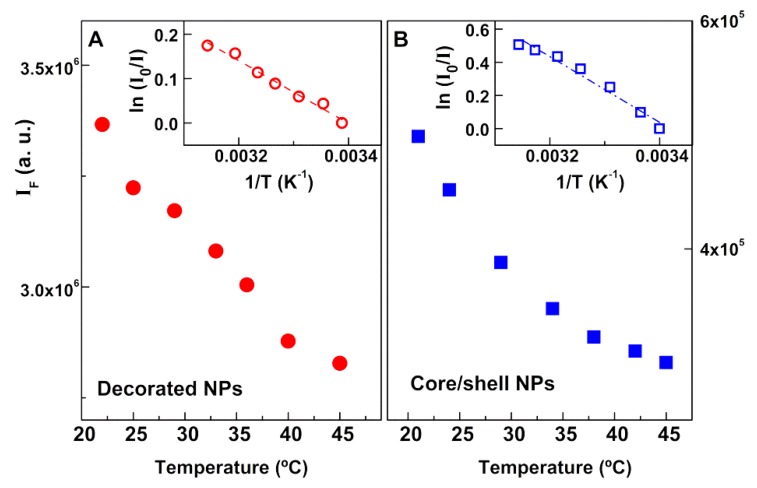
Multifunctional nanosystems combining magnetic and plasmonic properties are a promising approach for cancer therapy, allowing magnetic guidance and a local temperature increase. This capability can provide a triggered drug release and synergistic cytotoxic effect in cancer cells. In this work, nickel ferrite/gold nanoparticles were developed, including nickel ferrite magnetic nanoparticles decorated with plasmonic gold nanoparticles and core/shell nanostructures (with a nickel ferrite core and a gold shell). These nanoparticles were covered with a surfactant/lipid bilayer, originating liposome-like structures with diameters below 160 nm. The heating capacity of these systems, upon excitation with light above 600 nm wavelength, was assessed through the emission quenching of rhodamine B located in the lipid layer. The developed nanosystems show promising results for future applications in thermotherapy.
结合磁性和等离子体特性的多功能纳米系统是一种很有前景的癌症治疗方法,可实现磁引导和局部温度升高。这种能力可以在癌细胞中实现触发式药物释放和协同细胞毒性作用。在这项工作中,制备了镍铁氧体/金纳米颗粒,包括用等离子体金纳米颗粒修饰的镍铁氧体磁性纳米颗粒和核/壳纳米结构(以镍铁氧体为核,金为壳)。这些纳米颗粒覆盖有表面活性剂/脂质双层,形成直径低于160 nm的类脂质体结构。通过位于脂质层中的罗丹明B的发射猝灭,评估了这些系统在波长高于600 nm的光激发下的加热能力。所开发的纳米系统在热疗的未来应用中显示出有前景的结果。