Department of Crop Science, Chungnam National University, 99 Daehak-ro, Yuseong-gu, Daejeon 34134, Korea.
Department of Horticultural Science, Chungnam National University, 99, Daehak-Ro, Yuseong-gu, Daejeon 34134, Korea.
Biomolecules. 2020 Feb 11;10(2):277. doi: 10.3390/biom10020277.
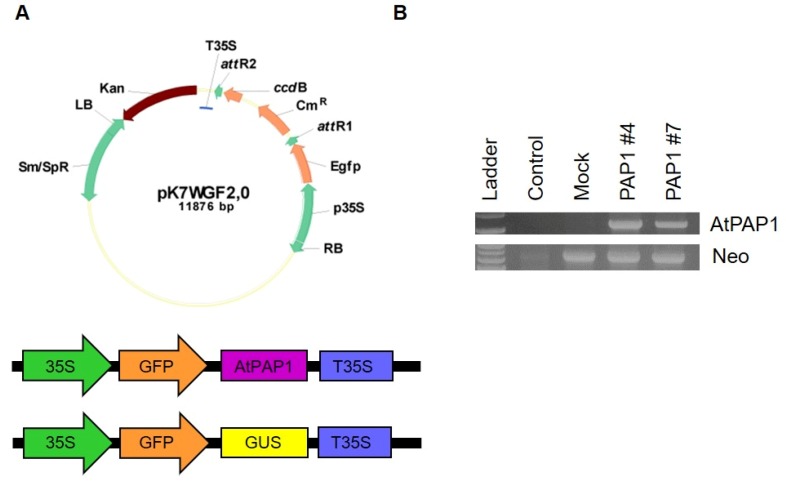
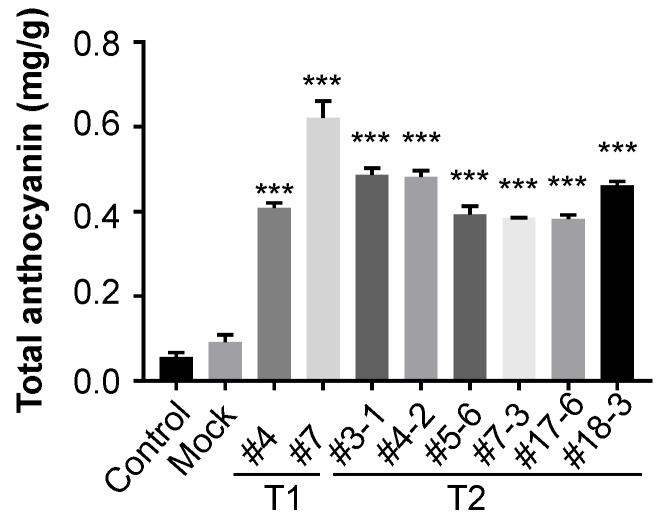
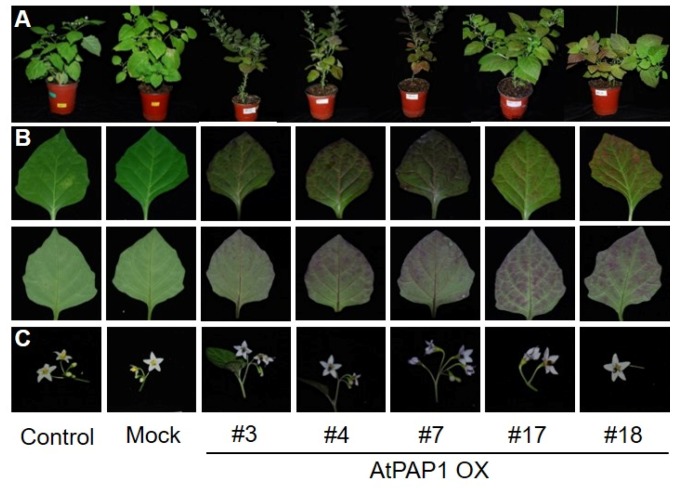
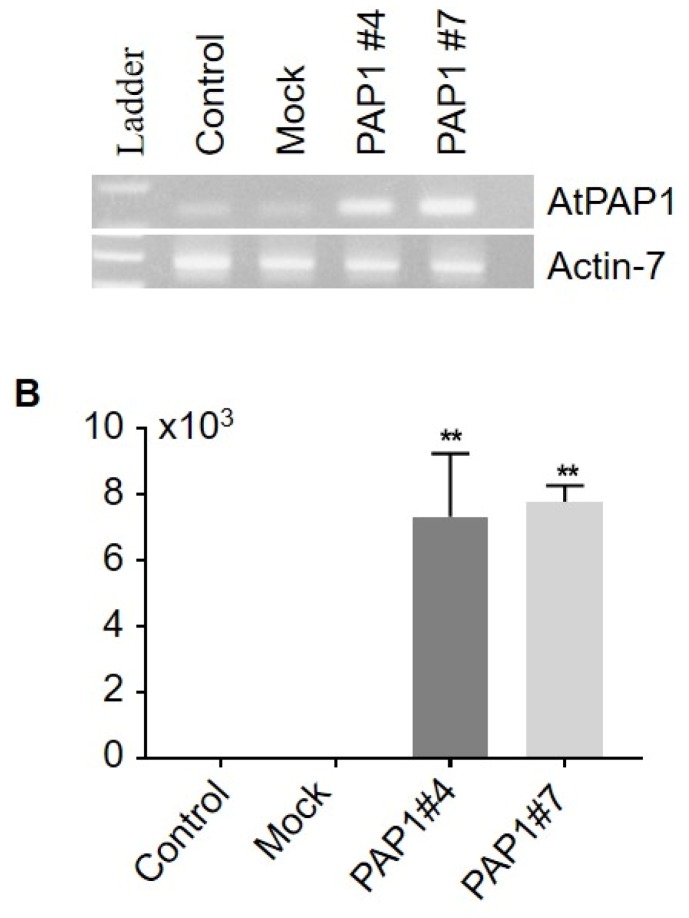
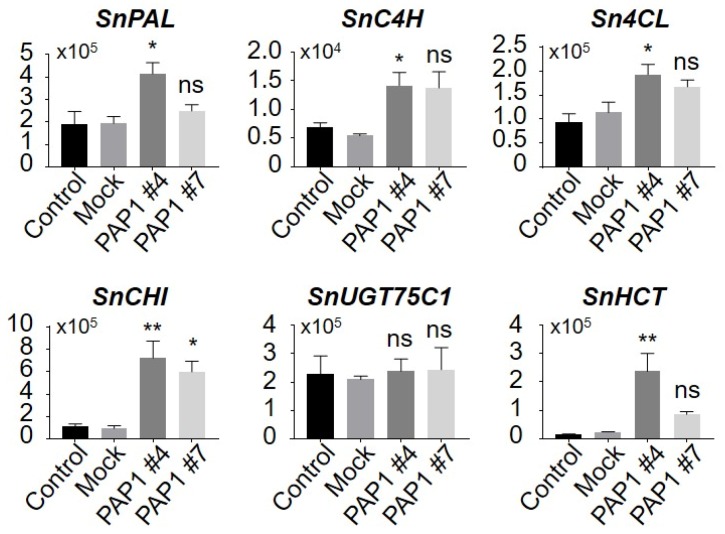
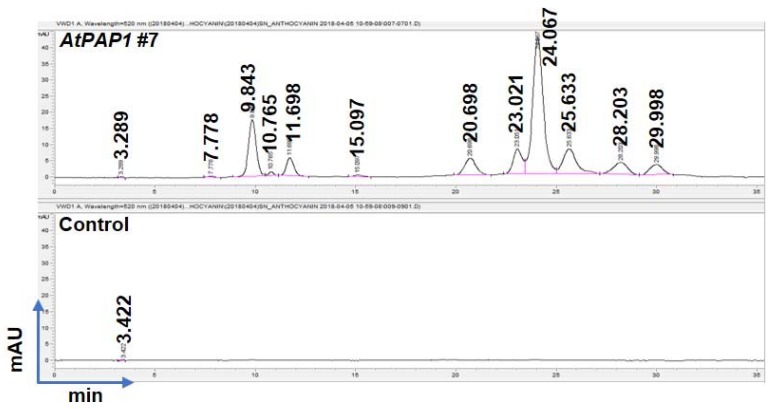
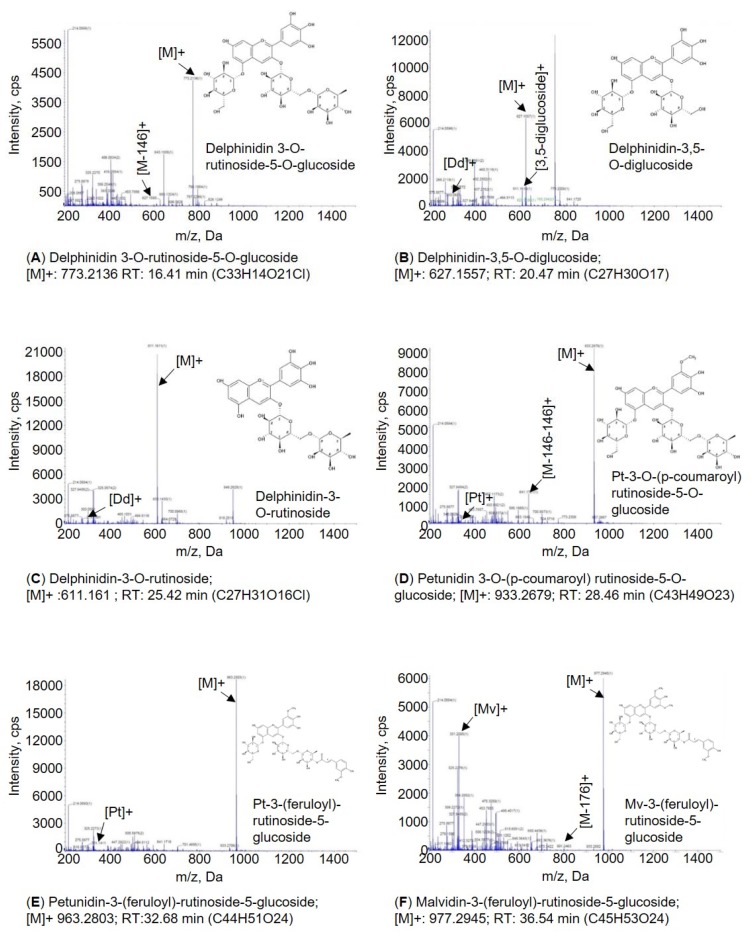
Black nightshade (Solanum nigrum) belongs to the Solanaceae family and is used as a medicinal herb with health benefits. It has been reported that the black nightshade plant contains various phytochemicals that are associated with antitumor activities. Here we employed a genetic approach to study the effects of overexpression of production of anthocyanin pigment 1 (AtPAP1) in black nightshade. Ectopic expression of AtPAP1 resulted in enhanced accumulation of anthocyanin pigments in vegetative and reproductive tissues of the transgenic plants. Analysis of anthocyanin revealed that delphinidin 3-O-rutinoside-5-O-glucoside, delphinidin 3,5-O-diglucoside, delphinidin 3-O-rutinoside, petunidin 3-O-rutinoside (--coumaroyl)-5-O-glucoside, petunidin 3-(feruloyl)-rutinoside-5-glucoside, and malvidin 3-(feruloyl)-rutinoside-5-glucoside are highly induced in the leaves of AtPAP1 overexpression lines. Furthermore, ectopic expression of AtPAP1 evoked expression of early and late biosynthetic genes of the general phenylpropanoid and flavonoid pathways that include phenylalanine ammonia-lyase (), cinnamate-4-hydroxylase (), 4-coumarate CoA ligase (), chalcone isomerase (), and quinate hydroxycinnamoyl transferase (), which suggests these genes might be transcriptional targets of AtPAP1 in black nightshade. Concomitantly, the total content of anthocyanin in the transgenic black nightshade plants was higher compared to the control plants, which supports phenotypic changes in color. Our data demonstrate that a major anthocyanin biosynthetic regulator, AtPAP1, can induce accumulation of anthocyanins in the heterologous system of black nightshade through the conserved flavonoid biosynthesis pathway in plants.
龙葵(Solanum nigrum)属于茄科,是一种具有保健功效的药用植物。据报道,龙葵植物含有各种与抗肿瘤活性相关的植物化学物质。在这里,我们采用遗传方法研究了过量表达花青素生物合成酶 1(AtPAP1)对龙葵的影响。AtPAP1 的异位表达导致转基因植物的营养和生殖组织中积累了更多的花青素。对花青素的分析表明,飞燕草素 3-O-芸香糖苷-5-O-葡萄糖苷、飞燕草素 3,5-O-二葡萄糖苷、飞燕草素 3-O-鼠李糖苷、锦葵素 3-O-鼠李糖苷(--咖啡酰基)-5-O-葡萄糖苷、锦葵素 3-(阿魏酰基)-鼠李糖苷-5-葡萄糖苷和矢车菊素 3-(阿魏酰基)-鼠李糖苷-5-葡萄糖苷在 AtPAP1 过表达系的叶片中高度诱导。此外,AtPAP1 的异位表达引发了一般苯丙素和类黄酮途径的早期和晚期生物合成基因的表达,包括苯丙氨酸解氨酶()、肉桂酸-4-羟化酶()、4-香豆酸辅酶 A 连接酶()、查尔酮异构酶()和奎尼酸羟肉桂酰基转移酶(),这表明这些基因可能是 AtPAP1 在龙葵中的转录靶标。同时,转基因龙葵植物中的总花青素含量高于对照植物,这支持了颜色表型的变化。我们的数据表明,花青素生物合成的主要调节因子 AtPAP1 通过植物中保守的类黄酮生物合成途径可以在龙葵的异源系统中诱导花青素的积累。