Department of Clinical Neurosciences, Hotchkiss Brain Institute, University of Calgary, 3330 Hospital Drive NW, Calgary, AB, T2N 4N1, Canada.
Cumming School of Medicine, University of Calgary, 3330 Hospital Drive NW, Calgary, AB, T2N 4N1, Canada.
J Neuroeng Rehabil. 2020 Feb 13;17(1):18. doi: 10.1186/s12984-020-0654-1.
While motor deficits are the hallmark of hemiparetic cerebral palsy, children may also experience impairments in visuospatial attention that interfere with participation in complex activities, including sports or driving. In this study, we used a robotic object hitting task to assess bilateral sensorimotor control and visuospatial skills in children with hemiparesis due to perinatal arterial ischemic stroke (AIS) or periventricular venous infarct (PVI). We hypothesized that performance would be impaired bilaterally and be related to motor behavior and clinical assessment of visuospatial attention.
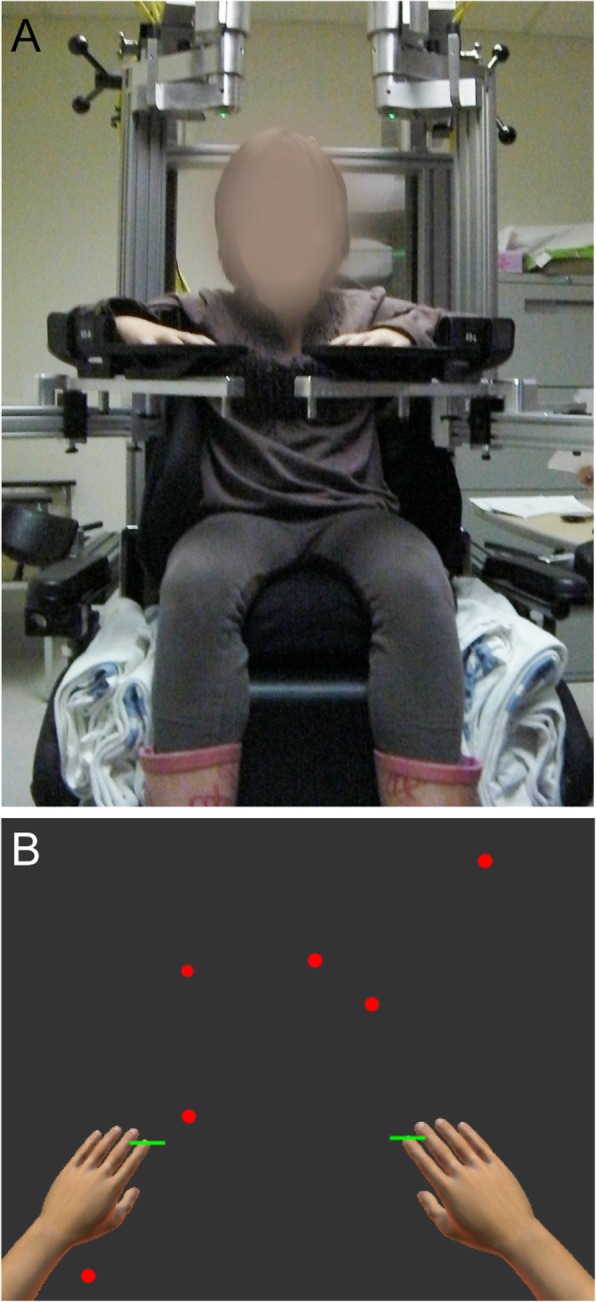
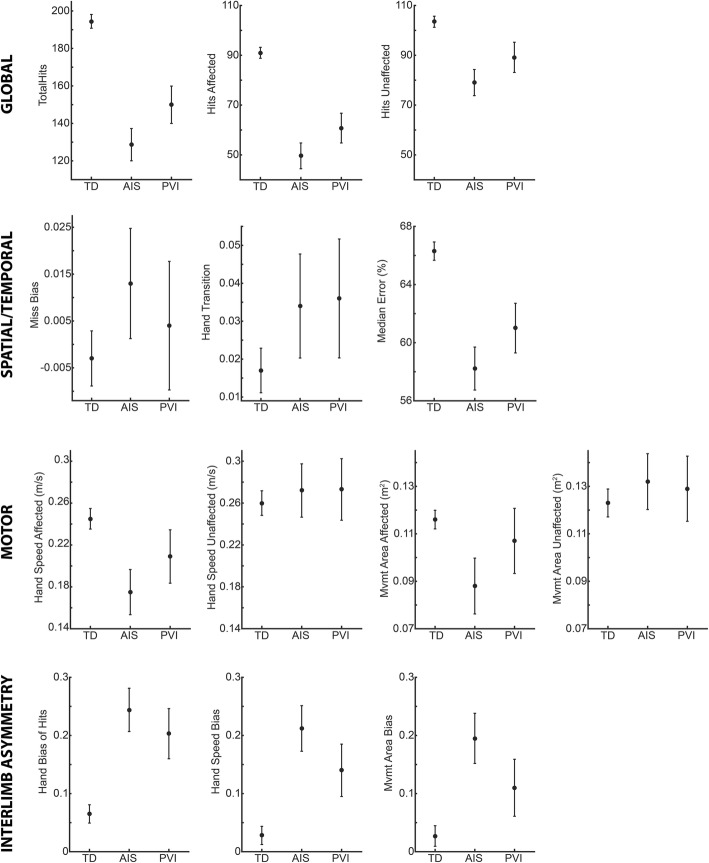
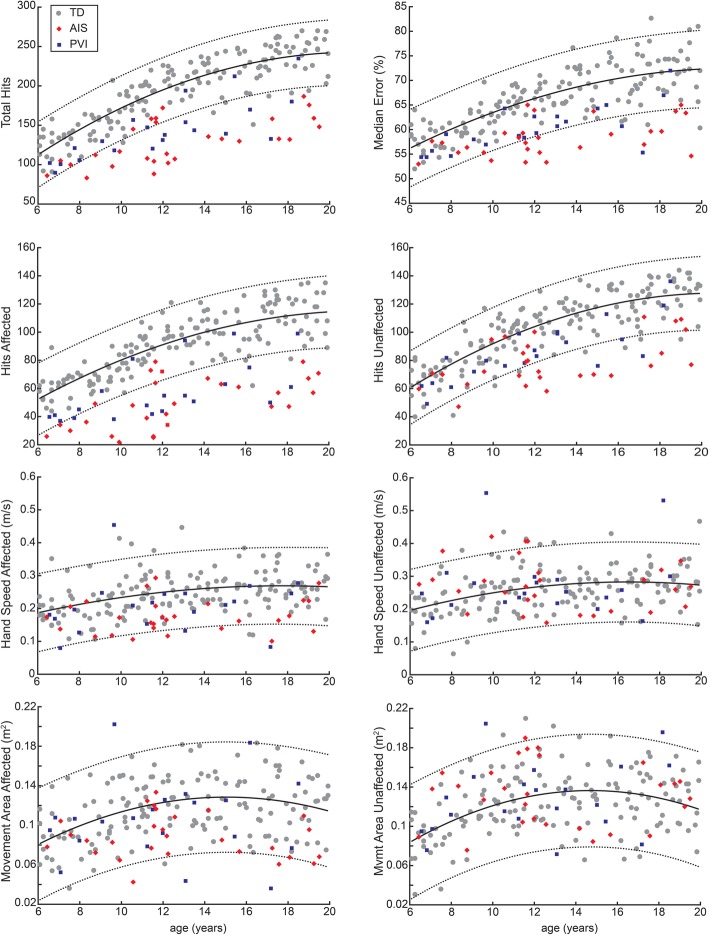
Forty-nine children with perinatal stroke and hemiparetic cerebral palsy and 155 typically developing (TD) children participated in the study. Participants performed a bilateral object hitting task using the KINARM Exoskeleton Robot, in which they used virtual paddles at their fingertips to hit balls that fell from the top of the screen with increasing speed and frequency over 2.3 min. We quantified performance across 13 parameters including number of balls hit with each hand, movement speed and area, biases between hands, and spatial biases. We determined normative ranges of performance accounting for age by fitting 95% prediction bands to the TD children. We compared parameters between TD, AIS, and PVI groups using ANCOVAs accounting for age effects. Lastly, we performed regression analysis between robotic and clinical measures.
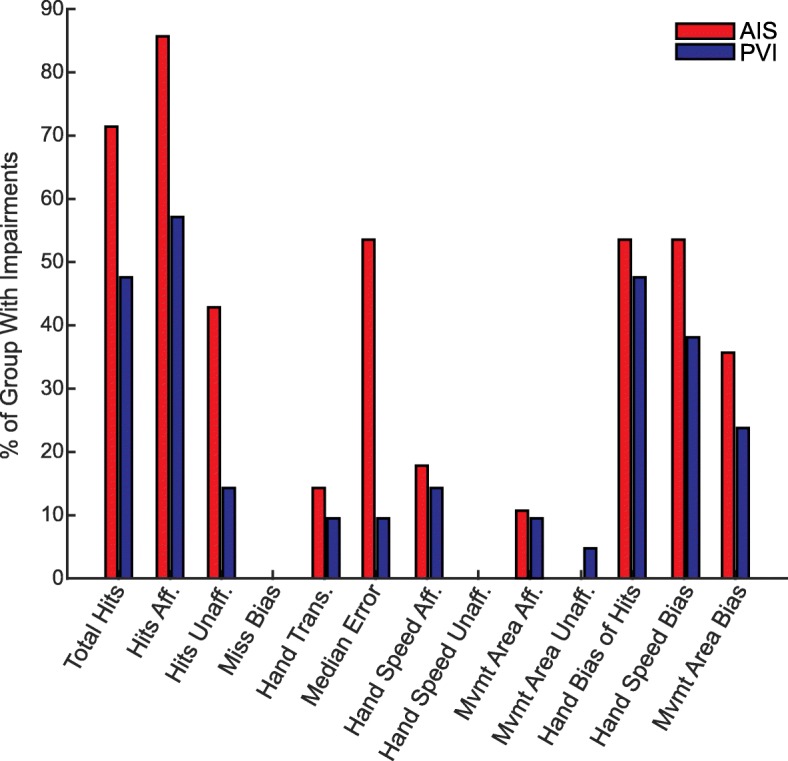
The majority of children with perinatal stroke hit fewer balls with their affected arm compared to their typically developing peers. We also found deficits with the ipsilesional ("unaffected") arm. Children with AIS had greater impairments than PVI. Despite hitting fewer balls, we only identified 18% of children as impaired in hand speed or movement area. Performance on the Behavioral Inattention Test accounted for 21-32% of the variance in number of balls hit with the unaffected hand.
Children with perinatal stroke-induced hemiparetic cerebral palsy may have complex bilateral deficits reflecting a combination of impairments in motor skill and visuospatial attention. Clinical assessments and interventions should address the interplay between motor and visuospatial skills.
虽然运动障碍是偏瘫性脑瘫的主要特征,但儿童也可能存在视空间注意力损伤,这会干扰他们参与复杂活动,包括运动或驾驶。在这项研究中,我们使用机器人物体击打任务来评估围产期动脉缺血性卒中(AIS)或脑室周围静脉梗死(PVI)导致的偏瘫性脑瘫儿童的双侧感觉运动控制和视空间技能。我们假设,表现会双侧受损,并与运动行为和视空间注意力的临床评估有关。
49 名围产期卒中伴偏瘫性脑瘫的儿童和 155 名正常发育(TD)的儿童参与了这项研究。参与者使用 KINARM 外骨骼机器人进行双侧物体击打任务,他们使用指尖上的虚拟球拍击打从屏幕顶部落下的球,球速和频率在 2.3 分钟内逐渐增加。我们通过拟合 95%预测带,量化了 13 个参数,包括每只手击球的数量、运动速度和面积、双手之间的偏差以及空间偏差。我们使用 ANCOVA 比较了 TD、AIS 和 PVI 组之间的参数,该方法考虑了年龄的影响。最后,我们对机器人和临床测量之间进行了回归分析。
大多数围产期卒中的儿童与他们的正常发育同龄人相比,用患病手臂击球的数量较少。我们还发现,他们的健侧手臂(“未受影响”的手臂)也存在缺陷。AIS 患儿的损伤比 PVI 患儿更严重。尽管击球次数较少,但我们只发现 18%的儿童存在手部速度或运动面积受损的情况。行为性注意测验的表现解释了未受影响手击球数量的 21-32%的方差。
围产期卒中引起的偏瘫性脑瘫儿童可能存在复杂的双侧缺陷,反映了运动技能和视空间注意力的综合损伤。临床评估和干预措施应考虑运动和视空间技能之间的相互作用。