Department of Biomedical Engineering, University of Texas at Dallas, 800W Campbell Rd., Richardson, TX, 75080, USA.
Department of Electrical and Computer Engineering, University of Texas at Dallas, 800W Campbell Rd., Richardson, TX, 75080, USA.
Sci Rep. 2020 Feb 13;10(1):2557. doi: 10.1038/s41598-020-59525-y.
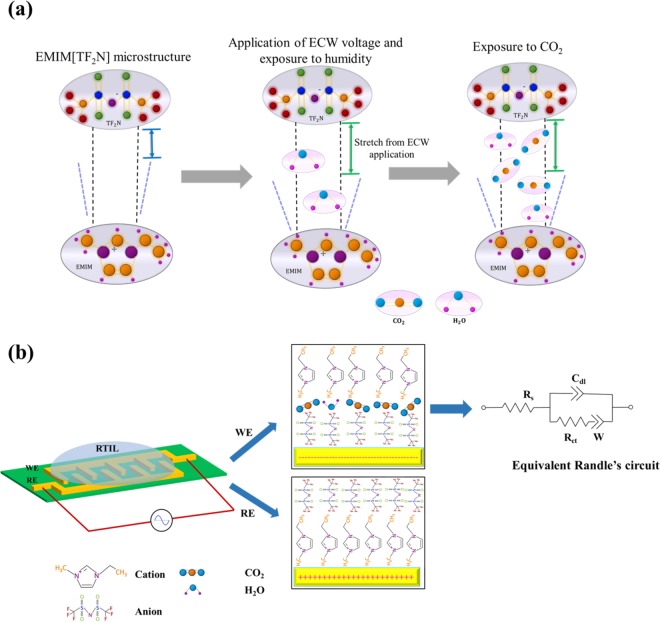
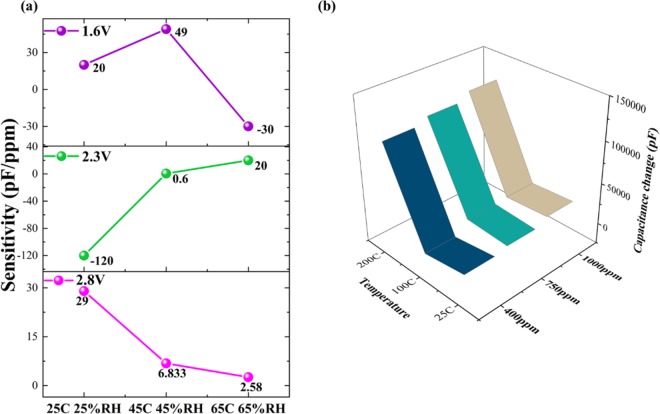
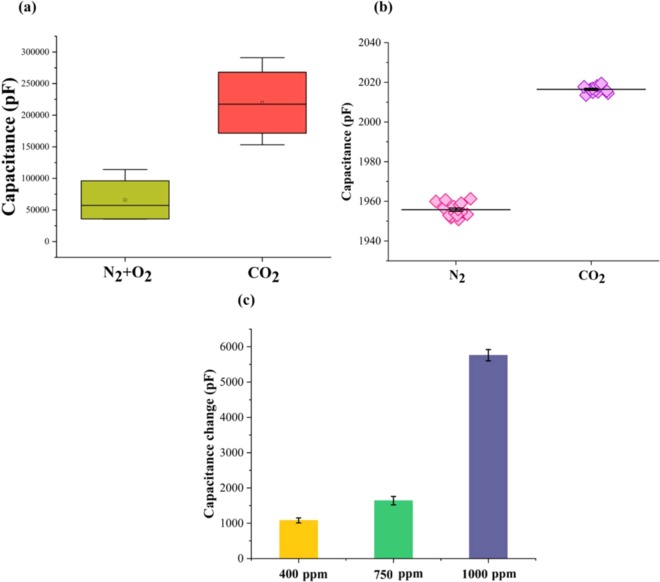
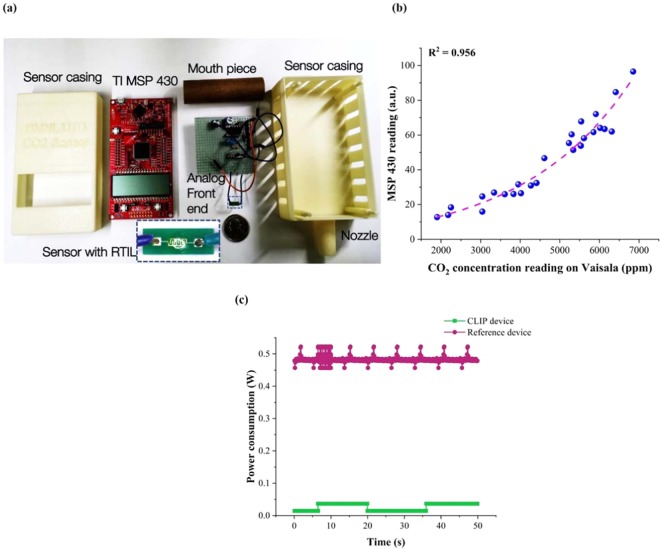
Health and safety considerations of room occupants in enclosed spaces is crucial for building management which entails control and stringent monitoring of CO levels to maintain acceptable air quality standards and improve energy efficiency. Smart building management systems equipped with portable, low-power, non-invasive CO sensing techniques can predict room occupancy detection based on CO levels exhaled by humans. In this work, we have demonstrated the development and proof-of-feasibility working of an electrochemical RTIL- based sensor prototype for CO detection in exhaled human breath. The portability, small form factor, embedded RTIL sensing element, integrability with low-power microelectronic and IOT interfaces makes this CO sensor prototype a potential application for passive room occupancy monitoring. This prototype exhibits a wide dynamic range of 400-8000 ppm, a short response time of ~10 secs, and a reset time of ~6 secs in comparison to commercial standards. The calibration response of the prototype exhibits an R of 0.956. With RTIL as the sensing element, we have achieved a sensitivity of 29 pF/ppm towards CO at ambient environmental conditions and a three times greater selectivity towards CO in the presence of N and O. CO detection is accomplished by quantifying the capacitance modulations arising within the electrical double layer from the RTIL- CO interactions through AC- based electrochemical impedance spectroscopy and DC- based chronoamperometry.
密闭空间内居住者的健康和安全考虑对于建筑管理至关重要,这需要控制和严格监测 CO 水平,以维持可接受的空气质量标准并提高能源效率。配备便携式、低功耗、非侵入式 CO 感测技术的智能建筑管理系统可以根据人体呼出的 CO 水平预测房间占用情况。在这项工作中,我们展示了一种基于电化学 RTIL 的传感器原型的开发和可行性研究,用于检测呼出的人体呼吸中的 CO。该传感器原型具有便携性、小尺寸、嵌入式 RTIL 感测元件、与低功耗微电子和物联网接口的集成性,使其成为被动式房间占用监测的潜在应用。与商业标准相比,该原型具有 400-8000 ppm 的宽动态范围、约 10 秒的短响应时间和约 6 秒的重置时间。原型的校准响应表现出 0.956 的 R ² 值。我们使用 RTIL 作为感测元件,在环境条件下实现了 29 pF/ppm 的 CO 灵敏度,并且在存在 N 和 O 的情况下对 CO 的选择性提高了三倍。通过交流电化学阻抗谱和直流计时安培法来量化 RTIL-CO 相互作用引起的双电层中的电容调制,从而实现 CO 检测。