Department of Hygienic Chemistry, Faculty of Pharmacy, Keio University, 1-5-30 Shibakoen, Minato-ku, Tokyo, 105-8512, Japan.
Division of Structural Biochemistry, Department of Biochemistry, Jichi Medical University, 3311-1 Yakushiji, Shimotsuke-shi, Tochigi-ken, 329-0498, Japan.
Sci Rep. 2020 Feb 13;10(1):2584. doi: 10.1038/s41598-020-59380-x.
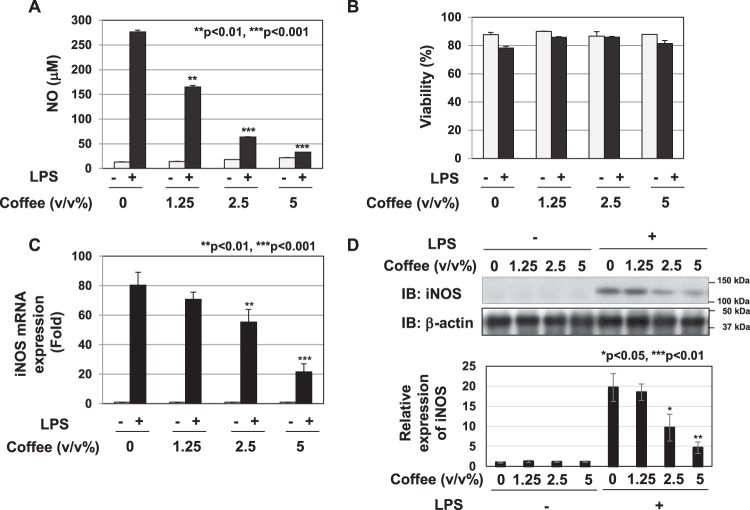
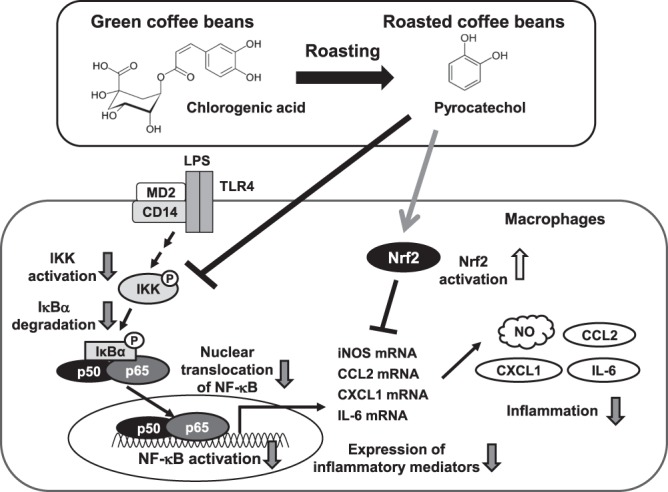
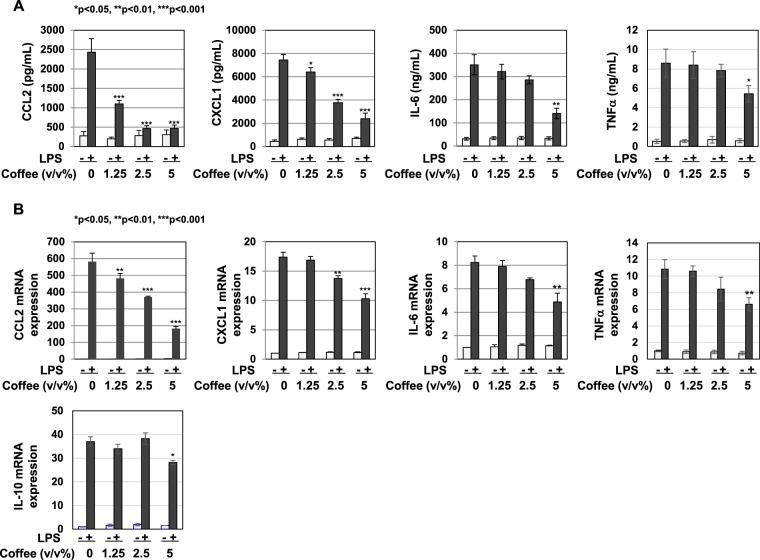
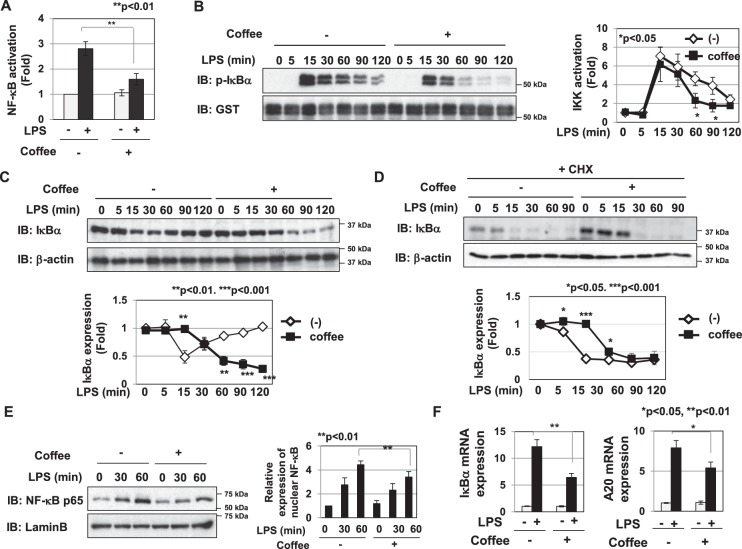
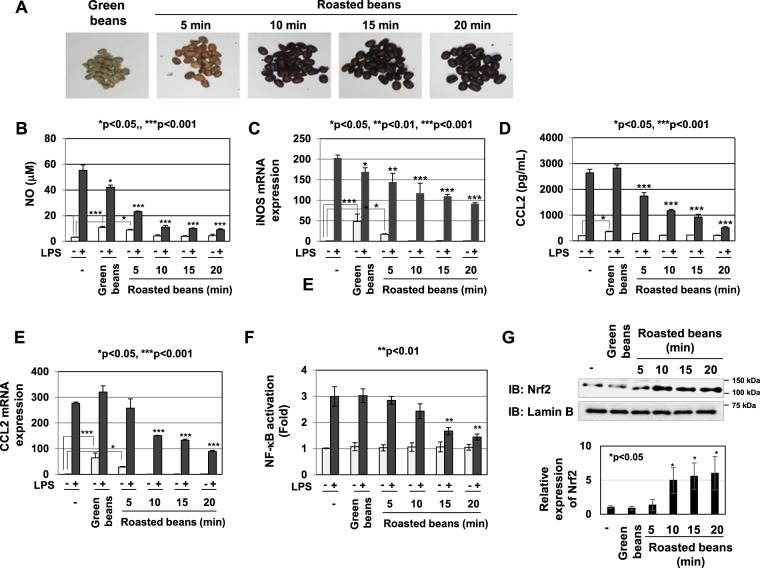
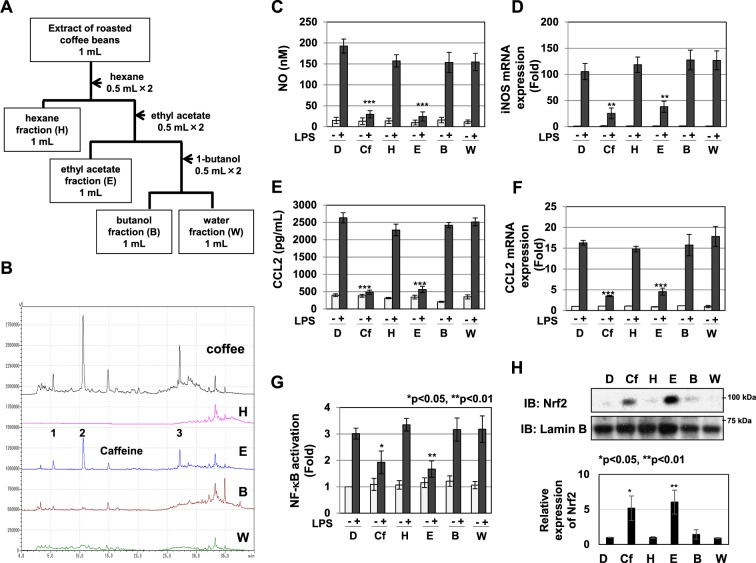
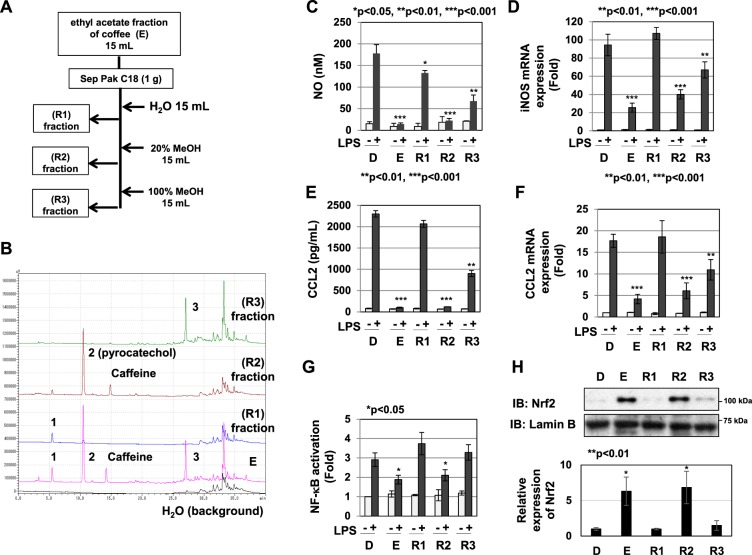
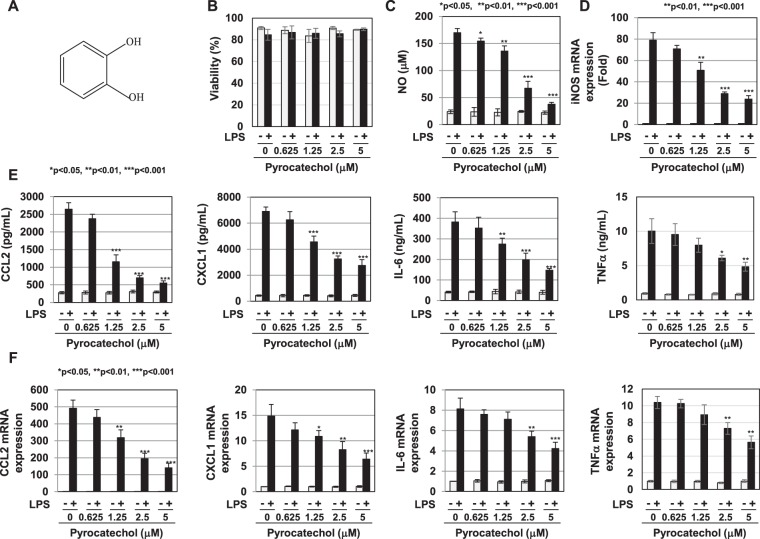
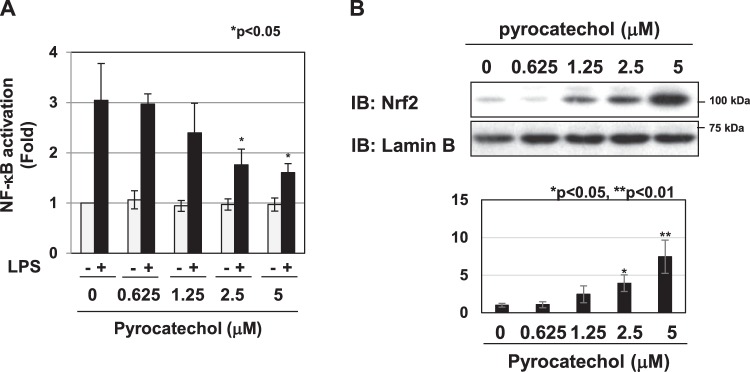
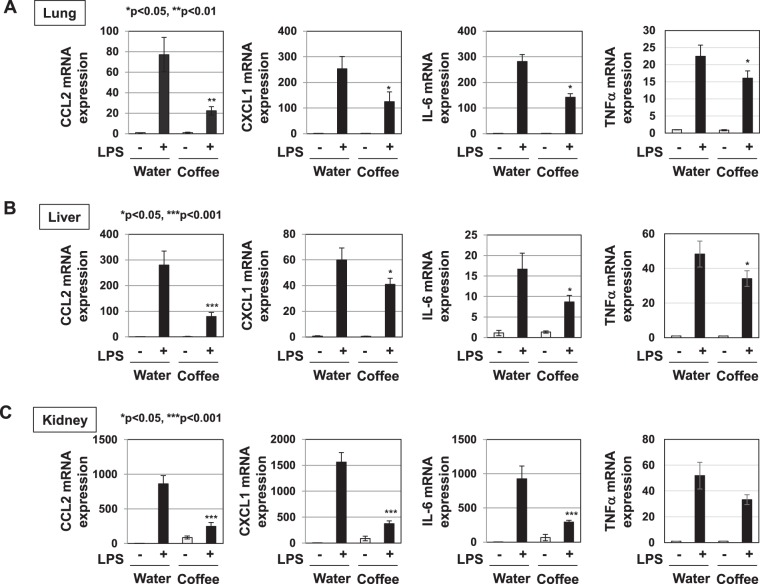
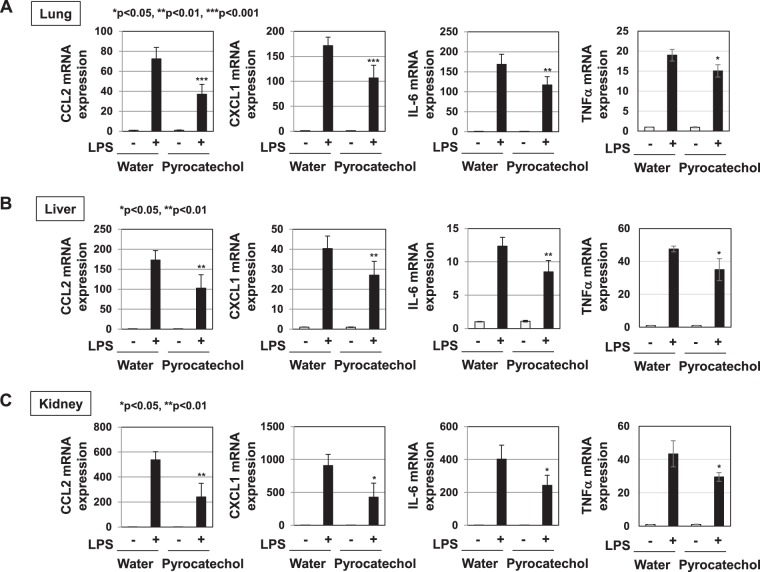
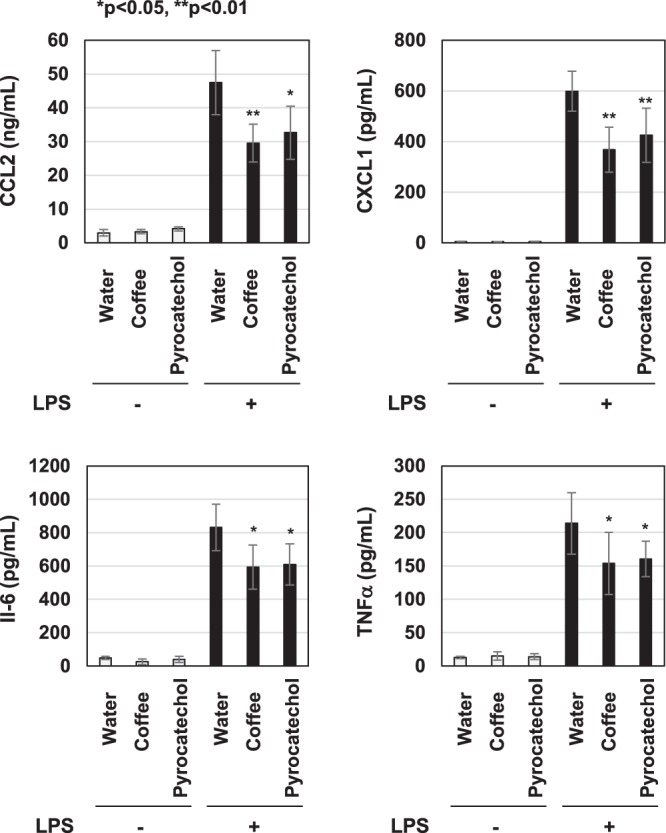
Coffee is a complex mixture of many bioactive compounds possessing anti-inflammatory properties. However, the mechanisms by which coffee exerts anti-inflammatory effects remains unclear and the active ingredients have not yet been identified. In this study, we found that coffee extract at more than 2.5%(v/v) significantly inhibited LPS-induced inflammatory responses in RAW264.7 cells and that anti-inflammatory activity of coffee required the roasting process. Interestingly, we identified pyrocatechol, a degradation product derived from chlorogenic acid during roasting, as the active ingredient exhibiting anti-inflammatory activity in coffee. HPLC analysis showed that 124 μM pyrocatechol was included in 100% (v/v) roasted coffee. A treatment with 5%(v/v) coffee extract and more than 2.5 μM pyrocatechol inhibited the LPS-induced activation of NF-κB and also significantly activated Nrf2, which acts as a negative regulator in LPS-induced inflammation. Furthermore, intake of 60% (v/v) coffee extract and 74.4 μM pyrocatechol, which is the concentration equal to contained in 60% (v/v) coffee, markedly inhibited the LPS-induced inflammatory responses in mice. Collectively, these results demonstrated that pyrocatechol, which was formed by the roasting of coffee green beans, is one of the ingredients contributing to the anti-inflammatory activity of coffee.
咖啡是一种复杂的混合物,含有许多具有抗炎特性的生物活性化合物。然而,咖啡发挥抗炎作用的机制尚不清楚,其有效成分也尚未确定。在这项研究中,我们发现咖啡提取物浓度超过 2.5%(v/v)时,可显著抑制 LPS 诱导的 RAW264.7 细胞炎症反应,并且咖啡的抗炎活性需要经过烘焙过程。有趣的是,我们鉴定出邻苯二酚,这是一种在烘焙过程中由绿原酸降解生成的物质,是咖啡中具有抗炎活性的有效成分。HPLC 分析表明,100%(v/v)烘焙咖啡中含有 124 μM 的邻苯二酚。用 5%(v/v)咖啡提取物和超过 2.5 μM 的邻苯二酚处理可抑制 LPS 诱导的 NF-κB 激活,还可显著激活 Nrf2,后者在 LPS 诱导的炎症中作为负调节剂发挥作用。此外,摄入 60%(v/v)咖啡提取物和 74.4 μM 的邻苯二酚,其浓度与 60%(v/v)咖啡中的含量相当,可显著抑制 LPS 诱导的小鼠炎症反应。综上所述,这些结果表明,邻苯二酚是由咖啡生豆烘焙生成的物质之一,是咖啡抗炎活性的成分之一。