Kang Ye, Nii Takahiro, Isobe Naoki, Yoshimura Yukinori
Graduate School of Biosphere Science, Hiroshima University, Higashi-Hiroshima 739-8528, Japan.
The Research Center for Animal Science, Hiroshima University, Higashi-Hiroshima, Japan.
J Poult Sci. 2018;55(4):288-300. doi: 10.2141/jpsa.0170217. Epub 2018 Apr 25.
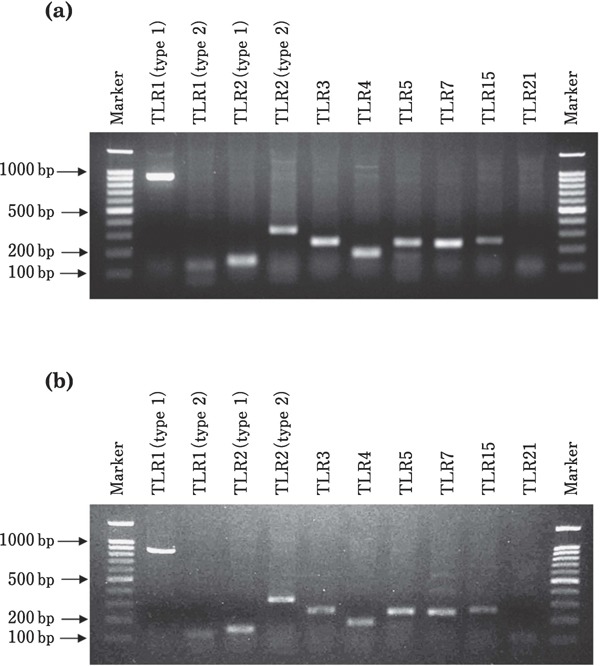
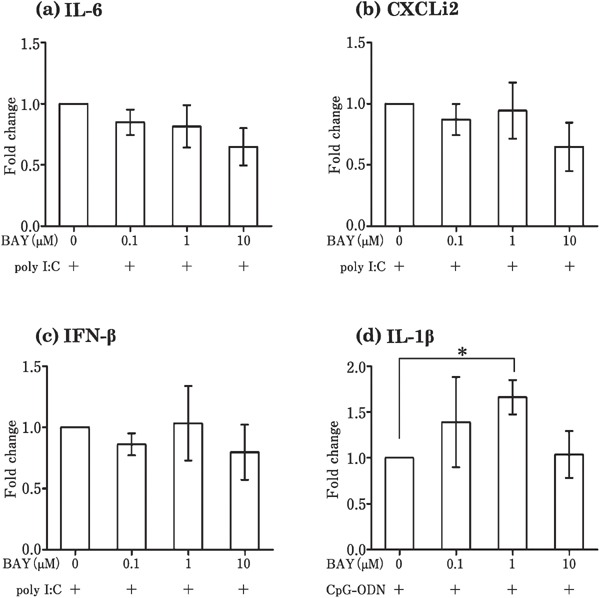
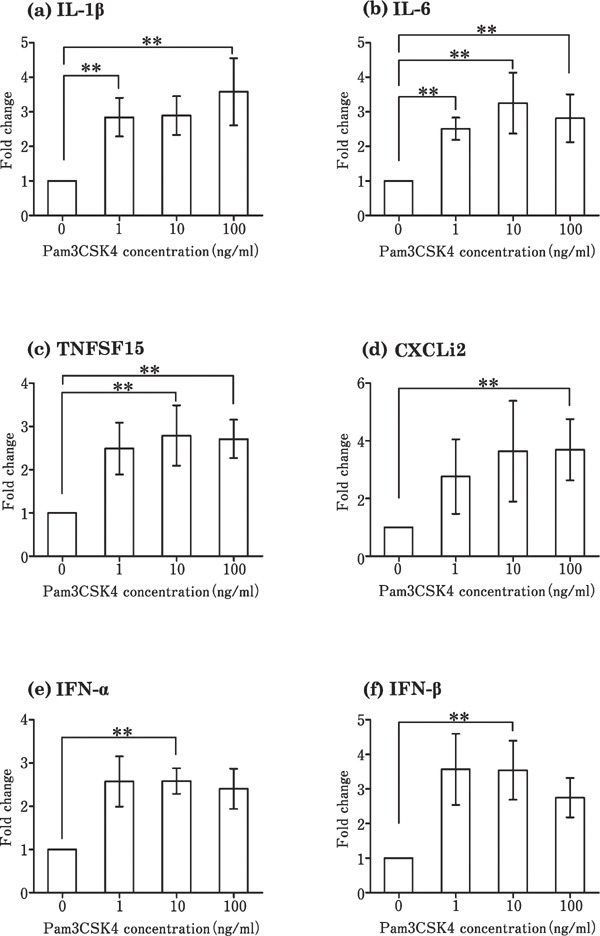
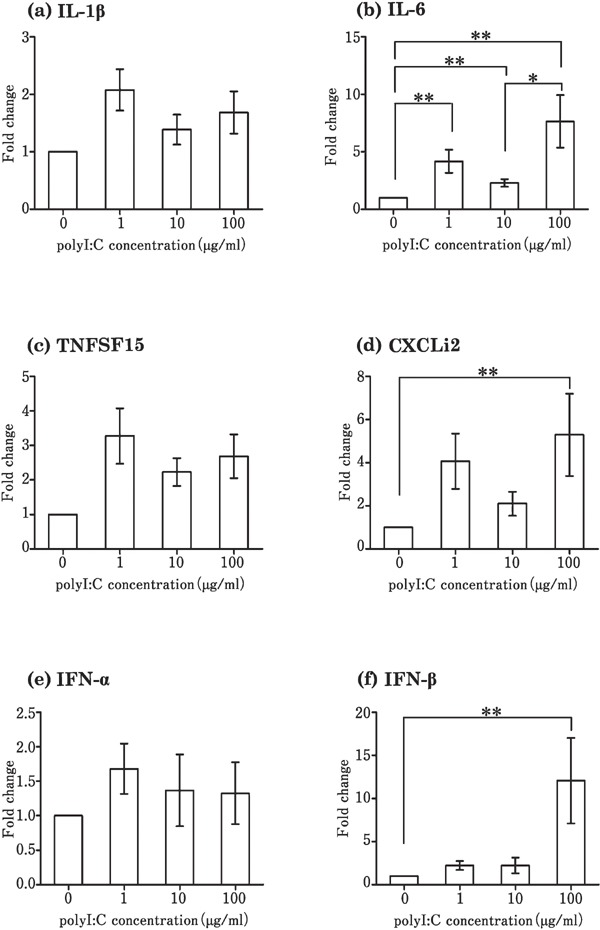
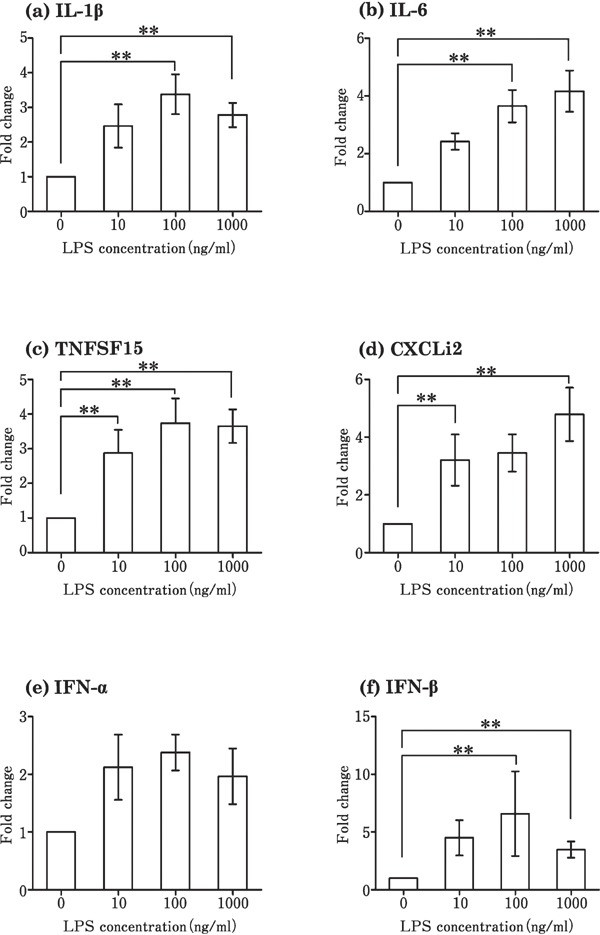
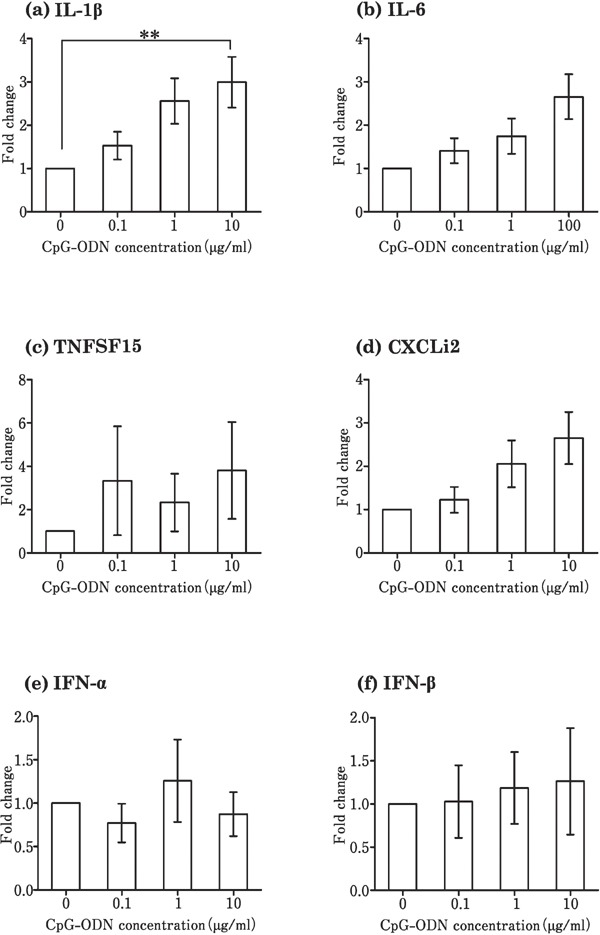
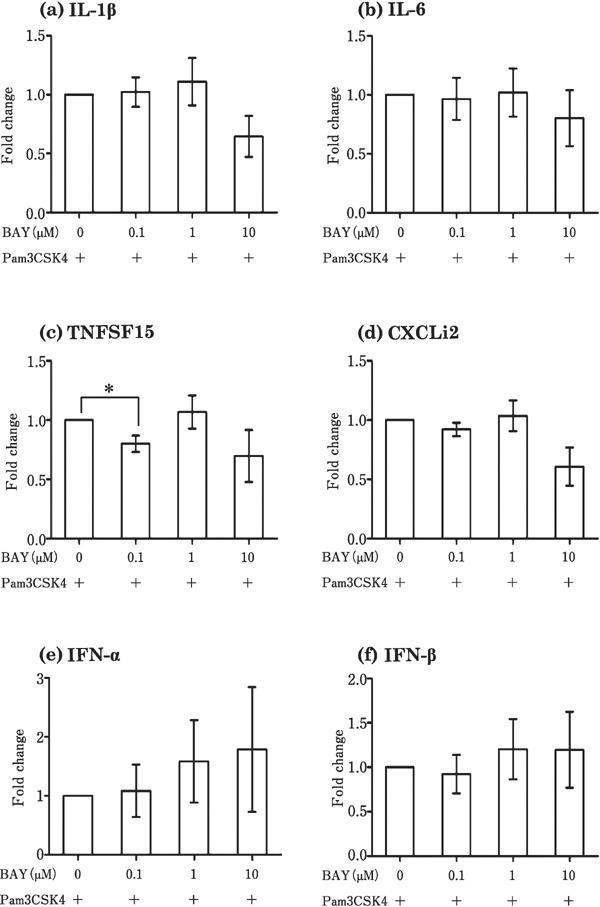
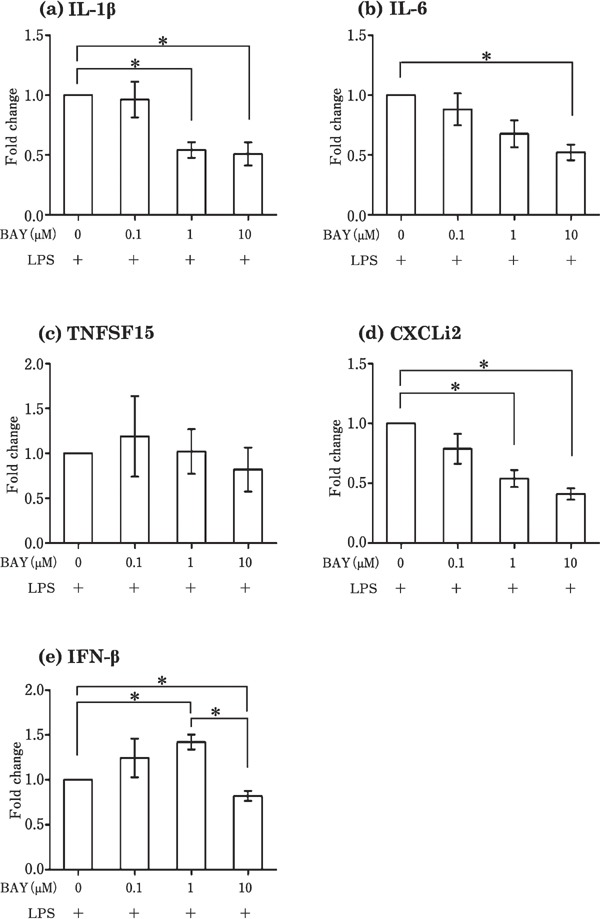
The aim of this study was to determine the effects of Toll-like receptor (TLR) ligands on the expression of cytokines in chicken follicular theca and to investigate whether nuclear factor-B (NFB) was involved in their expression. The follicular theca was collected from the largest follicle of laying hens. In experiment 1, the expression of TLRs in the theca interna and externa was confirmed using RT-PCR. The theca tissues were then incubated with or without Pam3CSK4 (TLR2 ligand), poly I:C (TLR3 ligand), LPS (TLR4 ligand), flagellin (TLR5 ligand), R837 (TLR7 ligand), and CpG-ODN (TLR21 ligand) for 3 h, after which cytokine expression (IL-1, IL-6, TNFSF15, CXCLi2, IFN-, and IFN-) was analyzed by real-time PCR. In experiment 2, the theca tissues were incubated in a medium containing Pam3CSK4, poly I:C, LPS, or CpG-ODN with or without BAY 11-7085 (an inhibitor of NFB) for 3 h. The results of experiment 1 revealed that all TLRs, namely TLR1 (type 1 and 2), TLR2 (type 1 and 2), 3-5, 7, 15, and 21, were expressed in the follicular theca, although the PCR products of TLR1 (type 2) and TLR21 were faint. Moreover, Pam3CSK4 and LPS upregulated the expression of all detected cytokines, except for IFN-, whose expression was not upregulated by LPS. Poly I:C upregulated the expression of IL-6, CXCLi2, and IFN-, while CpG-ODN upregulated IL-1. Flagellin and R837 did not significantly affect cytokine expression. In experiment 2, the expression of IL-1, IL-6, CXCLi2 and IFN- in tissues incubated with LPS was downregulated by BAY 11-7085. These results suggest that the innate immune system, including pattern recognition by TLRs and cytokine synthesis, occur in the theca; whereas, functions for recognition of bacterial patterns is more developed than that of viral ones.
本研究的目的是确定Toll样受体(TLR)配体对鸡卵泡膜细胞中细胞因子表达的影响,并研究核因子-κB(NF-κB)是否参与其表达。从产蛋母鸡最大的卵泡中收集卵泡膜。在实验1中,使用逆转录聚合酶链反应(RT-PCR)确认了卵泡膜内层和外层中TLR的表达。然后将卵泡膜组织与Pam3CSK4(TLR2配体)、聚肌苷酸-聚胞苷酸(poly I:C,TLR3配体)、脂多糖(LPS,TLR4配体)、鞭毛蛋白(TLR5配体)、R837(TLR7配体)和CpG寡脱氧核苷酸(CpG-ODN,TLR21配体)一起孵育3小时,之后通过实时聚合酶链反应分析细胞因子表达(白细胞介素-1(IL-1)、白细胞介素-6(IL-6)、肿瘤坏死因子配体超家族成员15(TNFSF15)、趋化因子CXCLi2、干扰素-α(IFN-α)和干扰素-β(IFN-β))。在实验2中,将卵泡膜组织在含有Pam3CSK4、poly I:C、LPS或CpG-ODN的培养基中与或不与BAY 11-7085(一种NF-κB抑制剂)一起孵育3小时。实验1的结果显示,所有TLR,即TLR1(1型和2型)、TLR2(1型和2型)、3至5、7、15和21,均在卵泡膜中表达,尽管TLR1(2型)和TLR21的聚合酶链反应产物较淡。此外,Pam3CSK4和LPS上调了所有检测到的细胞因子的表达,但IFN-α除外,其表达未被LPS上调。Poly I:C上调了IL-6、CXCLi2和IFN-α的表达,而CpG-ODN上调了IL-1的表达。鞭毛蛋白和R837对细胞因子表达没有显著影响。在实验2中,BAY 11-7085下调了与LPS一起孵育的组织中IL-1、IL-6、CXCLi2和IFN-α的表达。这些结果表明,包括TLR模式识别和细胞因子合成在内的先天性免疫系统在卵泡膜中发生;然而,细菌模式识别功能比病毒模式识别功能更发达。