Liu Jing, Liu Mengxing, Zhang Hongxing, Wei Xuehong, Wang Juanjuan, Xian Ming, Guo Wei
School of Chemistry and Chemical Engineering , Shanxi University , Taiyuan 030006 , China . Email:
Scientific Instrument Center , Shanxi University , Taiyuan 030006 , China.
Chem Sci. 2019 Sep 7;10(43):10065-10071. doi: 10.1039/c9sc02618e. eCollection 2019 Nov 21.
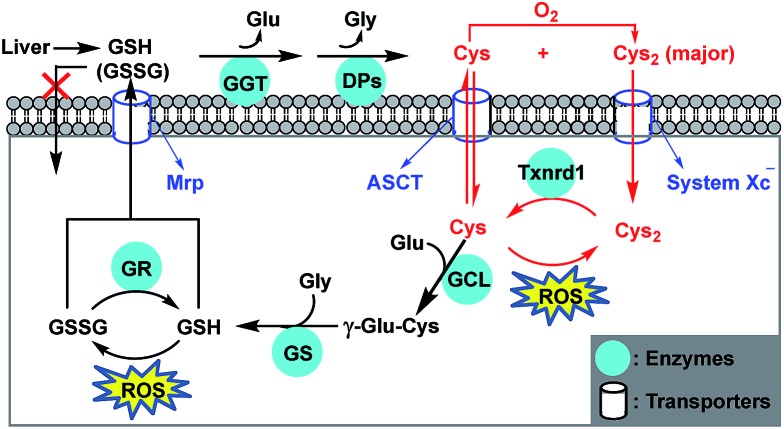
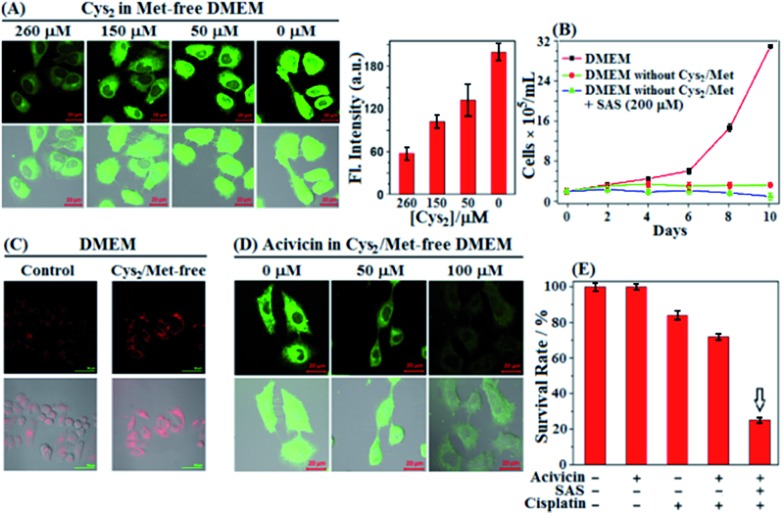
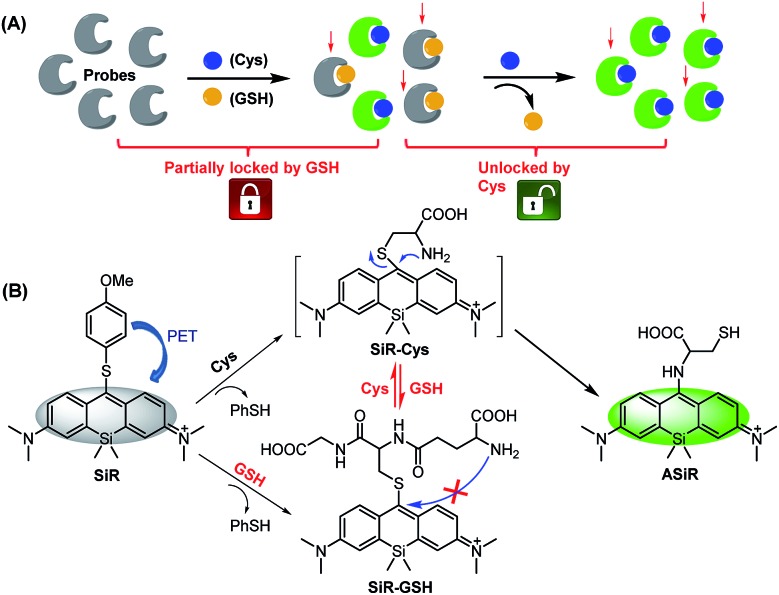
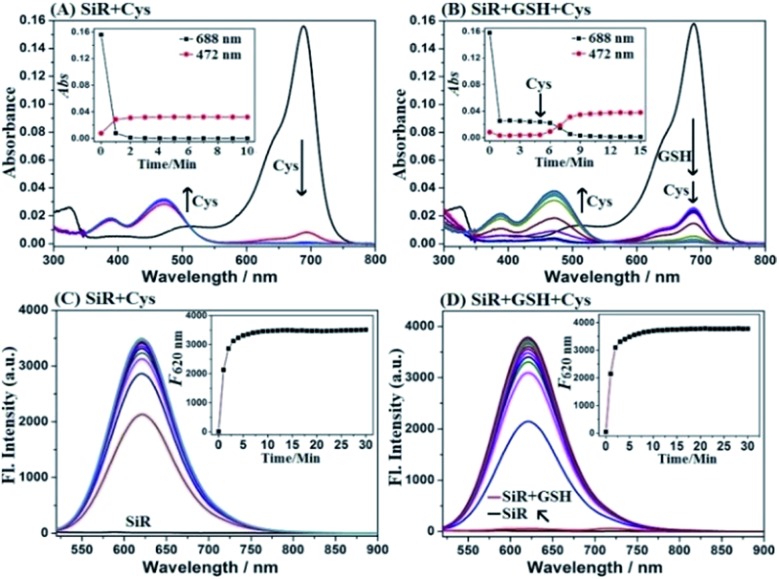
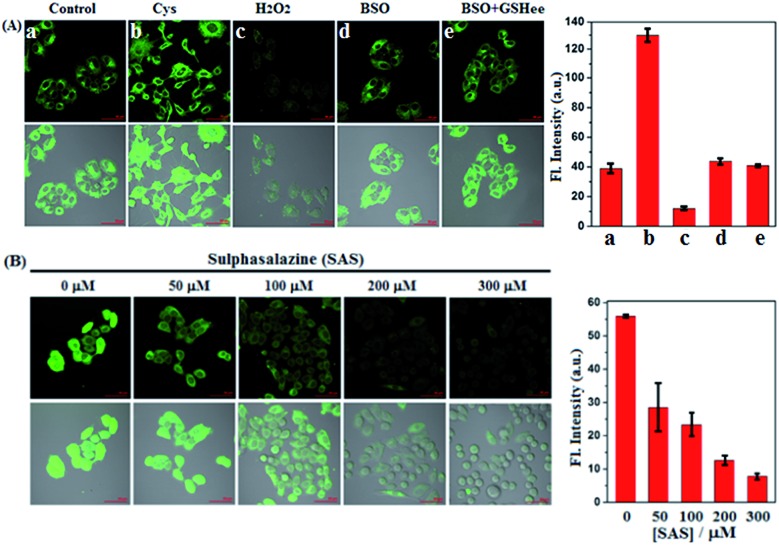
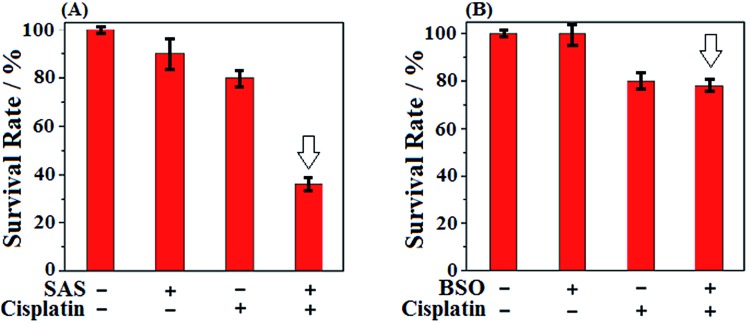
To probe the regulatory roles of cysteine (Cys) in cancer cell survival, a highly selective and sensitive fluorescent Cys probe was developed by employing a novel "lock and key" strategy, which allows Cys to be detected without any interference or probe consumption caused by the intracellular high concentration of glutathione (GSH). Using , we confirmed that inhibiting cystine (Cys) transporter system x to deplete intracellular Cys is more efficient than inhibiting glutamate-cysteine ligase GCL to deplete intracellular GSH for sensitizing cancer cells to chemotherapy. Moreover, with the probe, a possible self-protection mechanism of cancer cells was indicated: when extracellular Cys sources are blocked, cancer cells could still survive by multidrug resistance protein transporter (Mrp1)-mediated export of intracellular GSH/GSSG as sources to supply intracellular Cys for resisting detrimental oxidative stress. Based on this finding, we further confirmed that abrogating the self-protection mechanism is an even more efficient strategy for sensitizing cancer cells to chemotherapy.
为了探究半胱氨酸(Cys)在癌细胞存活中的调控作用,采用一种新颖的“锁钥”策略开发了一种高选择性和高灵敏度的荧光Cys探针,该策略能够在不受细胞内高浓度谷胱甘肽(GSH)干扰或探针消耗的情况下检测Cys。通过实验,我们证实抑制胱氨酸(Cys)转运体系统x以耗尽细胞内Cys比抑制谷氨酸-半胱氨酸连接酶GCL以耗尽细胞内GSH对使癌细胞对化疗敏感更有效。此外,利用该探针揭示了癌细胞一种可能的自我保护机制:当细胞外Cys来源被阻断时,癌细胞仍可通过多药耐药蛋白转运体(Mrp1)介导的细胞内GSH/GSSG作为来源的输出,来供应细胞内Cys以抵抗有害的氧化应激从而存活。基于这一发现,我们进一步证实消除这种自我保护机制是使癌细胞对化疗敏感的一种更有效的策略。