RuenHuei Biopharmaceuticals, Inc., Taipei, 100, Taiwan.
Genomics Research Center, Academia Sinica, Taipei, 115, Taiwan.
J Biomed Sci. 2020 Feb 14;27(1):33. doi: 10.1186/s12929-020-0626-6.
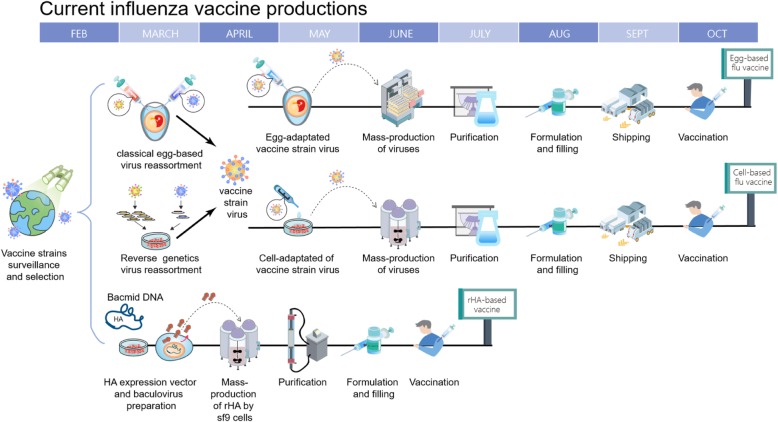
Vaccination is the most effective measure at preventing influenza virus infections. However, current seasonal influenza vaccines are only protective against closely matched circulating strains. Even with extensive monitoring and annual reformulation our efforts remain one step behind the rapidly evolving virus, often resulting in mismatches and low vaccine effectiveness. Fortunately, many next-generation influenza vaccines are currently in development, utilizing an array of innovative techniques to shorten production time and increase the breadth of protection. This review summarizes the production methods of current vaccines, recent advances that have been made in influenza vaccine research, and highlights potential challenges that are yet to be overcome. Special emphasis is put on the potential role of glycoengineering in influenza vaccine development, and the advantages of removing the glycan shield on influenza surface antigens to increase vaccine immunogenicity. The potential for future development of these novel influenza vaccine candidates is discussed from an industry perspective.
接种疫苗是预防流感病毒感染的最有效措施。然而,目前的季节性流感疫苗仅能预防与流行株高度匹配的病毒。即使进行广泛监测和年度改造,我们的努力仍然落后于快速进化的病毒,这往往导致匹配不佳和疫苗效果降低。幸运的是,目前正在开发许多下一代流感疫苗,利用一系列创新技术缩短生产时间并提高保护范围。本综述总结了当前疫苗的生产方法、流感疫苗研究的最新进展,并强调了尚未克服的潜在挑战。特别强调了糖基工程在流感疫苗开发中的潜在作用,以及去除流感表面抗原上糖萼以提高疫苗免疫原性的优势。从行业角度讨论了这些新型流感候选疫苗的未来发展潜力。