Zamani Esfahlani Farnaz, Bertolero Maxwell A, Bassett Danielle S, Betzel Richard F
Department of Psychological and Brain Sciences, Indiana University, Bloomington, IN, 47405, USA.
Department of Bioengineering, University of Pennsylvania, Philadelphia, PA, 19141, USA.
Neuroimage. 2020 May 1;211:116612. doi: 10.1016/j.neuroimage.2020.116612. Epub 2020 Feb 17.
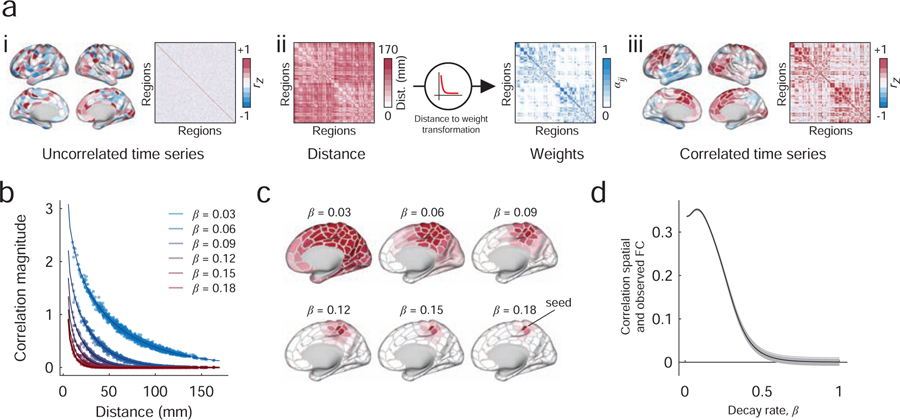
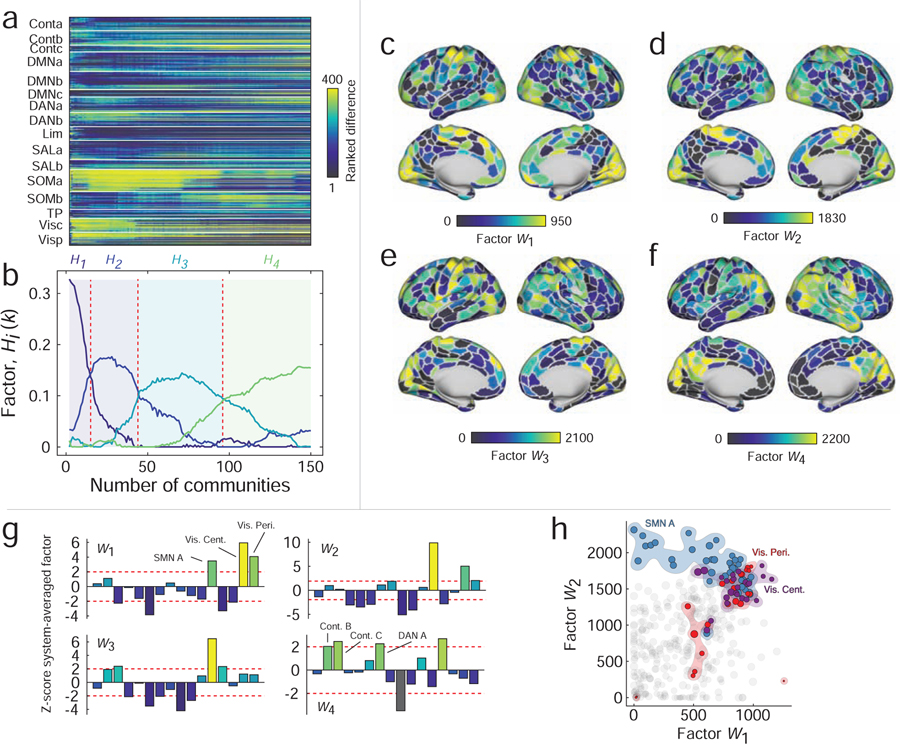
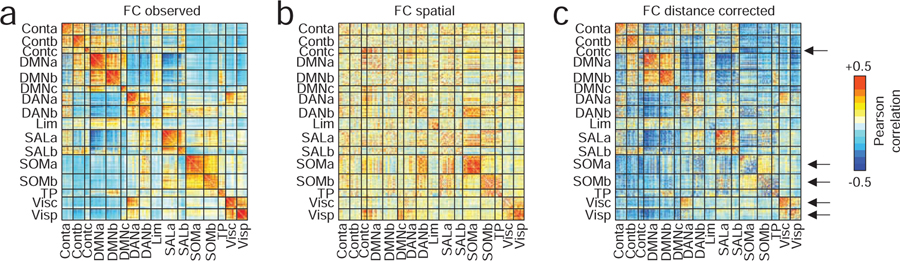
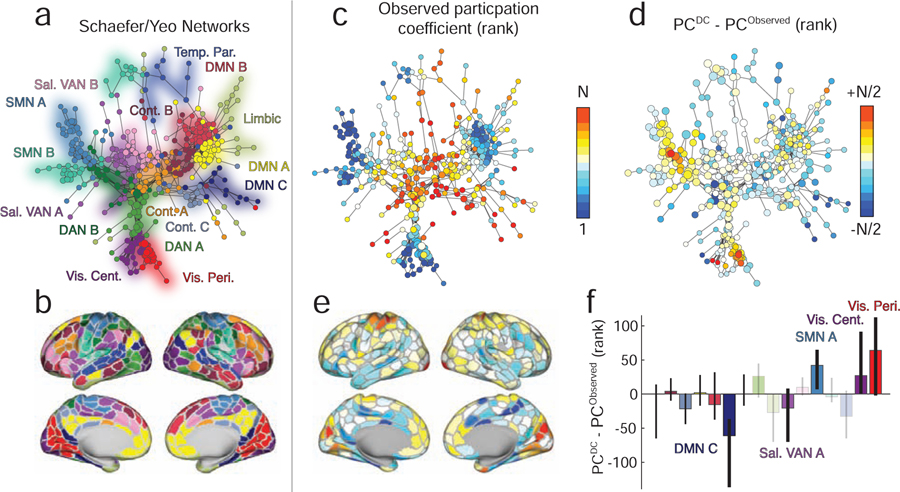
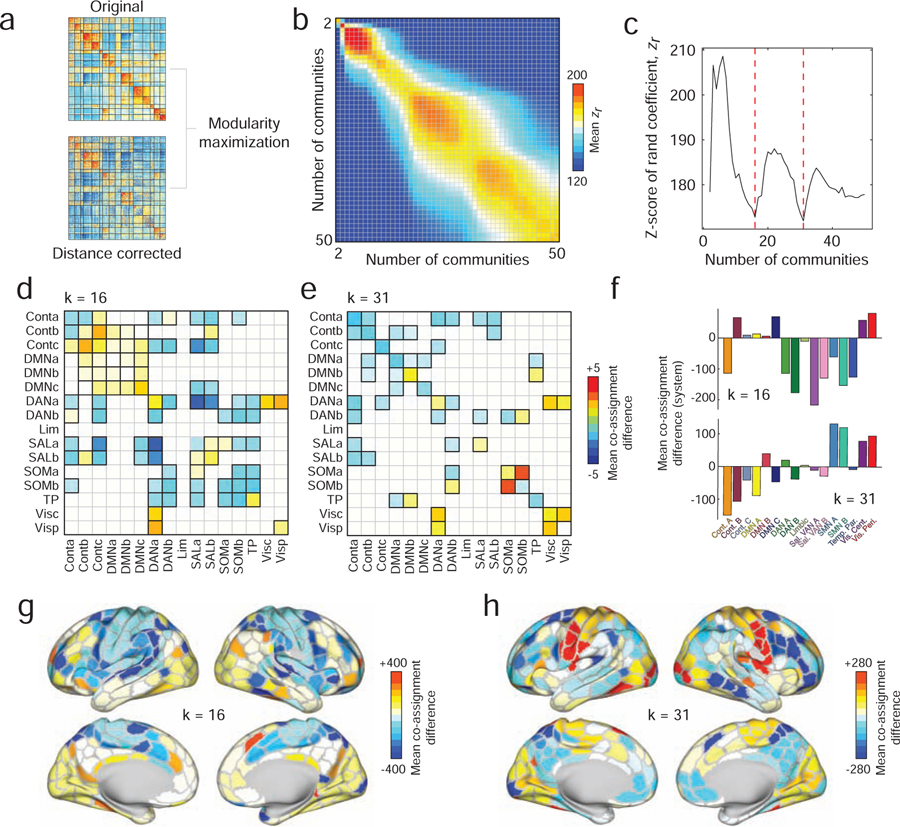
Coordinated brain activity reflects underlying cognitive processes and can be modeled as a network of inter-regional functional connections. The most costly connections in the network are long-distance correlations that, in the absence of underlying structural connections, are maintained by sustained energetic inputs. Here, we present a spatial modeling approach that amplifies contributions made by long-distance functional connections to whole-brain network architecture, while simultaneously suppressing contributions made by short-range connections. We use this method to characterize the long-distance architecture of functional networks and to identify aspects of community and hub structure that are driven by long-distance correlations and that, we argue, are of greater functional significance. We find that based only on patterns of long-distance connectivity, primary sensory cortices occupy increasingly central positions and appear more "hub-like". Additionally, we show that the community structure of long-distance connections spans multiple topological levels and differs from the community structure detected in networks that include both short-range and long-distance connections. In summary, these findings highlight the complex relationship between the brain's physical layout and its functional architecture. The results presented here inform future analyses of community structure and network hubs in health, across development, and in the case of neuropsychiatric disorders.
协调的大脑活动反映了潜在的认知过程,并且可以被建模为一个区域间功能连接的网络。网络中代价最高的连接是长距离相关性,在没有潜在结构连接的情况下,这些相关性由持续的能量输入维持。在这里,我们提出了一种空间建模方法,该方法放大了长距离功能连接对全脑网络架构的贡献,同时抑制了短程连接的贡献。我们使用这种方法来表征功能网络的长距离架构,并识别由长距离相关性驱动的社区和枢纽结构的各个方面,我们认为这些方面具有更大的功能意义。我们发现,仅基于长距离连接模式,初级感觉皮层占据了越来越中心的位置,并且看起来更像“枢纽”。此外,我们表明长距离连接的社区结构跨越多个拓扑层次,并且与在包括短程和长距离连接的网络中检测到的社区结构不同。总之,这些发现突出了大脑物理布局与其功能架构之间的复杂关系。这里呈现的结果为未来在健康、发育过程以及神经精神疾病情况下对社区结构和网络枢纽的分析提供了信息。