Department of Epidemiology University of Pittsburgh PA.
Departments of Psychiatry and Psychology University of Pittsburgh PA.
J Am Heart Assoc. 2020 Feb 18;9(4):e013876. doi: 10.1161/JAHA.119.013876. Epub 2020 Feb 17.
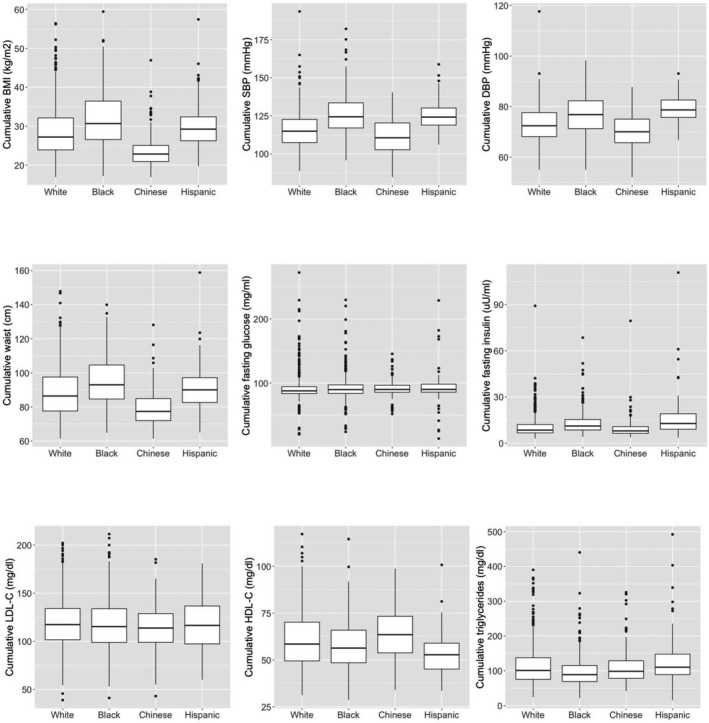
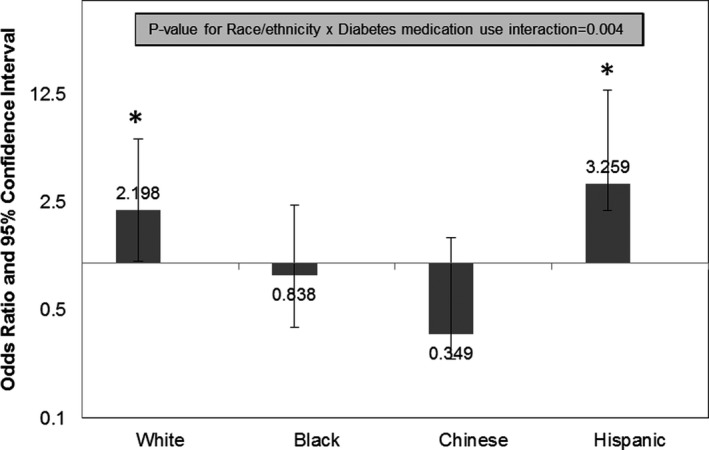
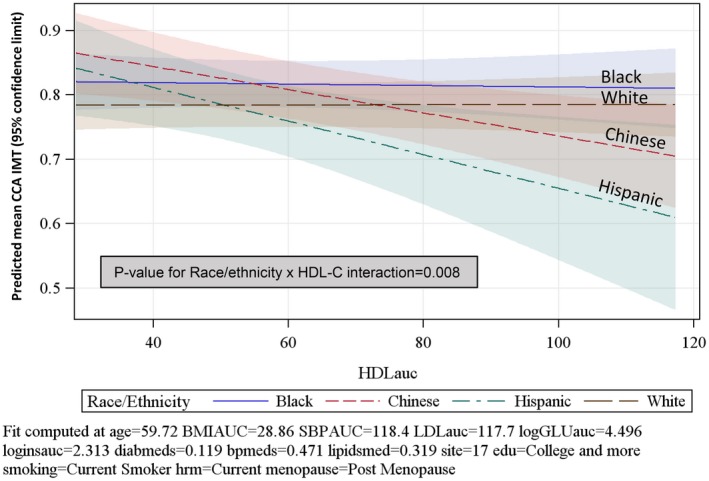
Background The extent to which cardiovascular disease (CVD) risk factors across the menopause explain racial/ethnic differences in subclinical vascular disease in late midlife women is not well documented and was explored in a multi-ethnic cohort. Methods and Results Participants (n=1357; mean age 60 years) free of clinical CVD from the Study of Women's Health Across the Nation had common carotid artery intima-media thickness, interadventitial diameter, and carotid plaque presence assessed by ultrasonography on average 13.7 years after baseline visit. Early to late midlife time-averaged cumulative burden of traditional CVD risk factors calculated using serial measures from baseline to the ultrasound visit were generally less favorable in black and Hispanic women compared with white and Chinese women, including education and smoking status and time-averaged cumulative blood pressure, high-density lipoprotein cholesterol, and fasting insulin. Independent of these risk factors, BMI, and medications, common carotid artery intima-media thickness was thicker in black women, interadventitial diameter was wider in Chinese women, yet plaque presence was lower in black and Hispanic women compared with white women. CVD risk factor associations with subclinical vascular measures did not vary by race/ethnicity except for high-density lipoprotein cholesterol on common carotid artery intima-media thickness; an inverse association between high-density lipoprotein cholesterol and common carotid artery intima-media thickness was observed in Chinese and Hispanic but not in white or black women. Conclusions Race/ethnicity did not particularly moderate the association between traditional CVD risk factors measured across the menopause transition and late midlife subclinical vascular disease. Unmeasured socioeconomic, cultural, and nontraditional biological risk factors likely play a role in racial/ethnic differences in vascular health and merit further exploration.
心血管疾病(CVD)风险因素在女性绝经过渡期的分布情况在多大程度上可以解释亚临床血管疾病在中老年女性中的种族/民族差异,目前相关研究记录较少,本研究在一个多民族队列中对此进行了探讨。
无临床 CVD 的绝经后女性参加了妇女健康倡议研究(Study of Women's Health Across the Nation),基线访视后平均 13.7 年时,通过超声检查评估参与者(n=1357;平均年龄 60 岁)的颈总动脉内膜-中层厚度、内中膜厚度与中层厚度比值和颈动脉斑块。使用基线至超声访视期间的连续测量值计算的传统 CVD 风险因素的早至晚绝经中期时间平均累积负担,在黑人和西班牙裔女性中通常比白人和华裔女性更差,包括教育和吸烟状况以及时间平均累积血压、高密度脂蛋白胆固醇和空腹胰岛素。独立于这些风险因素、BMI 和药物,黑种女性的颈总动脉内膜-中层厚度较厚,华裔女性的内中膜厚度与中层厚度比值较宽,但黑种和西班牙裔女性的斑块发生率低于白种女性。除了高密度脂蛋白胆固醇与颈总动脉内膜-中层厚度的关系之外,CVD 风险因素与亚临床血管指标的关联在不同种族/民族间没有差异,在华裔和西班牙裔女性中观察到高密度脂蛋白胆固醇与颈总动脉内膜-中层厚度之间存在负相关,而在白种或黑种女性中则没有。
种族/民族并没有特别调节绝经过渡期测量的传统 CVD 风险因素与中老年女性亚临床血管疾病之间的关联。未测量的社会经济、文化和非传统生物学风险因素可能在血管健康的种族/民族差异中发挥作用,值得进一步探讨。