Division of Cardiology Department of Medicine Columbia University Medical Center New York NY.
Department of Epidemiology & Population Health Albert Einstein College of Medicine Bronx NY.
J Am Heart Assoc. 2020 Feb 18;9(4):e013522. doi: 10.1161/JAHA.119.013522. Epub 2020 Feb 17.
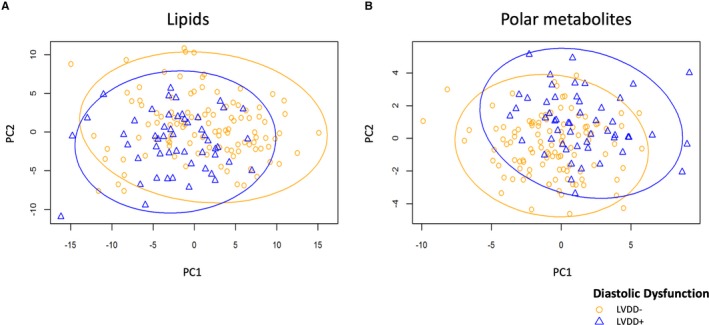
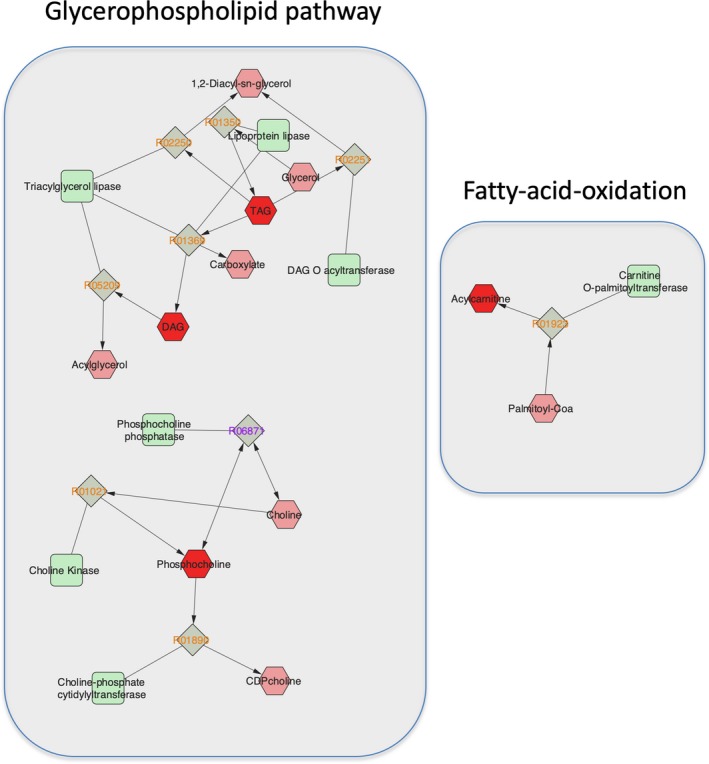
Background People living with HIV have an increased risk of left ventricular diastolic dysfunction (LVDD) and heart failure. HIV-associated LVDD may reflect both cardiomyocyte and systemic metabolic derangements, but the underlying pathways remain unclear. Methods and Results To explore such pathways, we conducted a pilot study in the Bronx and Brooklyn sites of the WIHS (Women's Interagency HIV Study) who participated in concurrent, but separate, metabolomics and echocardiographic ancillary studies. Liquid chromatography tandem mass spectrometry-based metabolomic profiling was performed on plasma samples from 125 HIV-infected (43 with LVDD) and 35 HIV-uninfected women (9 with LVDD). Partial least squares discriminant analysis identified polar metabolites and lipids in the glycerophospholipid-metabolism and fatty-acid-oxidation pathways associated with LVDD. After multivariable adjustment, LVDD was significantly associated with higher concentrations of diacylglycerol 30:0 (odds ratio [OR], 1.60, 95% CI [1.01-2.55]); triacylglycerols 46:0 (OR 1.60 [1.04-2.48]), 48:0 (OR 1.63 [1.04-2.54]), 48:1 (OR 1.62 [1.01-2.60]), and 50:0 (OR 1.61 [1.02-2.53]); acylcarnitine C7 (OR 1.88 [1.21-2.92]), C9 (OR 1.99 [1.27-3.13]), and C16 (OR 1.80 [1.13-2.87]); as well as lower concentrations of phosphocholine (OR 0.59 [0.38-0.91]). There was no evidence of effect modification of these relationships by HIV status. Conclusions In this pilot study, women with or at risk of HIV with LVDD showed alterations in plasma metabolites in the glycerophospholipid-metabolism and fatty-acid-oxidation pathways. Although these findings require replication, they suggest that improved understanding of metabolic perturbations and their potential modification could offer new approaches to prevent cardiac dysfunction in this high-risk group.
HIV 感染者患左心室舒张功能障碍(LVDD)和心力衰竭的风险增加。HIV 相关的 LVDD 可能反映了心肌细胞和全身代谢紊乱,但潜在的途径尚不清楚。
为了探索这些途径,我们在 WIHS(妇女机构 HIV 研究)的布朗克斯和布鲁克林站点进行了一项试点研究,这些参与者同时参加了代谢组学和超声心动图辅助研究。对 125 名 HIV 感染(43 名患有 LVDD)和 35 名 HIV 未感染妇女(9 名患有 LVDD)的血浆样本进行基于液相色谱串联质谱的代谢组学分析。偏最小二乘判别分析确定了与 LVDD 相关的甘油磷脂代谢和脂肪酸氧化途径中的极性代谢物和脂质。经过多变量调整后,LVDD 与更高浓度的二酰基甘油 30:0(比值比[OR],1.60,95%置信区间[CI]:1.01-2.55);三酰甘油 46:0(OR 1.60 [1.04-2.48])、48:0(OR 1.63 [1.04-2.54])、48:1(OR 1.62 [1.01-2.60])和 50:0(OR 1.61 [1.02-2.53]);酰基辅酶 C7(OR 1.88 [1.21-2.92])、C9(OR 1.99 [1.27-3.13])和 C16(OR 1.80 [1.13-2.87]);以及更低浓度的磷酸胆碱(OR 0.59 [0.38-0.91])。这些关系没有证据表明受 HIV 状态的影响。
在这项试点研究中,患有或有 HIV 相关 LVDD 风险的妇女表现出血浆代谢物在甘油磷脂代谢和脂肪酸氧化途径中的改变。尽管这些发现需要复制,但它们表明,更好地了解代谢紊乱及其潜在修饰可能为预防高危人群的心脏功能障碍提供新的方法。