Neves Beatriz, Zanella Camila M, Kessous Igor M, Uribbe Fernando P, Salgueiro Fabiano, Bered Fernanda, Antonelli Alexandre, Bacon Christine D, Costa Andrea F
Programa de Pós-graduação em Ciências Biológicas (Botânica) Museu Nacional, Universidade Federal do Rio de Janeiro Rio de Janeiro Brazil.
Gothenburg Global Biodiversity Centre Göteborg Sweden.
J Biogeogr. 2020 Jan;47(1):261-274. doi: 10.1111/jbi.13746. Epub 2019 Nov 24.
Understanding the complex interaction and relative contributions of factors involved in species and trait diversification is crucial to gain insights into the evolution of Neotropical biodiversity. Here, we investigated the drivers of morphological variation in bromeliads along a latitudinal gradient in a biodiversity hotspot.
Atlantic Forest, Brazil.
A species complex in the genus (Bromeliaceae).
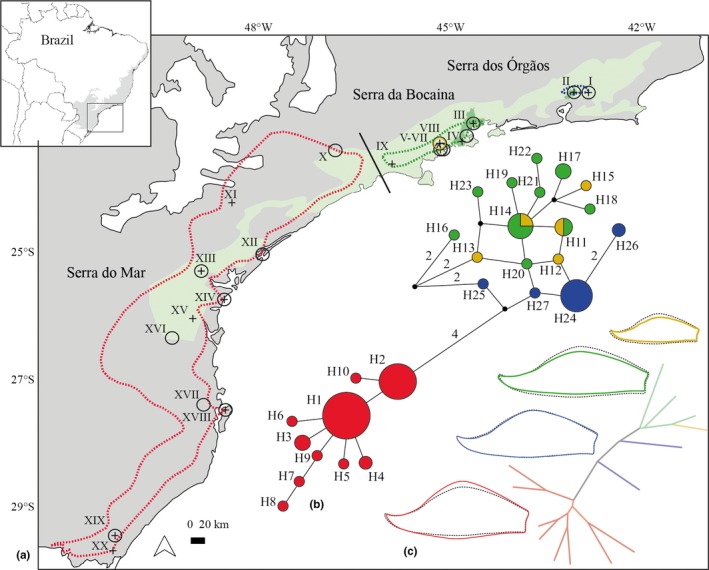
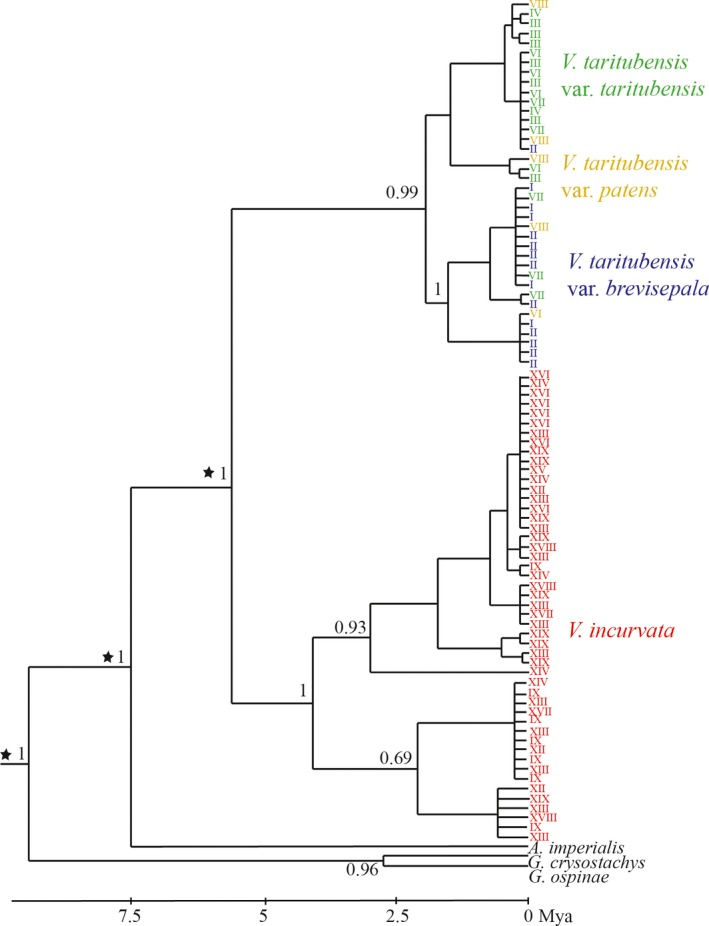
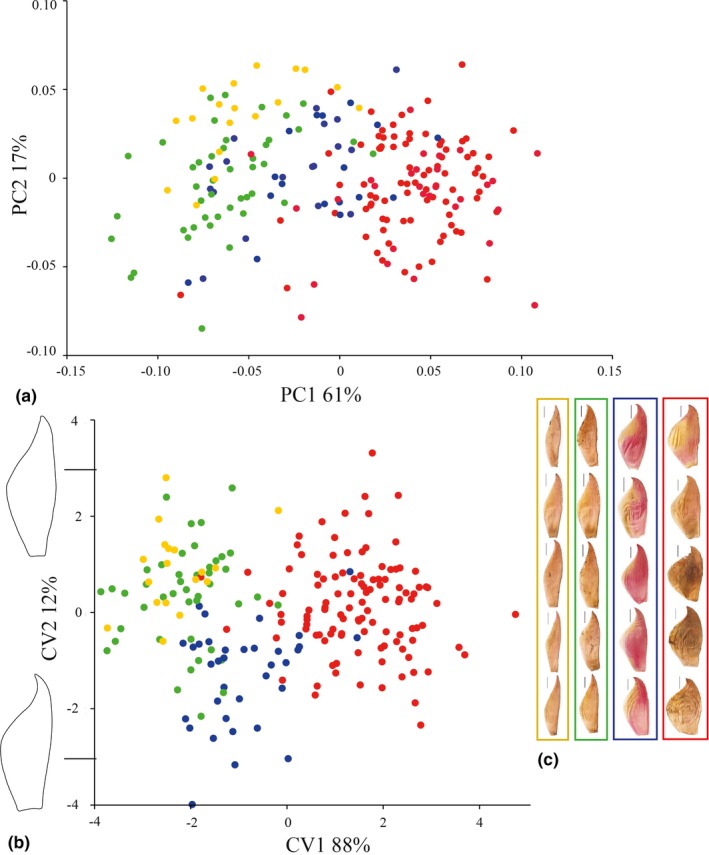
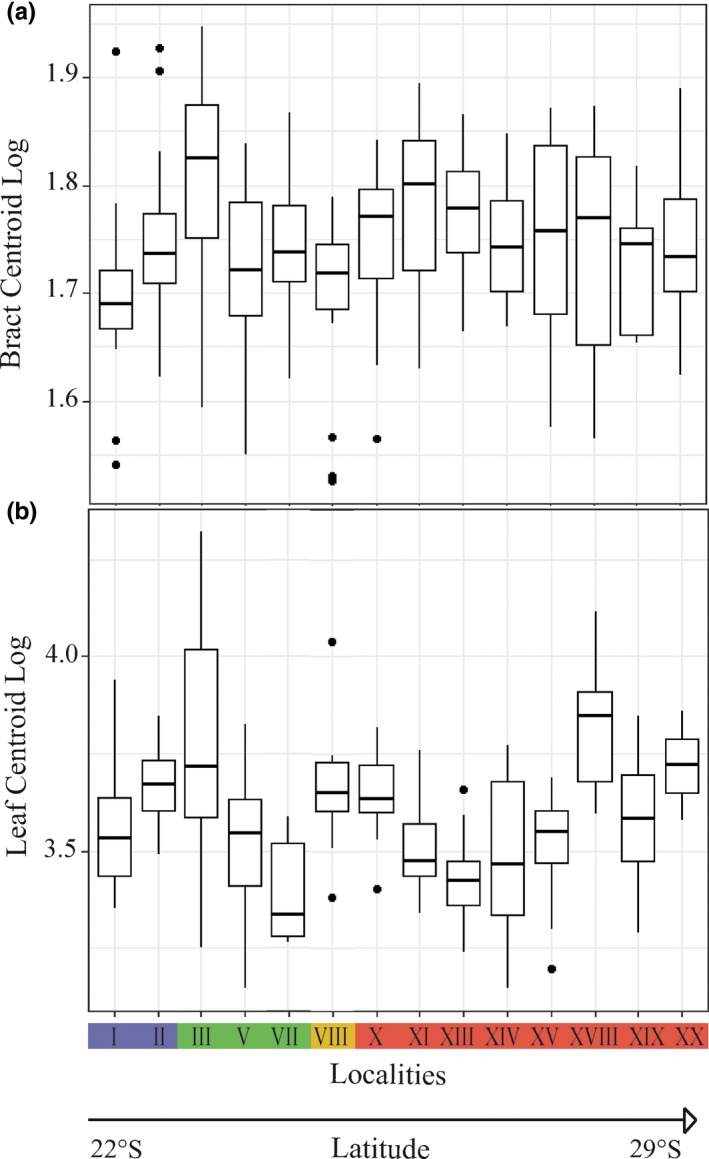
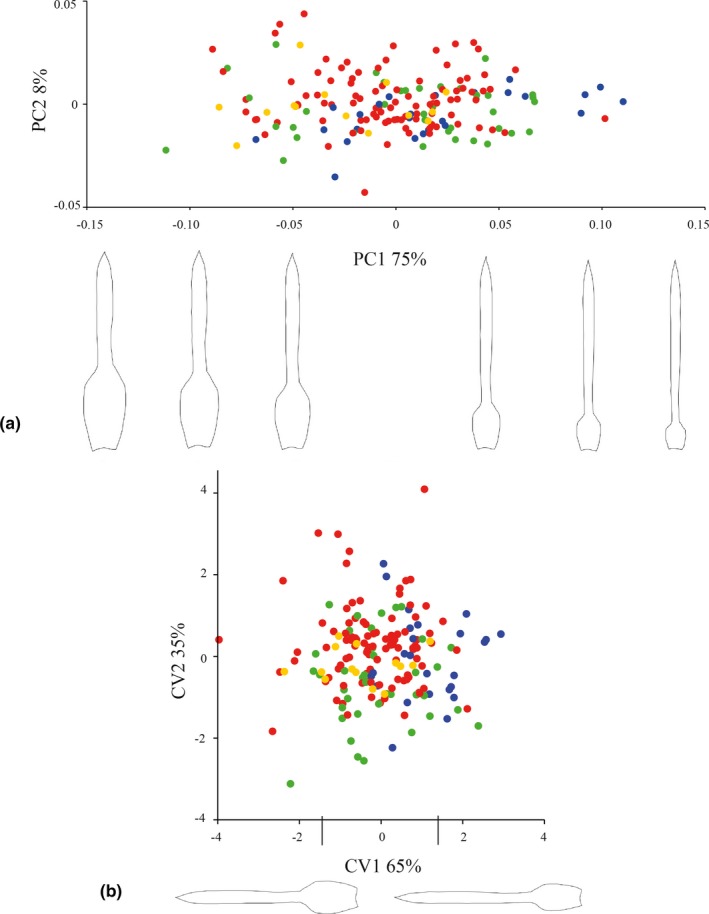
We measured shape and size variation for 208 floral bracts and 176 leaves in individuals from 14 localities using geometric morphometrics. We compiled data for two chloroplast regions ( and ) from 89 individuals to assess genetic diversity, population structure and phylogenetic relationships. We tested the influence of climate, altitude and genetic distance on morphological traits using linear statistical models.
Temperature seasonality is a main driver of floral bract shape. Together with precipitation, it also explains changes in leaf size across the latitudinal gradient. Shifts in morphological traits are correlated with genetic structure and partly support the recent taxonomic delimitation proposed for the species complex. The species started to diversify in the Pliocene ca. 5 Mya. We detected a phylogeographical break in species distribution into northern and southern clades between the Bocaina region and the southern portion of the Atlantic Forest.
We identify how geography and environmental changes through time shape floral bracts and leaves in similar ways. At highly seasonal sites with lower annual precipitation (in the southern subtropical portion of the Atlantic Forest), leaves are larger and floral bracts are wide-elliptic, making them better suited for increased water accumulation. In contrast, at less seasonal sites (in the tropical north, where rainfall is more abundant and temperatures are higher), leaves are narrower and floral bracts are lanceolate-shaped, facilitating water drainage. The biogeographical break we identified suggests a role of tectonic activity and climatic oscillations in promoting species divergence and diversification.
了解物种和性状多样化过程中各种因素的复杂相互作用及其相对贡献,对于深入理解新热带生物多样性的演化至关重要。在此,我们研究了生物多样性热点地区沿纬度梯度分布的凤梨科植物形态变异的驱动因素。
巴西大西洋森林。
凤梨科(Bromeliaceae)的一个物种复合体。
我们使用几何形态测量学方法,测量了来自14个地点的个体中208个花苞片和176片叶子的形状和大小变异。我们收集了89个个体的两个叶绿体区域( 和 )的数据,以评估遗传多样性、种群结构和系统发育关系。我们使用线性统计模型测试了气候、海拔和遗传距离对形态性状的影响。
温度季节性是花苞片形状的主要驱动因素。它与降水量一起,还解释了沿纬度梯度叶片大小的变化。形态性状的变化与遗传结构相关,部分支持了最近对该物种复合体提出的分类界定。该物种大约在500万年前的上新世开始多样化。我们在物种分布中检测到一个生物地理断点,将其分为博凯纳地区和大西洋森林南部之间的北部和南部分支。
我们确定了地理和环境随时间的变化如何以相似的方式塑造花苞片和叶子。在年降水量较低的高度季节性地区(大西洋森林的南亚热带部分),叶子较大,花苞片呈宽椭圆形,使其更适合增加水分积累。相反,在季节性较小的地区(热带北部,降雨较多且温度较高),叶子较窄,花苞片呈披针形,便于排水。我们确定的生物地理断点表明构造活动和气候振荡在促进物种分化和多样化方面发挥了作用。