The Johns Hopkins University Applied Physics Laboratory, Laurel, MD, USA.
Naval Surface Warfare Center, Dahlgren, VA, USA.
BMC Genomics. 2020 Feb 17;21(1):166. doi: 10.1186/s12864-020-6557-5.
The state-of-the-art in nucleic acid based biodetection continues to be polymerase chain reaction (PCR), and many real-time PCR assays targeting biodefense pathogens for biosurveillance are in widespread use. These assays are predominantly singleplex; i.e. one assay tests for the presence of one target, found in a single organism, one sample at a time. Due to the intrinsic limitations of such tests, there exists a critical need for high-throughput multiplex assays to reduce the time and cost incurred when screening multiple targets, in multiple pathogens, and in multiple samples. Such assays allow users to make an actionable call while maximizing the utility of the small volumes of test samples. Unfortunately, current multiplex real-time PCR assays are limited in the number of targets that can be probed simultaneously due to the availability of fluorescence channels in real-time PCR instruments.
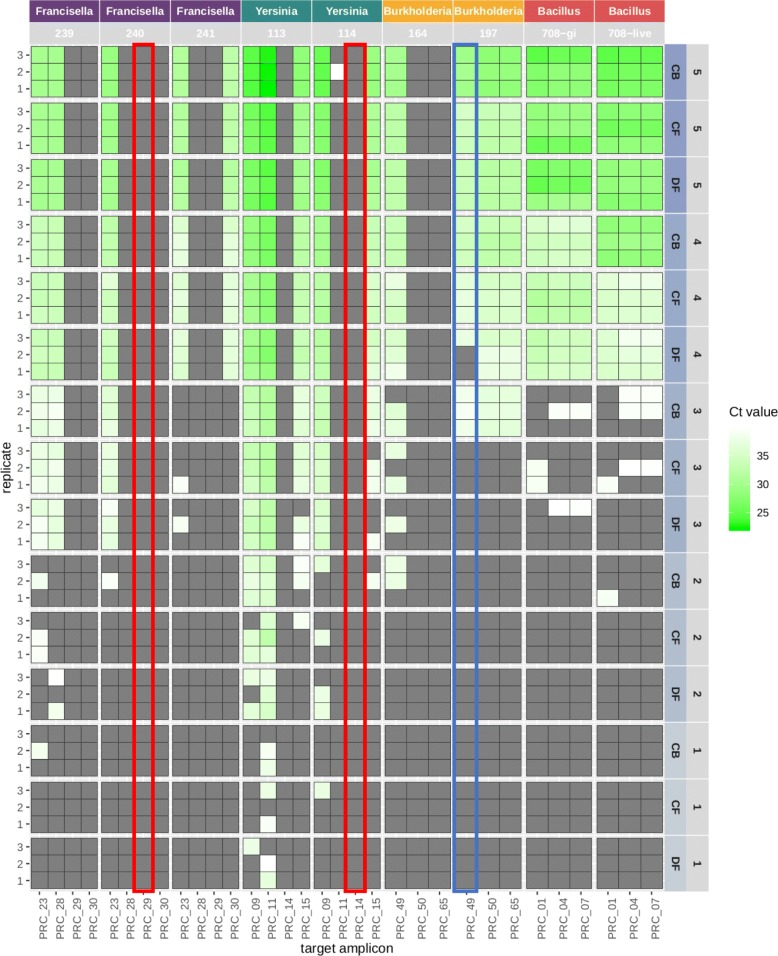
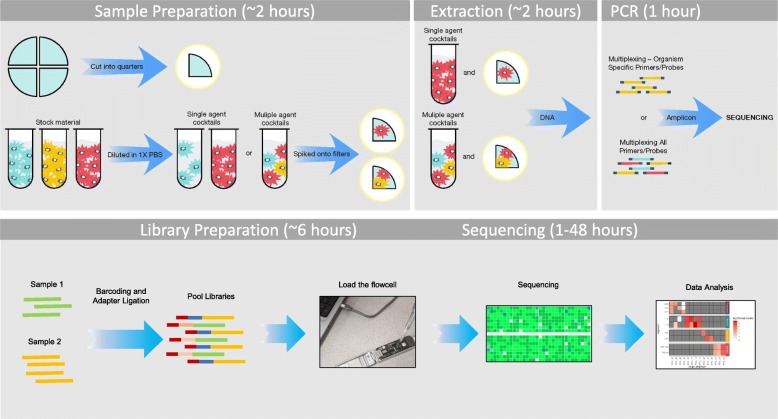
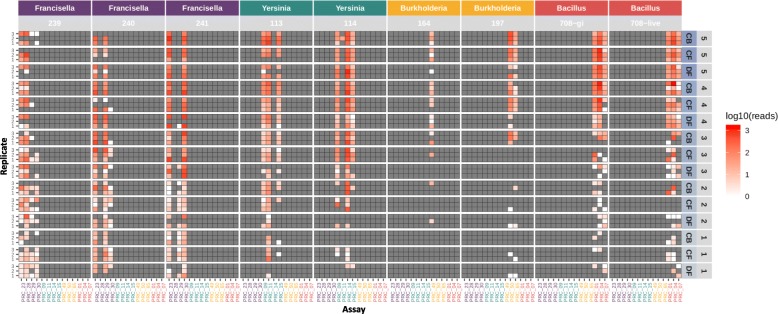
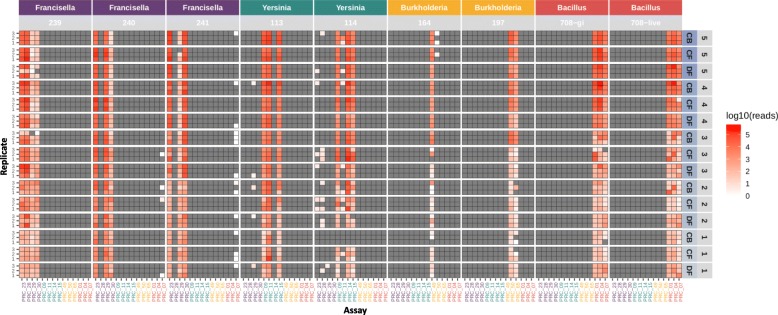
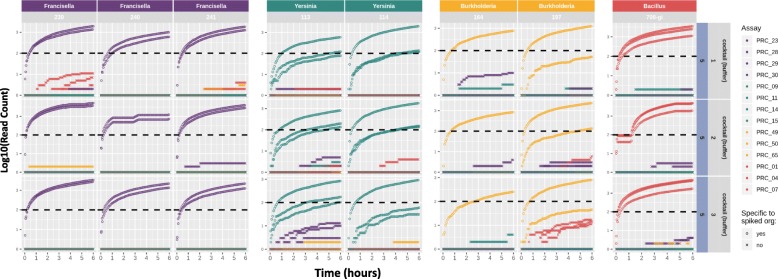
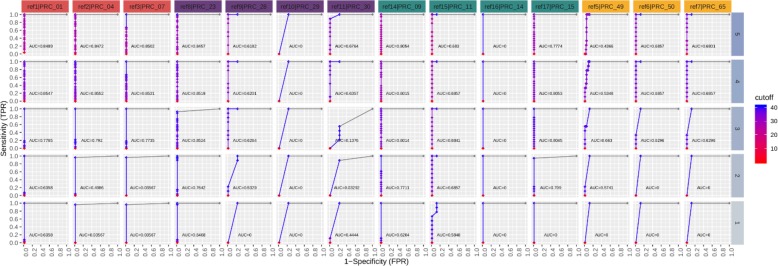
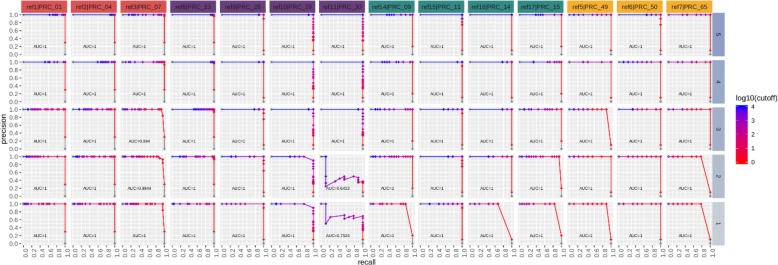
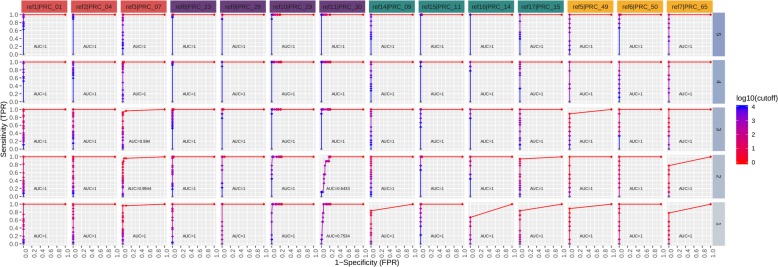
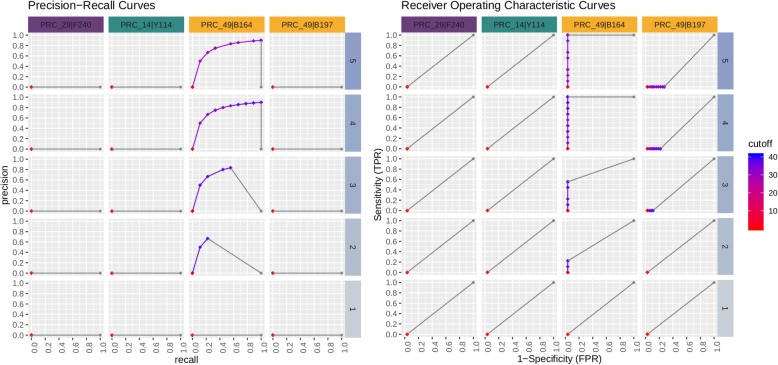
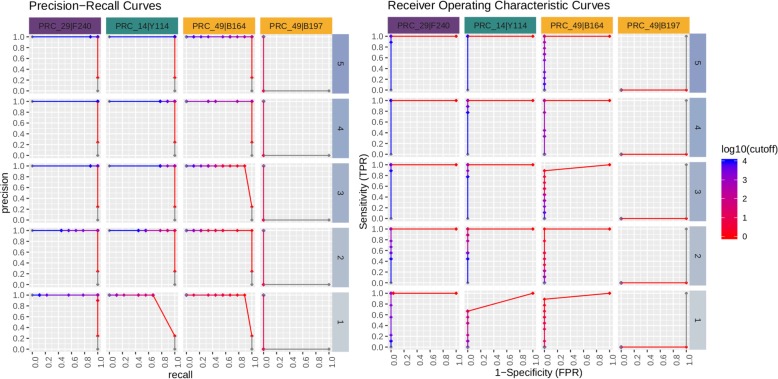
To address this gap, we developed a pipeline in which the amplicons produced by a 14-plex end-point PCR assay using spiked samples were subsequently sequenced using Nanopore technology. We used bar codes to sequence multiple samples simultaneously, leading to the generation and subsequent analysis of sequence data resulting from a short sequencing run time (< 10 min). We compared the limits of detection (LoD) of real-time PCR assays to Oxford Nanopore Technologies (ONT)-based amplicon sequencing and estimated the sample-to-answer time needed for this approach. Overall, LoDs determined from the first 10 min of sequencing data were at least one to two orders of magnitude lower than real-time PCR. Given enough time, the amplicon sequencing approach is approximately 100 times more sensitive than real-time PCR, with detection of amplicon specific reads even at the lowest tested spiking concentration (around 2.5-50 Colony Forming Units (CFU)/ml).
Based on these results, we propose amplicon sequencing assay as a viable alternative to replace the current real-time PCR based singleplex assays for higher throughput biodefense applications. We note, however, that targeted amplicon specific reads were not detectable even at the highest tested spike concentrations (2.5 X 10-5.0 X10 CFU/ml) without an initial amplification step, indicating that PCR is still necessary when utilizing this protocol.
核酸生物检测的最新技术仍然是聚合酶链反应(PCR),许多针对生物防御病原体的实时 PCR 检测方法都被广泛用于生物监测。这些检测方法主要是单重检测,即每次检测一个样本中一个单一生物体内的一个目标。由于此类检测方法存在固有局限性,因此迫切需要高通量多重检测方法来减少在多个样本中筛选多个目标和多个病原体时所花费的时间和成本。此类检测方法允许用户在最大限度地利用小体积测试样本的同时做出可操作的判断。不幸的是,由于实时 PCR 仪器中荧光通道的可用性,当前的多重实时 PCR 检测方法在可同时检测的目标数量上受到限制。
为了解决这一差距,我们开发了一种方法,使用加标样本的 14 重终点 PCR 检测方法产生的扩增子,随后使用纳米孔技术进行测序。我们使用条形码同时对多个样本进行测序,从而生成并随后分析了短测序运行时间(<10 分钟)产生的序列数据。我们比较了实时 PCR 检测方法与牛津纳米孔技术(ONT)基于扩增子测序的检测限(LoD),并估计了这种方法所需的样本至答案时间。总体而言,从测序数据的前 10 分钟获得的 LoD 至少比实时 PCR 低一到两个数量级。只要有足够的时间,扩增子测序方法的灵敏度大约比实时 PCR 高 100 倍,即使在最低测试加标浓度(约 2.5-50 个菌落形成单位(CFU)/ml)下,也可以检测到扩增子特异性读长。
基于这些结果,我们提出扩增子测序检测方法是一种可行的替代方案,可以替代当前用于高通量生物防御应用的基于实时 PCR 的单重检测方法。然而,我们注意到,在没有初始扩增步骤的情况下,即使在最高测试加标浓度(2.5X10-5.0X10 CFU/ml)下,也无法检测到靶向扩增子特异性读长,这表明在使用此方案时仍然需要 PCR。