Jill Roberts Institute for Research in Inflammatory Bowel Disease, Friedman Center for Nutrition and Inflammation, Joan and Sanford I. Weill Department of Medicine, Department of Microbiology and Immunology, Weill Cornell Medicine, Cornell University, New York, NY, 10021, USA.
Division of Pulmonary Medicine, Department of Medicine, Keio University School of Medicine, Shinjuku, Tokyo, 160-8582, Japan.
Mucosal Immunol. 2020 Jul;13(4):626-636. doi: 10.1038/s41385-020-0266-x. Epub 2020 Feb 17.
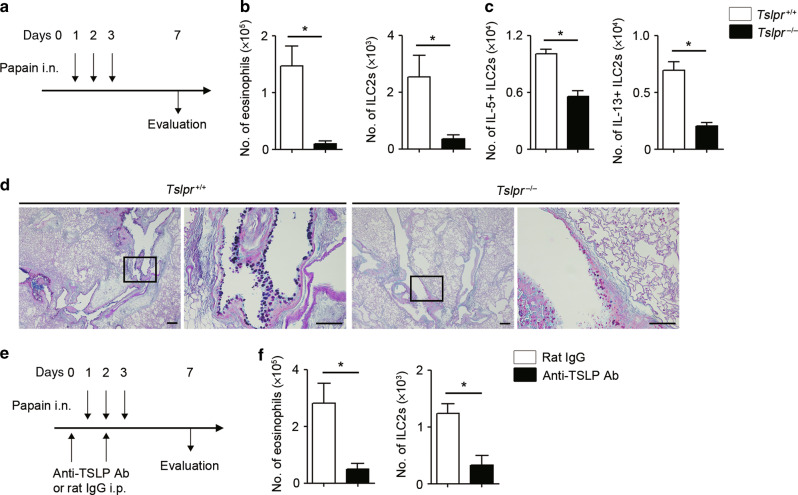
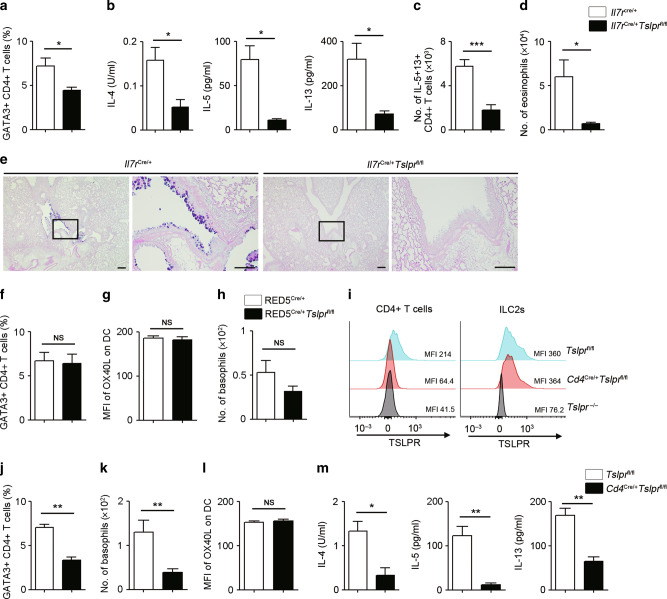
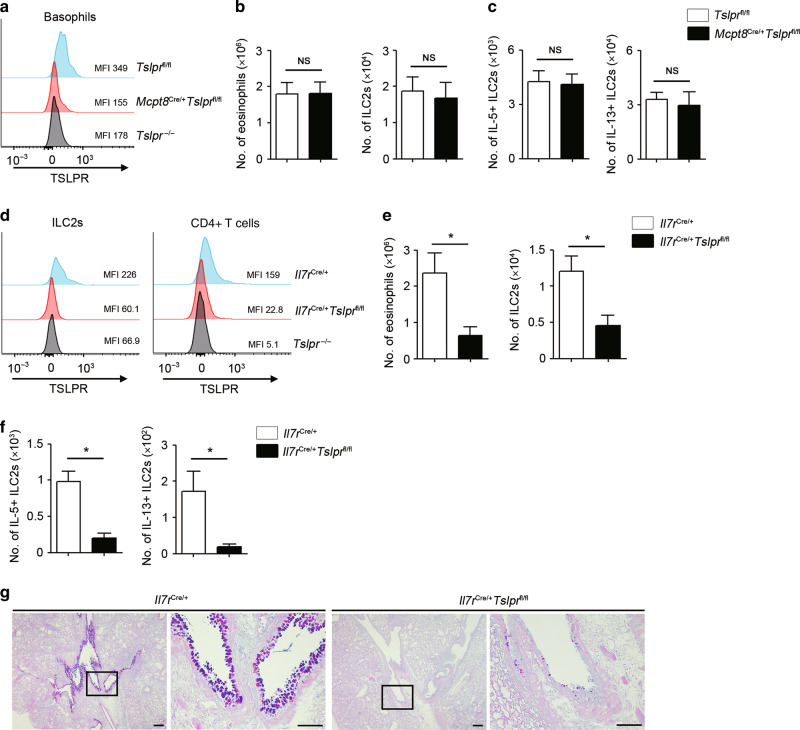
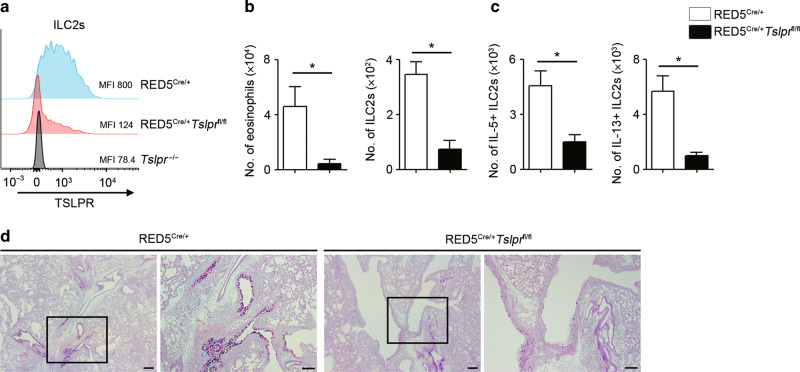
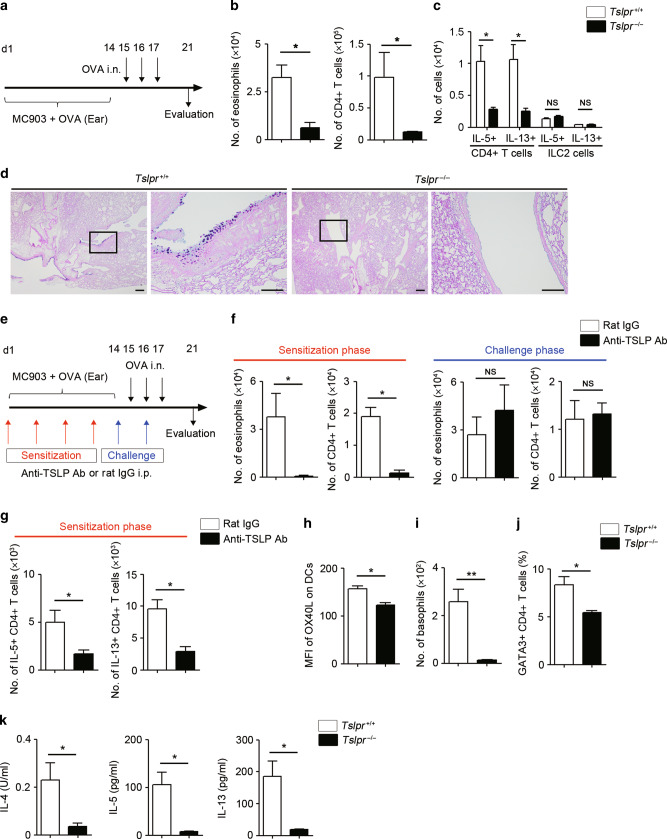
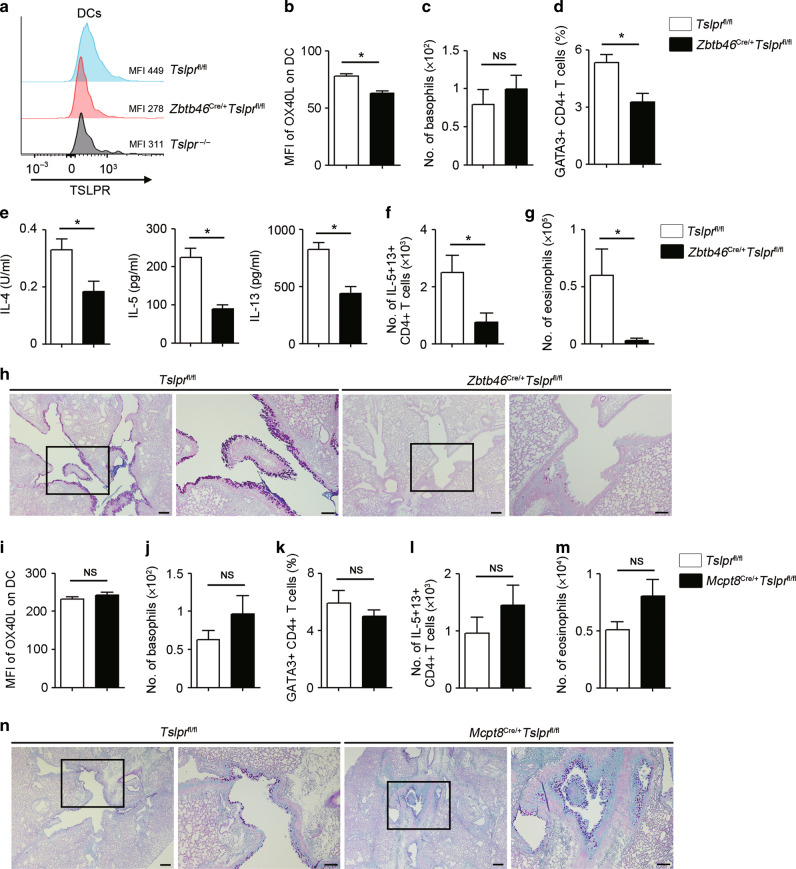
Thymic stromal lymphopoietin (TSLP) is a critical upstream cytokine inducing type 2 inflammation in various diseases, including asthma and atopic dermatitis. Accumulating evidence suggests that TSLP can directly stimulate a variety of immune cells, such as dendritic cells (DCs), basophils, T cells, and group 2 innate lymphoid cells (ILC2s). However, which cell types directly respond to TSLP in vivo and how TSLP initiates type 2 inflammation has remained controversial. To define the precise role of TSLP in vivo, for the first time we generated multiple cell lineage-specific TSLP receptor-deficient mice to systematically dissect the cell-intrinsic requirements for TSLP responsiveness in type 2 inflammation in the lung. In papain-induced innate immune-mediated type 2 airway inflammation, TSLP directly stimulated ILC2s, but not basophils, leading to enhanced type 2 inflammation. On the other hand, in OVA-induced adaptive immune-mediated type 2 airway inflammation, TSLP principally acted on DCs and CD4 + T cells during the sensitization phase, but not basophils or ILC2s, and facilitated the development of Th2 cell-mediated airway inflammation. Together, these findings reveal that TSLP activates distinct immune cell cascades in the context of innate and adaptive immune-mediated type 2 inflammation.
胸腺基质淋巴细胞生成素 (TSLP) 是一种关键的上游细胞因子,可诱导包括哮喘和特应性皮炎在内的各种疾病中的 2 型炎症。越来越多的证据表明,TSLP 可以直接刺激多种免疫细胞,如树突状细胞 (DC)、嗜碱性粒细胞、T 细胞和 2 型固有淋巴细胞 (ILC2)。然而,哪种细胞类型在体内直接对 TSLP 做出反应,以及 TSLP 如何引发 2 型炎症,一直存在争议。为了明确 TSLP 在体内的精确作用,我们首次生成了多种细胞谱系特异性 TSLP 受体缺陷小鼠,以系统解析 TSLP 对肺 2 型炎症反应的细胞内在需求。在木瓜蛋白酶诱导的先天免疫介导的 2 型气道炎症中,TSLP 直接刺激 ILC2,而不刺激嗜碱性粒细胞,导致 2 型炎症增强。另一方面,在 OVA 诱导的适应性免疫介导的 2 型气道炎症中,TSLP 在致敏阶段主要作用于 DC 和 CD4+T 细胞,而不是嗜碱性粒细胞或 ILC2,促进了 Th2 细胞介导的气道炎症的发展。总之,这些发现揭示了 TSLP 在先天和适应性免疫介导的 2 型炎症中激活不同的免疫细胞级联反应。