Mahmud Jubayer Al, Hasanuzzaman Mirza, Khan M Iqbal Raza, Nahar Kamrun, Fujita Masayuki
Department of Agroforestry and Environmental Science, Sher-e-Bangla Agricultural University, Sher-e-Bangla Nagar, Dhaka-1207, Bangladesh.
Department of Agronomy, Faculty of Agriculture, Sher-e-Bangla Agricultural University, Sher-e-Bangla Nagar, Dhaka-1207, Bangladesh.
Plants (Basel). 2020 Feb 13;9(2):241. doi: 10.3390/plants9020241.
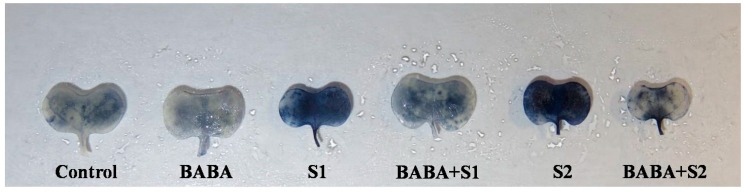
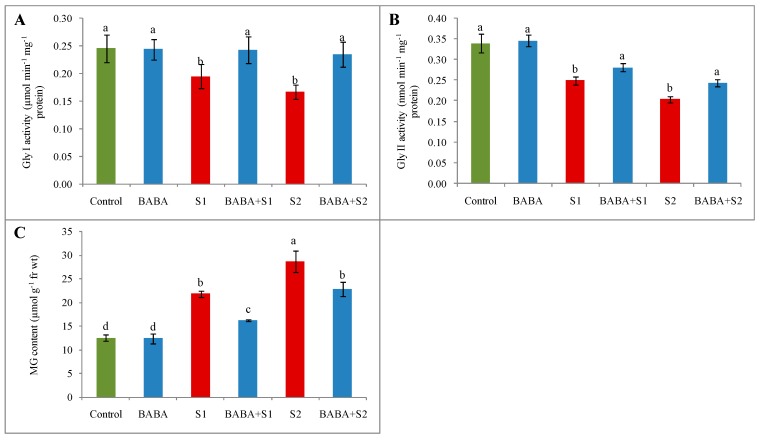
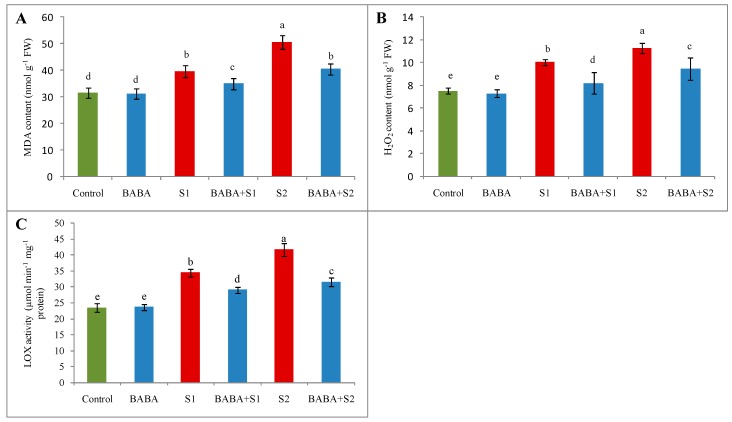
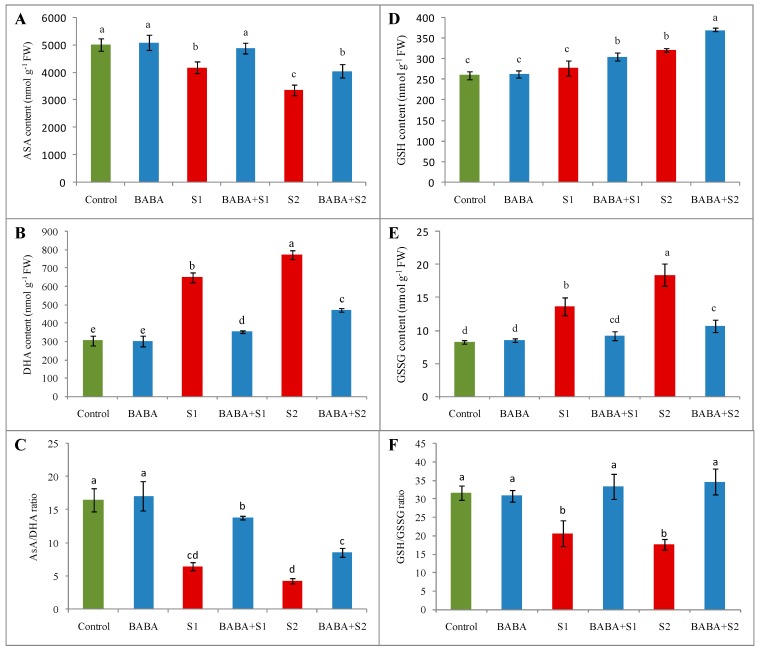
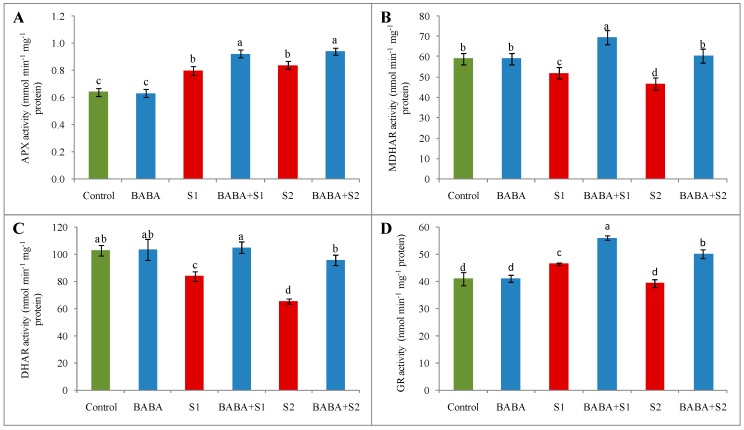
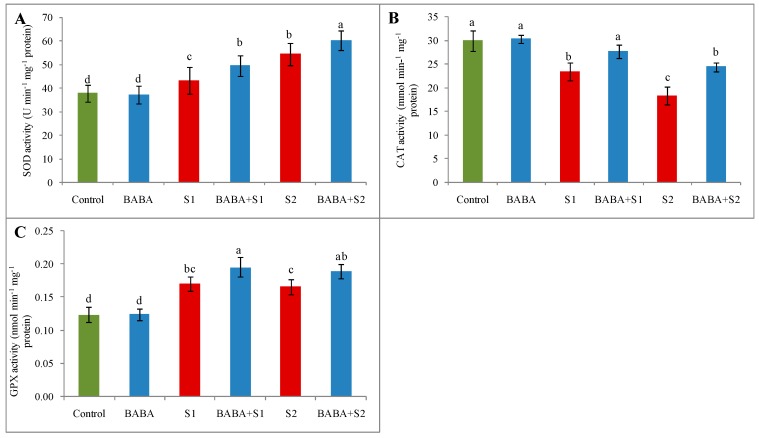
Salinity is a serious environmental hazard which limits world agricultural production by adversely affecting plant physiology and biochemistry. Hence, increased tolerance against salt stress is very important. In this study, we explored the function of β-aminobutyric acid (BABA) in enhancing salt stress tolerance in rapeseed ( L.). After pretreatment with BABA, seedlings were exposed to NaCl (100 and 150 mM) for 2 days. Salt stress increased Na content and decreased K content in shoot and root. It disrupted the antioxidant defense system by producing reactive oxygen species (ROS; HO and O), methylglyoxal (MG) content and causing oxidative stress. It also reduced the growth and photosynthetic pigments of seedlings but increased proline (Pro) content. However, BABA pretreatment in salt-stressed seedlings increased ascorbate (AsA) and glutathione (GSH) contents; GSH/GSSG ratio; and the activities of ascorbate peroxidase (APX), monodehydroascorbate reductase (MDHAR), dehydroascorbate reductase (DHAR), glutathione reductase (GR), glutathione peroxidase (GPX), superoxide dismutase (SOD), catalase (CAT), glyoxalase I (Gly I), and glyoxalase II (Gly II) as well as the growth and photosynthetic pigments of plants. In addition, compared to salt stress alone, BABA increased Pro content, reduced the HO, MDA and MG contents, and decreased Na content in root and increased K content in shoot and root of rapeseed seedlings. Our findings suggest that BABA plays a double role in rapeseed seedlings by reducing Na uptake and enhancing stress tolerance through upregulating the antioxidant defense and glyoxalase systems.
盐度是一种严重的环境危害,通过对植物生理和生化产生不利影响来限制世界农业生产。因此,提高对盐胁迫的耐受性非常重要。在本研究中,我们探讨了β-氨基丁酸(BABA)在增强油菜(L.)耐盐胁迫中的作用。用BABA预处理后,将幼苗暴露于100和150 mM的NaCl中2天。盐胁迫增加了地上部和根部的Na含量,降低了K含量。它通过产生活性氧(ROS;HO和O)、甲基乙二醛(MG)含量并引起氧化应激,破坏了抗氧化防御系统。它还降低了幼苗的生长和光合色素,但增加了脯氨酸(Pro)含量。然而,盐胁迫幼苗中的BABA预处理增加了抗坏血酸(AsA)和谷胱甘肽(GSH)含量;GSH/GSSG比值;以及抗坏血酸过氧化物酶(APX)、单脱氢抗坏血酸还原酶(MDHAR)、脱氢抗坏血酸还原酶(DHAR)、谷胱甘肽还原酶(GR)、谷胱甘肽过氧化物酶(GPX)、超氧化物歧化酶(SOD)、过氧化氢酶(CAT)、乙二醛酶I(Gly I)和乙二醛酶II(Gly II)的活性以及植物生长和光合色素。此外,与单独盐胁迫相比,BABA增加了Pro含量,降低了HO、丙二醛(MDA)和MG含量,并降低了油菜幼苗根部的Na含量,增加了地上部和根部的K含量。我们的研究结果表明,BABA在油菜幼苗中发挥双重作用,通过减少Na吸收并通过上调抗氧化防御和乙二醛酶系统来增强胁迫耐受性。