Department of Clinical Medicine, Medical College of Soochow University, Ren Ai Road 199, Suzhou Industrial Park, Suzhou, 215123, China.
Laboratory of Precision Medicine and Translational Medicine, Suzhou Hospital Affiliated to Nanjing Medical University, Suzhou Science and Technology Town Hospital, Suzhou, 215153, China.
Reprod Biol Endocrinol. 2020 Feb 18;18(1):11. doi: 10.1186/s12958-019-0561-0.
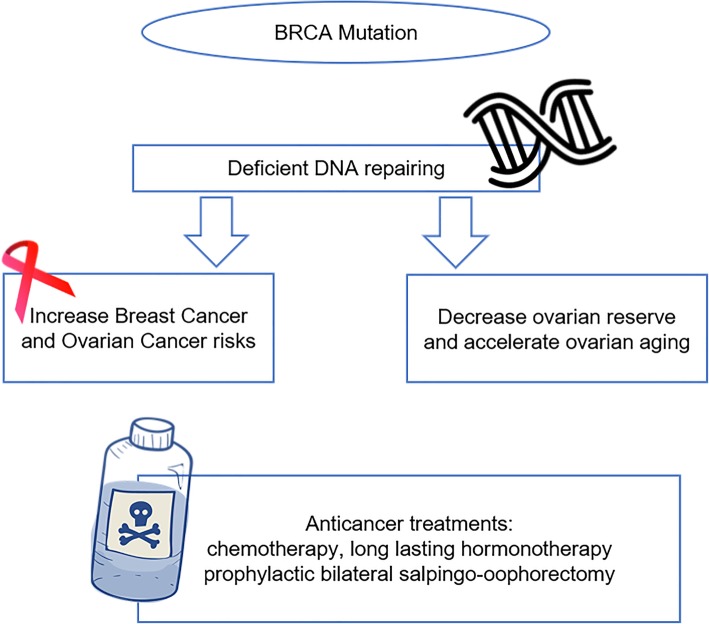
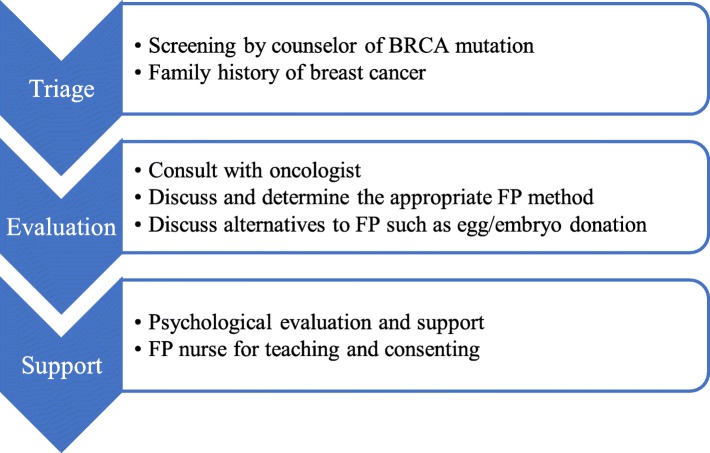
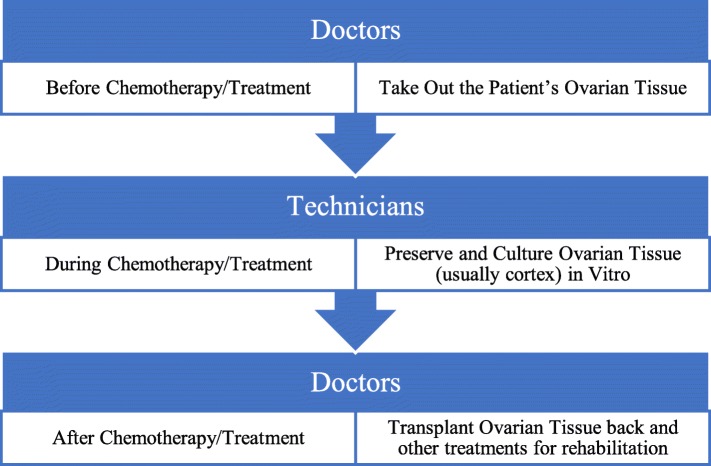
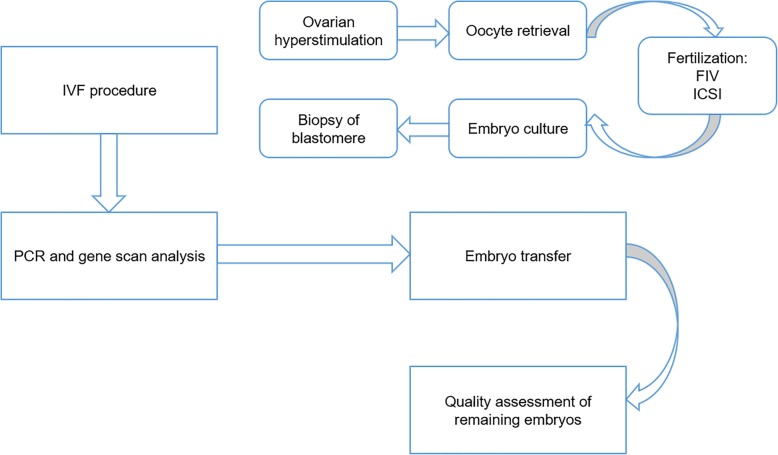
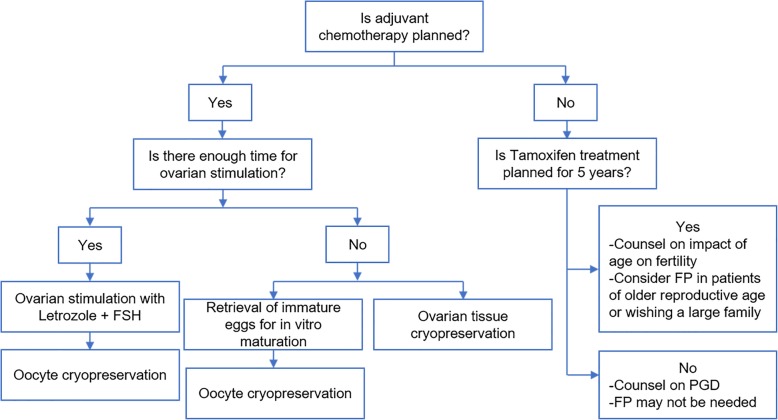
BRCA mutation carriers face various situations that influence their fertility potential. There is still a lack of guideline or expert consensus on Fertility Preservation (FP) in BRCA mutation carriers and the necessity and safety of FP in BRCA mutation carriers is still in dispute. This review aims to focus on the population of BRCA mutation carriers by analyzing the existing FP strategies, comprehensively comparing the pros and cons of each strategy and its applicability.FP is a suggestion for BRCA mutation carriers with birth planning. Different FP strategies have different characteristics. Considering the particularity of BRCA mutation carriers, multiple factors need to be carefully considered. This review focuses on the applicability of each FP method for carriers under various circumstances. Available FP strategies including oocyte cryopreservation, ovarian tissue cryopreservation, preimplantation genetic diagnosis, and egg/embryo donation are analyzed by comparing existing methods comprehensively. In the attempt to provide an up-to-date decision-making guidance. Conditions taking into consideration were the carrier's age, the risk of breast and ovarian metastasis, plans for oncotherapy, FP outcome, time available for FP intervention and accessibility.Overall, FP is necessary and safe for BRCA mutation carriers. Among all available FP methods, oocyte cryopreservation is the most reliable procedure; ovarian tissue cryopreservation is the only way for preserving both fertility and endocrine function, recommended for pre-pubertal carriers and when time is limited for oocyte stimulation. A clear framework provides frontline clinical practitioners a new thought and eventually benefit thousands of BRCA mutation carriers.
BRCA 基因突变携带者面临着各种影响其生育潜力的情况。目前对于 BRCA 基因突变携带者的生育力保存(FP)仍然缺乏指南或专家共识,BRCA 基因突变携带者进行 FP 的必要性和安全性仍存在争议。本综述旨在通过分析现有的 FP 策略,全面比较每种策略的优缺点及其适用性,重点关注 BRCA 基因突变携带者这一人群。FP 是有生育计划的 BRCA 基因突变携带者的建议。不同的 FP 策略具有不同的特点。考虑到 BRCA 基因突变携带者的特殊性,需要仔细考虑多种因素。本综述重点关注每种 FP 方法在各种情况下对携带者的适用性。通过综合比较现有的方法,对卵母细胞冷冻保存、卵巢组织冷冻保存、胚胎植入前遗传学诊断和卵/胚胎捐赠等可用的 FP 策略进行了分析。试图为携带者提供最新的决策指导。考虑的条件包括携带者的年龄、乳腺癌和卵巢转移的风险、肿瘤治疗计划、FP 结果、FP 干预和获得的时间。
总体而言,FP 对于 BRCA 基因突变携带者是必要且安全的。在所有可用的 FP 方法中,卵母细胞冷冻保存是最可靠的程序;卵巢组织冷冻保存是保留生育力和内分泌功能的唯一方法,推荐用于青春期前携带者和卵母细胞刺激时间有限时。一个明确的框架为一线临床医生提供了一个新的思路,最终使成千上万的 BRCA 基因突变携带者受益。